

 (505) 280-5216
No Beater Bar, Low Moisture: Berber Carpet Cleaning for Homeowners
The safest way to handle berber carpet cleaning is suction-first vacuuming, fast blotting on any spill, and zero beater-bar contact, backed by a professional deep clean on a regular schedule. Hire a pro the moment a stain keeps reappearing after drying or the pile starts pulling. Both the Carpet and Rug Institute and the IICRC build their guidance around exactly this: less water, stronger extraction, and controlled drying.
TL;DR:
- Using a suction-only vacuum and avoiding beater bars prevents loop-pull damage and extends berber carpet lifespan.
- Frequent vacuuming at least once a week, especially in high-traffic areas, reduces soil buildup and re-soiling issues.
- Professional deep cleaning every 12 to 18 months with high suction extraction minimizes wicking and prevents browning or fiber damage.
- Spot treatment should always start with blotting and testing cleaning solutions first to avoid irreversible staining or fiber yellowing.
- Avoid DIY steam cleaning with rental equipment, as excessive water and poor extraction often cause wicking, browning, and fast re-soiling.
Table of Contents
- What Is Berber Carpet, and Why Does Its Weave Complicate Cleaning?
- How Should You Vacuum and Maintain Berber Between Cleanings?
- How Do You Remove Common Berber Carpet Stains?
- What’s the Best Way to Deep Clean Berber Without Damaging It?
- When Should You Call a Professional for Berber Carpet Care?
- How Do You Prevent Damage and Keep Berber Looking New Longer?
- A Local Cleaner’s Take on Berber
- How Royal Carpet and Tile Cleaning Handles Berber the Right Way
- Standards Behind This Guide
- Sources
- FAQ
What Is Berber Carpet, and Why Does Its Weave Complicate Cleaning?
Berber gets its texture from a looped construction rather than the cut, upright fibers you see on plush carpet. Manufacturers weave the yarn into small, tight loops instead of shearing the tops off, which is why the surface feels dense and low profile underfoot. That looping is also exactly why berber carpet cleaning trips up so many homeowners: soil doesn’t just sit on top of the fiber, it works down into the gaps between loops and hides there until a vacuum or a wet cleaning pass forces it back to the surface.
Fiber type changes the whole equation. Olefin (polypropylene) loop pile is the most common and the most oil-attracting, since the fiber is naturally oleophilic and grabs onto cooking grease, lotion, and body oils in a way water alone won’t release. Nylon berber holds up better against crushing and cleans more forgivingly. Wool berber looks great and resists soil naturally, but it’s pH sensitive, meaning the wrong cleaning chemical can yellow or damage the fiber permanently, according to trade guidance on berber’s fiber-specific behavior.
Left unmanaged, berber shows damage in a few predictable ways:
- Wicking: stains that seem to vanish, then resurface hours or days later as moisture pulls residue back up through the loops.
- Pulled or snagged loops: usually from vacuum brush rollers or pet claws catching a loop and unraveling it.
- Browning: a yellowish discoloration from cellulosic residue reacting with moisture, common in olefin.
- Rapid re-soiling: a cleaned area that dirties again within weeks, often a sign of leftover detergent residue attracting new soil.
How Should You Vacuum and Maintain Berber Between Cleanings?
Vacuum settings make or break berber’s lifespan. A rotating beater bar, the kind built into most upright vacuums, is designed to agitate and lift cut-pile carpet. On loop pile, that same brush roller catches individual loops and pulls them loose, and manufacturers frequently exclude that kind of brush-roll damage from warranty coverage. Switch to a suction-only head or a brush-off attachment, and check that your machine has a height adjustment or a bare-floor setting you can use on berber.
Frequency matters as much as technique. The Carpet and Rug Institute recommends vacuuming at least once a week for typical living areas, and more often anywhere foot traffic runs heavy: entryways, hallways, and in front of a couch. CRI Seal of Approval certification on a vacuum tells you it has been independently tested for soil removal without damaging the fiber, so it’s worth checking for that label when you shop.
When something spills, speed matters more than the product you reach for. Follow this order:
- Blot immediately with a white cloth or paper towel, working from the outer edge of the spill toward the center so you don’t spread it wider.
- Absorb as much liquid as possible before applying anything, pressing rather than rubbing.
- Test any cleaning solution on a hidden corner first, since olefin and wool react differently to the same chemical.
- Apply a small amount of cleaner to the cloth, not directly onto the carpet, and blot again.
- Rinse with a small amount of cool water and blot dry to remove residue that would otherwise attract new dirt.
Mild dish soap diluted in water handles most everyday spots. Skip ammonia-based glass cleaners and anything with bleach, since both can strip color from dyed olefin and wool alike.
Pro Tip: Keep a stack of plain white microfiber cloths near the kitchen and living room specifically for spills. Colored towels can transfer dye onto damp carpet fibers, turning a five-minute cleanup into a stain of its own.
How Do You Remove Common Berber Carpet Stains?
Every stain on berber follows the same first move: blot, don’t rub. Rubbing pushes the spill deeper into the loop structure and spreads it sideways, which is how a coin-sized spot turns into a dinner-plate stain. Work from the edges inward with a dry cloth before you introduce any liquid.
From there, treatment depends on what caused the stain:
- Water-based stains (juice, coffee, soda): blot dry, then apply a mix of one tablespoon dish soap with two cups of warm water, blot again, and rinse with plain water.
- Oily or greasy stains (cooking oil, makeup, lotion): sprinkle cornstarch or baking soda over the spot, let it sit for 15 minutes to absorb the oil, vacuum it up, then treat any remaining mark with a small amount of dish soap solution.
- Wine and dark liquids: blot immediately, apply a mix of one part white vinegar to two parts water, blot from the outside in, and rinse.
- Pet urine: blot up as much as possible, apply an enzyme-based pet stain cleaner formulated for carpet, and let it sit per the product’s instructions rather than rinsing it away early, since the enzymes need time to break down the uric acid.
A few materials do more harm than good on berber:
- Chlorine bleach, which fades dye lots unevenly and can weaken olefin fibers.
- Oxygen bleach used at full strength without dilution, which can leave a lightened halo around the treated spot.
- Leftover surfactant residue from over-diluted store cleaners, which attracts dirt faster than the original stain did.
Stop the DIY attempt and call in help if a stain returns after the carpet dries, if the fibers feel stiff or discolored after treatment, or if you’re dealing with a large area rather than a single spot. Our guide on cleaning the most common carpet stains walks through additional formulas by stain type if you want more detail before deciding.
What’s the Best Way to Deep Clean Berber Without Damaging It?
Moisture control decides whether a deep clean helps or hurts. Berber’s tight loop structure means water has a harder time evaporating out compared to cut pile, and any moisture that reaches the backing or pad can wick back up through the fibers days later, leaving a ring-shaped stain right where the wet spot used to be, exactly what the IICRC S100 standard warns professionals to guard against.
Two methods dominate professional berber carpet cleaning, and each suits a different situation:
- Low-moisture encapsulation applies a cleaning compound that crystallizes around soil particles as it dries, then lifts out with vacuuming rather than rinsing. It’s often the preferred method for olefin loop pile because so little moisture ever reaches the backing.
- Hot water extraction, whether truck-mounted or a strong portable unit, works well on heavier soil loads but only when the technician runs it with high suction and follows up with multiple dry passes to pull residual water back out.
Consumer rental machines and off-the-shelf steam cleaners are where most berber damage actually starts. Those units typically apply far more water than they can recover in a single pass, and without the extraction power to pull it back out, that excess moisture sits in the pad and drives wicking. Our post on when rental carpet cleaners just aren’t good enough covers why this gap between water output and water recovery is the single biggest risk factor for do-it-yourself berber cleaning.
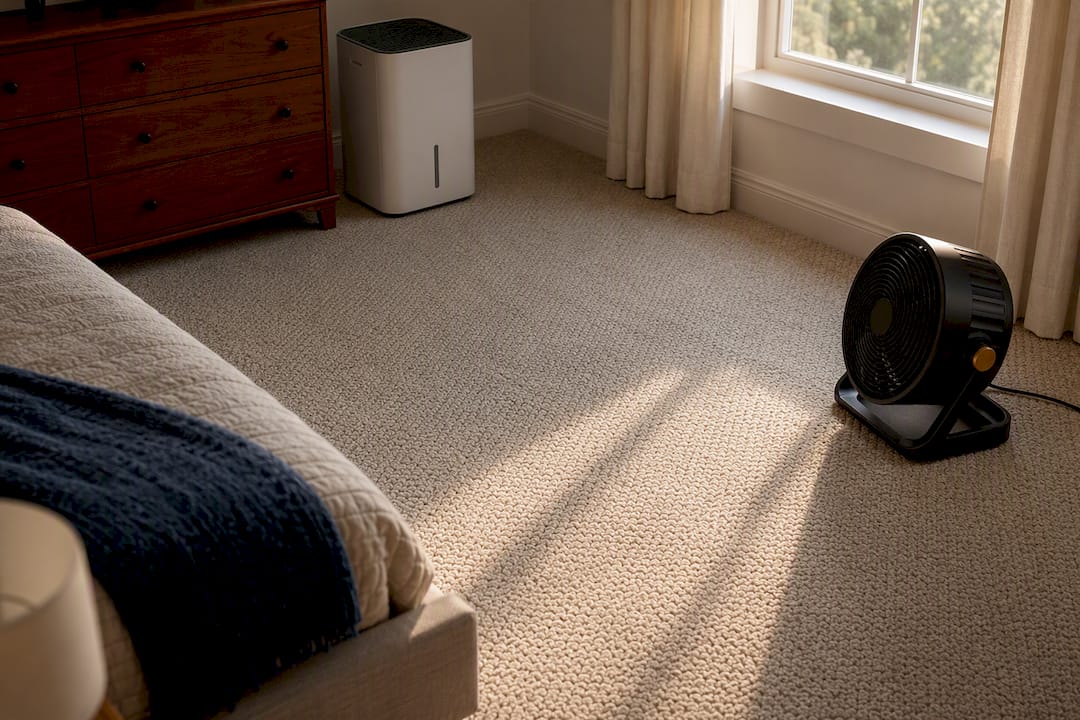
The CRI 205 Residential Carpet Standard recommends professional deep cleaning every 12 to 18 months for average households, and sooner in homes with pets or heavy foot traffic. Plan on 4 to 8 hours of drying time after a proper extraction cleaning, with fans or dehumidifiers running to speed the process along.
When Should You Call a Professional for Berber Carpet Care?
A handful of warning signs mean it’s time to stop treating a spot yourself. Watch for these:
- A stain that fades after cleaning but reappears within a day or two, a classic wicking pattern.
- Oily discoloration that won’t lift with dish soap or cornstarch.
- Loops that look pulled, frayed, or unraveled in a patch.
- Browning across a wider area rather than one isolated spot.
- A persistent odor even after the visible stain is gone.
- Soiling spread across most of a room rather than confined to traffic lanes.
A professional visit worth paying for follows a specific sequence: fiber identification to confirm olefin, nylon, or wool; a pretest in an inconspicuous area; pre-spray with Seal of Approval–certified products; extraction with multiple dry passes to pull moisture back out of the pile; forced air drying with fans; and a final inspection before the crew leaves.
Pro Tip: Ask any cleaner you’re considering three questions before booking: what equipment they run, how many dry passes they include, and how long they expect drying to take. Vague answers to any of those three are a red flag.
How Do You Prevent Damage and Keep Berber Looking New Longer?
A few habits do most of the work of protecting berber long term. On the vacuum, keep the brush roller off entirely, or invest in an attachment built for suction-only pickup, since that single switch prevents most loop-pulling damage before it starts.
- Rotate furniture position every few months so the same traffic lane and the same furniture legs aren’t wearing one strip of carpet.
- Use felt or rubber pads under furniture legs to spread weight and stop indentation.
- Place walk-off mats at entry points to cut down on the grit that gets tracked in and ground into the loops.
- Stick with CRI Seal of Approval cleaning products, since off-brand chemicals can leave residue that voids manufacturer warranties.
- Keep vacuum filters clean; a clogged filter loses suction and starts leaving soil behind instead of lifting it out.
Following this cadence, plus a professional cleaning on the 12 to 18 month schedule CRI recommends, cuts down dramatically on how often you’ll need aggressive wet cleaning, and that in itself protects the fiber more than any single product choice. Our carpet cleaning tips page has a broader maintenance checklist if you want to build this into a regular household routine.
A Local Cleaner’s Take on Berber
The mistake I see most often isn’t a wrong cleaning product, it’s too much water. Homeowners rent a machine, run it over the same spot three or four times trying to get a stain out, and end up with a wet pad that takes two days to dry and a ring-shaped stain that shows up on day three. Aggressive extraction paired with real drying time beats a soaking every time. If you’re not sure a product is safe, test it on a hidden patch first, and never rewet a spot that’s already drying. Patience protects berber more than any cleaner on the shelf.
— Bernadette
How Royal Carpet and Tile Cleaning Handles Berber the Right Way
A professional cleaning service is the alternative to a rental machine or a guessing game with store-bought cleaners for homeowners who want their berber cleaned without the wicking risk. The process typically runs a pre-inspection to identify fiber type, a pretest for hidden discoloration, pre-spray with Seal of Approval products, high-suction extraction with multiple dry passes, and forced-air drying before the job is considered done, often offered at transparent pricing.

That sequence is the difference between a carpet that looks clean for a week and one that stays clean for months, because the drying step is where most DIY attempts fall short. If your berber has a stain that keeps coming back, feels stiff after your own cleaning attempt, or simply hasn’t had a professional deep clean in over a year, get a free estimate through our carpet cleaning page and we’ll walk you through what your specific carpet needs.
Standards Behind This Guide
This guide follows the IICRC S100 Standard for Textile Floor Coverings for moisture control and extraction practices, and the CRI 205 Residential Carpet Standard for vacuuming frequency, Seal of Approval products, and recommended deep-cleaning intervals. Both organizations publish consumer-facing resources worth bookmarking if a new stain or texture change ever has you second-guessing your next move.
Sources
FAQ
What Are the Drawbacks of Berber Carpet?
Berber’s tight loop construction traps soil deep in the fibers, resists a full clean without professional extraction, and is prone to wicking when overwetted. Olefin berber specifically attracts oily soils and can brown over time, while pulled loops from beater-bar vacuums or pet claws are a common and visible failure mode.
Can You Clean Berber Carpet With a Rug Doctor or Similar Rental Machine?
Rental steam cleaners and upright extractors often put down more water than they recover in a single pass, and that excess moisture is exactly what drives wicking and browning in berber. A light, careful pass on a small area may be fine, but for a full room, professional equipment with stronger extraction and forced drying is the safer route.
Can Berber Carpet Be Steam Cleaned?
Yes, but only with controlled moisture and strong extraction immediately following, which is what separates a safe professional hot water extraction from a risky consumer steam pass. The IICRC S100 standard treats moisture control as the single most important factor in preventing wicking after a steam or extraction clean.
What Type of Vacuum Cleaner Is Best for Berber Carpets?
A suction-only vacuum or one with a brush-off attachment that disables the rotating beater bar is best, since a spinning brush roller catches and pulls loops loose over time. Look for a CRI Seal of Approval certification on the vacuum, which confirms independent testing for effective soil removal without fiber damage.
How Often Should Berber Carpet Get a Professional Cleaning?
Every 12 to 18 months for average households, and sooner in homes with pets or heavy foot traffic, based on the CRI 205 Residential Carpet Standard. Current pricing for carpet cleaning is available through a free estimate on the carpet cleaning page.



