(505) 280-5216
Pet stain removal: A complete guide for clean homes
TL;DR:
- Pet stain removal requires deep cleaning of carpets, padding, and subfloor to eliminate odors and bacteria.
- Enzyme cleaners are the most effective for breaking down organic compounds and controlling pet odors.
- Professional extraction is often necessary for long-lasting results, especially with deep saturation or extensive damage.
Pet stains are one of the most persistent and misunderstood cleaning challenges homeowners face. A quick spray and blot might look like it worked, but beneath the carpet fibers, urine can soak deep into the padding and even reach the subfloor, where odors linger and bacteria thrive long after the surface looks dry. This guide walks you through exactly what pet stain removal involves, why standard cleaning methods often fall short, and what steps actually deliver lasting results for your Albuquerque home.
Table of Contents
- What is pet stain removal?
- The science behind pet stain removal
- DIY pet stain removal: Common methods and mistakes
- When to call the professionals for pet stain removal
- The overlooked truth about pet stain removal: Why most homeowners struggle
- Tackle stubborn stains with Albuquerque’s experts
- Frequently asked questions
Key Takeaways
| Point | Details |
|---|---|
| Deep cleaning matters | Simply removing a visible pet stain rarely eliminates the underlying odor or health risks. |
| Use enzyme solutions | Enzyme-based cleaners are proven to neutralize pet stains and odors most effectively. |
| Know when to call pros | If stains keep reappearing or odors persist, professional extraction is likely the only permanent fix. |
| Address stains quickly | The sooner you treat a pet stain, the less chance it can soak into padding or subfloor. |
What is pet stain removal?
Pet stain removal is the process of identifying, treating, and fully eliminating stains and odors caused by pets, including urine, feces, and vomit. It goes well beyond blotting up a visible puddle. True pet stain removal addresses both the surface layer and the underlying materials, including carpet padding, upholstery foam, and in serious cases, the subfloor beneath.
This matters more than most people realize. Pet waste contains uric acid, proteins, and bacteria that bond to carpet fibers and padding. Standard cleaners may remove the visible stain but leave behind these compounds, which continue to produce odor and attract your pet back to the same spot. This is why many homeowners find themselves cleaning the same area over and over without real improvement.
Effective carpet pet stain removal covers several key areas:
- Urine stains: The most common and most challenging, because urine penetrates deeply and crystallizes as it dries
- Feces stains: Carry bacteria and require disinfection in addition to stain removal
- Vomit stains: Acidic content can discolor and degrade carpet fibers quickly if not treated promptly
- Tracking stains: Mud, saliva, and paw prints that build up over time and dull carpet appearance
One critical misconception is that surface cleaning is enough. As noted in guidance from the AKC, old or dried stains often require a UV blacklight to even locate them, and severe saturation may require pad replacement or professional extraction because urine penetrates deep into padding and subfloor materials. You can find more detail on effective solutions for pet stains specific to common household surfaces.
Key insight: Pet stain removal is not just about aesthetics. Untreated stains can degrade your carpet’s structural integrity, reduce indoor air quality, and create a cycle of repeated marking by your pet, all of which shortens the life of your flooring significantly.
The science behind pet stain removal
Understanding why pet stains are so stubborn helps you choose the right tools. The core issue is organic matter. Pet urine, for example, contains urea, urochrome, uric acid, and ammonia compounds. When urine dries, it crystallizes. Those crystals are what make the odor reactivate when the area gets humid or damp again, which is why a “cleaned” spot can suddenly smell again after a rainy day.
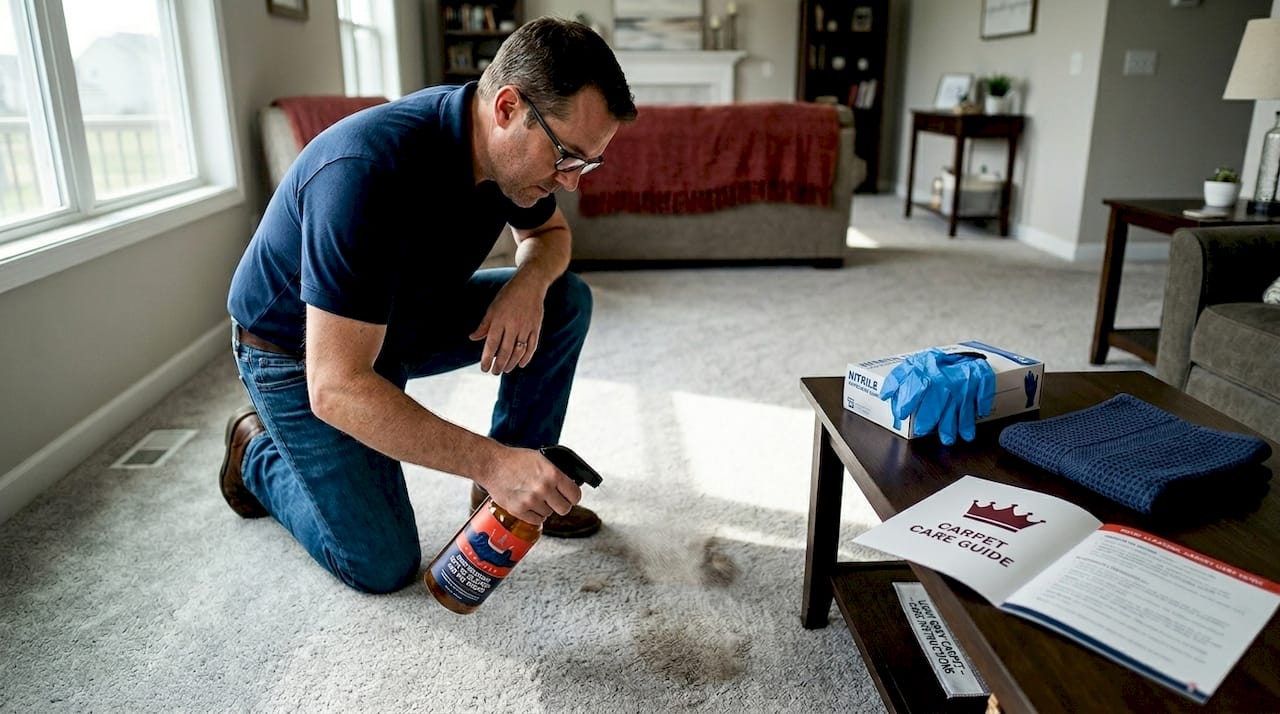
Enzyme cleaners are the gold standard because they work at a molecular level. Enzymes are biological proteins that break down the specific molecules in pet waste, including uric acid crystals, into smaller compounds that evaporate or rinse away cleanly. Without this breakdown, the odor source stays in place regardless of how much product you spray on top.
One key variable that most homeowners get wrong is dwell time. According to lab testing from CNET, top enzyme cleaners can remove over 250 stains, and real-world tests show that enzymes need up to 30 minutes of dwell time for heavy loads, even when product labels suggest only 5 minutes. Rushing this step dramatically reduces effectiveness. Covering the treated area with a damp cloth or plastic wrap helps keep the enzymes active during that dwell period.
For more practical carpet cleaning tips on maximizing enzyme cleaner performance, local guidance from professionals who understand Albuquerque’s dry climate is especially useful. The low humidity here means stains dry faster, which makes quick treatment even more important.
| Cleaning method | Odor elimination | Stain removal | Residue risk | Best use case |
|---|---|---|---|---|
| Enzyme cleaner | Excellent | Excellent | Low | Fresh and set stains |
| Steam cleaning | Good | Good | Low | Surface sanitization |
| Vinegar and baking soda | Moderate | Moderate | Medium | Fresh surface stains |
| Masking agents (sprays) | Poor | None | High | Temporary odor cover |
| Basic dish soap and water | Low | Low | High | Light surface spots only |
Pro Tip: Always test your enzyme cleaner on a hidden area of carpet first. Some older or delicate carpet fibers can be sensitive to certain enzyme formulas, especially on wool or antique rugs.
DIY pet stain removal: Common methods and mistakes
Most homeowners reach for what is available: paper towels, white vinegar, baking soda, or a store-bought enzyme spray. These can work reasonably well for fresh, surface-level stains. The problems start when the stain is older, when it has soaked into the pad, or when the wrong technique is used.
Here is a step-by-step approach that gives you the best chance of success at home:
- Blot immediately. Use clean white cloths or paper towels. Press firmly and absorb as much liquid as possible. Never rub, as rubbing spreads the stain and pushes it deeper into fibers.
- Rinse with cold water. Pour a small amount of cold water over the area and blot again. This dilutes the urine before it sets. Avoid hot water, which can set protein-based stains permanently.
- Apply enzyme cleaner generously. Saturate the area fully so the enzyme solution reaches as deep as the urine did. Light misting is not enough.
- Allow proper dwell time. Cover with a damp cloth and let it sit for at least 15 to 30 minutes. For set stains, 30 to 45 minutes is better.
- Blot and extract. Use a wet/dry vacuum or press clean towels firmly to pull the moisture and broken-down compounds up and out of the carpet.
- Dry thoroughly. Point a fan at the area or open windows. Incomplete drying leads to mildew and can reactivate odors.
For stubborn or older stains, guidance from the AKC recommends lightly re-wetting the dried stain and using a UV blacklight to find all affected areas, since dried urine is often invisible in normal light. Repeating enzyme applications on set stains is also necessary. You can find more detailed tips for removing pet urine that cover specific carpet types.
| Method | Ease of use | Effectiveness | Cost | Reaches carpet pad? |
|---|---|---|---|---|
| DIY enzyme spray | Easy | Moderate to good | Low | Sometimes |
| DIY steam cleaner rental | Moderate | Moderate | Medium | Rarely |
| Professional hot water extraction | Requires pro | Excellent | Higher | Yes |
| Professional enzyme injection | Requires pro | Excellent | Higher | Yes |
Common mistakes to avoid:
- Over-wetting the area. Too much water spreads contamination and promotes mold growth in the padding.
- Using ammonia-based cleaners. Ammonia smells similar to urine to your pet, which encourages repeat marking in the same spot.
- Skipping the extraction step. Leaving enzyme cleaner in the carpet without pulling it out leaves residue that attracts dirt.
- Cleaning only what you can see. For deep stain removal that goes beyond the surface, especially with older stains, visible discoloration is often just a fraction of the affected area.
Pro Tip: Use a UV blacklight flashlight in a darkened room to reveal all hidden stain spots before you begin cleaning. Pet urine fluoresces under UV light, and you will often find far more affected areas than expected.
When to call the professionals for pet stain removal
DIY methods have clear limits. Knowing when to stop and call a professional saves you time, money, and the frustration of recurring odors. Here are the key signs that your situation has moved beyond what home methods can reliably fix:
- Persistent odor even after multiple thorough DIY treatments
- Stains that keep darkening or returning after the carpet dries
- Your pet continues marking the same spot despite cleaning
- The stain is large, spanning more than a foot in diameter
- You notice stiff or crunchy carpet texture, which indicates deep crystallization
- There are multiple stained areas throughout the home
According to guidance on dog urine stains from the AKC, severe saturation situations may require pad replacement or professional extraction because urine penetrates through carpet and into padding and subfloor materials that no surface treatment can reach.
Professional carpet cleaning equipment, specifically truck-mounted hot water extraction systems, operate at pressures and temperatures that consumer-grade tools simply cannot match. These systems flush cleaning agents and contaminants out of the full carpet stack, including the pad, rather than just the surface fibers. Some professionals also use enzyme injection techniques that deliver solution directly into the pad layer for cases of extreme saturation.
Reviewing a carpet stain removal workflow used by certified professionals shows just how many layers the process involves compared to typical DIY approaches. Understanding cleaning the most common carpet stains also helps you evaluate which situations warrant professional help right away versus which ones you can try to handle first.
Professional cleaning also includes post-treatment protection options, such as carpet protector application, that reduce the risk of future stains bonding as deeply into the fibers.
The overlooked truth about pet stain removal: Why most homeowners struggle
We have worked with many Albuquerque homeowners who have spent months treating the same stained carpet area with various products, only to still smell odor when their HVAC kicks on or when the weather warms up. The honest truth is that most people underestimate the complexity of this problem, and the cleaning product industry has not helped by marketing sprays as complete solutions.
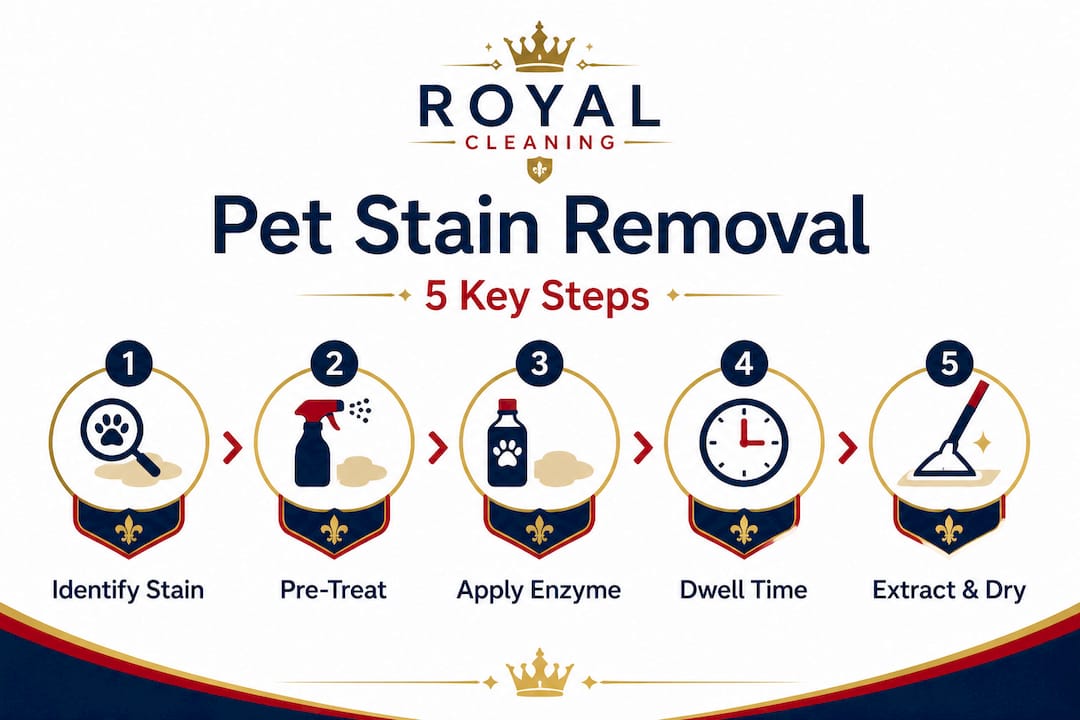
The real issue is that pet stain removal is a process with multiple stages, not a single product application. Every step matters: the speed of the initial response, the type of cleaner used, the dwell time, the extraction method, and the drying approach. If any one of those steps is skipped or done poorly, the result will be incomplete, and the odor will return.
There is also a hidden cost to repeated DIY attempts that fail. Each time you add moisture to an improperly treated area, you risk pushing residue deeper into the padding. Over time, you can create a larger contamination zone than the original stain covered. What started as a localized spot can become a widespread pad problem that eventually requires full pad replacement.
Our experience tells us that homeowners who address stains correctly the first time, or call for professional help at the right moment, consistently protect more of their carpet’s lifespan. Investing in correct methods early, whether that means buying a quality enzyme cleaner and following proper dwell times or scheduling professional extraction for a set stain, is nearly always more cost-effective than repeated unsuccessful treatments.
One of the most practical things any pet owner can do is learn about protecting your carpet from pets before a stain occurs. Area rugs in high-traffic pet zones, regular grooming, and keeping enzyme cleaner stocked mean you are always ready to treat a fresh stain correctly and immediately.
Tackle stubborn stains with Albuquerque’s experts
If you have been battling recurring pet odors or stains that keep coming back despite your best efforts, the right professional help makes all the difference. At Royal Cleaning New Mexico, we provide professional carpet cleaning using advanced truck-mounted extraction systems that reach deep into carpet padding where DIY methods cannot. We also offer upholstery cleaning services for sofas, chairs, and other fabric surfaces that pets share with your family.
Our team serves homeowners across Albuquerque and the surrounding areas with transparent pricing, eco-friendly disinfectant options, and a satisfaction guarantee. Whether you are dealing with a single stubborn stain or multiple affected areas throughout your home, we assess each situation thoroughly and recommend the right solution. Explore our expert carpet cleaning tips to stay prepared between professional visits. Contact us today to schedule a cleaning and get your home back to truly fresh.
Frequently asked questions
What’s the difference between regular cleaning and pet stain removal?
Pet stain removal targets biological stains and odors using enzyme-based solutions that break down uric acid and organic compounds at the source. Standard cleaning products often leave these compounds behind, which means odors return, and according to real-world testing, enzyme cleaners with proper dwell time consistently outperform general-purpose cleaners on pet stains.
How can I tell if a pet stain reached the carpet pad?
Persistent odor after multiple surface cleanings, visible discoloration that returns after drying, or your pet repeatedly marking the same spot are strong indicators of pad penetration. The AKC notes that a UV blacklight can help locate the full extent of invisible dried urine before you decide whether to treat or call a professional.
What’s the most effective cleaner for pet stains?
Enzyme cleaners are the most effective option because they break down odor and stain molecules at the molecular level rather than masking them. Lab testing confirms that top enzyme products can remove over 250 stains and fully eliminate pet urine odor when used with adequate dwell time.
When should I replace carpet after pet stains?
Replacement becomes necessary when stains have saturated the padding and caused persistent odors even after professional extraction has been attempted. According to AKC guidance, severe saturation that reaches the subfloor may require both pad replacement and professional extraction before any surface treatment will be effective.