

 (505) 280-5216
Stair Carpet Cleaning: DIY or Pro? $45–$65 for Standard Stairs
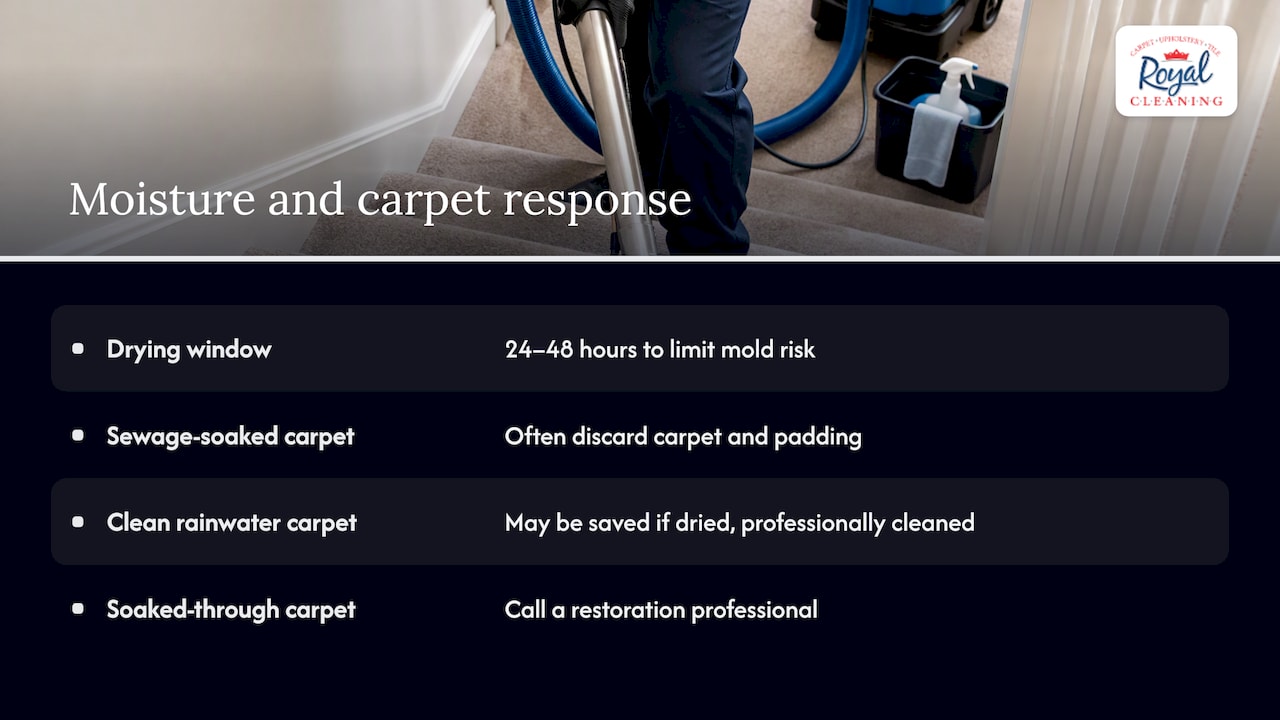
Professional hot water extraction is a common deep-clean method for stair carpet cleaning, while DIY extraction can suit light maintenance. Industry pricing puts stairs at about $2 to $5 per step, or $45 to $65 for a standard staircase, and add-ons may affect the total. Whatever method you choose, the carpet and padding must dry within 24 to 48 hours to limit mold risk.
TL;DR:
- Professional quotes may add charges for pet urine treatment, odor control, furniture moving, extra flights, difficult access, and minimum job fees.
- For DIY cleaning, check the carpet maker’s guidance, test the solution in a hidden spot, and finish with several dry extraction passes.
- If flooding involves contaminated water or soaks through the carpet, contact a restoration professional rather than treating it as routine cleaning.
- Call a professional for recurring odors, urine reaching the padding, visible mold, or warranty rules that require specific cleaning methods.
- The Carpet and Rug Institute recommends professional deep cleaning every 12 to 18 months; vacuum stair traffic lanes more often and use an entrance mat.
Table of Contents
- What does a professional stair carpet cleaning appointment include?
- How can you clean carpeted stairs yourself?
- How much does stair carpet cleaning cost?
- How long should stairs take to dry, and when does moisture become a mold problem?
- How should you prepare before cleaning, and what should you do after?
- When is it better to call a professional?
- Why is professional stair cleaning worth considering?
- How can we help with your stair carpet cleaning?
- FAQ
- Sources
What does a professional stair carpet cleaning appointment include?
A good appointment follows a repeatable sequence, and knowing it helps you judge any quote you receive. The Carpet and Rug Institute lists inspection, pre-treatment, extraction, and protectant application as the typical professional steps. Here is how that plays out on a staircase in our own work:
- Walk-through and inspection. We note the carpet type, document stains and worn spots, and check for any warranty notes before we start.
- Pre-vacuum and pre-treatment. Dry soil comes out first. Then we treat traffic lanes and stains with cleaning solutions when possible, so the cleaning solution works on dirt rather than loose grit.
- Hot water extraction. We use professional extraction equipment to rinse the fibers and pull the water and soil back out. Dry passes follow so less moisture stays behind in the pile and padding.
- Finishing. We groom the pile to remove wand marks, spot-treat anything that remains, and apply a stain or soil protectant if you want one.
- Add-ons. Pet urine treatment, odor neutralization, and furniture moving are the common extras, and each one changes the final price.
Stairs are harder than flat floor. Each step has a tread, a riser, and a nose, and the nose takes the most abuse. Uneven wear makes stair carpet look dingy even when the rest of the house is clean. Technicians work the edges by hand with a smaller tool, which is why a staircase is quoted differently from a bedroom.
Pro Tip: Ask how the technician plans to speed up drying on your stairs. A clear answer about dry passes, airflow, and dehumidification tells you the crew takes moisture seriously.
How can you clean carpeted stairs yourself?
DIY works well for maintenance cleaning, light soil, and fresh spills. You need a vacuum with strong suction, a consumer spotter or rental extractor, white towels, a spotting solution, and a fan or dehumidifier. Fiber type matters here. Different carpet fibers may respond differently to cleaning products, so check the label or the manufacturer’s guidance before you pick a product. The University of Illinois Extension names four main cleaning methods: dry powder, dry foam, shampoo, and hot water extraction.
- Vacuum thoroughly. Go over every tread and riser, and use a crevice tool along the edges and under each step nose. Loose grit turns to mud once you add water.
- Pretest and pre-treat. Try your cleaner on a hidden spot, such as the carpet on the bottom riser or a closet corner. Then apply it to traffic lanes and stains, following the label.
- Extract with wet passes, then dry passes. Work from the top step down so you never walk on clean carpet. Make a few wet passes, then several dry passes with no trigger pulled. Stop adding water as soon as the recovered water runs fairly clear.
- Speed up drying. Run fans and a dehumidifier, open a window if the air is dry, and keep foot traffic off the stairs until they are dry to the touch. If you have only one staircase between floors, clean it when people can use another route.
Blot spills instead of scrubbing to avoid potentially damaging the fibers or spreading the stain. Avoid bleach unless you know it is safe for your carpet. Avoid over-wetting, since water that sinks into the padding may take longer to dry than water on the surface. Our carpet cleaning tips page covers more about maintenance and spot treatment, and our guide to carpet wicking stains explains why a stain can return after it looks gone.
Pro Tip: Photograph the stairs before and after cleaning. If a stain comes back, you will see right away whether it was wicking up from below or new soil.
How much does stair carpet cleaning cost?
Industry guidance from Angi places stair cleaning at about $2 to $5 per step, or $45 to $65 for a standard staircase. A local example from Angi’s Columbus, OH page shows how much quotes shift by market: $1.50 to $5 per step, or $35 to $50 for a standard staircase.
Typical stair cleaning runs $2 to $5 per step, or $45 to $65 for a standard staircase. Use that as a starting point, then adjust for your own home.
Several things move a quote up or down:
- Carpet condition. Heavy traffic lanes and old soil need more pre-treatment time.
- Pet stains and odor. Urine treatments are usually priced separately from the base cleaning.
- Number of flights. Each extra flight adds steps, landings, and setup time.
- Access. Tight turns, winders, and furniture at the top or bottom slow the work.
- Method. Hot water extraction costs more than a light surface clean.
- Travel and minimums. A small job may fall under a company’s minimum charge.
Companies usually quote by the step, by a flat staircase fee, or by the hour, with add-ons listed on top. Count your steps, including landings, before you call. A vague “about a dozen” can turn into a higher final number once the technician arrives.
How long should stairs take to dry, and when does moisture become a mold problem?
Wet padding can pose a mold risk. The EPA’s remediation guidance is clear about timing for water-damaged porous materials such as carpet and padding:
Dry within 24 to 48 hours to minimize the risk of mold growth, using wet vacuums, dehumidifiers, and fans.
That timeline is why professionals pair extraction with airflow. A wet vacuum collects water but will not dry the carpet by itself. The EPA’s mold course explains that fans speed drying while dehumidifiers lower humidity, and that carpet and pad may need to be pulled off the floor to dry fully.
Carpet and padding left wet for an extended period may be at risk of mold growth. For routine cleaning that is rarely an issue, because extraction removes most of the water and drying equipment finishes the job.
Safety on the stairs matters too. Keep people and pets away from damp stairs, and seek professional advice if you are unsure how to manage the hazard safely.
The situation changes if the water was contaminated or the carpet was soaked through. Extension guidance from University of Wisconsin notes that sewage-contaminated carpet and padding often should be discarded, while clean rainwater-soaked carpet may be saved if it is dried and professionally cleaned. In those cases, call a restoration professional rather than treating it as routine cleaning.
How should you prepare before cleaning, and what should you do after?
A few minutes of prep makes the cleaning more effective and can keep the quote down.
- Clear the stairs and nearby areas of shoes, baskets, and small decor.
- Count or measure your steps so the quote matches the job.
- Ask the provider whether they want you to vacuum first. Many are glad to have it done, but confirm so you do not duplicate their step.
- Move pets and children away from the area until the work is finished.
After cleaning, stay off the stairs until they are dry, groom the pile to erase wand marks, and consider a protectant if your cleaner offers one. Then set a rhythm. Vacuum high-traffic lanes more often than the sides of the steps, and plan a professional deep clean every 12 to 18 months, which matches CRI’s recommendation. A walk-off mat at the stair entrance cuts down on the soil that reaches the treads.
If your stair railings and spindles need attention at the same time, this interior door cleaning guide from One Day Doors & Closets has useful tips for wood surfaces near the stairs.
When is it better to call a professional?
Some jobs go beyond a rental extractor. Call a pro if you notice any of these:
- Persistent odor that returns after cleaning
- Urine saturation that has reached the padding
- Recent flooding, especially with contaminated water
- Visible mold on the carpet, tack strip, or padding
- A manufacturer warranty that requires specific cleaning methods
In these cases, DIY cleaning may leave moisture trapped below the surface, creating conditions that can contribute to mold growth. Using unsuitable chemicals may affect your warranty, so check the manufacturer’s terms. The EPA’s mold cleanup advice notes that moldy carpet and padding may have to be discarded, and recommends checking references before you hire.
Before you book, ask:
- Do you follow CRI-recommended procedures?
- What cleaning method and drying controls do you use?
- Do you offer pet urine or odor treatments, and how are they priced?
Why is professional stair cleaning worth considering?
Most homeowners want to save money, and that is a fair goal. For a light refresh, a rental machine and an afternoon can do it. But stairs punish a DIY attempt. The steps can be awkward to clean, and trapped moisture can be a concern. A professional multi-step process, with pre-treatment, extraction, and drying, may help care for the carpet and get the stairs usable sooner. Clear pricing and good equipment are the two things I would weigh most when choosing a provider. If you want a turnkey result, count your steps and ask for a quote.
— Bernadette
How can we help with your stair carpet cleaning?
We are an owner-operated carpet cleaning company serving Albuquerque and Rio Rancho, and stairs are part of our regular carpet work. Our carpet cleaning service uses a multi-step process, and we offer pet urine treatments and carpet stain resistance alongside it. Because the owner is involved in the work, you know who is accountable for the result. We believe in transparent pricing with no hidden charges, and we stand behind our work with a satisfaction guarantee.

When you book, here is what to expect:
- An inspection of your stairs and a clear quote based on your step count
- Professional extraction with drying practices
- A conversation about add-ons before the work begins, not after
Count your steps, then request a quote on our carpet cleaning page and tell us about any pet stains or odors. We will take it from there.
FAQ
Does baking soda really clean carpet?
Baking soda can absorb some odors and lift light surface dirt when you vacuum it up after a short wait. It does not remove embedded soil or stains the way extraction does. For stairs with heavy traffic wear, it is a light refresh rather than a deep clean.
How much does it cost to have a 9×12 rug cleaned?
Rug pricing depends on fiber, construction, and whether the work is on-site or at a cleaning plant, so there is no single number. We can quote a rug once we know its material and condition. Our area rug cleaning page explains our on-site and in-plant options.
How much does it cost to clean a stair carpet?
Angi reports about $2 to $5 per step, or $45 to $65 for a standard staircase. Pet treatments, heavy soil, and extra flights can raise the total. Counting your steps before you call gives you the most accurate quote.
What is the best way to clean carpeted stairs?
Professional hot water extraction after a thorough vacuum and pre-treatment is one option for deep cleaning. For light maintenance at home, vacuum, pre-treat, extract with wet and dry passes, and dry with fans. Keep traffic off the stairs until they are fully dry.
Sources
- Mold Remediation in Schools and Commercial Buildings Guide: Chapter 4 | US EPA
- Cleaning and Maintenance – The Carpet and Rug Institute
- How Much Does Carpet Cleaning Cost? 2026 Data | Angi



