

 (505) 280-5216
Stop Carpet Wicking Stains in 48 Hours With Dry Passes for Homeowners
Carpet wicking is a reappearing stain caused by moisture pulling old contamination up from the backing or pad as the carpet dries. The moment you spot one, stop reaching for more cleaner. Blot the area, lay a folded clean white towel over the spot, weight it down, and leave it overnight. If the stain keeps coming back after that, it’s time to call in a professional.
TL;DR:
- Wicking occurs within 24 to 48 hours and often matches the original stain’s shape, indicating moisture pulling contamination from the backing or pad.
- Over-wetting during cleaning, insufficient rinsing, and slow drying with high humidity are common causes that increase the risk of wicking reappearances.
- Home remedies like blotting and weighted towels can help intercept rising moisture, but persistent wicking may require professional extraction and pad replacement.
- Preventative measures include minimal detergent use, prompt spill response, good airflow, and asking cleaners about their drying and rinsing procedures.
- Surface cleaning cannot fully resolve deep pet urine or flood damage cases, which often need subfloor treatment or pad replacement for a lasting fix.
Table of Contents
- What Carpet Wicking Stains Actually Are
- Why Wicking Happens in the First Place
- Fixing a Wicking Stain Step by Step
- Preventing Wicking Before It Starts
- What Professional Wicking Remediation Actually Involves
- Why Wicking Callbacks Don’t Mean the Cleaning Failed
- Book a Carpet Cleaning That Accounts for Wicking
- Sources
- FAQ
What Carpet Wicking Stains Actually Are
Wicking happens through capillary action, the same force that pulls water up a paper towel. When carpet fibers, backing, and pad hold moisture and old soil, that moisture travels upward through the fibers as everything dries, dragging contamination back to the surface. It’s not a failed cleaning. It’s physics finishing a job the cleaning started.
Timing is your best diagnostic tool. According to a carpet stain guide from ClearlyLearned, a spot that reappears within 24 to 48 hours of drying is almost always wicking. Compare that to residue, which builds up gradually over weeks as detergent left behind attracts new dirt, according to BoiseFloorCare’s breakdown of returning stains. Browning shows up differently too, usually a yellowish tint after prolonged wet exposure rather than a sharp outline.
Here’s a quick way to tell them apart:
- Wicking: returns fast (1-2 days), matches the original stain’s shape, feels damp underneath.
- Detergent residue: builds slowly, feels slightly sticky or stiff, attracts new dirt faster than surrounding carpet.
- Browning: yellow-tinted, spreads with a soft edge, usually tied to older water damage. Our carpet browning guide walks through that distinction in more detail.
Why Wicking Happens in the First Place
Most wicking traces back to how a carpet was cleaned or how it dried afterward. Over-wetting is the biggest offender: pushing too much water into the carpet without pulling enough back out drives soil deeper into the backing and pad instead of removing it. Excellent Supply’s guide to reappearing stains points out that DIY rental machines are frequent culprits here, since they often apply more water than they recover.
A few other contributors show up regularly:
- Detergent residue left behind from insufficient rinsing, which attracts new soil through a different mechanism than wicking.
- Slow drying combined with high indoor humidity, which extends the window contamination has to migrate upward.
- Poor airflow during and after cleaning, letting moisture linger in the pad far longer than it should.
- Pad or subfloor contamination from pet urine or past flooding, which usually needs remediation beyond surface cleaning.
The IICRC’s carpet care tip sheet notes that re-cleaning a wicking spot with more water almost always makes it worse, not better. That instinct to soak the stain again is exactly backward.
Fixing a Wicking Stain Step by Step
The fix depends on what caused the wicking and how deep the contamination sits. Start small before escalating.
- Stop applying any cleaner. Adding more product feeds the reservoir under the carpet and gives wicking more material to pull up.
- Blot, don’t scrub. Scrubbing pushes moisture and soil sideways and deeper into the pad.
- Document it. Take a photo before treatment and another at the 48-hour mark. This tells you whether you’re dealing with true wicking or something else.
- Rewet lightly with clean, warm water. Use only enough to loosen the surfacing contamination, never a full soak.
- Apply the weighted towel method. Lay a folded, clean white towel over the damp spot and weight it with a heavy, flat object overnight. The towel intercepts rising moisture before it reaches the fiber tips, a trick ClearlyLearned recommends as the standard home remedy. Repeat until the towel comes up clean.
- Run dry passes. If you have access to real extraction equipment, make several passes with the solution trigger off to pull residual moisture out rather than pushing more in.
- Bring in air movement. Position fans or air movers at a 15 to 45 degree angle to sweep air across the surface instead of blasting straight down, and add a dehumidifier if your home runs humid.
Pro Tip: Skip the trigger entirely on your last two or three extraction passes. Dry strokes pull moisture out of the pad faster than any amount of additional cleaning solution ever will.
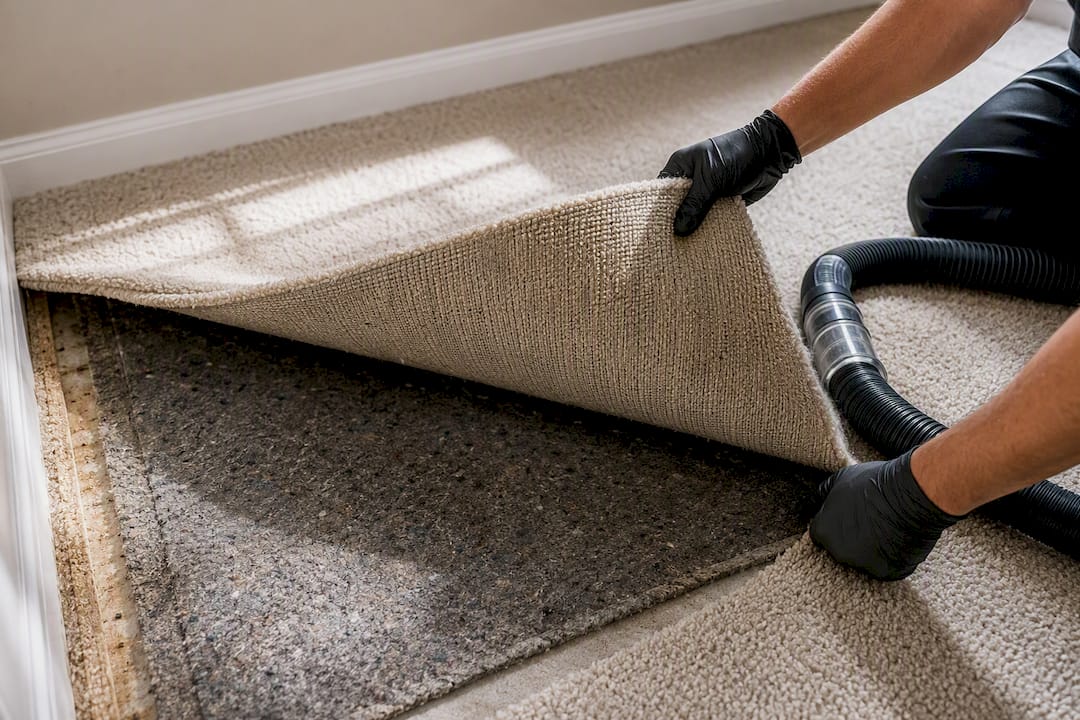
When home efforts don’t hold, it’s a scope problem, not an effort problem. Professionals bring truckmount or high-powered portable extraction that recovers far more moisture than consumer machines, along with deep flushing to rinse out old detergent and soil trapped in the backing. For pet urine or flood contamination that has soaked into the pad, pad replacement is often the only real fix, since surface treatments can’t reach contamination that’s already sitting under the carpet.
Preventing Wicking Before It Starts
Prevention comes down to controlling moisture at every stage, not just during the initial clean.
For everyday spills, keep it simple: use minimal detergent, blot instead of scrub, reach for white towels so you can see what’s transferring, and act on spills within minutes rather than hours. The longer a spill sits, the deeper it soaks into the pad. Zerorez’s explanation of carpet wicking makes the same point about cleaning agents: less is genuinely more here, since heavy product use just adds another layer of residue that can attract soil later.
When you hire a professional, ask specific questions before they start:
- Do they finish with a clean-water rinse pass to flush out cleaning solution rather than leaving it behind?
- Do they run multiple dry passes with the trigger off at the end?
- Do they use air movers or fans to accelerate drying afterward?
- Do they offer a documented callback policy if a stain resurfaces?
A few protective steps go a long way between cleanings. Fabric protectors and stain resistance treatments reduce how quickly a spill penetrates fibers, buying you time to blot before it reaches the backing. Regular vacuuming keeps loose soil from building up into a reservoir, and keeping an eye on indoor humidity, especially in basements or during New Mexico’s monsoon season, helps carpet dry fully between cleanings instead of staying damp for days.
What Professional Wicking Remediation Actually Involves
Calling a professional isn’t an admission that something went wrong. It’s the right move when contamination sits deeper than surface tools can reach.
A properly equipped technician typically works through several stages:
- Truckmount or high-capacity portable extraction that recovers significantly more water than consumer-grade machines.
- Repeated dry passes with the cleaning solution shut off, pulling residual moisture straight out of the carpet and pad.
- Weighted bonnets or absorbent pads placed over problem spots to intercept rising contamination, the same principle as the home towel method, just scaled up.
- Air movers and dehumidifiers positioned to cut drying time from a day or more down to a few hours.
When contamination has reached the pad or subfloor, which happens often with pet urine, sub-surface extraction tools or full pad replacement may be the only durable fix. A multi-step carpet cleaning process that includes deep extraction, eco-friendly solution options, and transparent pricing gives you a clearer picture of what you’re paying for before the work starts, rather than finding out after a callback.
Why Wicking Callbacks Don’t Mean the Cleaning Failed
A stain resurfacing after cleaning feels like a broken promise, but it’s usually a drying problem, not a skill problem. Every technician who’s worked carpet long enough has seen a spotless-looking job turn ugly two days later.
The fix isn’t panic, it’s tracking. Photograph the spot right after cleaning and again at the 48-hour mark before assuming the worst. If it does resurface, ask your cleaner about their extraction power and whether they offer a documented re-clean policy. A company confident in its drying process will say yes without hesitation.
— Bernadette
Book a Carpet Cleaning That Accounts for Wicking
Moisture control is incorporated into every carpet cleaning job to help ensure the results last and avoid stains resurfacing within 48 hours. The cleaning process combines deep extraction with dry-pass techniques and rapid-drying equipment to effectively remove contamination from the carpet pad.

That matters most with pet urine, where surface cleaning alone rarely solves the problem. We offer dedicated pet urine treatments alongside standard carpet cleaning, and we’re upfront if a job needs pad-level attention rather than another round of shampoo. Before your appointment, clear the affected area of furniture where possible and make a note of any prior spill history, especially pet accidents, so our technicians can plan the right extraction approach from the start.
Ready to stop guessing whether a stain will come back? Request an inspection through our carpet cleaning page and ask about our callback guarantee when you book.
Sources
This article draws on trade guidance from the IICRC and practical prevention write-ups from CarpetCleaningDigital, ClearlyLearned, and Excellent Supply.
- Why Do Stains Come Back After Cleaning? Wicking Explained — ClearlyLearned
- IICRC tip sheet — Carpet topics
- Solving the mystery of reappearing stains: a guide to preventing carpet wicking — Excellent Supply (encapblog)
FAQ
How do I fix a carpet wicking stain?
Stop adding cleaner, blot the area, and lay a weighted white towel over the spot overnight to intercept rising moisture, repeating until it comes up clean. If the stain returns after that or you have access to extraction equipment, follow up with dry passes and strong airflow, and call a professional if it persists.
Why is my carpet randomly soaking wet in one spot?
This usually means moisture trapped in the pad or backing is working its way back to the surface, often from an earlier cleaning that didn’t fully dry or extract properly. It can also point to a leak or heavy humidity buildup underneath, so check for a water source if the dampness isn’t tied to a recent cleaning.
What is wicking in carpet cleaning?
Wicking is the upward movement of moisture and old contamination from the carpet backing or pad to the surface as the carpet dries, and it typically shows up within 24 to 48 hours of a clean. Professionals prevent it with dry passes, weighted bonnets, and air movers rather than additional cleaning solution.
What stains cannot be removed from carpet?
Deep pet urine contamination and old flood damage that have soaked into the pad or subfloor often can’t be fully resolved through surface cleaning alone. In those cases, pad replacement or subfloor treatment is usually the only lasting solution rather than repeated extraction attempts.



