

 (505) 280-5216
Wait 72 Hours: Homeowners’ Rule for Carpet Ripples After Cleaning
Most carpets that ripple after cleaning are showing a temporary reaction to moisture, or revealing slack that was already hiding beneath the fibers. Give it a few days to dry fully before you worry. Keep foot traffic off the area, run fans or a dehumidifier to speed things along, and watch for two red flags that mean it’s not just moisture: visible backing separation or buckles that refuse to flatten once the carpet is completely dry.
TL;DR:
- Ripples after cleaning are usually temporary and caused by moisture absorption and expansion, often resolving within 72 hours with proper drying.
- Poor installation using a knee kicker instead of a power stretcher often leaves slack that becomes visible only after cleaning, especially on older or poorly installed carpets.
- High humidity, inadequate ventilation, and delayed drying significantly extend the time ripples remain visible, making patience and proper airflow essential.
- Attempting DIY stretching or pulling on the carpet can cause damage; professional restretching with a power stretcher is necessary for lasting results.
- Persistent buckles after full drying may indicate pre-existing slack, padding degradation, or delamination, requiring professional inspection and repair.
Table of Contents
- What Causes Carpet Ripples After Cleaning
- Why Professional Cleaning Makes Ripples More Visible
- How Long Do Ripples Take to Disappear?
- What to Try Before Calling a Technician
- When to Call a Professional for Carpet Restretching
- How a Trusted Carpet Cleaner Handles Post-Cleaning Ripples
- A Note on Managing the Wait
- Book an Inspection If Ripples Don’t Settle
- Sources
- FAQ
What Causes Carpet Ripples After Cleaning
Ripples rarely come from one single problem. They’re usually the result of several small factors lining up at once, and understanding each one helps you figure out whether you’re dealing with a quick fix or something that needs a technician.
Moisture is the most common trigger. Carpet fibers and the backing material both absorb water during cleaning, and they expand slightly as they do. That expansion pushes the carpet against baseboards and furniture with nowhere to go but up, which is what creates the wave pattern you’re seeing.
Installation quality matters just as much. The IICRC notes that rippling often traces back to installation that relied on a knee kicker instead of a power stretcher. A knee kicker only tensions the carpet locally, near the knee, while a proper power stretcher pulls the entire width toward manufacturer tension specs. If that step was skipped or rushed years ago, the slack has been sitting there the whole time. Cleaning just makes it visible.
A few other contributors show up regularly:
- Padding problems: cushion that’s too thin, too soft, or the wrong density lets the carpet shift more than it should.
- Delamination: the adhesive bonding the backing layers together breaks down, and this one doesn’t self-correct with drying.
- Age and wear: older carpet loses elasticity, so it holds onto ripples longer than newer material.
- Furniture movement: shifting heavy pieces during cleaning can tug carpet out of place at the edges.
Why Professional Cleaning Makes Ripples More Visible
Cleaning doesn’t usually cause ripples so much as it exposes them. The Carpet and Rug Institute’s technical bulletin explains that wrinkles and bubbles typically trace back to installation technique, and that wet cleaning can make existing slack visible even though the carpet usually settles back into place as it dries.
The amount of water involved plays a big role here. Hot-water extraction pushes more moisture into the backing than low-moisture methods do, which means more swelling and a longer window before things look normal again. Low-moisture encapsulation cleaning can dry in under an hour in some cases, while a full extraction job may leave carpet damp for half a day or longer.
Two things happen simultaneously during that drying window:
- The carpet’s face fibers and the backing dry at slightly different rates, creating temporary bumps.
- Latex in the backing can shift slightly as it absorbs and releases moisture, a normal part of the process.
Lasting damage only enters the picture when a carpet gets genuinely over-wetted, either from an aggressive cleaning pass or a subfloor moisture issue the technician didn’t catch beforehand.
How Long Do Ripples Take to Disappear?
Give the carpet real time before you draw conclusions. Most ripples fade within the standard drying window, but a few conditions can stretch that timeline out.
- Hours 0 to 24: expect visible dampness and the most pronounced ripples. This is normal, not a warning sign.
- Hours 24 to 72: most temporary ripples flatten out on their own as the backing finishes drying, a range echoed in general industry guidance on post-cleaning drying.
- Beyond 72 hours: if buckles or waves are still visible and the carpet feels fully dry to the touch, you’re likely looking at pre-existing slack or a padding issue rather than leftover moisture.
High humidity, poor room ventilation, and closed-door rooms all slow this process down considerably. Keep pets and foot traffic off the area during the wait, and check back every several hours rather than constantly walking the surface to test it.
What to Try Before Calling a Technician
There’s a lot you can safely do yourself while the carpet finishes drying, and a few things you shouldn’t attempt no matter how tempting they look.
Start with airflow. High-volume fans pointed across the surface, combined with a dehumidifier running in the room, cut drying time noticeably compared to just opening a window and waiting. A controlled-drying setup using fans and dehumidifiers also reduces the odds that uneven drying leaves behind stubborn bumps.
Once the carpet is completely dry, and only then, you can try weighted smoothing on small, low spots: place flat, heavy objects (books stacked on a board, for example) over the area for about 24 hours. This encourages the fibers to settle back down without stressing the backing.
- Do not attempt power-stretching yourself. It requires specialized equipment and technique.
- Avoid pulling on the carpet by hand or renting a low-cost stretcher tool, both can damage tack strips.
- For area rugs, gentle rolling and professional steam handling are safer than aggressive DIY stretching, especially since on-site cleaning of shrinkage-prone rugs can sometimes cause edge curl that needs specialist attention.
- Check for household moisture sources contributing to the problem, including AC leaks that add unwanted humidity to the room.
Pro Tip: Snap a photo of any ripple the day it appears, with a tape measure in frame. If it’s still there at the 72-hour mark, that photo makes it much faster for a technician to confirm whether it’s shrinking, stable, or getting worse.
When to Call a Professional for Carpet Restretching
If ripples are still visible after a full drying period and the weighted smoothing trick didn’t help, it’s time to bring in a technician rather than keep experimenting.
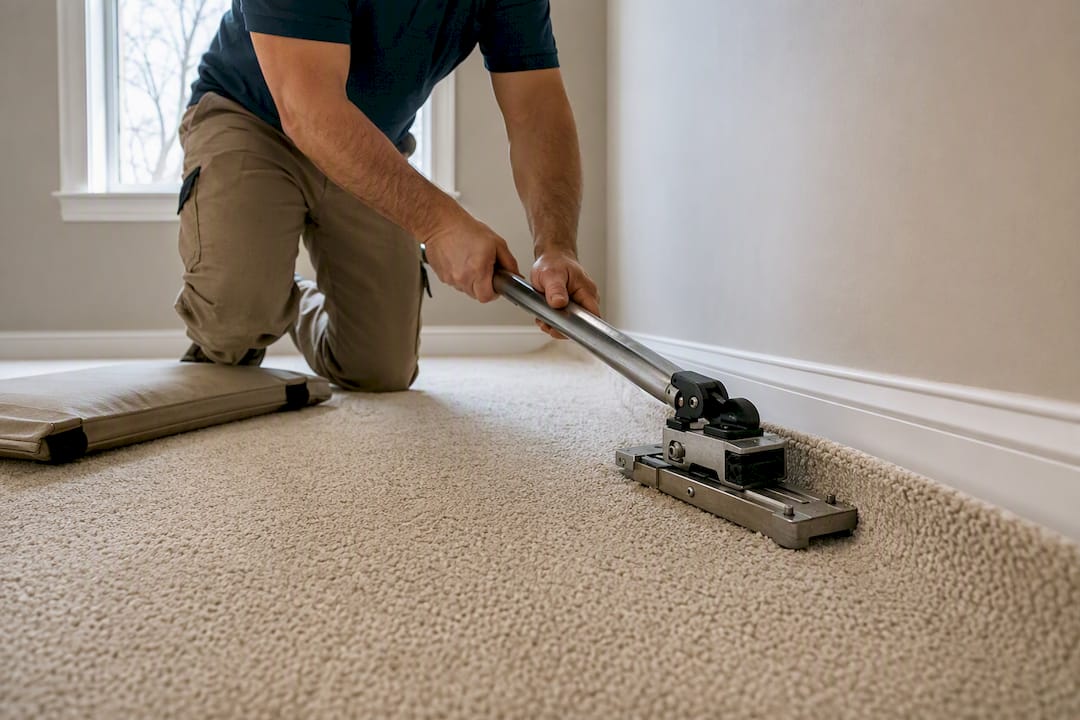
Professional restretching uses a power stretcher, a tool that applies leverage across the full width of the carpet to restore it to the tension specified by the manufacturer. That broad, even pull is exactly what separates a lasting fix from the localized, temporary tug a knee kicker provides, which is part of why manufacturer tension specs call for power stretching in the first place.
A technician’s visit typically includes a few concrete steps:
- Assessment: checking whether the issue is slack, padding failure, or delamination.
- Delamination decision: repairing the backing where possible, or discussing replacement if the carpet’s age and condition make repair impractical.
- Documentation: a written estimate before any work begins, so you know what you’re paying for.
- Credential check: ask specifically for an IICRC Certified Carpet Repairman, which confirms formal training in this exact repair.
Most restretching visits take a couple of hours for a standard room, longer for whole-house jobs or when delamination complicates the picture. Clear the area of furniture and small items beforehand so the technician has full access to the edges and tack strips.
How a Trusted Carpet Cleaner Handles Post-Cleaning Ripples
A well-run cleaning process is built to minimize surprises like this in the first place. That starts with equipment and technique that limit over-wetting rather than flood the backing and hope for the best, paired with a controlled drying setup instead of leaving a homeowner to figure out airflow alone.
Good practice also means documenting the carpet’s condition before cleaning even starts. Noting pre-existing slack, wear patterns, or loose seams ahead of time protects the homeowner and sets honest expectations about what cleaning will and won’t reveal.
- Multi-step carpet cleaning built around moisture control, not just stain removal.
- Pre-cleaning inspection notes so any existing slack is on record, not a surprise.
- Transparent scheduling for follow-up restretching if it’s needed after drying.
Always ask your cleaner for drying-time notes and a clear next-step recommendation before they leave.
A Note on Managing the Wait
Ripples after cleaning are frustrating to look at, especially right after paying for a service that’s supposed to leave your floors looking better, not lumpier. But the physics here are boring in the best way: water swells fibers, fibers settle, and most of the time the carpet just needs its full drying window.
What actually separates a false alarm from a real problem is patience paired with documentation. Photograph anything that concerns you, note the date, and if it’s still rippled once the carpet is bone dry, that photo becomes useful evidence for whoever inspects it next.
— Bernadette
Book an Inspection If Ripples Don’t Settle
A trusted local carpet cleaning service offers a straightforward alternative to guessing at DIY fixes or waiting indefinitely on a problem that might need real repair. If your carpet is still rippled after the drying window, our technicians can inspect it, identify whether you’re looking at leftover moisture, padding failure, or delamination, and walk you through the repair options with transparent pricing before any work starts.

Services often include controlled drying during the cleaning visit to reduce the chance of ripples, as well as power re-stretching and delamination assessment when a carpet requires it. If it’s been more than three days and the buckles haven’t flattened, schedule a professional carpet cleaning and inspection and get a clear answer instead of another round of fans and waiting.
Sources
The guidance in this article draws on the same standards carpet technicians use to diagnose and repair rippling.
- IICRC Tip Sheet: Carpet Topics
- Carpet Wrinkles (Buckles or Bubbles) Technical Bulletin — Carpet and Rug Institute
- Why Do Carpets Buckle After Cleaning Them? — BISSELL Commercial (blog)
FAQ
Do carpet ripples go away on their own?
Most do, typically within a few days as the backing and fibers finish drying. Ripples that remain after full drying usually point to pre-existing slack, padding issues, or delamination that need a technician.
How do you get ripples out of carpet without a stretcher?
Weighted smoothing, placing flat, heavy objects over low spots for about 24 hours after the carpet is completely dry, can help minor waves settle. It won’t fix genuine slack or delamination, which require a power stretcher.
How many times can you restretch carpet?
There’s no fixed limit, but each restretch relies on the carpet having enough remaining material and elasticity at the edges. A technician can tell you during inspection whether the carpet has enough slack left to restretch again or whether replacement makes more sense.
How do you fix carpet that’s already installed but turned lumpy?
Lumps in already-installed carpet usually mean padding has shifted or degraded, or the original installation lacked proper tension. A technician typically pulls back the affected section, checks the padding, and restretches with a power stretcher to restore even tension.
Why does my carpet ripple more after professional cleaning than regular vacuuming?
Cleaning introduces far more moisture into the fibers and backing than vacuuming ever does, and that moisture is what makes existing slack temporarily visible. It’s a sign the water is doing its job, not that the cleaning caused damage.



