

 (505) 280-5216
Homeowners: Fade Most Black Carpet Edge Lines and Prevent Return
Those dark lines along your baseboards and doorways are almost always filtration soiling, not a stain or carpet defect. Fine airborne particles get trapped where air squeezes through tiny gaps, and the carpet fibers act like a filter. Edge cleaning and professional hot-water extraction can remove or fade most filtration soiling, particularly on synthetic carpet, though older oily deposits sometimes leave a faint shadow behind.
TL;DR:
- Filtration soiling lines are caused by airborne particles from household sources like cooking oils, soot, and dust entering through gaps under baseboards and doors.
- Running a simple wipe test can distinguish filtration soil from wear or dye changes, guiding whether cleaning is effective or professional help is needed.
- Vacuuming with a crevice tool, gentle brushing, pre-treatment, blotting, and hot-water extraction are the recommended steps to clean these lines effectively.
- Professional cleaning is advisable if DIY methods fail, especially for wool or antique rugs, or when airflow issues contribute to recurring soiling.
- Preventing future lines depends on sealing gaps, regularly changing HVAC filters, and maintaining proper airflow to minimize particle deposition.
Table of Contents
- What Causes Black Lines on Carpet?
- Is It Filtration Soiling or Something Else?
- How Do You Clean Filtration Lines on Carpet?
- When Should You Call a Professional Carpet Cleaner?
- How Can You Prevent Black Lines From Coming Back?
- What Realistic Results Should You Expect?
- Get Professional Help for Stubborn Filtration Lines
- Sources
- FAQ
What Causes Black Lines on Carpet?
Filtration soiling happens when carpet fibers trap fine, oily airborne particles as air passes through them, according to the Carpet and Rug Institute. It is not a manufacturing flaw or a sign your carpet is wearing out. The carpet is simply doing what carpet does: catching particles that pass through it.
Those particles come from ordinary household life. Common sources include:
- Candle smoke and fireplace ash
- Cooking oils that drift through the air, especially near open kitchens
- Outdoor soot and vehicle exhaust pulled in through leaky windows or doors
- Dust and debris carried through HVAC ducts
Edges, baseboards, and areas under doors take the worst of it because that is where pressure differences push air through small gaps. As air squeezes past a door bottom or a gap under a baseboard, it drops its cargo of fine particles right where the carpet meets the wall. The lines can show up within weeks or build slowly over years, and they tend to stand out more on light-colored carpet than on dark, according to the CRI’s filtration soiling bulletin.
Is It Filtration Soiling or Something Else?
Before you treat anything, run a few quick checks. Filtration soiling responds to certain tests differently than wear, staining, or fiber damage does, and skipping this step is how homeowners end up scrubbing a problem that cleaning cannot fix.
- Wipe test: Press a clean white cloth against the dark line. If soil transfers onto the cloth, you are dealing with surface soiling that can likely be lifted. If nothing transfers, you may be looking at dye change, burn marks, or ground-in wear.
- Pattern check: Lines that trace baseboards, door thresholds, or stair edges point strongly to filtration soiling rather than random staining.
- Angle and feel check: Tilt the carpet under a lamp and run your hand across the pile. Crushed or flattened fibers suggest traffic wear or furniture indentation, not filtration soiling.
- Fiber inspection: Wool and antique rugs can discolor permanently if treated with the wrong chemistry, so a positive wipe test on these materials is your cue to call a professional rather than experiment.
A simple wipe test can save you from an aggressive treatment that risks damaging carpet backing or shifting its color, a risk Carpet Clean Expert flags in its own field notes on distinguishing filtration lines from traffic wear.
How Do You Clean Filtration Lines on Carpet?
Once you have confirmed the soil is filtration related, work through the process in order rather than jumping straight to the strongest chemical you own.
- Vacuum the edge with a crevice tool. This pulls out loose particles before you introduce any moisture, and it doubles as a second wipe test since fresh soil often loosens right away.
- Loosen with a soft-bristle brush. Work gently along the line to lift particles bound into the fiber base without fraying it.
- Pre-treat with a mild soil-dispersing detergent. Test it on a hidden section of carpet first. Dish soap diluted with water works for light cases, but a dedicated carpet-safe cleaner performs more consistently.
- Blot, don’t rub, working outward. Rubbing spreads the loosened particles further into clean fiber; blotting from the outer edge of the stain inward contains it.
- Move to hot-water extraction if the line persists. A rental or home extraction unit, used carefully and without overwetting, is the method most likely to succeed on filtration soiling, according to The Spruce.
If extraction does not fully clear it, you have hit the ceiling of what most consumer equipment and products can do. There is no widely available consumer-grade filtration-soil remover that matches what professionals use, per The Spruce, and that gap explains why some lines fade with DIY effort while others barely budge. Professional treatments add targeted edge tools, solvent boosters formulated for oily residue, controlled dwell time, and stronger extraction power, which is why pros often succeed where a rental machine stalls out.
Pro Tip: Test any cleaning solution on a hidden patch of carpet first, and always blot from the cleanest section toward the darkest part of the line. Working the other direction just drags the soil further into fibers that were clean a minute ago.
Wool carpet and rugs with sensitive backing need extra caution. Excess moisture can cause wool to shrink or the backing adhesive to weaken, so keep water use minimal and dry the area quickly with fans or open windows.
When Should You Call a Professional Carpet Cleaner?
Call a professional when DIY cleaning and rental extraction leave the lines visibly unchanged, when the carpet is wool or an antique rug, or when you suspect the backing or adhesive underneath has been compromised by past overwetting. These situations call for equipment and chemistry that go beyond what a rented machine offers.
Professional visits typically involve hot-water extraction paired with edge-focused attachments built specifically for baseboard and doorway lines, plus solvent boosters designed for oily, embedded soil. Some technicians follow up with a protective treatment to slow the next round of buildup.
Before you book anyone, ask a few direct questions:
- Are your technicians IICRC certified, and what training backs that certification?
- Have you handled filtration soiling specifically, not just general traffic stains?
- What does your edge-cleaning process actually involve, step by step?
- How long will the carpet take to dry, and do you offer eco-friendly chemistry options?
- Is there a satisfaction guarantee if the lines don’t fully clear?
If the soiling pattern lines up with a vent or return, ask whether pairing the carpet visit with a duct inspection makes sense. Treating the carpet without addressing the airflow source just buys you a few months before the lines return.
How Can You Prevent Black Lines From Coming Back?
Cleaning existing lines matters less than stopping new particles from settling into the carpet in the first place. A few changes to your HVAC habits and daily routine go a long way.
- Replace HVAC filters on the schedule your system recommends, and upgrade to a higher-efficiency filter if your unit supports one.
- Have ducts inspected, and cleaned if needed, when dust patterns line up with specific vents or returns.
- Seal gaps under baseboards and door bottoms with caulk or threshold strips to cut down on the air bypass that pulls particles into the carpet edge.
- Leave interior doors open while the HVAC system runs so air pressure equalizes across rooms instead of forcing itself through gaps.
- Use entry mats, adopt a no-shoes policy indoors, and vary your vacuuming path so you are not just pushing the same particles back and forth.
- Vacuum with a HEPA-capable machine to actually capture fine particles instead of recirculating them into the room.
Sealing gaps and fixing airflow issues stops the ongoing deposition even if the existing lines still need a professional pass, according to the CRI’s technical bulletin. If soiling keeps returning despite all of that, replacing just the affected carpet edges, or choosing a darker carpet for high-airflow rooms next time, is a reasonable compromise. A related read on air duct cleaning benefits walks through how reducing duct-borne dust cuts down on the particle load reaching your floors in the first place.
What Realistic Results Should You Expect?
Most filtration lines fade noticeably with the right process, but full removal depends on how long the soil has been embedded and how oily it is. A line that appeared last month behaves very differently than one that has been baking into the fiber for five years.
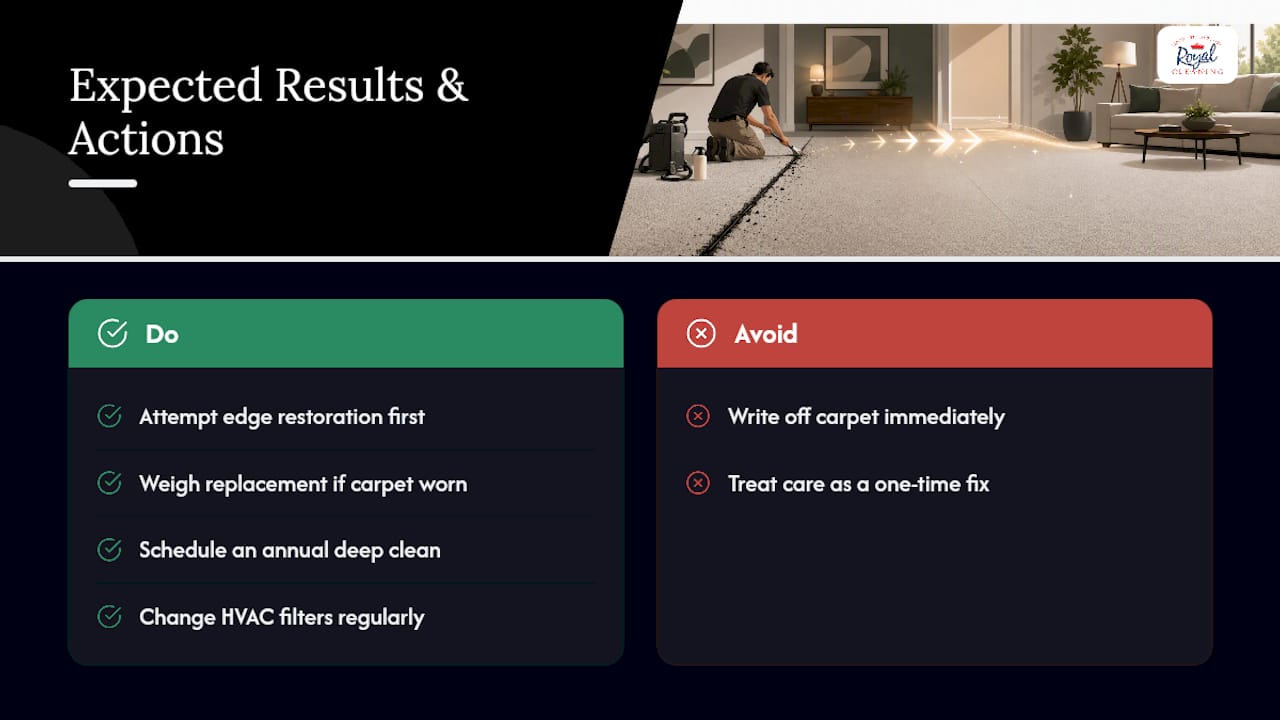
Edge treatments cost far less than replacing a whole room of carpet, so it is worth attempting restoration before you write off a carpet as ruined. If the carpet is already old or worn elsewhere, though, weigh whether spending on edge treatment makes sense versus planning a replacement on your own timeline instead.
The homeowners who avoid this problem entirely are the ones who treat carpet care as a recurring task, not a one-time fix. An annual deep clean paired with regular HVAC filter changes keeps particle buildup from ever reaching the point where you’re staring at a permanent shadow along your baseboards.
— Bernadette
Get Professional Help for Stubborn Filtration Lines
Professional carpet cleaning services offer a faster path to results than working through rental machines and trial-and-error products on your own. Professional cleaning services often use hot-water extraction paired with targeted edge treatments designed for embedded, oily soiling, and may offer eco-friendly disinfectant options for households seeking to avoid harsh chemistry.

A typical professional cleaning visit often starts with an estimate and an inspection of the affected edges, so clients have clear expectations before cleaning begins. Technicians usually explain the process, provide realistic drying timelines, and offer care guidance to help reduce the chance of filtration lines returning. If your soiling pattern traces back to your vents, we also handle air duct cleaning, which addresses the airborne dust feeding the problem at its source. Visit our professional carpet cleaning page for Albuquerque and Rio Rancho to request a quote and get your carpet edges back to their original color.
Sources
- Carpet and Rug Institute technical resources
- Filtration soil: What It Is and How to Get Rid of It — The Spruce
FAQ
What Are the Black Marks on My Carpet?
They are almost always filtration soiling, a buildup of fine airborne particles like dust, soot, and cooking oil trapped where carpet fibers meet a gap in the flooring or wall.
What Causes Black Edges on Carpet?
Air squeezing through gaps under baseboards, doors, or around HVAC returns forces fine particles into the carpet fibers at those exact spots, which is why the discoloration follows straight lines instead of random patches.
How Do You Get Rid of Black Marks on Carpet?
Vacuum the area, pre-treat with a mild soil-dispersing detergent, and blot outward before moving to hot-water extraction if the mark persists; Royal Carpet and Tile Cleaning’s professional extraction service handles cases that resist DIY treatment.
Is Cellulosic Browning the Same as Filtration Soiling?
No. Cellulosic browning is a chemical discoloration in plant-based fibers triggered by moisture and heat, while filtration soiling is trapped airborne particulate. A wipe test helps tell them apart since browning typically will not transfer onto a cloth the way surface soil does.
Can Filtration Soiling Mean My Carpet Has Mold?
Not typically. Filtration soiling is dry particulate matter, not fungal growth, though a musty smell alongside dark lines is worth having a professional inspect since it could point to a separate moisture issue.



