

 (505) 280-5216
Carpet Drying Time: 8 Pro Steps Homeowners Can Use
Most carpets dry within 6 to 12 hours after standard hot water extraction, while low-moisture methods like encapsulation dry in 30 minutes to a few hours. Bonnet cleaning and dry compound systems land in the 45 to 90 minute range. The biggest swing factor isn’t the method itself. It’s air movement and humidity in the room. If carpet still feels noticeably damp after 24 hours, something went wrong and it’s time to call your cleaner back.
TL;DR:
- Hot water extraction typically dries in 6 to 12 hours, while encapsulation and low-moisture methods often finish within 30 minutes to a few hours.
- Proper airflow, including the correct placement of fans and dehumidifiers, can reduce drying time by up to 65 percent, regardless of the cleaning method.
- Wool carpets and dense, thick-piled styles absorb more water and dry slower than synthetic or low-pile carpets, especially in poorly ventilated spaces.
- Monitoring moisture levels with a moisture meter and waiting for a towel or fingertip test to confirm dryness prevent foot traffic damage and microbial growth.
- Asking your cleaner for a written dry-time estimate, confirming equipment use, and taking control of airflow can ensure carpets are fully dry within expected time frames.
Table of Contents
- How Long Does Carpet Cleaning Drying Time Take by Method?
- What Environmental Factors Change Carpet Drying Time?
- How Can You Speed Up Carpet Drying After Cleaning?
- When Can You Walk on Carpet or Put Furniture Back?
- What Are the Warning Signs That Something Went Wrong?
- How Professionals Actually Manage and Verify Drying Time
- Book a Carpet Cleaning With a Faster, Predictable Dry Time
- Sources
- FAQ
How Long Does Carpet Cleaning Drying Time Take by Method?
The cleaning method you choose sets the baseline for how long your carpet stays wet, and the differences between methods are bigger than most homeowners expect.
Hot water extraction (steam cleaning) pushes hot water and cleaning solution deep into the carpet fibers, then pulls most of it back out with a powerful vacuum. Residential jobs typically dry in 6 to 12 hours, and truck-mounted units generally beat portable machines because they generate stronger suction and hotter water for better extraction and recovery. Anything stretching past 24 hours usually points to a process problem, not just bad luck.
Encapsulation and other low-moisture systems use far less water and a polymer that crystallizes soil so it can be vacuumed away once dry. That’s why these jobs finish in 30 to 90 minutes in most cases, sometimes stretching to a few hours on heavier carpets. The tradeoff: encapsulation doesn’t pull embedded soil out of the pad the way extraction does, which is why commercial spaces like hotel lobbies favor it for same-day turnaround while reserving deep extraction for periodic maintenance.
Bonnet cleaning and dry compound cleaning work only at the surface, spinning an absorbent pad or dry powder across the top of the fibers. Expect 45 to 90 minutes to dry, but understand you’re getting a surface refresh, not a deep clean.
A quick note on DIY rental machines: consumer-grade units often leave more water behind than truck-mounted equipment, which can push drying time out to 12 to 24 hours. Wool carpet, Berber loops, and shag piles all trap more water regardless of method and typically need extra time on top of these ranges.
What Environmental Factors Change Carpet Drying Time?
Temperature and humidity control how fast water evaporates off carpet fibers, and the difference between a good setup and a bad one can be dramatic. A room at 72°F with 40% relative humidity dries a carpet far faster than a room at 65°F with 70% humidity, even with identical cleaning methods, because damp air simply can’t absorb much more moisture.
Airflow matters more than heat. According to one operator guide, two air movers positioned correctly can cut drying time by 50% to 65%, while adding a dehumidifier on humid days contributes roughly another 20% improvement. Cranking up the thermostat without moving air just creates warm, stagnant humidity that slows things down.
Carpet construction plays a role too:
- Wool fibers can absorb several times their weight in water, so wool carpet dries noticeably slower than synthetic blends.
- Dense cut-pile carpet and thick padding hold moisture longer than looped or low-pile styles.
- Basements and closed rooms with poor ventilation can add hours, sometimes a full day, compared to an open living room with ceiling fans running.
- Apartments with limited HVAC return airflow trap humidity near the floor, slowing evaporation even when the rest of the unit feels dry.
Room layout matters as much as the weather outside. A closed bedroom with the door shut behaves like its own microclimate.
How Can You Speed Up Carpet Drying After Cleaning?
You have real control over how fast your carpet dries, and the order you tackle these steps matters.
- Ask your cleaner the right questions before the job starts. Request strong extraction settings, confirm they’ll leave air movers running, and ask for a printed dry-time estimate on your work order.
- Blot excess moisture immediately with clean, absorbent towels, pressing rather than rubbing.
- Use a wet/dry vacuum on the carpet if one is available. This pulls out water a regular vacuum can’t touch. Skip your regular upright vacuum until the carpet is fully dry.
- Position fans for crossflow, not just random placement. Aim two fans across the room at opposite angles rather than pointing one straight at a wall.
- Run your HVAC system or window AC on the fan setting to keep air circulating, even if you don’t need the temperature adjusted.
- Set up a dehumidifier near the room’s return air path or in the center of a closed space for the biggest effect.
- Open windows only if outdoor humidity is lower than indoor humidity. Cracking a window on a rainy day adds moisture, it doesn’t remove it.
- Use direct sunlight sparingly. A sunny window can help evaporation, but prolonged direct light can fade dyed fibers.
For homeowners without fans or a dehumidifier on hand, renting both for a day is often cheaper than the cost of a callback visit. If your carpet still feels wet after using this checklist for several hours, that’s a sign to call a professional rather than keep waiting.
Pro Tip: Never crank the heat to “dry it faster.” High heat without airflow just cooks moisture into the pad and backing, which can actually extend drying time and stress the fibers.
When Can You Walk on Carpet or Put Furniture Back?
Light foot traffic in clean socks is usually fine after 3 to 4 hours if air movers were used during a hot water extraction job. Hold off on normal shoe traffic and heavy activity until the carpet passes a simple dryness check.
- Towel test: press a clean white towel into the carpet for 10 seconds. If it comes back damp, wait longer.
- Fingertip test: press your fingers into the pile near the backing. Cool or damp fibers mean it’s not ready.
- Moisture meter: professionals look for readings below roughly 14% moisture before calling a carpet fully dry.
If furniture must go back early, slide plastic wrap, aluminum foil, or furniture coasters under the legs to prevent rust rings and pad indentation while the carpet finishes drying underneath.
What Are the Warning Signs That Something Went Wrong?
A musty smell, visible mold spots, or carpet that’s still cool and damp after 24 hours are all red flags that drying stalled somewhere it shouldn’t have. Patchy areas that dry unevenly, especially in corners or near baseboards, often point to poor airflow reaching that section of the room.
- Musty odor that lingers beyond a day
- Visible mold or discoloration on the backing or baseboards
- Carpet still damp to the touch after 24 hours
- Uneven drying with some spots wet and others dry
The first move is adding more air movers and a dehumidifier to the affected area, or asking your cleaner to re-extract the spot. Standing moisture for multiple days invites microbial growth, so don’t wait it out. If you suspect a larger water intrusion, or the smell persists after a day of aggressive drying, call a restoration specialist. A rented dehumidifier for a night runs far less than repairing water-damaged pad or subfloor down the line.
How Professionals Actually Manage and Verify Drying Time
A quality operator follows a consistent protocol: identify the fiber type, measure the room, extract thoroughly, position air movers, then confirm dryness with a moisture meter before calling the job finished. Skipping any one of these steps is usually why a homeowner ends up with a carpet that takes twice as long as expected.
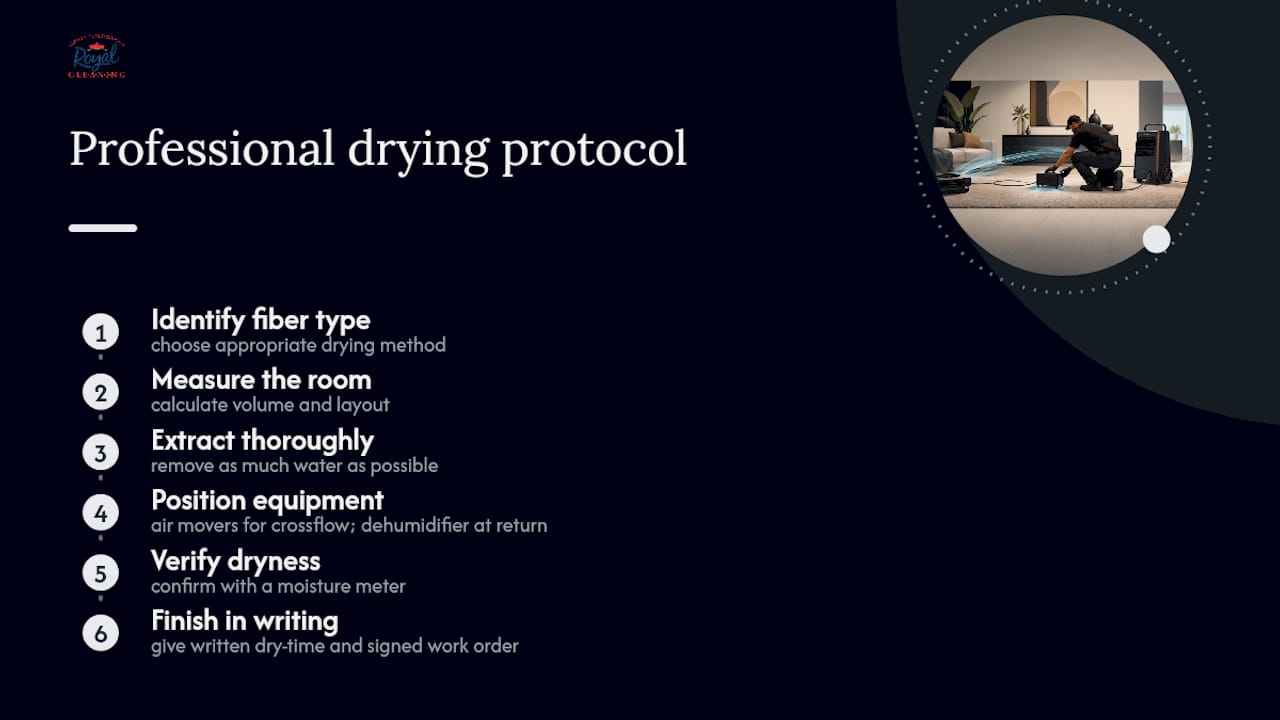
The equipment math backs this up. Placement isn’t an afterthought, either. Pointing fans to create genuine crossflow, and setting a dehumidifier near a room’s return air path, performs far better than dropping equipment wherever it’s convenient.
If you’re hiring a cleaner, ask for a written dry-time estimate and a signed work order that spells out drying instructions for your specific carpet and room setup. A cleaner who won’t commit to a number in writing usually hasn’t measured anything.
— Bernadette
Book a Carpet Cleaning With a Faster, Predictable Dry Time
Some professional carpet cleaners run truck-mounted extraction paired with commercial-grade air movers and dehumidifiers on residential jobs, which can make a practical difference between a carpet that’s walkable by evening and one still damp the next morning.

When booking a carpet cleaning, ask about air movers being left running and moisture checks before the crew leaves. It is helpful when quotes include a dry-time estimate so you know what to expect before the work starts. Carpet that remains damp for a full day or longer may indicate underpowered equipment or rushed extraction. See what professional carpet cleaning in Albuquerque actually includes, and get a straightforward quote for your home.
Sources
FAQ
How long after carpet cleaning can you walk on it?
Light foot traffic in socks is usually safe after 3 to 4 hours when air movers were used, but wait for the towel test to come back dry before allowing normal shoe traffic.
How soon can you put furniture back after carpet cleaning?
Wait until the carpet passes a fingertip or towel test, typically 6 to 12 hours after hot water extraction, and use coasters or foil under furniture legs if you must place items back early.
How many times should I go over my carpet with a carpet cleaner?
Two or three passes per section is usually enough. One or two wet passes to lift soil, followed by a final dry pass with the machine’s suction only to pull out excess moisture and shorten drying time.
What is the fastest way to dry a carpet after cleaning?
Combine a wet/dry vacuum to pull out standing moisture, two fans positioned for crossflow, and a dehumidifier near the room’s return air path. That combination is the highest-leverage setup for cutting drying time at home.



