(505) 280-5216
Clean Your Car’s Headliner Like a Pro: Top Products and Tips
Upholstery Cleaner for Car Headliner: 4 Pro Steps
Why Your Car’s Headliner is a Magnet for Grime
A proper upholstery cleaner for car headliner is low-moisture and pH-balanced. To protect the adhesive, apply it to a cloth, not the headliner itself. Foam-based automotive cleaners are ideal, but a diluted white vinegar solution can work for light stains.
Quick Guide to Headliner Cleaning:
| Step | Action | Why It Matters |
|---|---|---|
| 1 | Vacuum or brush loose dirt | Prevents scratching during cleaning |
| 2 | Spot-test cleaner | Avoids discoloration on visible areas |
| 3 | Apply cleaner to towel, not fabric | Controls moisture to prevent sagging |
| 4 | Dab gently, never scrub | Protects foam backing and adhesive |
| 5 | Blot dry and air out | Ensures complete drying |
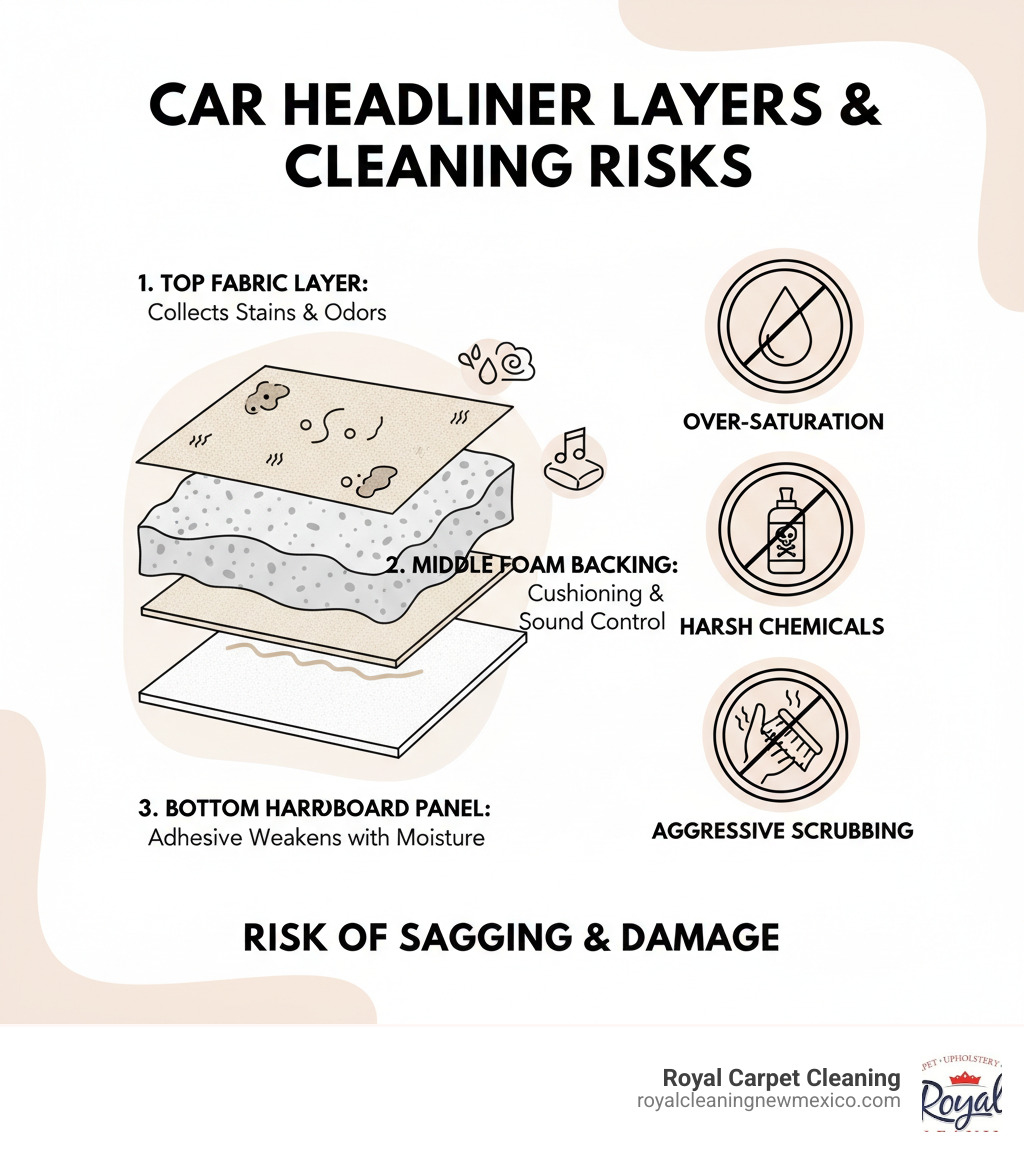
Your car’s headliner, the fabric ceiling, traps everything from dust and smoke to hair oils. It’s made of a thin fabric glued to a foam backing, making it delicate. Over-saturating the fabric or scrubbing too hard can destroy the adhesive, leading to a sagging headliner—an expensive repair. Using the correct low-moisture technique is critical to prevent damage.
The Ultimate Guide to Using an Upholstery Cleaner for Car Headliner
Cleaning your headliner improves your car’s appearance and air quality. Follow these steps to do it safely.
Choosing the Right Upholstery Cleaner for Your Car Headliner
- Low-moisture foam cleaners or pH-balanced fabric sprays are best for standard headliners. They clean without over-wetting, which protects the adhesive. Always choose products made for automotive fabrics.
- For vinyl, use a specialized vinyl cleaner. For suede or Alcantara, use only cleaners specifically made for those materials.
- A DIY solution of diluted white vinegar (1:10 with water) can treat minor spots but must be used sparingly on a cloth. Avoid harsh household cleaners, as they can damage the adhesive.
Gathering Your Essential Tools
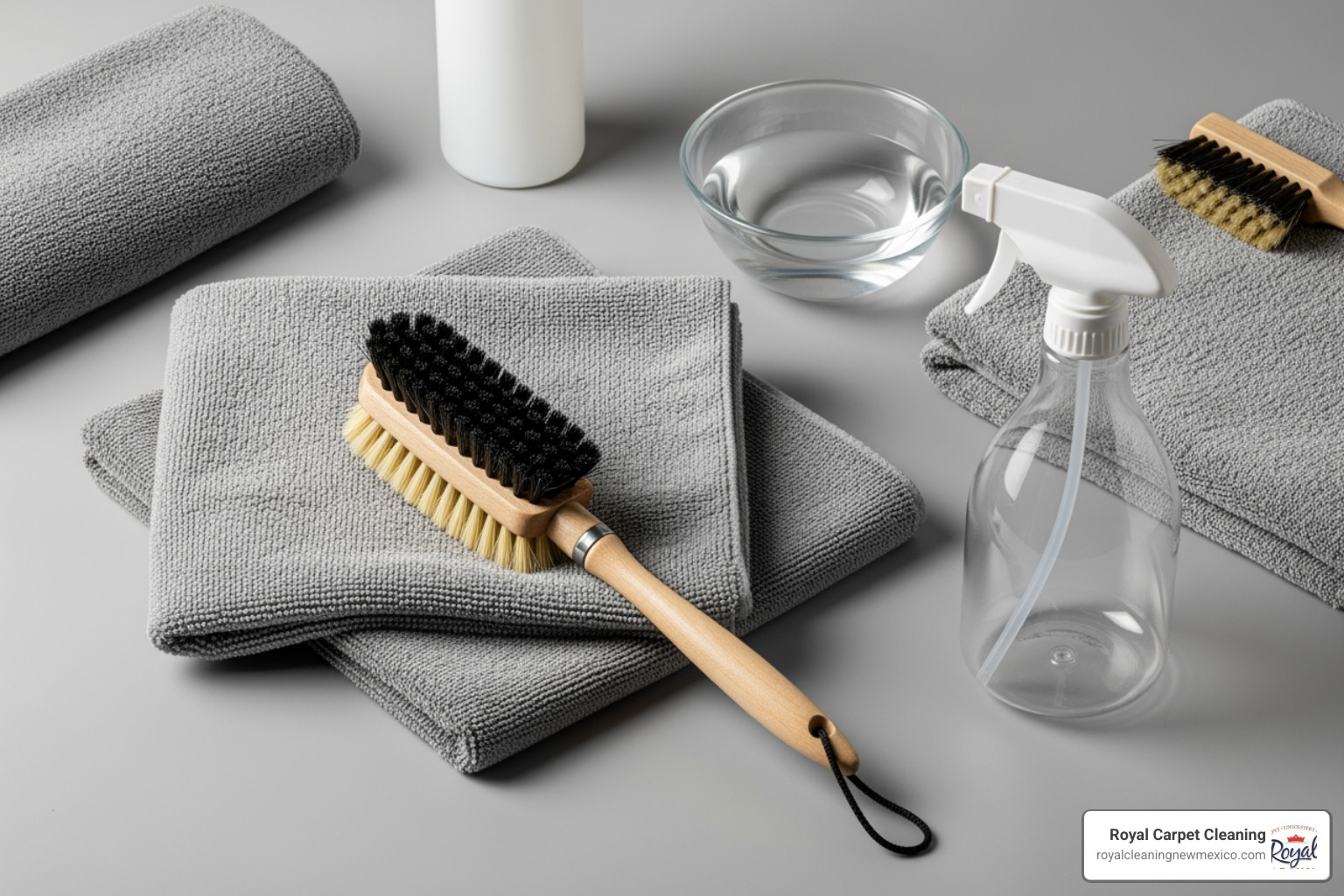
- Microfiber towels: For applying cleaner and blotting moisture.
- Soft-bristle brush: To gently agitate dirt.
- Vacuum with brush attachment: For removing loose debris first.
- Avoid steam cleaners or extractors unless you are an experienced detailer, as they can easily cause over-wetting and damage.
The 4-Step Process for Using an Upholstery Cleaner for Car Headliner
Step 1: Prepare the Area. Vacuum or brush away all loose dirt and dust to avoid creating mud.
Step 2: Spot Test. Apply a small amount of cleaner with a towel to a hidden area. Let it dry to check for discoloration before continuing.
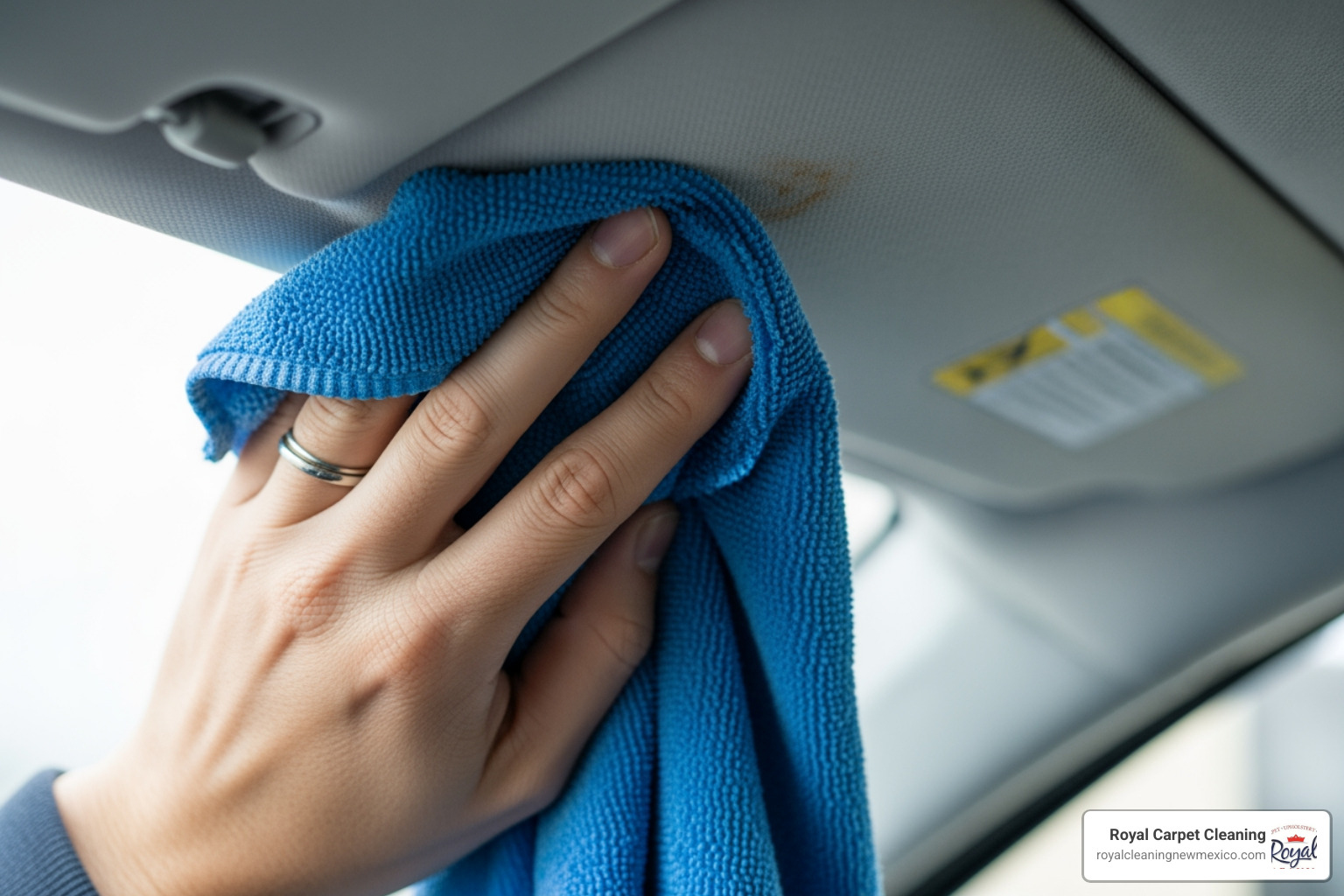
Step 3: Apply and Agitate. Spray cleaner onto a microfiber towel, never directly on the headliner. Dab stains, then gently agitate with a soft brush in small sections.
Step 4: Blot and Air Dry. Use a clean, dry microfiber towel to blot the area, absorbing moisture. Leave windows open to air dry for several hours. Do not use heat.
Critical Mistakes That Cause Sagging and Discoloration
- Over-saturating the surface: The #1 cause of sagging. Always apply cleaner to your cloth.
- Aggressive scrubbing: Damages fabric and foam. Dab or use light circular motions.
- Using harsh chemicals: Bleach or ammonia can discolor fabric and dissolve adhesive.
- Applying cleaner directly: Leads to uncontrolled moisture and sagging.
- Using heat to dry: Weakens the adhesive. Only air dry.
Long-Term Care and Professional Solutions
Keep your headliner clean with these long-term habits.
How to Prevent Future Stains and Odors
- Apply a Fabric Protectant: A quality fabric guard repels liquids and blocks UV rays to prevent fading.
- Vacuum Regularly: A quick vacuum every few months removes dust before it sets in.
- Practice Good Habits: Avoid touching the headliner, be careful with food and drinks, and blot spills immediately.
When to Call a Professional for Car Upholstery Cleaning
Some jobs require a professional to avoid costly mistakes. Call for help if you see:
- Severe sagging, bubbling, or peeling fabric.
- Widespread water damage or musty odors, which could indicate mold.
- Stubborn stains or lingering odors (smoke, ink) that won’t come out.
Adding moisture to an already sagging headliner will only make it worse.
Why Choose Royal Carpet Cleaning? Our professional service offers peace of mind. We use commercial-grade equipment to deep clean without risking over-saturation. Our expert team handles delicate materials and tough stains, backed by a 100% satisfaction guarantee, saving you time and stress.
For residents in Albuquerque, Rio Rancho, and surrounding areas, we are your local experts. Book our Car Upholstery Cleaning Albuquerque service for a pristine interior without the risk.