(505) 280-5216
Step-by-step upholstery cleaning guide for Albuquerque 2026
Maintaining clean upholstery protects your family’s health while extending the life of your furniture investment. Dust, allergens, and stains accumulate quickly in Albuquerque’s dry climate, affecting indoor air quality and fabric integrity. This comprehensive guide provides a proven step-by-step process to clean upholstery safely and effectively, helping you restore freshness to your furniture without risking damage to delicate fabrics.
Table of Contents
- Why Upholstery Cleaning Matters For Albuquerque Homes
- Prerequisites: What You Need Before You Start Cleaning
- Step-By-Step Upholstery Cleaning Process
- Common Mistakes And How To Avoid Them
- Expected Results And Maintenance Tips
- Professional Upholstery Cleaning Services In Albuquerque
- FAQ
Key takeaways
| Point | Details |
|---|---|
| Proper preparation prevents damage | Gathering the right tools and testing cleaning solutions ensures safe, effective upholstery cleaning. |
| Follow a methodical cleaning process | Vacuuming, spot treating, deep cleaning, and thorough drying preserve fabric integrity and remove allergens. |
| Avoid common cleaning mistakes | Over-wetting, harsh chemicals, and insufficient drying cause mold, discoloration, and fabric deterioration. |
| Regular maintenance extends furniture life | Cleaning upholstery every 6 months significantly reduces allergen buildup and maintains fabric quality. |
| Professional support enhances results | Expert cleaning tackles stubborn stains and complements DIY efforts for optimal upholstery health. |
Why upholstery cleaning matters for Albuquerque homes
Albuquerque’s unique environment creates specific challenges for upholstery maintenance that directly impact your family’s health and furniture longevity. The city’s dry climate accelerates dust accumulation while influencing how cleaning solutions and moisture affect your fabrics.
Dust and allergens settle deep into upholstery fibers, creating an environment that compromises indoor air quality significantly. Albuquerque’s low humidity means particles remain suspended longer before settling into furniture, increasing exposure for household members. Pet dander, pollen, and skin cells compound this issue, particularly affecting allergy sufferers who spend substantial time indoors.
- Accumulated dust triggers respiratory irritation and allergic reactions
- Dried particles penetrate deeper into fabric fibers than in humid climates
- Regular cleaning removes up to 85% of allergen buildup from upholstery surfaces
- Improved air quality benefits everyone, especially children and elderly family members
The dry climate also affects fabric care uniquely. Understanding why get upholstery cleaned regularly helps preserve your furniture investment. Moisture evaporates faster in Albuquerque, which seems beneficial but actually concentrates cleaning solutions if not managed properly. This rapid drying can leave residue that attracts more dirt or causes stiff, uncomfortable fabric texture.
Professional cleaning removes stubborn contaminants while protecting fabric integrity, ensuring your upholstery remains comfortable and safe for daily use.
Proper upholstery maintenance prevents premature fabric degradation. Dirt particles act like sandpaper, wearing down fibers with each use. Regular cleaning removes these abrasive elements before they cause permanent damage, potentially extending furniture lifespan by several years. This proactive approach saves money while maintaining the aesthetic appeal of your living spaces.
Prerequisites: what you need before you start cleaning
Successful upholstery cleaning depends entirely on proper preparation and having the right tools at hand. Gathering everything beforehand prevents interruptions and ensures you can complete the process efficiently without risking fabric damage.
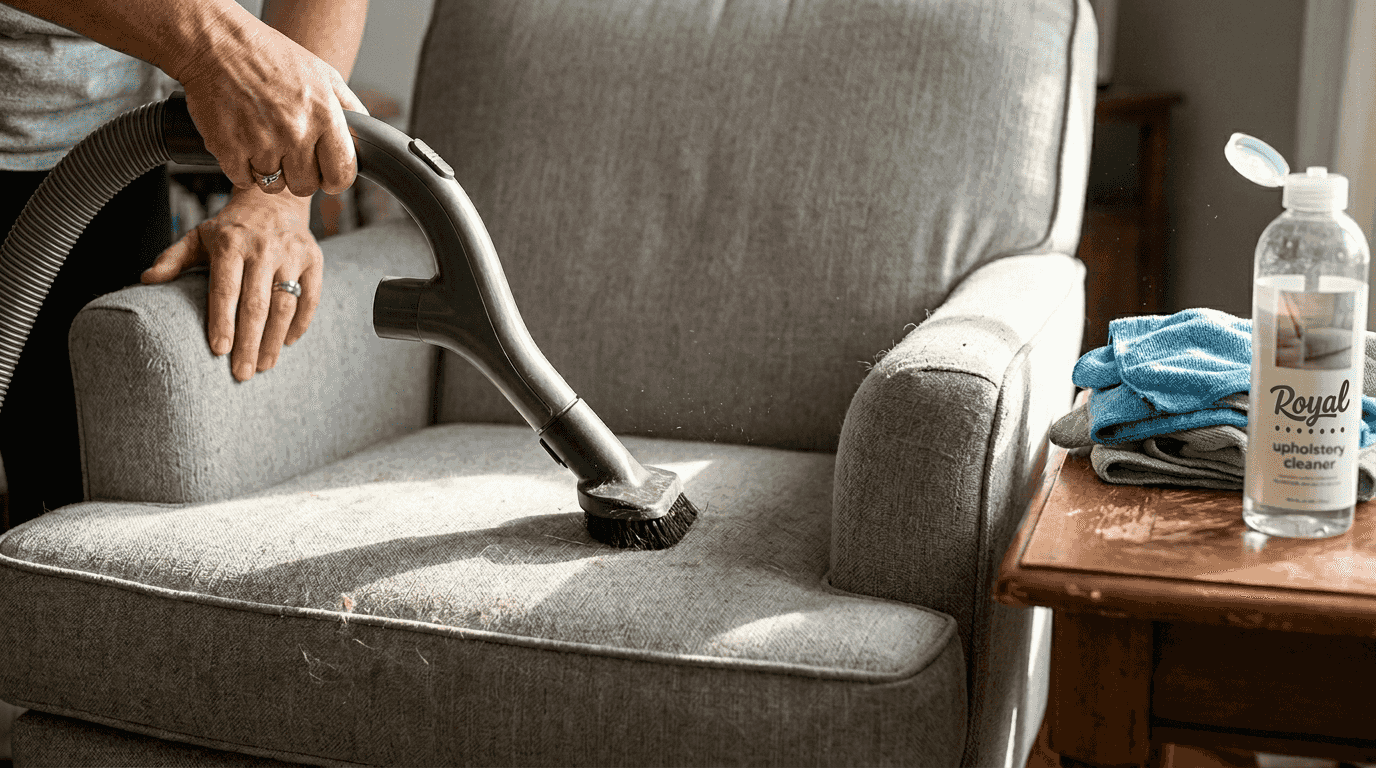
Start with a quality vacuum cleaner equipped with upholstery attachments and brush tools. Models with HEPA filtration capture fine particles that would otherwise recirculate into your home’s air. Consider investing in negative ion technology for enhanced dust removal, as these systems charge particles for better capture rates.
| Tool Category | Recommended Items | Purpose |
|---|---|---|
| Cleaning Equipment | Vacuum with upholstery attachment, soft brushes | Removes surface dirt and debris |
| Cleaning Solutions | Eco-friendly upholstery shampoo, spot treatment agents | Breaks down stains and lifts embedded dirt |
| Application Tools | Spray bottles, microfiber cloths, soft sponges | Applies solutions without saturating fabric |
| Drying Equipment | Fans, dehumidifier, clean towels | Accelerates moisture removal safely |
| Safety Items | Protective gloves, ventilation fans | Protects skin and ensures air circulation |
Pro Tip: Always test any cleaning solution on a hidden fabric area for 48 hours before applying to visible surfaces. This simple step prevents irreversible discoloration or fabric damage that could ruin expensive furniture.
Choose cleaning products carefully based on your fabric type and stain concerns. Eco-friendly, non-toxic shampoos protect your family’s health while effectively cleaning most upholstery materials. Explore effective home remedies for upholstery cleaning as safe alternatives to commercial products.
- Check manufacturer tags for cleaning codes: W for water-based, S for solvent-based, WS for either, X for professional only
- Prepare white cloths or towels to avoid color transfer during cleaning
- Ensure adequate ventilation by opening windows or using fans
- Have clean water readily available for rinsing processes
- Keep pets and children away from the cleaning area for safety
Optional but highly effective tools include upholstery shampoo machines and handheld steam cleaners. These devices provide deeper cleaning power than manual methods, particularly for heavily soiled furniture. However, they require careful operation to avoid over-wetting, which creates more problems than it solves.
Step-by-step upholstery cleaning process
Following a systematic approach ensures thorough cleaning while protecting your upholstery from common damage risks. Each step builds on the previous one, creating a comprehensive cleaning sequence that addresses surface dirt, embedded stains, and deep fiber contamination.
-
Remove loose debris and vacuum thoroughly using the brush attachment to lift dirt from fabric fibers. Work in overlapping passes, paying extra attention to crevices, seams, and areas where cushions meet the frame. This initial step removes up to 80% of surface contaminants, making subsequent cleaning more effective.
-
Identify and pre-treat visible stains immediately with appropriate spot cleaners. Blot gently from the outside edge toward the center to prevent spreading. Water-based stains respond well to mild detergent solutions, while oil-based marks require solvent cleaners. Apply cleaning solution sparingly and let it sit for 3 to 5 minutes to break down the stain.
-
Mix your upholstery shampoo according to package directions, typically using less product than you might expect. Over-application creates residue problems that attract future dirt. Apply the solution using a soft brush or sponge in circular motions, working small sections at a time. Avoid saturating the fabric; dampness should penetrate only the surface layer.
-
For deep cleaning, consider using a steam cleaner or upholstery machine following manufacturer guidelines. These tools provide superior cleaning power but demand careful moisture control. Review comprehensive upholstery cleaning remedies to understand which method suits your fabric type best.
-
Rinse cleaned areas thoroughly with clean water applied via spray bottle, then blot immediately with absorbent towels. This critical step removes cleaning solution residue that would otherwise attract dirt and degrade fabric over time. Multiple rinse-and-blot cycles ensure complete product removal.
-
Dry upholstery completely using fans positioned to maximize airflow across cleaned surfaces. Albuquerque’s dry climate helps, but proper air circulation remains essential. Allow 6 to 12 hours drying time before using furniture. Insufficient drying invites mold growth and persistent odors.
Pro Tip: Speed drying by pointing fans directly at cleaned upholstery while running a dehumidifier in the room. This combination removes moisture efficiently without risking fabric damage from heat sources.
| Cleaning Method | Effectiveness | Best Application | Caution |
|---|---|---|---|
| Dry vacuuming | Good for surface dirt | Regular maintenance | Won’t remove stains |
| Spot cleaning | Excellent for fresh stains | Immediate treatment | Test products first |
| Shampoo cleaning | Very good for overall freshness | Deep cleaning sessions | Requires thorough rinsing |
| Steam cleaning | Excellent for sanitizing | Professional-level results | Risk of over-wetting |
| Professional service | Superior for tough stains | Annual deep cleaning | Higher cost investment |
Consult the detailed upholstery cleaning services guide for additional techniques that address specific fabric challenges. Each upholstery type responds differently to cleaning methods, so matching your approach to your furniture’s needs produces optimal results.
Common mistakes and how to avoid them
Even well-intentioned homeowners make errors that compromise cleaning effectiveness or damage upholstery permanently. Understanding these pitfalls helps you avoid costly mistakes while achieving professional-quality results at home.
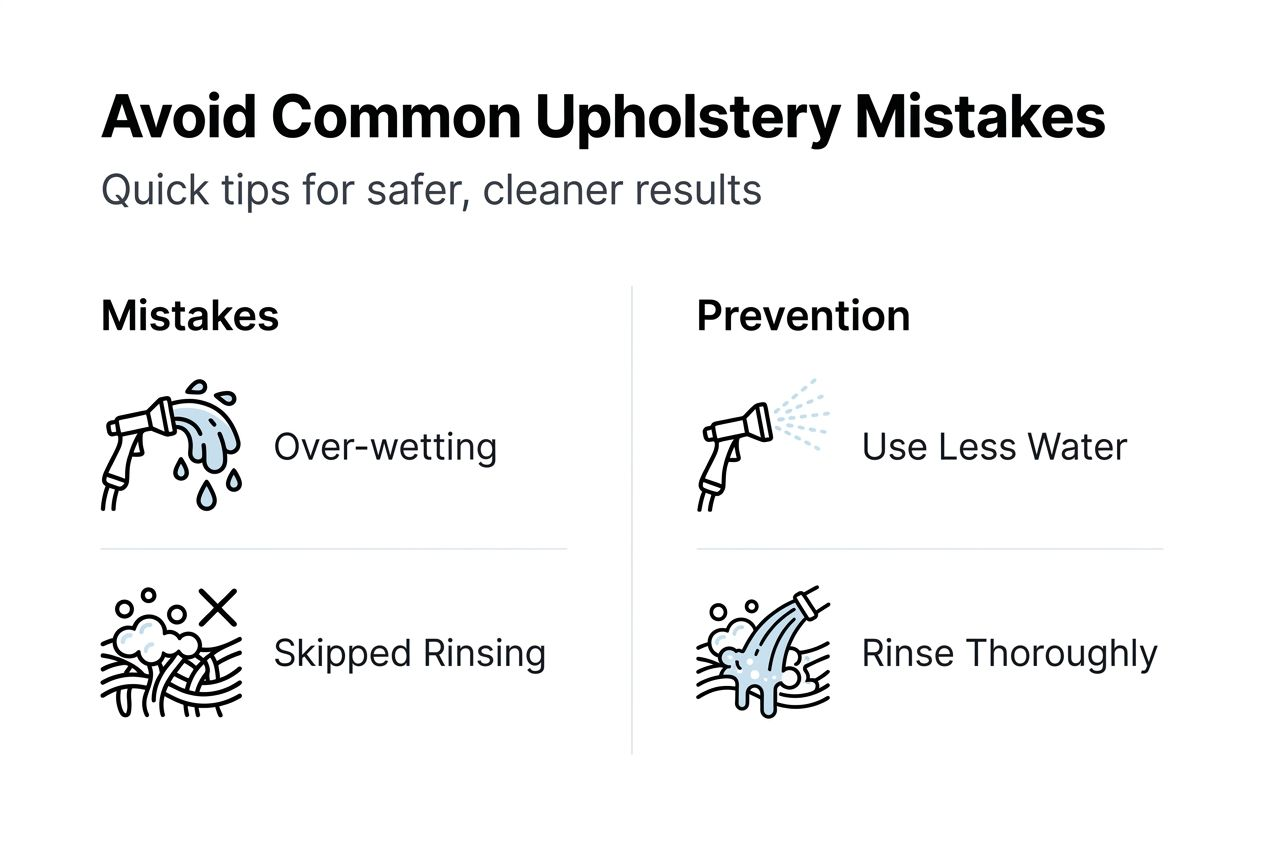
Over-wetting ranks as the most frequent and damaging mistake. Excessive moisture penetrates beyond fabric into padding and frame materials, creating ideal conditions for mold growth within 24 to 48 hours. Wet padding takes days to dry completely, during which musty odors develop and structural damage occurs. Apply cleaning solutions sparingly, focusing on surface dampness rather than saturation.
- Use spray bottles set to fine mist for controlled application
- Blot immediately after applying any liquid to limit penetration
- Test moisture levels by pressing a dry cloth against cleaned areas
- Never pour cleaning solution directly onto upholstery surfaces
Harsh chemical cleaners promise quick results but often weaken fabric fibers and cause irreversible color changes. Bleach, ammonia, and strong solvents strip protective coatings from synthetic fabrics while degrading natural fibers like cotton and wool. Discover safer spotless furniture cleaning secrets that protect your investment.
Pro Tip: When in doubt about a cleaning product’s safety, dilute it to half strength for your first application. You can always increase concentration if needed, but you cannot reverse fabric damage.
| Common Mistake | Consequence | Prevention Strategy |
|---|---|---|
| Over-wetting fabric | Mold growth, odors, structural damage | Apply minimal moisture, use fans immediately |
| Using harsh chemicals | Discoloration, fiber weakening, texture changes | Choose eco-friendly products, always spot test |
| Skipping thorough rinsing | Residue attracts dirt, fabric becomes stiff | Multiple rinse cycles, complete blotting |
| Insufficient drying time | Mildew, persistent odors, bacterial growth | Allow 6-12 hours with fans, test moisture levels |
| Scrubbing stains aggressively | Fabric damage, stain spreading, fiber distortion | Blot gently, work from edges inward |
Skipping the rinsing phase leaves detergent residue embedded in fibers. This invisible layer acts like a dirt magnet, causing upholstery to appear dingy within days of cleaning. Residue also creates a stiff, uncomfortable texture that defeats the purpose of cleaning. Always rinse thoroughly, even when using “no-rinse” products.
Insufficient drying time causes problems that appear days or weeks after cleaning. Damp fabric harbors bacteria and mildew spores that produce unpleasant odors and potential health concerns. Albuquerque’s dry climate helps, but internal padding and dense fabrics still require adequate airflow to dry completely. Learn advanced upholstery cleaning pro tips to optimize your drying process.
Expected results and maintenance tips
Proper upholstery cleaning delivers immediate visual improvements and long-term benefits that justify your time investment. Understanding realistic expectations helps you evaluate your results accurately while maintaining furniture condition between deep cleaning sessions.
Most homeowners notice a dramatic difference immediately after cleaning. Visible stains lighten or disappear entirely, colors appear brighter, and fabrics feel softer to the touch. Professional-grade techniques remove at least 70% of embedded allergens, creating noticeable improvements in indoor air quality within hours.
- Colors regain original vibrancy as dirt buildup disappears
- Fabric texture softens without stiffness from old detergent residue
- Odors from pets, cooking, and daily use fade completely
- Allergy symptoms decrease as airborne particles reduce
Maintaining these results requires consistent care between deep cleaning sessions. Regular maintenance every 6 months keeps upholstery fresh while preventing the kind of heavy soiling that demands intensive cleaning efforts. Establish a routine that includes weekly vacuuming and immediate stain treatment.
Improved indoor air quality benefits everyone in your household, particularly children, elderly family members, and anyone with respiratory sensitivities. Clean upholstery releases fewer particles into the air during normal use, creating a healthier living environment. This advantage alone justifies regular cleaning schedules.
Avoid future damage by following correct procedures consistently. Rushing through steps or skipping preparation invites problems that undermine your cleaning investment. Review comprehensive upholstery cleaning maintenance tips to develop habits that preserve your furniture’s appearance and structural integrity for years.
- Vacuum upholstered furniture weekly using proper attachments
- Treat new stains within minutes to prevent permanent setting
- Rotate cushions monthly to distribute wear evenly
- Keep furniture away from direct sunlight to prevent fading
- Schedule professional deep cleaning annually for optimal results
Realistic expectations include understanding that some stains, particularly old or set-in marks, may lighten but not disappear completely. Professional cleaning services handle these challenging situations more effectively than DIY methods. Knowing when to seek expert help protects your furniture investment while achieving the best possible results.
Professional upholstery cleaning services in Albuquerque
While DIY cleaning maintains upholstery between professional services, some situations demand expert intervention for optimal results. Stubborn stains, delicate fabrics, or time constraints make professional upholstery cleaning a valuable investment that complements your maintenance efforts.
Local Albuquerque professionals understand how the region’s climate affects upholstery care, applying techniques specifically suited to dry conditions. They use commercial-grade equipment that extracts dirt more thoroughly than consumer tools while managing moisture levels precisely. Eco-friendly cleaning solutions protect your family’s health without compromising cleaning effectiveness.
Combining regular DIY maintenance with annual professional cleaning creates the ideal care schedule for most households. You handle routine vacuuming and spot treatment while experts tackle deep cleaning that restores upholstery to like-new condition. This balanced approach maximizes furniture lifespan while minimizing your time investment. Consider coordinating professional carpet cleaning services at the same time for comprehensive home care, and explore additional carpet cleaning tips to maintain all soft surfaces effectively.
FAQ
How often should homeowners in Albuquerque clean their upholstery?
Cleaning upholstery every 6 months maintains optimal freshness and prevents heavy soil buildup in most Albuquerque homes. Households with pets, young children, or family members with allergies benefit from quarterly cleaning to manage increased dirt and allergen accumulation. Regular upholstery cleaning frequency adjustments based on your specific situation ensure furniture remains healthy and attractive.
What are the safest products to use for upholstery cleaning at home?
Eco-friendly, non-toxic upholstery shampoos provide effective cleaning without health risks or fabric damage. Always spot test any new product on a hidden fabric area for 48 hours before applying to visible surfaces. Natural solutions like diluted white vinegar or mild dish soap work well for many stains. Review safe upholstery cleaning products for detailed recipes and application methods.
Can I use a steam cleaner on all types of upholstery?
Steam cleaning works effectively on many upholstery fabrics but can damage delicate materials like silk, velvet, or vintage textiles. Always check manufacturer care tags before using steam equipment. Test a small, inconspicuous area first if tags are missing or unclear. Consult the comprehensive steam cleaning upholstery guide for fabric-specific recommendations and techniques.
What should I do if a stain doesn’t come out after cleaning?
Persistent stains that resist home treatment typically require professional cleaning services equipped with specialized stain removal products and techniques. Avoid repeated aggressive scrubbing or harsh chemicals that risk permanent fabric damage. Professional cleaners identify stain types accurately and apply targeted treatments. Explore stubborn upholstery stains solutions for expert intervention options.