(505) 280-5216
Steam Cleaning Kills 99.9% Germs Without Chemicals
Many homeowners believe steam cleaning requires harsh chemicals to sanitize effectively. The truth is steam cleaning uses only high-temperature water vapor, killing up to 99.9% of common household pathogens without any chemicals. This article explains steam cleaning’s mechanism, health benefits, environmental advantages, common myths, and practical home applications to help you maintain a healthy, eco-friendly living space.
Table of Contents
- Understanding Steam Cleaning And How It Works
- Health Benefits And Impact On Indoor Air Quality
- Eco-Friendly Advantages Of Steam Cleaning
- Common Misconceptions About Steam Cleaning
- Proper Applications And Practical Limitations
- Integrating Steam Cleaning Into Your Home Maintenance Routine
- Experience Expert Steam Cleaning In Albuquerque
- Frequently Asked Questions About Steam Cleaning
Key Takeaways
| Point | Details |
|---|---|
| Chemical-Free Sanitization | Steam cleaning kills 99.9% of household germs using only vaporized water heated above 200°F. |
| Allergen & VOC Reduction | Significantly reduces allergens and chemical residues, improving indoor air quality for sensitive individuals. |
| Eco-Friendly Method | Conserves water by up to 90% and eliminates harmful chemical discharge into the environment. |
| Myth Busting | Does not damage properly sealed surfaces or require chemicals for effectiveness. |
| Proper Application | Safe for tile, grout, carpet, upholstery, and sealed hardwood when used correctly with adequate drying time. |
Understanding Steam Cleaning and How It Works
Steam cleaning transforms ordinary water into a powerful sanitizing tool. The process heats water above 200°F, creating pressurized vapor that penetrates deep into surfaces. This high-temperature vapor kills up to 99.9% of common household pathogens, including bacteria, viruses, dust mites, and mold spores.
The beauty of steam cleaning lies in its simplicity. Unlike traditional cleaning methods that rely on chemical sanitizers, steam uses only vaporized water. No harsh residues remain on your surfaces after cleaning. The heat and pressure work together to break down grime, eliminate odors, and lift contaminants from deep within fibers.
Steam cleaning works effectively on multiple surfaces throughout your home:
- Carpets and area rugs
- Tile floors and grout lines
- Upholstered furniture and drapes
- Sealed hardwood and laminate floors
- Bathroom fixtures and kitchen appliances
The pressurized steam reaches areas that traditional mopping and scrubbing miss. It penetrates carpet fibers, grout pores, and upholstery weave to extract embedded dirt and allergens. This deep-cleaning action addresses both visible grime and invisible contaminants that affect your indoor air quality.
Many homeowners worry about common carpet cleaning myths surrounding moisture damage. When used properly, steam cleaning leaves minimal moisture that evaporates quickly. The combination of heat and low water volume makes it safer than traditional wet cleaning methods. Professional-grade equipment provides precise temperature and pressure control for optimal results.
The chemical-free carpet cleaning approach appeals to households with children, pets, or chemical sensitivities. You avoid exposure to synthetic fragrances, surfactants, and solvents found in conventional cleaners. The steam cleaning process kills 99.9% of pathogens through heat alone, making additional chemicals unnecessary.
Pro tip: Always test your steam cleaner on a small, hidden area before cleaning entire surfaces. This ensures your specific surface type tolerates steam without discoloration or damage, particularly important for delicate upholstery and older sealed wood floors.
Health Benefits and Impact on Indoor Air Quality
Your home’s air quality directly affects respiratory health and overall wellbeing. Steam cleaning provides measurable improvements by targeting the primary sources of indoor allergens. Dust mites, pet dander, and mold spores accumulate in soft surfaces despite regular vacuuming.
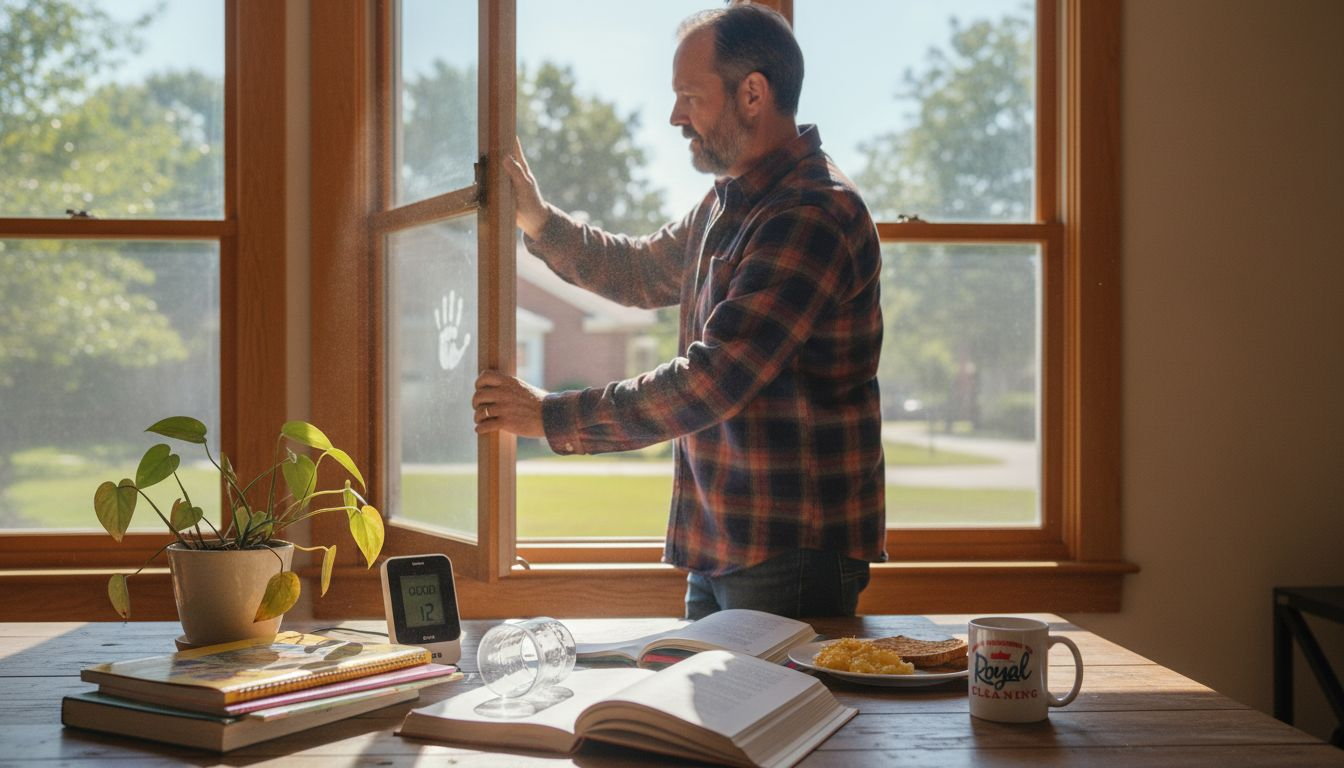
These microscopic allergens trigger asthma attacks, allergic reactions, and chronic respiratory irritation. Steam’s high temperature kills dust mites on contact and removes their waste products from carpet and upholstery fibers. For households with pets, steam cleaning extracts dander that vacuuming alone cannot fully remove.
Traditional cleaning products leave chemical residues that continuously emit volatile organic compounds (VOCs). Steam cleaning eliminates these chemical residues that harm lung health over time. When you switch to steam, you stop introducing new VOCs while removing existing residues from previous cleanings.
The health improvements show up quickly:
- Reduced nighttime coughing and congestion
- Fewer asthma medication needs
- Less frequent allergic reactions
- Improved sleep quality
- Decreased respiratory irritation
Children and elderly family members benefit most from cleaner indoor air. Their developing or compromised immune systems make them vulnerable to airborne irritants. Steam cleaning creates a safer environment without exposing them to cleaning chemical fumes during or after the process.
The air duct cleaning benefits multiply when combined with regular surface steam cleaning. Your HVAC system circulates air throughout your home, so clean ducts paired with clean carpets and upholstery provide comprehensive air quality improvement. This integrated approach to home maintenance cleaning and health addresses contamination at every level.
Mold spores pose serious health risks, especially in humid climates or poorly ventilated areas. Steam kills active mold and prevents regrowth by eliminating the organic matter mold feeds on. The heat penetrates porous surfaces where mold hides, providing deeper remediation than surface wiping.
Pro tip: Schedule regular steam cleaning of carpets and upholstery every 1 to 3 months to maintain healthy air quality year-round. This frequency prevents allergen buildup and keeps your home’s surfaces sanitized without chemical exposure.
Eco-Friendly Advantages of Steam Cleaning
Environmental responsibility starts at home with the cleaning methods you choose. Steam cleaning dramatically reduces your household’s water consumption and chemical footprint. Traditional mopping uses gallons of water per cleaning session, while steam cleaning uses up to 90% less water by vaporizing small amounts rather than saturating surfaces.
This water conservation matters in regions facing drought or water restrictions. You achieve superior cleaning results while using a fraction of the water required for conventional methods. The reduced water usage also means faster drying times and less risk of moisture-related problems.
Eliminating chemical cleaners from your routine prevents toxic substances from entering wastewater systems. Every bottle of conventional cleaner contains synthetic compounds that treatment plants cannot fully remove. These chemicals eventually reach rivers, lakes, and groundwater. Steam cleaning stops this pollution at the source.
| Comparison Factor | Steam Cleaning | Traditional Cleaning |
|---|---|---|
| Water Usage per Session | 1-2 cups vaporized | 2-5 gallons liquid |
| Chemical Residue | Zero | Multiple VOCs remain |
| Air Quality Impact | Improves IAQ | Degrades IAQ temporarily |
| Plastic Waste | Minimal (reusable pads) | Multiple bottles annually |
| Carbon Footprint | Lower (water heating only) | Higher (manufacturing + transport) |
The environmental benefits extend beyond your immediate cleaning session:
- No plastic bottles accumulating in landfills
- Reduced manufacturing demand for chemical cleaners
- Lower transportation emissions from product shipping
- Decreased water treatment burden
- Elimination of chemical container recycling needs
Your household waste stream shrinks significantly when you stop buying disposable cleaning products. Most steam cleaners use washable microfiber pads instead of disposable wipes or paper towels. This shift to chemical-free cleaning options aligns with broader sustainability goals without sacrificing cleanliness.
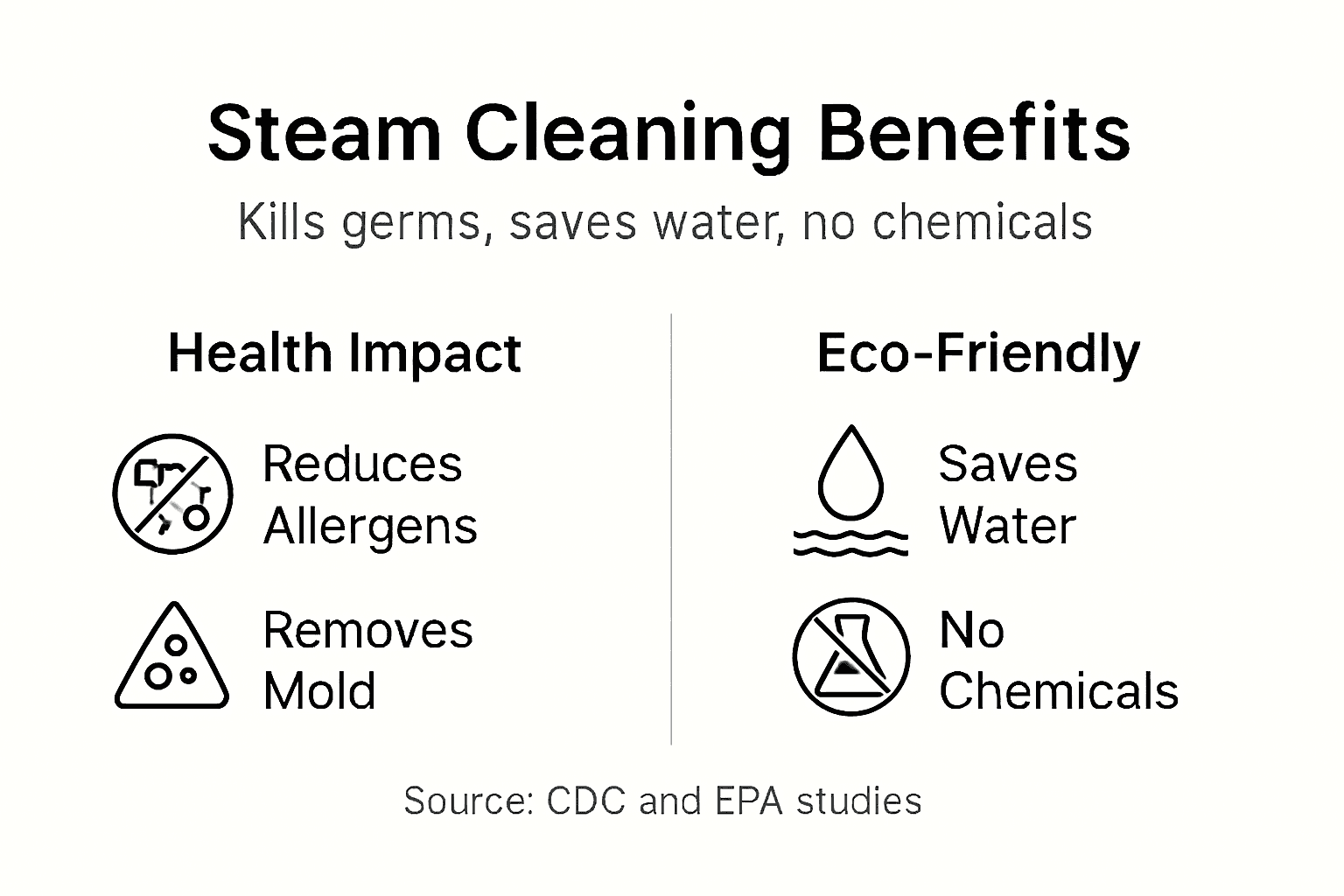
Professional services using advanced cleaning equipment for healthy homes amplify these benefits. Commercial-grade steam cleaners achieve higher temperatures and pressure, providing deeper sanitization with even less water. The efficiency of professional equipment maximizes environmental benefits while ensuring thorough cleaning.
Indoor air quality improvements from steam cleaning reduce your reliance on air purifiers and ventilation systems. Less energy consumption for air quality management lowers your carbon footprint. The water savings from steam cleaning compound over time, making this choice increasingly impactful with regular use.
Common Misconceptions About Steam Cleaning
Misinformation about steam cleaning prevents many homeowners from experiencing its benefits. Understanding the facts helps you make informed decisions about your cleaning methods. Three persistent myths deserve clarification.
Myth 1: Steam cleaning damages delicate surfaces. Many people avoid steam on hardwood floors or upholstery, fearing warping or discoloration. The reality is that steaming at above 200°F kills pathogens safely without damaging appropriately sealed surfaces. Proper technique and equipment settings protect your surfaces while delivering deep cleaning.
Myth 2: Chemicals are necessary for effective sanitization. This misconception stems from decades of chemical cleaner marketing. High-temperature steam alone achieves 99.9% pathogen elimination without any additives. The heat does the work, making chemical sanitizers redundant.
Myth 3: Steam cleaning spreads allergens into the air. Some worry that steam disturbs settled allergens, making them airborne. Steam actually binds allergens with moisture, weighing them down for removal rather than dispersal. The vacuum function on most steam cleaners immediately extracts these bound particles.
| Myth | Fact |
|---|---|
| Damages delicate surfaces | Safe on sealed wood, upholstery, and most surfaces when used correctly |
| Requires chemicals to work | High-temperature steam kills 99.9% of germs without any chemical additives |
| Spreads allergens around | Moisture binds allergens for extraction, preventing airborne distribution |
| Leaves surfaces too wet | Professional equipment leaves minimal moisture that dries in 1-2 hours |
| Only for carpet cleaning | Effective on tile, grout, upholstery, sealed hardwood, and many surfaces |
These carpet cleaning myths debunked help clarify what steam cleaning really accomplishes. The technology has evolved significantly, with modern equipment offering precise control over temperature, pressure, and moisture levels.
Consumer-grade steam cleaners sometimes underperform, reinforcing skepticism. Professional equipment reaches higher temperatures and provides better moisture extraction. This performance gap explains why some homeowners report disappointing results with rental or budget machines.
Surface preparation matters for optimal results. Vacuuming before steam cleaning removes loose dirt that would otherwise turn into muddy residue. Following manufacturer guidelines for your specific surfaces prevents the rare instances of damage that fuel these myths.
Proper Applications and Practical Limitations
Knowing where and how to use steam cleaning maximizes benefits while avoiding potential problems. Not every surface tolerates steam, and proper technique makes the difference between excellent results and damage.
Safe surfaces for steam cleaning include:
- Ceramic and porcelain tile
- Grout lines
- Carpet and area rugs
- Sealed hardwood floors
- Upholstered furniture with durable fabrics
- Mattresses and pillows
- Bathroom fixtures
Avoid using steam near electrical appliances, outlets, and switches. Water and electricity create dangerous situations, even with vaporized moisture. Keep steam away from unsealed or waxed wood, as these finishes cannot withstand heat and moisture. Delicate fabrics like silk or antique upholstery require professional assessment before steam cleaning.
Drying time is crucial for preventing mold growth and musty odors. Safe surfaces include tile, grout, carpet, upholstery, and sealed hardwood, but all require adequate drying. Allow at least one hour for carpets and upholstery, longer in humid conditions. Open windows and run fans to accelerate drying.
Follow these best practices for optimal results:
- Test a small, hidden area first to verify surface compatibility
- Vacuum thoroughly before steam cleaning to remove loose debris
- Work systematically in overlapping passes for complete coverage
- Keep the steam nozzle moving to avoid over-saturating any spot
- Extract moisture immediately using the vacuum function
- Ventilate the area well during and after cleaning
- Allow complete drying before replacing furniture or walking on carpets
Common failure points to avoid:
- Over-saturating surfaces by moving too slowly
- Skipping the test spot on new or delicate materials
- Using steam on moisture-sensitive surfaces like particle board
- Failing to extract moisture, leading to extended drying times
- Cleaning without proper ventilation in humid conditions
Temperature control matters for different surfaces. High heat works well on durable tile and grout but may be too intense for some upholstery. Adjustable steam settings let you match intensity to surface requirements. Professional equipment offers finer control than consumer models.
The carpet cleaning tips that professionals use emphasize systematic coverage and proper extraction. Missing spots or rushing through areas leaves some contamination behind. Taking time for thorough, even coverage produces noticeably better results.
Area rugs need special attention, particularly those with natural fiber construction or vintage dyes. Review area rug steam cleaning guidance before attempting valuable or delicate rugs. Some require professional handling to prevent shrinkage or color bleeding.
Understanding steam cleaning safety and limitations prevents the mistakes that lead to surface damage. When you respect these boundaries and follow proper procedures, steam cleaning delivers exceptional results without risk.
Integrating Steam Cleaning into Your Home Maintenance Routine
Consistent steam cleaning maintains the health benefits and cleanliness you want. Establishing a routine prevents allergen buildup and keeps your home sanitized without ongoing chemical exposure. The frequency depends on your household’s specific needs.
For most homes, steam clean high-traffic areas like carpets and upholstery every 1 to 3 months. Households with pets, children, or allergy sufferers benefit from monthly cleaning. Lower-traffic areas can go 3 to 6 months between deep steam treatments. Balance steam cleaning with regular vacuuming, which removes surface debris between deeper cleanings.
Professional steam cleaning services provide value for annual deep cleans or challenging situations. Technicians bring commercial-grade equipment that reaches higher temperatures and provides more powerful extraction. Their experience identifies problem areas and surface-specific requirements that homeowners might miss.
Signs that indicate you need steam cleaning:
- Persistent odors despite regular vacuuming
- Visible stains or discoloration on carpets or upholstery
- Increased allergy or asthma symptoms indoors
- Sticky or grimy feeling on floors or furniture
- Recent pet accidents or spills
- Preparing for guests or seasonal changes
The choice between professional and DIY steam cleaning depends on several factors. Consumer steam cleaners handle routine maintenance adequately. They work well for spot cleaning and regular upkeep. Professional services excel at whole-house deep cleaning, stubborn stains, and delicate materials requiring expert handling.
Maintenance tips for ongoing freshness:
- Vacuum high-traffic areas twice weekly
- Address spills immediately before they set
- Rotate furniture to distribute wear patterns
- Use doormats to reduce tracked-in dirt
- Schedule professional cleaning before allergy seasons
Pro tip: Choose steam cleaning as your primary method for households with pets, children, or chemical sensitivities. The chemical-free approach protects vulnerable family members while maintaining rigorous cleanliness standards.
The carpet cleaning tips for homeowners emphasize prevention alongside treatment. Protective measures reduce how often you need deep cleaning. However, even well-maintained carpets benefit from periodic steam treatment to remove accumulated allergens and refresh fibers.
Incorporating chemical-free cleaning methods throughout your home creates a healthier environment. Steam cleaning becomes part of a comprehensive approach that includes proper ventilation, humidity control, and regular maintenance. These elements work together for optimal indoor air quality.
Your area rug steam cleaning schedule should account for placement and use patterns. Entryway rugs need more frequent attention than bedroom accent pieces. High-value or antique rugs warrant professional care to preserve their condition and appearance.
Experience Expert Steam Cleaning in Albuquerque
Ready to experience the health and environmental benefits of professional steam cleaning? Local experts in Albuquerque bring advanced equipment and specialized techniques to your home. These professionals understand the unique needs of homes in our climate and deliver results that consumer equipment cannot match.
Professional carpet cleaning services use truck-mounted systems that generate higher temperatures and stronger extraction. This equipment removes deeply embedded allergens and contaminants while leaving carpets nearly dry. Expert technicians assess your specific surfaces and adjust methods accordingly, protecting your investment while delivering thorough sanitization.
The upholstery cleaning process requires understanding fabric types and construction methods. Professionals identify which pieces need gentle handling versus those that tolerate aggressive treatment. This expertise prevents damage while ensuring complete allergen removal from furniture your family uses daily.
For kitchens and bathrooms, professional tile and grout cleaning services restore original appearance while sanitizing thoroughly. Grout lines harbor bacteria and mold that regular mopping cannot reach. High-pressure steam penetrates these porous surfaces, eliminating hidden contamination.
Professional steam cleaning transforms your home’s indoor air quality while protecting your family from chemical exposure. Regular service maintains a healthy living environment that supports respiratory health and overall wellbeing.
Pro tip: Schedule professional cleaning before spring and fall allergy seasons, and after periods of high pet activity or household traffic. This timing maximizes health benefits when your family needs them most.
Frequently Asked Questions About Steam Cleaning
Is steam cleaning safe for hardwood floors?
Yes, steam cleaning is safe for sealed hardwood floors when done correctly. The key is ensuring your floors have an intact polyurethane or similar protective finish. Unsealed or waxed wood cannot tolerate the moisture and heat, so verify your floor type first.
How often should I steam clean my carpets?
Steam clean carpets every 1 to 3 months depending on household traffic and allergy concerns. Homes with pets or children benefit from monthly cleaning, while low-traffic areas can extend to quarterly treatments. Regular vacuuming between steam sessions maintains cleanliness.
Can steam cleaning remove pet odors effectively?
Steam cleaning effectively eliminates pet odors by breaking down the organic compounds that cause smells. The high temperature destroys odor-causing bacteria and removes urine residues deep in carpet fibers. For severe pet accidents, professional extraction equipment provides the most thorough results.
Does steam cleaning help with asthma and allergies?
Yes, steam cleaning significantly reduces allergens and chemical residues that trigger asthma and allergic reactions. It eliminates dust mites, pet dander, and mold spores while avoiding the VOCs that traditional cleaners release. Many families report noticeable respiratory improvement after switching to steam cleaning.
Do I need to hire professionals for steam cleaning?
Home steam cleaners suffice for routine maintenance and spot cleaning between professional treatments. However, professional services provide deeper cleaning with more powerful equipment, especially valuable for annual whole-house cleaning or addressing severe contamination. The carpet cleaning tips professionals use deliver noticeably superior results for challenging situations.