(505) 280-5216
Spot Treating Carpets: Extend Life by 5 Years Guide
Did you know that proper spot treating can extend your carpet’s life by up to five years? Many homeowners struggle with stubborn stains but lack clear guidance on safe, effective removal methods. Spot treating is an efficient way to tackle stains that can prolong carpet life. This guide explains what spot treating is, how to do it safely, and when to call professionals.
Table of Contents
- Understanding Spot Treating: Definition and Mechanism
- Safe and Effective Cleaning Agents for Spot Treating
- Step-by-Step Guide to Spot Treating Carpets at Home
- Common Misconceptions and Mistakes in Spot Treating Carpets
- Comparison: Spot Treating vs Full Carpet Cleaning
- Impact of Spot Treating on Carpet Longevity and Maintenance
- When to Call Professional Carpet Cleaning Services for Spot Treatment
- Safe, Effective Spot Treating with Royal Carpet Cleaning Services
Key Takeaways
| Point | Details |
|---|---|
| Spot treating targets small stains | Uses minimal moisture to preserve carpet fibers and prevent backing damage. |
| Choose pH-neutral or enzymatic cleaners | Match cleaning agents to stain types for safe, effective removal. |
| Follow a step-by-step process | Blot, apply cleaner sparingly, agitate gently, rinse lightly, and dry quickly. |
| Know the limits of DIY treatment | Large or deep stains require professional cleaning equipment and expertise. |
| Regular maintenance extends carpet life | Consistent spot treating delays carpet replacement by 3 to 5 years. |
Understanding Spot Treating: Definition and Mechanism
Spot treating involves focusing cleaning efforts strictly on the stain area rather than treating the entire carpet. This targeted approach uses specialized cleaning agents that break down stain components effectively. The process minimizes moisture use to prevent carpet backing damage and mold risk.
Safe for various carpet types when done correctly, spot treating works by applying cleaners that chemically interact with stain molecules. Enzymes break down protein-based stains like food or pet accidents. Solvents dissolve oil-based marks like grease or ink. The key is matching the cleaning chemistry to the stain type.
Minimal water application is critical because carpet backing and padding can retain moisture for days. Excess water creates ideal conditions for mold growth and can weaken adhesives holding carpet fibers. Proper spot treating addresses the stain without saturating underlying layers.
Pro Tip: Always start treatment with a minimal amount of cleaner to avoid spreading the stain. You can always add more product, but you cannot remove excess cleaner once applied. Work from the stain’s outer edge toward the center to prevent enlarging the affected area.
For more guidance on maintaining carpets between professional services, explore our comprehensive carpet cleaning tips resource.
Safe and Effective Cleaning Agents for Spot Treating
Choosing the right cleaning products for different stains is essential for carpet longevity. Match cleaning agents to stain chemistry for best results. Enzymatic cleaners are best for protein stains, while solvents work on ink and grease.
pH-neutral cleaners prevent fiber damage and discoloration by maintaining the carpet’s natural acidity balance. Harsh chemicals can shorten carpet life by weakening fibers and altering color. Alkaline cleaners may cause browning, while acidic products can eat through synthetic materials.
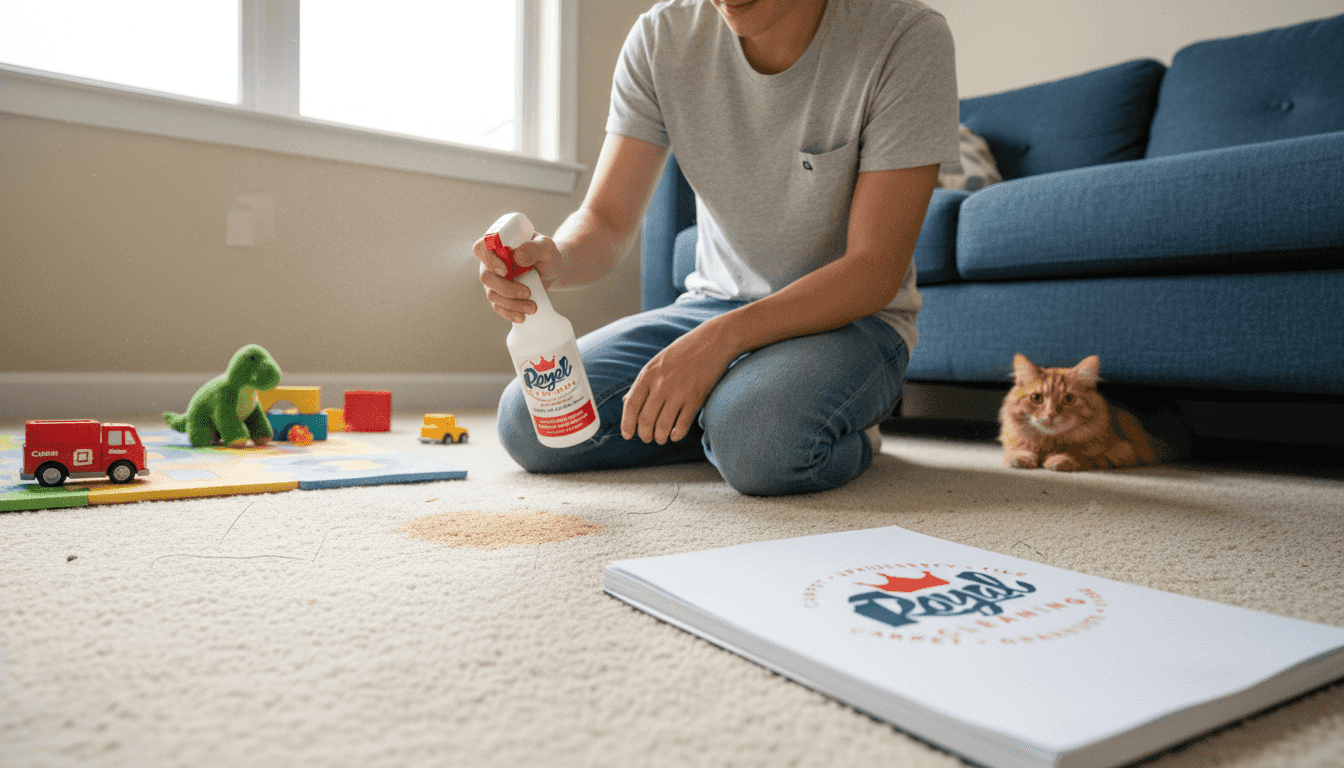
Eco-friendly cleaners improve indoor air quality and safety for families and pets. These products typically use plant-based surfactants and natural enzymes instead of volatile organic compounds. They work effectively without leaving harmful residues that off-gas into your home.
Always test cleaners on a hidden spot before full application. Choose an inconspicuous area like a closet corner or under furniture. Apply the cleaner, wait 10 minutes, and check for discoloration or texture changes. This simple test prevents costly mistakes on visible carpet areas.
Key cleaner types for effective spot treating:
- Enzymatic cleaners for protein stains like blood, food, and pet accidents
- Oxygen-based cleaners for organic stains including wine and coffee
- Solvent-based products for oil, grease, and ink marks
- pH-neutral all-purpose cleaners for general maintenance and unknown stains
For pet owners specifically, our pet safe carpet cleaning guide offers detailed product recommendations that protect both carpets and animals.
Step-by-Step Guide to Spot Treating Carpets at Home
Proper spot treating includes blotting, minimal cleaner use, gentle agitation, light rinsing, and quick drying to avoid damage. Follow this detailed process for best results:
-
Identify the stain type and size to confirm suitability for spot treating. Stains smaller than a dinner plate are ideal candidates. Note whether the stain is fresh or set-in, as this affects treatment approach.
-
Test your chosen cleaner on an inconspicuous carpet area. Wait 10 minutes and check for adverse reactions like discoloration or texture changes before proceeding.
-
Blot excess material gently using clean white cloths or paper towels. Press firmly without rubbing to absorb liquid or scrape up solids. Work from the stain’s outer edge toward the center.
-
Apply cleaner sparingly directly to the stain. Use about one tablespoon for a four-inch stain. Less is more, as excess product attracts dirt and requires extensive rinsing.
-
Gently agitate the area using a soft-bristled brush or clean cloth. Use circular motions with light pressure to work the cleaner into carpet fibers without damaging them.
-
Rinse lightly with clean water applied via spray bottle. Blot immediately with dry cloths to remove cleaner residue. Avoid soaking the carpet backing.
-
Quickly dry the area using fans or absorbent cloths weighted down on the damp spot. Complete drying within 6 to 12 hours prevents mold growth.
-
Evaluate results and repeat if needed. Some stains require multiple treatments. If three attempts do not remove the stain, professional cleaning is likely necessary.
Pro Tip: Place aluminum foil under furniture legs when using fans to dry treated areas. This prevents furniture stains caused by wet carpet transferring wood dyes or metal rust onto fibers.
For particularly stubborn marks, our deep stain removal guide and tips for tough carpet stains provide advanced techniques for challenging situations.
Common Misconceptions and Mistakes in Spot Treating Carpets
Excessive moisture and improper cleaners cause fiber damage and mold, and spot treating is not a cure-all for every stain. Understanding these limitations helps you avoid costly mistakes.
Spot treating cannot remove all stains. Large or old stains often require professional cleaning equipment and expertise. Set-in stains have bonded chemically with carpet fibers and need specialized treatment. Attempting DIY removal on these can spread the stain or damage fibers permanently.
Using too much water can soak carpet backing and cause mold formation. The padding beneath your carpet acts like a sponge, retaining moisture for days or weeks. This creates perfect conditions for mold and mildew growth, which produces health hazards and odors.
Not all household cleaners are safe for carpets. Bleach damages and discolors most carpet fibers. Dish soap leaves sticky residues that attract dirt. Vinegar can set certain stains and alter carpet pH. Harsh chemicals like ammonia weaken fiber bonds over time.
Spot treating is not a replacement for full carpet cleaning. Professional deep cleaning removes embedded dirt, allergens, and contaminants that spot treating cannot address. Most manufacturers recommend professional cleaning every 12 to 18 months to maintain warranties.
Common mistakes to avoid:
- Rubbing stains vigorously, which spreads them and damages fibers
- Using colored cloths that can transfer dye to light carpets
- Applying heat to stains before removal, which sets protein stains permanently
- Skipping the cleaner test step and risking visible damage
- Over-wetting carpets and creating mold-friendly conditions
Learn more about separating fact from fiction in our carpet cleaning myths article.
Comparison: Spot Treating vs Full Carpet Cleaning
Spot treating suits localized small stains while full cleaning addresses widespread or deep dirt and odors. Understanding when each approach is appropriate ensures you get optimal results.
Spot treating focuses on small, fresh stains using minimal moisture and lower cost. It targets specific problem areas without disturbing the entire carpet. This method works well for immediate response to spills and accidents. Time commitment is minimal, usually 15 to 30 minutes per stain.
Full carpet cleaning covers the entire carpet area, removing deep dirt and odors that accumulate over time. Professional equipment injects cleaning solution deep into fibers and extracts it along with embedded contaminants. This process addresses issues invisible to the naked eye.
| Feature | Spot Treating | Full Carpet Cleaning |
|---|---|---|
| Coverage | Individual stains only | Entire carpet area |
| Moisture Level | Minimal, surface only | Moderate, penetrates padding |
| Equipment | Spray bottles, brushes, cloths | Professional extraction machines |
| Cost | $0 to $20 in supplies | $100 to $300 per room |
| Time Required | 15 to 30 minutes per stain | 2 to 4 hours plus drying |
| Best For | Fresh spills under 15% carpet area | Deep dirt, odors, overall maintenance |
| Frequency | As needed for accidents | Every 12 to 18 months |
Thresholds matter when deciding between approaches. Stains smaller than 15% of carpet area may be managed with spot treating. Beyond that threshold, the time and effort of multiple spot treatments exceeds the efficiency of full cleaning. Professional cleaning uses specialized equipment for deeper, more thorough results.
Cost and time commitment are higher for full cleanings but provide comprehensive benefits. Deep extraction removes allergens, dust mites, and bacteria that spot treating leaves behind. For details on professional services, visit our professional carpet cleaning services page.
Impact of Spot Treating on Carpet Longevity and Maintenance
Spot treating prevents stain set-in that deteriorates fibers over time. When stains remain untreated, acidic or alkaline compounds continue reacting with carpet materials. This chemical process weakens fiber bonds and causes permanent discoloration. Immediate spot treatment stops this degradation.
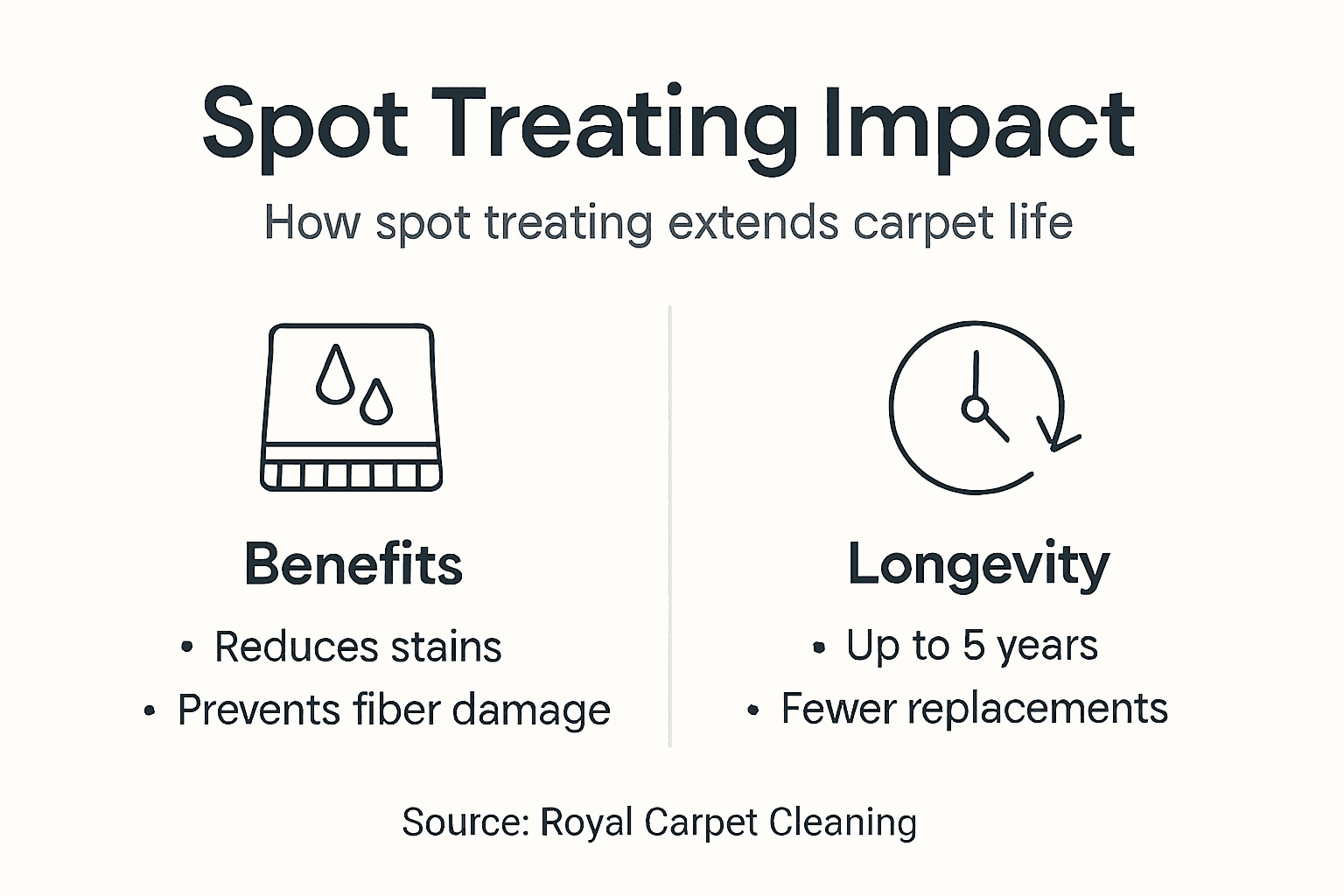
Maintains carpet’s fresh look and texture, improving home aesthetics. Clean carpets enhance room brightness by reflecting more light. Stained or dingy carpets make entire spaces appear neglected and reduce perceived home value. Regular spot maintenance preserves that new carpet appearance.
Reduces allergens and contaminants trapped by stains, promoting health. Organic stains like food and pet accidents harbor bacteria and attract dust mites. These biological contaminants produce allergens that affect indoor air quality. Removing stains promptly eliminates these health risks.
Regular spot treatment can extend carpet life by up to five years. This represents significant savings compared to replacement costs of $1,500 to $4,500 for an average home. The investment in spot treating supplies and time pays substantial dividends in delayed replacement expenses.
Cost-effective maintenance strategy compared with early replacement. Quality carpet installed today should last 10 to 15 years with proper care. Neglecting spot treatment can reduce this lifespan to 5 to 7 years. The math is simple: a $50 annual investment in cleaning supplies versus thousands in premature replacement.
Long-term benefits of consistent spot treating:
- Preserves manufacturer warranties that often require professional maintenance
- Maintains fiber resilience and texture for comfortable walking surfaces
- Prevents stain spread that occurs when liquids wick through untreated areas
- Reduces overall cleaning costs by minimizing need for expensive specialty treatments
When to Call Professional Carpet Cleaning Services for Spot Treatment
Large, persistent, or specialty stains often require professional treatment for full removal and to avoid damage. Recognizing the limits of DIY treating protects your carpet investment.
Large stains or those covering over 15% of carpet area need professionals. The equipment required to treat these expansive areas effectively exceeds typical household resources. Professional truck-mounted systems provide extraction power impossible to replicate with portable machines.
Persistent stains like ink, red wine, or dye require multi-step, specialized treatments. These challenging marks often need multiple product applications with precise dwell times. Professionals understand the chemistry involved and can adjust approaches based on carpet fiber type and stain age.
DIY attempts risk damaging fibers when improper methods or chemicals are used. Well-intentioned homeowners sometimes apply harsh products or excessive scrubbing that causes permanent damage. Professional cleaners carry insurance and possess training to avoid these costly mistakes.
Professional cleaners use advanced products and equipment unavailable to homeowners. Commercial-grade enzymes work faster and more completely than retail versions. Truck-mounted extraction systems remove 95% of applied moisture compared to 70% for portable units, significantly reducing dry time and mold risk.
When in doubt, consult experts to protect your carpet and investment. A professional assessment costs nothing and provides valuable information about stain removability and treatment options.
Situations requiring professional intervention:
- Stains that reappear after DIY treatment, indicating deep contamination
- Water damage or flooding affecting large carpet areas
- Odor issues persisting after spot cleaning attempts
- Delicate or antique carpets requiring specialized care
- Warranty maintenance requirements for newer carpet installations
Our professional carpet cleaning team serves Albuquerque and Rio Rancho with expertise in all stain types and carpet materials.
Safe, Effective Spot Treating with Royal Carpet Cleaning Services
Royal Carpet Cleaning offers expert spot treating and full carpet cleaning services tailored to Albuquerque homes. Our professional-grade products and equipment ensure safe, thorough stain removal and prolonged carpet life. We understand local challenges like desert dust and hard water mineral deposits that affect carpet maintenance.
Our technicians use eco-friendly solutions safe for children and pets while delivering commercial-strength results. Advanced extraction systems remove 95% of moisture, ensuring fast dry times that prevent mold growth. We customize treatment approaches based on your carpet type, stain age, and household needs.
Visit our professional carpet cleaning services page to schedule an appointment or explore our carpet cleaning tips for ongoing maintenance guidance. We also provide commercial carpet cleaning for businesses throughout the Albuquerque area. Contact us today for a free assessment and experience the Royal Carpet Cleaning difference.
FAQ
What cleaning solution is safest for pets during spot treating?
Enzymatic cleaners specifically formulated for pet stains are safest because they use natural bacteria and enzymes rather than harsh chemicals. Look for products certified by environmental and pet safety organizations. These break down organic stains effectively without leaving toxic residues that could harm animals through contact or ingestion.
How often should I spot treat my carpet to maintain its condition?
Spot treat immediately whenever spills or accidents occur for best results. This prevents stains from setting into fibers. For households with pets or children, you might spot treat weekly, while quieter homes may only need occasional treatments. Combine spot treating with professional deep cleaning every 12 to 18 months for optimal carpet health.
Can I spot treat old, set-in stains myself?
Old, set-in stains are challenging for DIY treatment because they have bonded chemically with carpet fibers. You can attempt treatment using enzymatic cleaners with longer dwell times, but success rates drop significantly after 48 hours. If two or three attempts do not show improvement, professional treatment offers better odds of removal without risking fiber damage.
How do I test if a spot cleaner will damage my carpet?
Apply a small amount of cleaner to an inconspicuous area like inside a closet or under furniture. Wait 10 to 15 minutes, then blot with a white cloth. Check for color transfer to the cloth, carpet discoloration, or texture changes. If any of these occur, do not use the product. This simple test prevents visible damage to high-traffic areas.
What are the risks of over-wetting my carpet during DIY cleaning?
Excessive moisture saturates carpet padding, creating ideal conditions for mold and mildew growth within 24 to 48 hours. Over-wetting also can damage carpet backing adhesives, cause delamination, and create buckling or wrinkling. Additionally, wet padding acts as a dirt magnet, attracting soil that wicks up into carpet fibers as it dries. Always use minimal moisture and ensure complete drying within 12 hours.