

 (505) 280-5216
Albuquerque Homeowners: Remove or Stabilize Red Clay Carpet Stains, CRI Backed
Yes, most fresh red clay stains can be significantly reduced or removed if you stabilize them right away. The first move is drying and removing loose clay, not pouring water on it. The Carpet and Rug Institute and UGA Extension both back a dry-first approach. This scenario often occurs in homes near unpaved yards and trails.
TL;DR:
- Immediate removal of loose, dried clay is critical to prevent deeper integration into carpet fibers and limit stain permanence.
- Applying water directly to dry clay can push particles further and worsen the stain, especially if bleach or oxygen-based products are used later.
- Using a diluted non-bleach dish soap solution and thorough rinsing with plain water offers the best chance of stain removal without setting the iron oxide.
- Persistent or large, heat-set, or days-old stains often require professional deep cleaning with specialized equipment and chemicals.
- Regular prevention measures like entry mats, shoe removal, and prompt spot treatment help minimize recurring red clay tracking.
Table of Contents
- Why red clay behaves like rust and why that matters for cleaning
- What to do in the first 5 to 10 minutes
- The DIY cleaning method that actually works
- When to call a professional instead
- Keeping the area clean after treatment
- A professional’s view on red clay and iron stains
- How Royal Cleaning New Mexico handles stubborn clay stains
- FAQ
- Sources
Why red clay behaves like rust and why that matters for cleaning
Red clay gets its color from iron oxide, the same mineral compound that causes rust stains on metal. Once iron oxide particles settle into carpet fibers, they bond chemically rather than just sitting on the surface, which is why red clay resists ordinary cleaning more than dust or mud made of other soils.
That bonding behavior changes what you should and should not do. Pouring liquid onto a dry clay spill pushes the particles deeper into the pile and backing, according to Carpet and Rug Institute guidance, which turns a surface problem into a set-in one. Chlorine bleach and oxygen bleach make things worse still: UGA Extension warns that bleaching agents tend to set iron and rust stains permanently rather than lift them.
A few points worth keeping in mind before you start:
- Iron oxide binds to carpet fibers chemically, not just physically, which is why plain water alone often struggles.
- Fresh stains respond far better than ones that have dried, been walked on repeatedly, or been heat-dried by a dryer or iron.
- Any bleach-based product, including “color-safe” oxygen bleach, risks locking the stain in rather than removing it.
Timing drives almost everything else in this guide. A stain treated within the first hour behaves very differently than one discovered a week later.
What to do in the first 5 to 10 minutes
How you handle the first few minutes determines whether this stays a quick fix or becomes a permanent mark. Work through these steps in order.
- If the clay is still wet, blot it with a dry white cloth, pressing straight down rather than scrubbing, which spreads the stain outward.
- If the moisture came from a flood, or looks gray or black rather than clean, stop and call a professional immediately rather than attempting DIY cleaning.
- If the clay has dried into a clump, let it finish drying if it is still tacky, then scrape the hardened material gently with the edge of a spoon.
- Vacuum the loosened dry residue thoroughly before introducing any liquid to the area.
- Never pour a cleaning solution directly onto a dry clay spill, and never reach for chlorine or oxygen bleach.
- Pretest any cleaner you plan to use on a hidden patch of carpet, such as inside a closet, and check for color change after it dries.
That sequence mirrors what the Carpet and Rug Institute recommends for any solid or semi-solid spill: blot, scrape, vacuum, then treat.
The DIY cleaning method that actually works
Once the loose clay is gone, the real cleaning begins. This sequence follows the dilution and rinsing approach the Carpet and Rug Institute publishes for home spot cleaning.
Step 1: Finish the dry removal. Break up any remaining crust with the spoon and vacuum again. Work from the outer edge of the stain toward the center so you never grind clay deeper into the pile.
Step 2: Mix the detergent solution. Combine one quarter teaspoon of clear, non-bleach, non-lanolin dish soap with one cup of lukewarm water, following the Carpet and Rug Institute dilution. Skip laundry detergent and automatic dishwasher soap, since both often contain optical brighteners or built-in bleaching agents that can alter carpet color permanently.
Step 3: Apply and blot. Dampen a clean cloth with the solution and work from the edges of the stain inward, blotting rather than rubbing. Rubbing spreads iron particles across more fibers and can fray the pile.
Step 4: Rinse thoroughly. Mist the area with plain lukewarm water and blot again, repeating until no more color transfers to your cloth. This step matters more than most people expect: leftover detergent residue attracts new soil and makes the spot look dirty again within days.
- Rinse until the blotting cloth comes away clean, not just until the stain looks lighter.
- Use a spray bottle set to mist rather than stream, so you control how much water reaches the backing.
- Change cloths often rather than reusing a soiled one, which can redeposit iron particles.
Step 5: Consider an enzyme cleaner or iron remover for stubborn residue. If color remains after two or three rinse cycles, a household enzyme detergent or a commercial iron remover made for rust stains may help. Pretest it on a hidden area first and follow the product’s own directions exactly, since formulations vary.
Step 6: Dry it fast. Point a fan or a low-heat blow dryer at the spot and keep blotting as it dries. Carpet that stays damp for hours is more likely to wick residual iron back to the surface as it evaporates, creating a faint ring.
Pro Tip: Keep blotting through the drying phase instead of walking away once it looks clean. Iron particles can resurface as the last moisture evaporates, and a few extra minutes of blotting now saves a repeat treatment later.
Acting quickly makes a real difference. Guidance from the Carpet and Rug Institute consistently emphasizes speed, since delays let iron-oxide stains set and become harder to remove. If you have gotten the color down significantly but a faint shadow remains, that is often a reasonable place to stop rather than risk damaging the pile with repeated aggressive treatment.
When to call a professional instead
DIY has real limits with iron-oxide stains, and knowing where that limit sits saves you from damaging the carpet through overtreatment.
- The stain persists after two or three proper rinse and stabilization cycles done correctly.
- The clay is several weeks old or was accidentally heat-set by a dryer, iron, or direct sun, which extension guidance treats as a much higher risk for permanence.
- The water involved is gray or black water from flooding, or you notice mold growth or a persistent odor. NC State Extension advises against DIY cleaning in these cases and recommends calling a professional, though clean water discovered within 48 hours may still be a reasonable DIY situation.
- You are dealing with a large area rather than a single spot.
Professional cleaners bring iron-specific chemistries and truck-mounted hot water extraction, which reaches deeper into the pile and backing than a household vacuum or spray bottle ever can, as explained in this deep carpet cleaning guide. Royal Cleaning New Mexico’s carpet cleaning process is built around exactly this kind of deeper extraction work.
Keeping the area clean after treatment
Stopping a stain from coming back takes a bit more than the initial cleaning.
- Rinse until the water runs clear, since leftover detergent residue attracts dirt and shortens the time before the spot needs cleaning again.
- Ask about professional stain-resistance treatments if red clay tracking is a recurring issue in your home.
- Place entry mats at exterior doors and encourage shoes off at the threshold, especially during wet seasons when clay tracks in easily.
- Vacuum high-traffic zones near entryways more often than the rest of the house.
Pro Tip: Keep a small spot kit by the door: a few white cloths, a travel bottle of clear dish soap, a spoon, and a mist sprayer. Having it within reach means you treat a fresh stain in the first minute instead of after it dries into the pile.
A professional’s view on red clay and iron stains
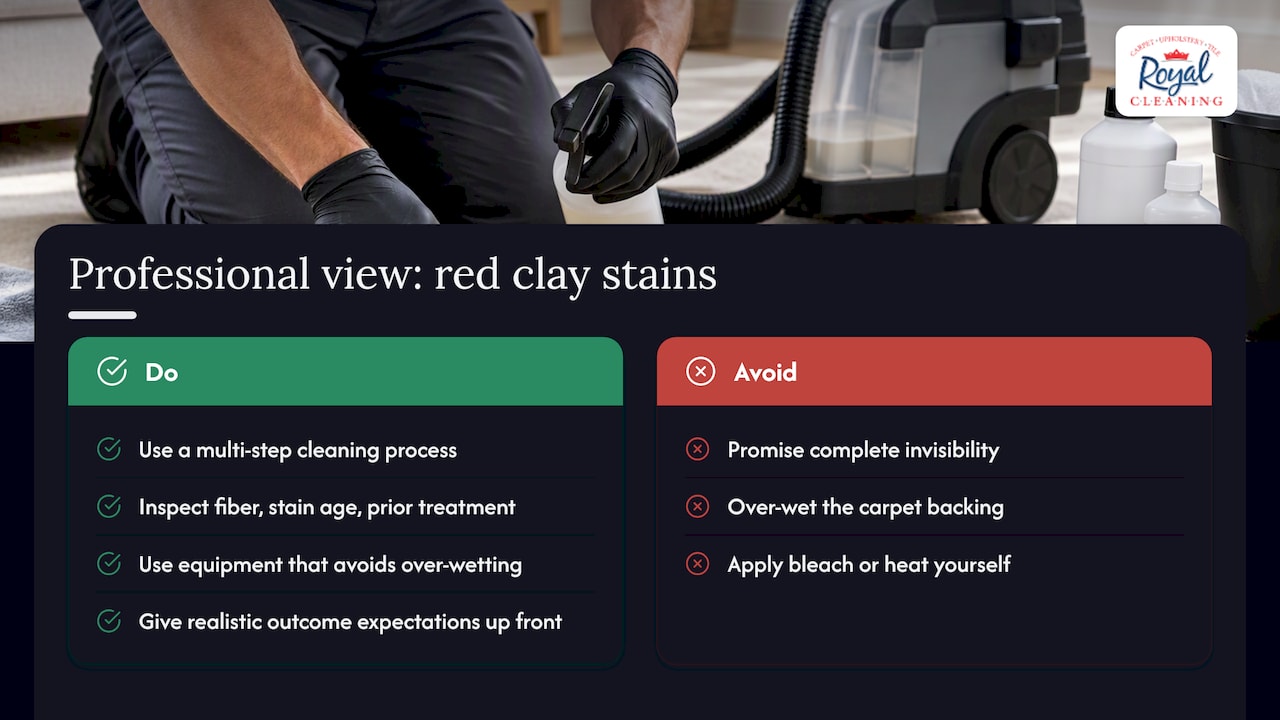
I’m Bernadette, and I focus on the kinds of stains Albuquerque homeowners run into most, red clay and caliche dust chief among them. Some cleaning services use a multi-step cleaning process with advanced equipment and eco-friendly disinfectant options, designed to remove embedded soil without over-wetting carpet backing.
When we inspect a red clay stain, we are checking fiber type, how long the stain has sat, and whether earlier attempts introduced bleach or heat. A realistic outcome for an old, set-in stain is major improvement rather than invisibility, and we will tell you that upfront rather than promise more than the fiber can deliver.
— Bernadette
How Royal Cleaning New Mexico handles stubborn clay stains

When a red clay stain has dried in, been heat-set, or simply outlasted your spot kit, our carpet cleaning service uses hot water extraction and iron-aware treatment methods that go beyond what a spray bottle can reach. Pricing is transparent with no hidden charges, and every job comes with our satisfaction guarantee. Request a quote and we will walk through what is realistic for your specific carpet before any work begins.
FAQ
How do I get red clay stains out of carpet?
Remove loose or dried clay by scraping and vacuuming first, never by pouring water on it. Then treat with a solution of one quarter teaspoon of clear dish soap per cup of lukewarm water, blotting from the edges inward, and rinse thoroughly, following the Carpet and Rug Institute dilution.
What is the best stain remover for red clay stains?
A mild, clear, non-bleach dish soap diluted as the Carpet and Rug Institute recommends is the safest starting point for most fibers. For residue that survives several rinse cycles, a commercial iron remover or enzyme cleaner pretested on a hidden area can help, though results vary by carpet fiber.
Does hydrogen peroxide remove red stains?
Hydrogen peroxide is an oxygen-based bleaching agent, and UGA Extension guidance warns that bleaching agents, including oxygen bleach, often set iron and rust stains permanently rather than remove them. It is best avoided on red clay stains for that reason.
What is the hardest stain to remove from carpet?
Iron-oxide stains like red clay and rust rank among the toughest because the mineral bonds chemically to carpet fibers rather than sitting on the surface. Extension and industry sources often note that these stains are best handled professionally once gentle DIY methods have been tried and have not fully worked.
Sources
- Remove Stains From Iron, Rust | UGA FACS
- Cleaning and maintenance | Carpet and Rug Institute
- Water-Damaged Carpets and Rugs | NC State Extension Publications



