(505) 280-5216
Must-have cleaning tools to boost indoor air quality
TL;DR:
- Albuquerque’s dry, windy climate requires specialized cleaning tools to control dust and allergens.
- HEPA vacuums, microfiber tools, and MERV-13 filters are essential for effective allergen removal.
- Daily cleaning routines and professional deep cleans help maintain healthier indoor air quality.
Living in Albuquerque means dealing with a level of dust and airborne allergens that most cities simply don’t see. The high desert climate, low humidity, and frequent wind events push fine particulate matter into your home constantly. HEPA vacuums capture 99.97% of particles as small as 0.3 microns, which matters a great deal when Albuquerque’s outdoor air regularly carries pollen, soil dust, and fine sand indoors. Cleaning more often helps, but it’s the right tools that make a real, measurable difference in your indoor air quality. This article breaks down which tools belong in every Albuquerque home, how they compare, and how to use them effectively.
Table of Contents
- What makes a cleaning tool essential?
- Top must-have cleaning tools for Albuquerque homes
- How these tools compare: performance and practicalities
- Expert cleaning strategies for ongoing indoor air quality
- Our take: what most cleaning tool lists miss for Albuquerque
- How local pros can take your clean further
- Frequently asked questions
Key Takeaways
| Point | Details |
|---|---|
| HEPA vacuums are crucial | They capture nearly all dust and allergens vital in Albuquerque homes. |
| Microfiber traps dust best | Cloths and mops prevent dust from spreading, improving indoor air. |
| Multi-step method works | Vacuum, mop, and top-down dusting reduce allergens by up to 90%. |
| Portable purifiers help | HEPA air purifiers and upgraded filters catch lingering particles. |
| Pro cleans handle deep dust | Professionals remove what household tools can’t for peak air quality. |
What makes a cleaning tool essential?
Not every cleaning product earns a spot in your home. In Albuquerque, where dust settles quickly and allergen levels stay elevated year-round, a tool has to do more than look useful. It has to perform.
Here’s what separates a must-have tool from a nice-to-have:
- Allergen capture rate: Can it trap fine particles, or does it just move them around?
- Dust suppression: Does it prevent dust from becoming airborne again during use?
- Durability: Will it hold up to frequent use without losing performance?
- Local suitability: Is it designed to handle fine, dry desert dust rather than just standard household dirt?
- Maintenance support: Does it work for daily upkeep, deep cleans, or both?
The EPA prioritizes a three-part approach to indoor air quality: source control first, then ventilation, then supplemental air cleaning tools. That means your cleaning tools are the third line of defense, but they’re still critical. Using advanced cleaning equipment that matches the scale of Albuquerque’s dust challenge is what separates effective cleaning from surface-level tidying.
“The best tool is the one that removes contaminants without putting them back into the air you breathe.”
Pro Tip: Before buying any cleaning tool, check whether it has a sealed filtration system. A vacuum with a HEPA filter but a leaky body can still release fine particles back into the room.
Tools that support both ongoing maintenance and periodic deep cleans are the most cost-effective investment. You want something you can use every other day without it wearing out in six months.
Top must-have cleaning tools for Albuquerque homes
With selection criteria set, let’s break down the top picks that excel in Albuquerque homes.
1. HEPA vacuum cleaners
This is the single most important tool for allergen control. HEPA vacuums capture 99.97% of particles, including dust mite debris, pollen, mold spores, and pet dander. Look for a model with a sealed system so particles captured by the filter can’t escape through gaps in the body.
2. Microfiber mops and cloths
Microfiber is a game-changer for fine dust. Damp dusting and microfiber tools are recommended for delicate surfaces because they trap dust rather than scatter it. A dry microfiber cloth creates a static charge that pulls dust in and holds it, which is exactly what you need when dealing with Albuquerque’s fine particulate matter.
3. Wet/dry vacuums or spin mops
For tile floors and hard surfaces, a spin mop or wet/dry vacuum picks up what a dry pass leaves behind. These are especially useful in entryways and kitchens where tracked-in desert dust accumulates fast.
4. Portable HEPA air purifiers
A HEPA air purifier works between cleanings to continuously filter particles from the air. Place one in the bedroom and one in the main living area for the best coverage. Look for units rated for professional allergen removal levels of filtration.
5. MERV-13+ HVAC filters
Your HVAC system moves air through your entire home. A MERV-13 filter (Minimum Efficiency Reporting Value, a standard rating for filter performance) captures particles down to 1 micron, including fine dust and some bacteria. Pair this with a routine for deep cleaning for allergies and you significantly reduce the allergen load circulating through your home.
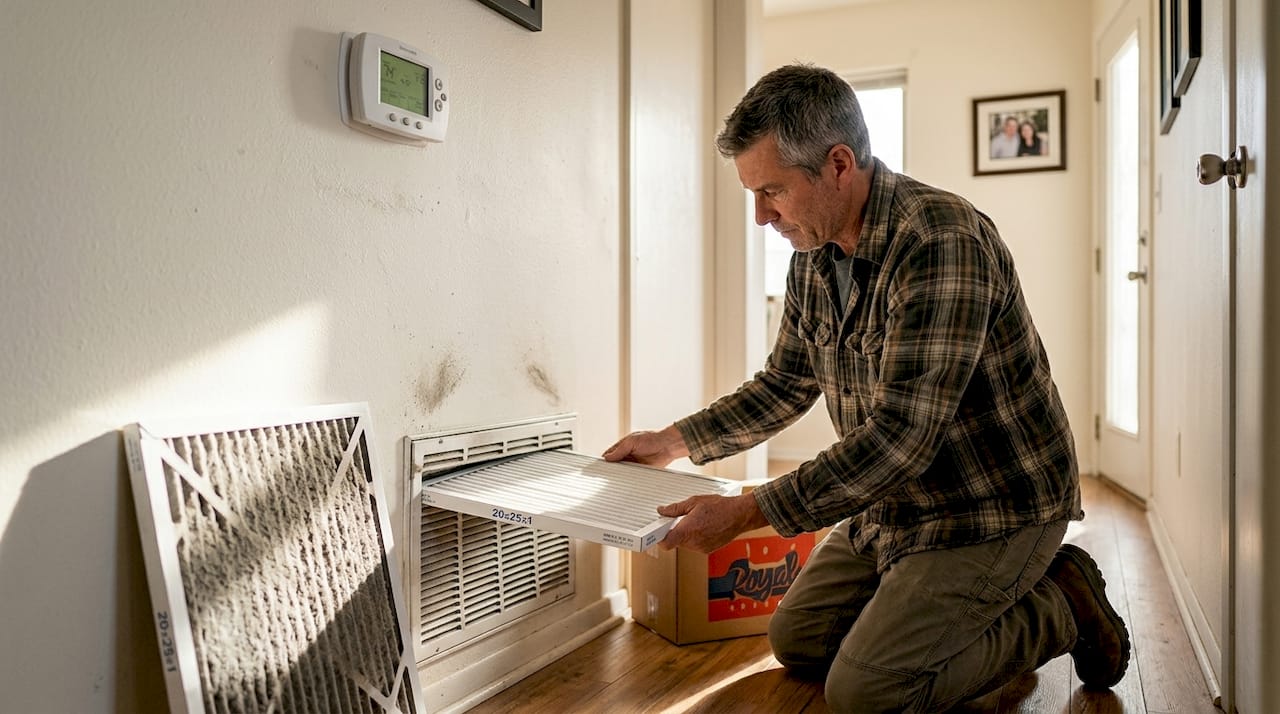
Pro Tip: Replace MERV-13+ filters every 60 days in Albuquerque rather than the standard 90-day schedule. The higher dust load here clogs filters faster, which reduces airflow and filtration efficiency.
These five tools together cover home allergen reduction from multiple angles: surface removal, airborne capture, and ongoing filtration.
How these tools compare: performance and practicalities
Let’s see how these must-haves stack up on the factors that actually make a difference.
| Tool | Allergen capture | Dust suppression | Ease of use | Cost range | Best use case |
|---|---|---|---|---|---|
| HEPA vacuum | 99.97% of particles | High | Moderate | $150-$600+ | Carpets, rugs, upholstery |
| Microfiber mop/cloth | High for fine dust | High | Easy | $20-$80 | Hard floors, surfaces |
| Wet/dry vac or spin mop | Moderate | Moderate | Easy | $40-$200 | Tile, entryways, kitchens |
| HEPA air purifier | Up to 99% of airborne particles | Continuous | Very easy | $100-$500 | Living areas, bedrooms |
| MERV-13+ HVAC filter | Particles down to 1 micron | Whole-home | Easy (replace only) | $20-$60 per filter | Whole-home air circulation |
Consumer-grade tools work well for maintenance, but there’s a clear ceiling on what they can achieve. Multi-step cleaning cuts allergens by up to 90%, while professional-grade equipment removes up to 95% of deep-seated allergens that standard tools can’t reach.
Key takeaways from the comparison:
- HEPA vacuums are unmatched for carpets and fabric surfaces, where allergens embed deeply.
- Microfiber tools are the best daily option for hard floors and furniture surfaces.
- HVAC filters are the only tool that addresses allergens in circulating air passively.
- Air purifiers fill the gap between cleanings, especially in high-traffic rooms.
For most Albuquerque homeowners, combining a HEPA vacuum with microfiber tools and a MERV-13+ filter covers the majority of daily allergen control needs. Add a portable air purifier for bedrooms and you’ve built a solid system.
Expert cleaning strategies for ongoing indoor air quality
Knowing the top tools and their differences, here’s how to use them for best results in an Albuquerque home.
A structured routine matters more than any single tool. Here’s the sequence that produces the best results:
- Start at the top: Dust ceiling fans, light fixtures, and shelves first using a microfiber cloth. Gravity pulls loosened particles down, so you want to capture them on lower surfaces next.
- HEPA vacuum all soft surfaces: Carpets, rugs, upholstered furniture, and even mattresses. Work slowly to give the suction time to extract embedded particles.
- Mop hard floors with a damp microfiber mop: This picks up what the vacuum stirred up on hard surfaces without spreading it into the air.
- Run your HEPA air purifier throughout: Keep it running before, during, and after cleaning to capture particles that become airborne during the process.
- Check and replace HVAC filters on schedule: In Albuquerque, every 60 days is the recommended interval.
Daily sweeps and multi-step routines reduce allergens by up to 90% compared to single-pass cleaning. That’s a significant difference for anyone managing asthma, allergies, or respiratory sensitivity.
“The EPA found that indoor air is 2 to 5 times worse than outdoor air in terms of pollutant concentration, which makes consistent cleaning and filtration critical for Albuquerque homes.”
For home air purification in Albuquerque, running your purifier on a timer during peak outdoor dust hours (typically midday to early afternoon in New Mexico) adds another layer of protection. Keeping windows closed during high-wind days also reduces the amount of particulate matter entering your home in the first place.
Our take: what most cleaning tool lists miss for Albuquerque
Most articles about cleaning tools treat every city the same. They list a HEPA vacuum, mention microfiber, and call it done. That’s not good enough for Albuquerque.
New Mexico’s desert dust is a different challenge. It’s finer, drier, and more persistent than typical household dust. It gets into HVAC systems, settles into carpet fibers, and coats surfaces within hours of cleaning. A tool routine that works in Seattle or Chicago will fall short here without adjustments for frequency and method.
We’ve seen homeowners invest in good tools and still struggle because they’re cleaning on a schedule designed for a wetter climate. The tools are right. The frequency isn’t. In Albuquerque, daily or every-other-day maintenance isn’t excessive. It’s necessary.
We also want to be honest about the limits of consumer tools. Consumer tools suffice for maintenance, but professional cleaning is needed for deeper allergen reduction in high-dust environments. No HEPA vacuum, however good, reaches the allergens embedded deep in carpet backing or settled inside air ducts. That’s where periodic professional intervention matters. Think of your home tools as the daily defense and advanced equipment insights from professional services as the seasonal reset that keeps your system working at full capacity.
How local pros can take your clean further
Your daily tools do a lot, but even the best home routine has limits when it comes to deep-seated allergens in carpets, upholstery, and grout lines.
At Royal Cleaning New Mexico, we use commercial-grade HEPA extraction systems and multi-step protocols designed specifically for Albuquerque’s dust and allergen conditions. Professional equipment removes up to 95% of deep allergens that standard home tools leave behind. Whether you need professional carpet cleaning, upholstery cleaning, or tile and grout cleaning, our team brings the tools and expertise to get the job done right. Contact us to schedule a cleaning that goes beyond what any home tool can deliver.
Frequently asked questions
Why is a HEPA vacuum important for Albuquerque homes?
HEPA vacuums remove 99.97% of fine dust and allergens, which are especially prevalent in Albuquerque’s dry, dusty climate. Standard vacuums often release fine particles back into the air, making the problem worse rather than better.
Are microfiber mops better than brooms for dust control?
Yes. Microfiber mops trap dust rather than spreading it, while brooms stir fine particles into the air where they stay suspended for hours. For allergy control in Albuquerque, microfiber is the clear choice.
How often should I use must-have cleaning tools?
In Albuquerque, daily or every-other-day sweeps are recommended due to frequent dust requiring more cleaning, with full multi-step deep cleans done seasonally or after high-wind events.
Can portable air purifiers improve indoor air quality?
Yes. HEPA air purifiers capture up to 99% of fine particles and are especially helpful between regular cleanings to maintain lower allergen levels in living areas and bedrooms.