(505) 280-5216
Why follow multi-step cleaning for healthier homes in 2026
Most homeowners vacuum and dust regularly, thinking they’ve conquered dirt and allergens. Yet hidden contaminants lurk deep in carpets, upholstery, and air ducts where basic cleaning never reaches. Multi-step cleaning tackles these embedded pollutants through sequential techniques that dramatically improve indoor air quality. For Albuquerque residents facing dry, dusty conditions year round, understanding why comprehensive cleaning matters can transform your home’s health and comfort.
Table of Contents
- What Is Multi-Step Cleaning And Why Does It Matter?
- How Multi-Step Cleaning Improves Indoor Air Quality And Home Health
- The Equipment And Methods Behind Effective Multi-Step Cleaning
- How Following A Multi-Step Cleaning Routine Benefits Your Home And Longevity Of Surfaces
- Experience The Difference With Professional Multi-Step Cleaning
- Why Follow Multi-Step Cleaning? Frequently Asked Questions
Key takeaways
| Point | Details |
|---|---|
| Allergen reduction | Multi-step cleaning reduces allergen levels by 90%, significantly improving respiratory health for families. |
| Extended surface life | Regular deep cleaning extends carpet lifespan while maintaining fresh appearance through proper dirt extraction. |
| HEPA filtration power | Professional equipment captures 99.97% of airborne particles, removing contaminants consumer vacuums miss. |
| Top to bottom efficiency | Sequential cleaning prevents recontamination, saves time, and ensures thorough results across all surfaces. |
| Climate considerations | Dry climates require specialized moisture control and frequent deep cleaning to combat dust accumulation. |
What is multi-step cleaning and why does it matter?
Multi-step cleaning combines sequential techniques targeting different contaminant types and surface depths. Unlike single-step approaches that address only visible dirt, this method employs HEPA vacuuming, steam cleaning, damp dusting, and disinfecting in strategic order. Each step removes specific pollutants that previous steps missed or loosened.
Single-step cleaning typically involves one pass with a vacuum or mop. Surface dirt disappears, creating an illusion of cleanliness. However, embedded allergens, dust mites, and bacteria remain deep in fibers and porous surfaces. These hidden contaminants continuously degrade air quality and trigger respiratory issues.
The sequential approach addresses contamination at every level. HEPA vacuuming captures fine particles before moisture is introduced. Hot water extraction then removes embedded oils and allergens. Disinfecting eliminates remaining pathogens. This layered strategy achieves what single methods cannot.
For homeowners with allergies or asthma, the difference is measurable. Studies show multi-step cleaning reduces allergen levels by up to 90% compared to standard cleaning. That dramatic reduction translates to fewer symptoms, better sleep, and improved quality of life.
Multi-step methods prove especially valuable for households with pets, children, or immune-compromised family members. These groups face higher exposure risks from indoor pollutants. Professional home allergen removal services deliver the thoroughness these situations demand.
Pro Tip: Prioritize cleaning methods that include HEPA vacuuming and EPA-registered disinfectants. This combination addresses both particulate and biological contaminants effectively.
The investment in multi-step cleaning pays dividends through healthier indoor environments and extended surface lifespans. Understanding each component helps you evaluate cleaning services and maintain standards between professional visits.
How multi-step cleaning improves indoor air quality and home health
Indoor allergens assault respiratory systems daily, often without obvious symptoms until problems become chronic. The major culprits include dust mites feeding on dead skin cells, seasonal pollen tracked indoors, pet dander from oils and proteins, and mold spores thriving in moisture. Each requires specific removal strategies.
Multi-step cleaning attacks these allergens systematically:
- HEPA vacuuming captures particles as small as 0.3 microns, including dust mite waste and fine pollen.
- Steam cleaning at 200+ degrees kills dust mites and denatures protein-based allergens like pet dander.
- Disinfecting with EPA-registered products eliminates bacteria, viruses, and mold spores on contact surfaces.
- Ventilation during and after cleaning removes airborne particles loosened by mechanical action.
Research confirms dust mites, pollen, and pet dander reduce significantly after professional deep cleaning. The American Lung Association documents allergen reductions up to 95% in homes following comprehensive cleaning protocols. These improvements persist for weeks when combined with proper maintenance.
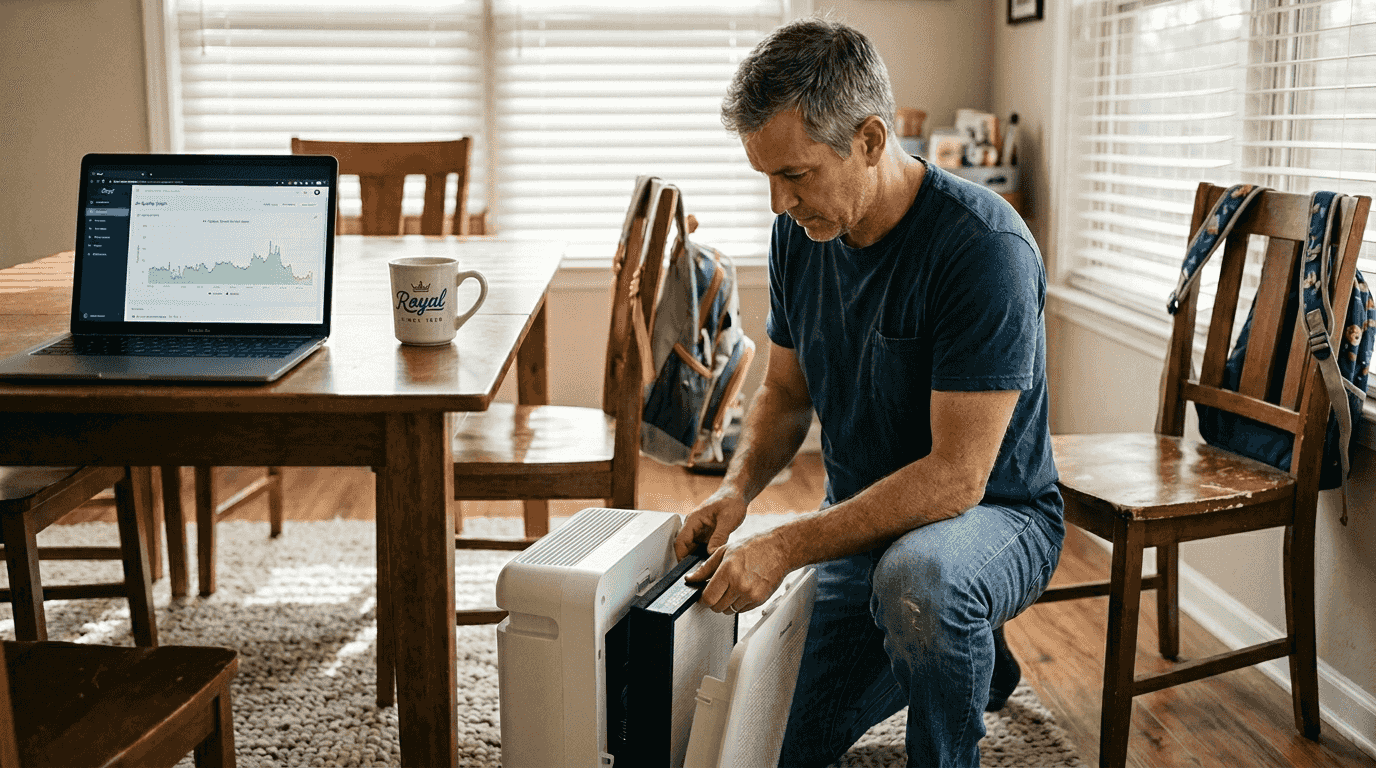
Humidity control plays an equally critical role in allergen management. Mold requires moisture above 50% relative humidity to proliferate. The CDC establishes that maintaining humidity between 30-50% prevents mold growth, a leading allergen source. Multi-step cleaning often includes moisture extraction that removes the water mold needs to survive.
Albuquerque’s dry climate presents unique challenges. While low humidity naturally inhibits mold, it also means dust and particulates remain airborne longer. These particles settle deep into fabrics and porous surfaces, requiring mechanical extraction rather than simple dusting.
“Professional cleaning services that combine mechanical extraction with HEPA filtration reduce both allergen and pathogen loads by 90-95%, creating measurably healthier indoor environments for families.”
The health benefits extend beyond allergy relief. Removing pathogens reduces illness transmission within households. Eliminating dust improves HVAC efficiency, reducing energy costs. Fresher air contributes to better sleep quality and cognitive function. Explore how benefits of air duct cleaning complement surface cleaning for comprehensive air quality improvement.
The equipment and methods behind effective multi-step cleaning
Professional equipment delivers results consumer products cannot match. Truck-mounted systems generate 500+ PSI of water pressure and vacuum suction equivalent to multiple household units combined. This power extracts deeply embedded dirt and removes 95% of applied moisture, preventing mold growth that plagues consumer steam cleaners.
Consumer-grade machines operate at 50-100 PSI with limited suction. They leave carpets damp for 12-24 hours, creating ideal mold conditions. Their lower temperatures (140-160°F) fail to kill dust mites or sanitize effectively. The equipment difference alone explains why professional results last months while DIY cleaning requires weekly repetition.
The top to bottom cleaning method prevents recontamination and maximizes efficiency. Starting with ceilings and working downward ensures loosened dust falls onto surfaces yet to be cleaned. This eliminates the frustration of cleaning floors only to have dust settle from above.
| Equipment Type | Moisture Removal | Temperature | Pressure | Allergen Capture |
|---|---|---|---|---|
| Truck-mounted | 95% | 200-220°F | 500+ PSI | 99.97% with HEPA |
| Portable pro | 85-90% | 180-200°F | 300-400 PSI | 99% with filtration |
| Consumer rental | 60-70% | 140-160°F | 50-100 PSI | 80-85% variable |
| Household unit | 40-50% | 120-140°F | 25-50 PSI | 60-70% limited |
Data from EPA indoor air quality research confirms that truck-mounted systems remove 95% of moisture, preventing mold better than consumer units. This moisture extraction capability proves critical in preventing secondary contamination that undermines cleaning efforts.
Professional methods also include pre-treatment of stains and high-traffic areas. Enzymes break down organic matter before extraction begins. Agitation loosens embedded particles that suction alone cannot remove. These preparatory steps multiply the effectiveness of subsequent cleaning phases.
Understanding professional grade carpet cleaners helps homeowners evaluate service providers and set realistic expectations. The equipment and methods employed directly determine cleaning longevity and health benefits.
Pro Tip: Ask your service provider about their cleaning equipment specifications and sequential methods. Reputable professionals eagerly explain their process, demonstrating expertise and thoroughness.
How following a multi-step cleaning routine benefits your home and longevity of surfaces
Embedded dirt acts like sandpaper on carpet fibers. Every footstep grinds particles against yarn, severing individual filaments and creating a worn, matted appearance. This mechanical damage accelerates when dirt accumulates, shortening carpet life by years. Regular extraction removes abrasive particles before they cause irreversible damage.
The benefits of consistent multi-step cleaning extend across every aspect of home maintenance:
- Carpets last 3-5 years longer with regular professional cleaning every 12-18 months
- Upholstery maintains color vibrancy and structural integrity through proper soil removal
- Hard surfaces resist scratching and etching when grit is eliminated promptly
- HVAC systems operate more efficiently without dust buildup restricting airflow
- Overall home value increases through well-maintained, fresh-appearing interiors
The Carpet and Rug Institute confirms that regular deep cleaning extends carpet life while keeping appearance intact. Their research shows professionally maintained carpets retain 85% of original appearance after 10 years, compared to 40% for neglected carpets.
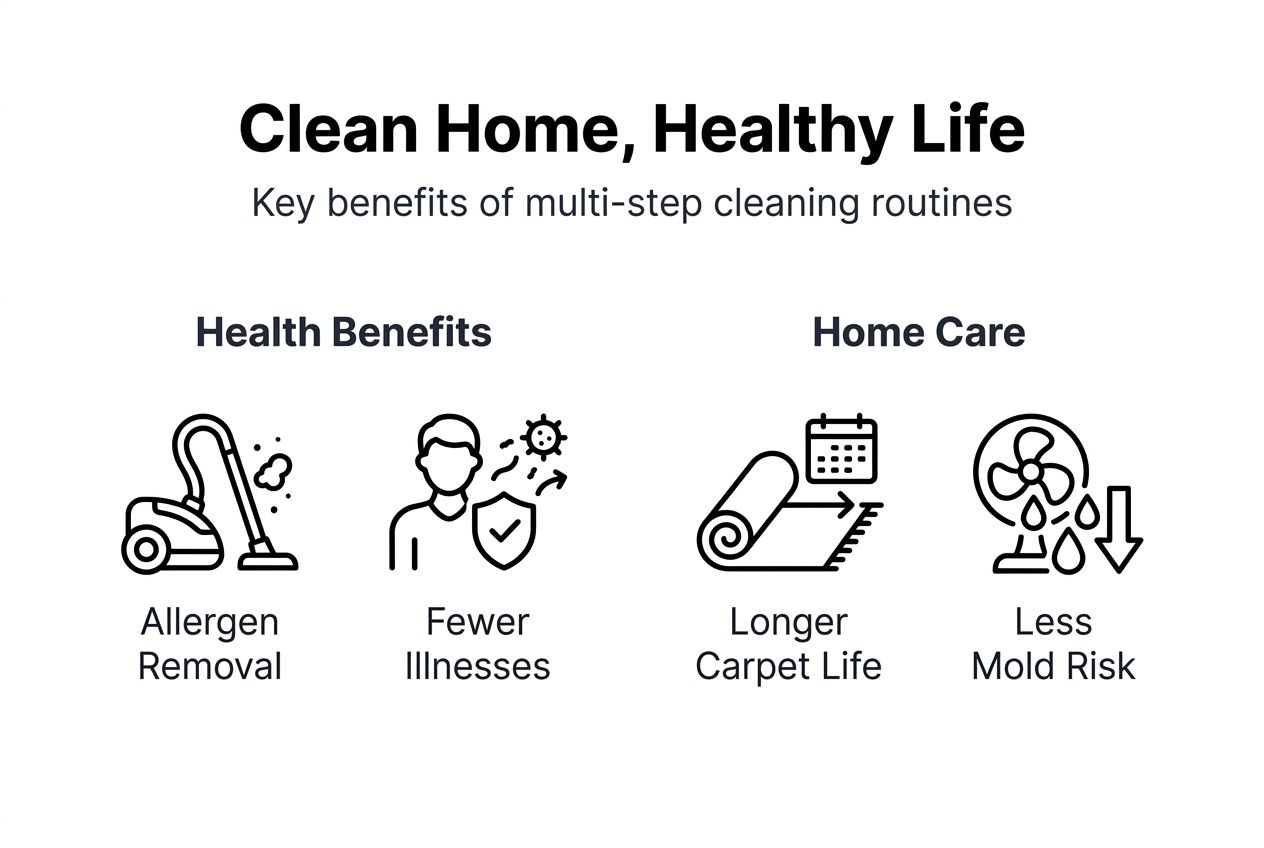
Structured cleaning checklists help homeowners maintain consistency between professional services. Research indicates structured cleaning checklists improve satisfaction and cleanliness by 40%. These tools ensure no surface gets overlooked and cleaning frequency aligns with actual need rather than arbitrary schedules.
| Cleaning Frequency | Average Carpet Lifespan | Homeowner Satisfaction | Annual Allergen-Related Issues |
|---|---|---|---|
| Multi-step every 12-18 months | 12-15 years | 92% satisfied | 2-3 incidents |
| Basic annual cleaning | 8-10 years | 68% satisfied | 5-7 incidents |
| Spot cleaning only | 5-7 years | 41% satisfied | 10+ incidents |
Consistent routines prevent allergen and pathogen buildup that requires intensive remediation. Weekly HEPA vacuuming removes surface particles before they embed. Monthly damp mopping eliminates residues that attract and bind dirt. Quarterly professional extraction addresses deeper contamination that home methods cannot reach.
The financial logic supports regular multi-step cleaning. Replacing carpet costs $3-8 per square foot installed. A 1,500 square foot home faces $4,500-12,000 in replacement costs. Professional cleaning every 18 months at $300-500 prevents premature replacement, saving thousands over a decade.
Learn strategies to extend the life of your carpet through proper maintenance intervals and techniques. Understanding the relationship between cleaning frequency and surface longevity helps homeowners make informed investment decisions.
Experience the difference with professional multi-step cleaning
Your family deserves the healthiest indoor environment possible. Royal Cleaning New Mexico delivers comprehensive multi-step cleaning services that transform air quality and surface appearance throughout your home. Our truck-mounted systems and HEPA filtration remove 95% of allergens, creating measurably cleaner spaces for your loved ones.
We customize cleaning plans to match your home’s specific needs and Albuquerque’s unique climate challenges. Whether you need professional carpet cleaning services, upholstery restoration, or complete home sanitation, our trained technicians follow proven protocols that deliver lasting results. Our transparent pricing and satisfaction guarantee give you confidence in every service.
Follow our detailed residential cleaning checklist 2026 to maintain quality between professional visits. Schedule your consultation today and discover how expert multi-step cleaning protects your family’s health. Explore our professional cleaning services for every surface to create your customized home care plan.
Why follow multi-step cleaning? Frequently asked questions
What are the steps in a multi-step cleaning process?
A complete multi-step process includes HEPA vacuuming to remove loose particles, pre-treatment of stains and high-traffic areas, hot water extraction at 200+ degrees, disinfecting with EPA-registered products, and thorough drying with moisture extraction. Each step targets specific contaminant types that other steps miss.
How often should multi-step cleaning be done for optimal results?
Most homes benefit from professional multi-step cleaning every 12-18 months, depending on traffic, pets, and occupant health needs. High-traffic households or those with allergy sufferers may require cleaning every 6-12 months. Weekly HEPA vacuuming and monthly surface cleaning maintain results between professional services.
Can multi-step cleaning help reduce allergy symptoms?
Yes, dramatically. Multi-step cleaning removes up to 95% of allergens including dust mites, pollen, pet dander, and mold spores. Most families notice reduced symptoms within days as allergen loads drop and air quality improves. Regular cleaning prevents allergen reaccumulation that triggers chronic symptoms.
Is professional equipment necessary for effective multi-step cleaning?
Professional equipment proves essential for thorough results. Truck-mounted systems extract 95% of moisture preventing mold, generate temperatures that kill dust mites, and provide suction consumer units cannot match. While homeowners can maintain surfaces between visits, professional equipment achieves deep cleaning consumer products cannot replicate.
What makes multi-step cleaning especially important in Albuquerque’s climate?
Albuquerque’s dry, dusty conditions mean fine particles remain airborne longer and settle deep into fabrics and surfaces. Low humidity prevents natural settling, requiring mechanical extraction rather than simple dusting. Professional multi-step cleaning removes embedded desert dust that abrases surfaces and degrades air quality. Discover why top reasons to hire a professional carpet cleaner matter even more in arid climates.