(505) 280-5216
How to remove pet stains: effective solutions for clean homes
TL;DR:
- Pet stains create persistent odors and damage if not addressed quickly.
- Proper removal involves enzymatic cleaners, blotting, and avoiding aggressive scrubbing.
- Professional cleaning is recommended for deeply set or recurring stains and odors.
Pet stains are one of the most frustrating problems Albuquerque homeowners face. The odor lingers, the discoloration spreads, and if you don’t act fast, the damage goes deeper than the surface. Many homeowners try their best with paper towels and spray bottles, only to find the smell returns days later. The good news is that with the right approach, the right products, and a clear step-by-step process, you can tackle pet stains effectively and protect your home’s health and appearance. This guide gives you exactly that, starting with why these stains are so stubborn in the first place.
Table of Contents
- Understanding pet stains and their challenges
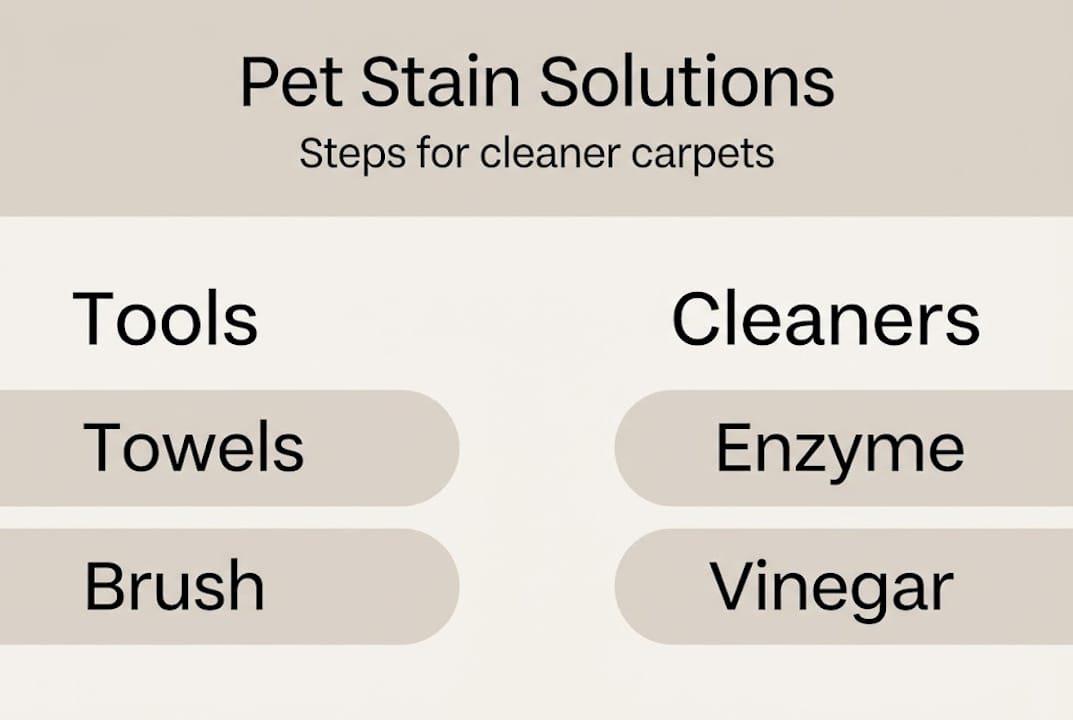
- What you’ll need: Tools and materials for effective stain removal
- Step-by-step process: Removing fresh and set-in pet stains
- How to prevent future pet stains and odors
- What most pet stain guides miss (and what actually works)
- Expert help: When professional pet stain removal makes sense
- Frequently asked questions
Key Takeaways
| Point | Details |
|---|---|
| Act quickly | Prompt action prevents stains from setting and spreading odors in your home. |
| Use the right cleaners | Choose solutions like white vinegar or enzyme cleaners for effective pet stain removal. |
| Avoid common mistakes | Blot stains—do not rub—to keep carpets in good condition. |
| Professional help is available | If DIY fails, local cleaning experts can restore even stubborn stains and odors. |
Understanding pet stains and their challenges
Pet stains aren’t just a cosmetic problem. When urine, vomit, or feces contacts carpet or upholstery, the organic compounds begin breaking down almost immediately. That breakdown creates ammonia, bacteria, and acidic residue that work their way into carpet fibers and the padding beneath. Left untreated, urine and organic stains can penetrate carpet and pad, causing lasting odors and bacteria growth that no surface spray can fully address.
Here’s a quick look at how different types of pet stains affect common surfaces:
| Stain type | Common surfaces affected | Risk if untreated |
|---|---|---|
| Urine | Carpet, hardwood, grout | Odor, bacteria, discoloration |
| Vomit | Carpet, upholstery, rugs | Acid damage, staining |
| Feces | Carpet, tile, hardwood | Bacterial contamination |
Some of the most common stain-related risks Albuquerque homeowners face include:
- Permanent discoloration from uric acid crystals bonding with carpet fibers
- Bacterial growth that creates an unhealthy indoor environment
- Allergen buildup from pet dander trapped alongside moisture, which poses pet dander risks for family members with sensitivities
- Subfloor damage when urine soaks through padding repeatedly
Many homeowners also fall into common myths that make things worse. Using hot water on a fresh stain, for example, actually sets the proteins in urine and makes the odor harder to remove. Scrubbing the stain aggressively spreads it and pushes it deeper into the fibers. And using bleach or ammonia-based cleaners on pet stains can make the smell worse because pets are drawn back to the scent.
Fast action is the single most important factor in successful pet stain removal. The longer a stain sits, the deeper it penetrates and the harder it becomes to remove fully.
For households with multiple pets or recurring accidents in the same spot, consider exploring pet-safe cleaning techniques that won’t harm your animals while still getting the job done.
What you’ll need: Tools and materials for effective stain removal
Once you understand what you’re up against, it’s time to assemble the right tools for the job. Using the wrong products is one of the most common reasons DIY stain removal fails. Some household products can set stains or damage carpet fibers if used incorrectly, so knowing what to reach for matters.
Here’s a comparison of your main options:
| Solution type | Best for | Limitations |
|---|---|---|
| White vinegar + water | Fresh urine stains | Smell may linger temporarily |
| Baking soda | Odor absorption | Does not remove the stain itself |
| Enzymatic cleaner | All pet stains, odors | Takes time to activate |
| OTC stain remover | Surface-level stains | May contain harsh chemicals |
| Professional treatment | Deep-set, recurring stains | Requires scheduling |
Your basic home toolkit should include:
- Clean white cloths or paper towels for blotting
- Cold water (never hot) for diluting the stain
- White vinegar mixed with water in equal parts
- Baking soda for odor neutralization after cleaning
- Enzymatic cleaner for breaking down uric acid at a molecular level
- A soft-bristle brush for working cleaner into fibers gently
- A wet/dry vacuum for extraction
Enzymatic cleaners deserve special attention. They contain biological enzymes that actually digest the proteins in pet waste, which is why they outperform simple soap-and-water solutions on odor. These are available at most pet stores and are safe for use around children and pets when used as directed.
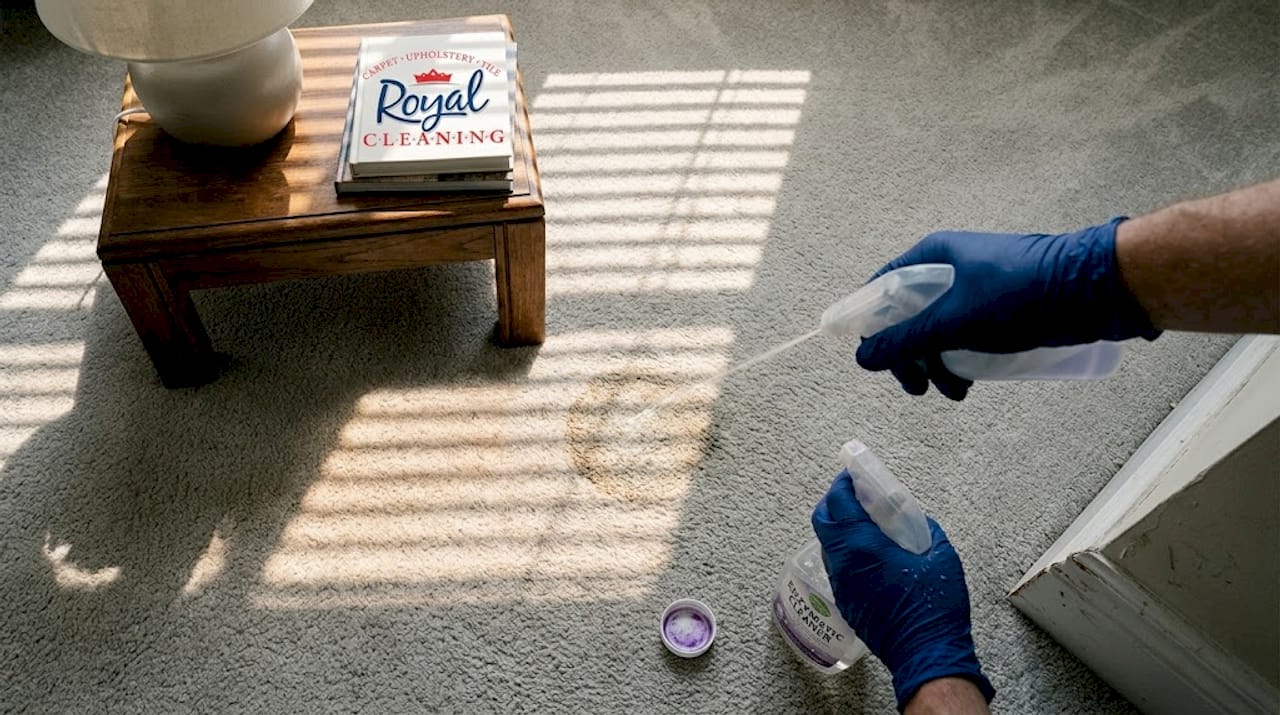
For safety, always check pet stain cleaning safety guidelines before mixing products. Never combine vinegar with hydrogen peroxide or bleach, as these combinations can produce harmful fumes.
Pro Tip: Test any cleaning solution on a hidden section of your carpet before applying it to the stain. Some carpets react poorly to acidic cleaners like vinegar, especially wool blends or older fibers.
For general upkeep between stain events, review these basic cleaning tips to keep your carpets in the best possible shape year-round.
Step-by-step process: Removing fresh and set-in pet stains
With your supplies gathered, follow this proven process for the best results on both fresh and older stains.
For fresh stains:
- Act immediately. The faster you respond, the better your results.
- Remove solids first. Use a spoon or paper towel to lift solid waste without spreading it.
- Blot the liquid. Press clean white cloths firmly onto the stain. According to sound cleaning practice, blot, don’t rub, to avoid spreading the stain or driving it deeper into the fibers.
- Apply cold water. Pour a small amount of cold water on the area and blot again to dilute the stain.
- Apply your cleaning solution. Use an enzymatic cleaner or a 1:1 vinegar-water solution. Let it sit for 5 to 10 minutes.
- Blot again. Work from the outside edges of the stain toward the center.
- Sprinkle baking soda. Once the area is damp but not soaking, apply a thin layer of baking soda and let it sit for several hours or overnight.
- Vacuum thoroughly. Remove all baking soda residue once dry.
For set-in stains:
Old stains require more patience. The stain has likely bonded with carpet fibers and dried into a hard residue. Start by re-wetting the area with cold water to loosen the dried material. Then apply an enzymatic cleaner generously and cover the area with a damp cloth to slow evaporation. Let it work for 20 to 30 minutes. You may need to repeat this process two or three times for deeply set stains.
For guidance on especially stubborn cases, explore these advanced stain removal options that go beyond standard at-home approaches.
Common mistakes to avoid:
- Using hot water, which sets protein-based stains
- Rubbing or scrubbing, which spreads the stain and damages fibers
- Skipping the blotting step, which leaves moisture trapped in the pad
- Using steam cleaners on fresh stains, which can bond the stain permanently
For a broader look at how professionals clean pet accidents, the AKC offers clear guidance on what works and what doesn’t.
Pro Tip: After the area dries completely, run your hand over it in the dark with a UV flashlight. Urine glows under UV light, so you can confirm whether the stain is fully gone or needs another treatment round.
How to prevent future pet stains and odors
After successfully tackling a stain, a few ongoing habits can make all the difference in keeping your home fresh. Prevention is far easier than repeated stain removal, and it protects your carpet’s lifespan significantly.
Here are the most effective prevention habits:
- Vacuum daily or every other day in areas where your pets spend the most time. This removes dander, hair, and debris before they settle deep into fibers.
- Clean accidents immediately every single time, even small ones. Consistency trains pets away from repeat spots.
- Use enzyme-based odor neutralizers monthly in high-traffic pet areas to prevent buildup before it becomes a problem.
- Place washable rugs in areas where your pet tends to rest or play. These are far easier to clean than wall-to-wall carpet.
- Apply carpet protector sprays after cleaning to create a barrier that slows stain absorption.
- Schedule professional deep cleaning at least once per year. As regular deep cleaning and prompt spot treatment show, consistent professional care is key to long-term cleanliness and carpet health.
The area where your pet had one accident is the exact spot they’ll likely return to unless the odor is fully eliminated. Removing the stain visually isn’t enough. You must eliminate the scent entirely.
For households with multiple pets, consider rotating area rugs and washing them every few weeks. Talk to your vet about behavioral training options if accidents are frequent, since this reduces the source problem rather than just addressing the aftermath.
Learn more about protecting your carpet from pet damage with practical, lasting solutions designed for real pet owners.
What most pet stain guides miss (and what actually works)
Most pet stain guides were written for a general audience in temperate, humid climates. Albuquerque is different. Our dry, high-desert climate affects how stains behave and how cleaning solutions perform. Moisture evaporates quickly here, which means enzymatic cleaners dry out before they’ve had enough time to fully break down uric acid. That’s why covering the treated area with a damp cloth is especially important in New Mexico homes.
Another overlooked factor is that Albuquerque’s hard water can leave mineral residue when mixed with certain cleaners, creating a new kind of stain where you were trying to remove one. Testing your solution and rinsing thoroughly with filtered water makes a real difference.
We also see homeowners who follow advice meant for tile or hardwood floors and apply it to their carpets, or vice versa. Surfaces matter. What removes a stain from tile grout can destroy carpet backing.
Finally, knowing when to stop is a skill. If you’ve tried three cleaning cycles and the smell remains, the stain has likely reached the subfloor or padding. At that point, additional DIY efforts often make things worse. Explore urine-specific solutions for guidance, and revisit deep cleaning advice to understand what the next level of care looks like.
Expert help: When professional pet stain removal makes sense
Sometimes DIY methods simply aren’t enough, and that’s completely normal. If odors return after cleaning, if the stain covers a large area, or if your carpet feels stiff or discolored despite your best efforts, it’s time to call in a professional.
At Royal Cleaning New Mexico, we specialize in professional carpet cleaning for Albuquerque homeowners dealing with exactly these challenges. Our multi-step extraction process reaches the carpet pad where DIY products can’t, eliminating odors at the source. We also offer specialized upholstery cleaning for sofas, chairs, and other fabric surfaces that pets love. Local expertise, eco-friendly solutions, and a satisfaction guarantee mean you get results you can trust without any surprises.
Frequently asked questions
What household products work best for cleaning pet stains?
White vinegar, baking soda, and enzymatic cleaners are the most effective options, as common household products for pet stains include all three for removing both the stain and the underlying odor.
How do I get rid of pet stain odors permanently?
Treat the area quickly with an enzymatic cleaner and ensure the padding beneath is also addressed, since odors linger if the stain is not removed fully from the carpet and padding.
Can pet stains damage my carpet or floors long-term?
Yes. Pet stains can lead to permanent discoloration and fiber breakdown if not removed promptly, especially when uric acid crystals bond deeply into the material.
When should I call a professional for pet stain removal?
Call a professional if DIY methods fail or odors persist after multiple attempts, since professional cleaning services can handle deeply set or persistent stains that go beyond the reach of surface treatments.