(505) 280-5216
Common Areas Cleaning Tips for a Healthier Home
TL;DR:
- Shared home spaces quickly attract dirt, germs, and allergens, making regular cleaning essential for hygiene. Focusing on high-touch surfaces, using proper tools, and maintaining consistency help prevent cross-contamination and improve indoor air quality. Professional deep cleaning is recommended for carpets, upholstery, and air ducts to address contaminants that surface cleaning cannot reach.
Shared spaces in your home collect dirt, germs, and allergens faster than most people realize. Whether you live with roommates, family, or manage a rental property, applying the right common areas cleaning tips makes a real difference in both hygiene and comfort. Indoor air can be up to 100 times more polluted in extreme cases than outdoor air, and neglected shared spaces are a major contributor. The good news is that a structured, consistent approach to cleaning shared areas is something any homeowner or renter can put into practice starting today.
Table of Contents
- Key takeaways
- 1. Common areas cleaning tips: the criteria that matter most
- 2. Entryways, hallways, and living rooms
- 3. Shared kitchens and dining spaces
- 4. Shared bathrooms and laundry areas
- 5. Cleaning tools and products compared
- My honest take on cleaning shared spaces
- When professional cleaning makes a real difference
- FAQ
Key takeaways
| Point | Details |
|---|---|
| Clean before you disinfect | Removing surface grime first allows disinfectants to actually work on pathogens underneath. |
| Use color-coded cloths | Assign specific cloth colors to each zone to stop germs from spreading between rooms. |
| Target high-touch points often | Light switches, door handles, and faucets need attention multiple times throughout the day. |
| Choose the right tools | Microfiber cloths and HEPA-filter vacuums outperform cotton rags and standard vacuums in shared spaces. |
| Consistency beats intensity | Frequent light cleaning sessions maintain hygiene better than one thorough weekly clean. |
1. Common areas cleaning tips: the criteria that matter most
Before you pick up a single cloth, you need a solid framework. Cleaning shared spaces without a plan often means missing the surfaces that matter most.
Here are the core criteria to apply every time:
- Address high-touch surfaces frequently. Door handles, light switches, stair railings, and remote controls collect pathogens from every person who passes through. Frequent touchpoint cleaning is necessary to minimize cross-contamination between full cleaning sessions.
- Declutter before you clean. Surfaces covered in clutter cannot be properly wiped or disinfected. Clear items away first so your cleaning tools actually reach the surface.
- Choose the right products for each surface. Not all cleaners work on all materials. Using the wrong product can damage finishes or leave behind residue that attracts more dirt.
- Think about indoor air quality. Dust disturbed during cleaning can worsen air quality if not captured properly. Maintaining HVAC components and using HEPA vacuums can significantly reduce airborne contaminants in shared household areas.
- Use color-coded cleaning textiles. Color-coded microfiber cloths assigned to specific zones prevent germs from traveling between the bathroom and the kitchen. Red for bathrooms, blue for kitchens, and green for living areas is a widely used standard.
Pro Tip: Always clean a surface before you disinfect it. Disinfection is ineffective on soiled surfaces because pathogens stay protected beneath grime and residue. A quick wipe to remove dirt first gives your disinfectant a clear path to work.
2. Entryways, hallways, and living rooms
These are the spaces everyone passes through multiple times a day, which means they accumulate dust, tracked-in debris, and surface grime quickly. Effective cleaning strategies for these common areas do not need to be complex. They just need to be consistent.
- Vacuum carpets and rugs at least twice a week in high-traffic areas. Floors and carpets are large contaminant reservoirs, and vacuuming with a HEPA filter vacuum removes allergens and microbes that standard vacuums simply recirculate.
- Wipe down door handles, light switches, and furniture surfaces with a disinfectant-dampened microfiber cloth at least every other day.
- Use damp mopping on hard floors rather than dry sweeping alone. Dry sweeping redistributes fine dust into the air. A damp mop captures it.
- Establish a clutter routine. Shoes by the door, bags on hooks, and mail in a designated spot all reduce the surface area you need to clean around.
- For living rooms, spot-clean upholstered furniture weekly and check under cushions for crumbs and debris that can attract pests.
Pro Tip: Microfiber cloths physically trap dirt and reduce the need for harsh chemical sprays. Use them dry for dusting and slightly damp for wiping surfaces. They outperform cotton rags in capturing fine particles rather than pushing them around.
For deeper guidance on keeping carpets hygienic, Royal Carpet and Tile Cleaning offers a dedicated resource covering professional-level carpet care for residential settings.
3. Shared kitchens and dining spaces
Kitchens carry a unique risk because food preparation surfaces can harbor pathogens that cause illness. Cleaning tips for communal spaces like shared kitchens need to address both hygiene and cross-contamination from food prep zones.
Follow this cleaning sequence for shared kitchen areas:
- Clear all surfaces. Remove dishes, appliances, and food items before wiping anything down.
- Wipe countertops with a food-safe cleaner first, then follow with a disinfectant. Allow the disinfectant to sit for the manufacturer’s recommended dwell time before wiping it off. Removing it too early significantly reduces its effectiveness.
- Disinfect high-touch kitchen surfaces like cabinet handles, the refrigerator door, microwave buttons, and the coffee maker throughout the day. One morning clean is not enough. Targeted disinfection throughout the day reduces pathogen buildup between full cleanings.
- Clean shared appliances on a schedule. Microwaves should be wiped inside weekly. Refrigerators need a thorough wipe-down monthly, including the door seals.
- Manage trash and recycling daily. Leaving bins full overnight invites pests and odors. Line bins consistently and sanitize them weekly with a diluted bleach solution.
A useful option for tough pathogen concerns is a fresh 1:9 bleach-to-water solution. This bleach solution destroys protein shells of viruses and is safe for most hard surfaces in kitchens and bathrooms.
Pro Tip: Assign separate cutting boards and prep zones for raw meat, vegetables, and ready-to-eat foods. Label them clearly and clean each with hot soapy water and a food-safe disinfectant after every use.
4. Shared bathrooms and laundry areas
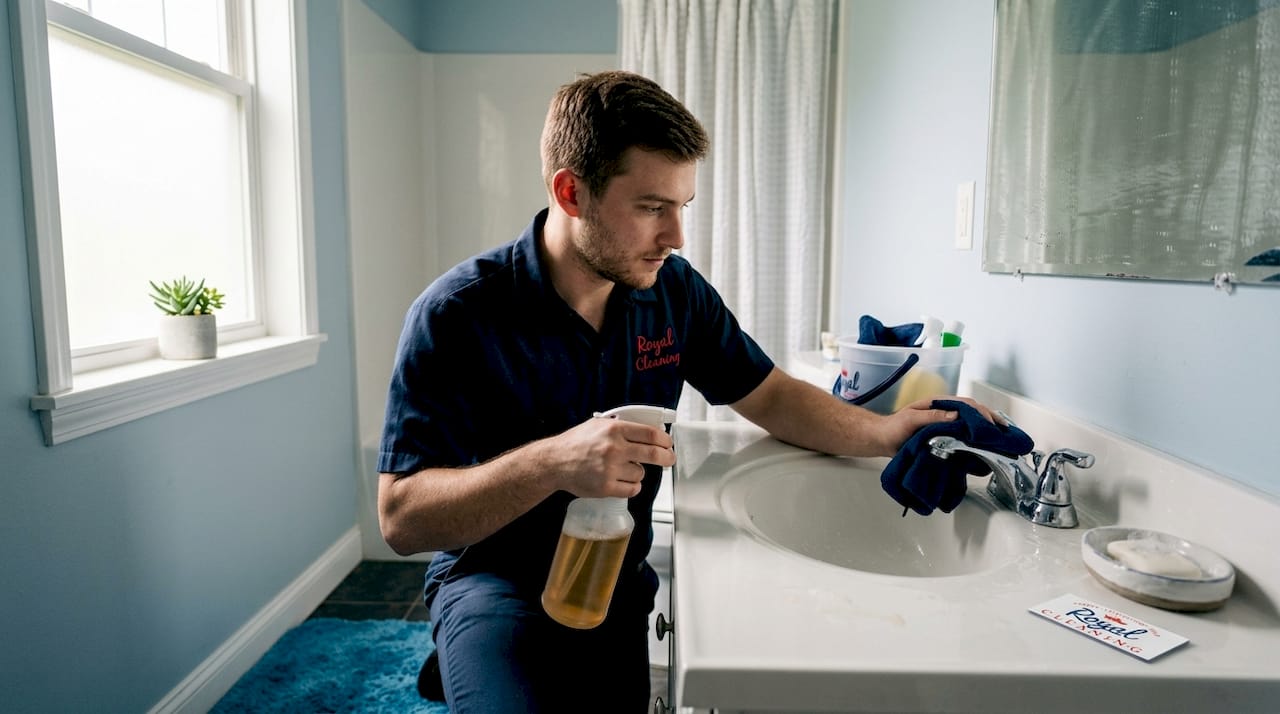
Wet areas carry the highest risk for mold, mildew, and pathogen buildup. Best practices for cleaning shared areas like bathrooms require specific tools and cleaning agents that address moisture-related problems directly.
- Use a bathroom-specific disinfectant on toilets, sinks, and shower tiles at least three times per week in a multi-person household. Daily is better.
- Clean drains weekly. Hair and soap scum buildup in drains creates the perfect environment for mold growth and unpleasant odors.
- Squeegee shower walls after each use to reduce moisture and prevent soap scum from hardening.
- Organize shower caddies and use separate toiletry cases for each person. Dedicated containers for shower and sink items reduce clutter and improve hygiene significantly.
- Disinfect faucets, flush handles, towel bars, and light switches daily. These are the highest-touch points in any bathroom and the fastest to recontaminate.
- For laundry areas, wipe down the drum and door seal of washing machines monthly. Mold grows inside damp seals quickly and transfers to clothing.
Pro Tip: Run your washing machine on a hot cycle with a cup of white vinegar monthly to clean the drum and eliminate odor-causing bacteria without damaging the machine.
Schedule your bathroom cleaning around peak-use times. Cleaning right after the morning rush gives the space the longest possible window to dry before the next heavy-use period.
5. Cleaning tools and products compared
Choosing the right tools is just as important as choosing the right technique. The table below compares the most common tools and products used for maintaining cleanliness in shared spaces.
| Tool or Product | Best Use | Key Benefit | Consideration |
|---|---|---|---|
| Microfiber cloth | Dusting and surface wiping | Traps particles instead of spreading them | Wash after each zone use |
| Flat mop with microfiber pad | Hard floor cleaning | Reduces water use and dries quickly | Replace pads regularly |
| HEPA filter vacuum | Carpets and rugs | Captures allergens and fine particles | Higher upfront cost |
| All-purpose disinfectant spray | Hard surfaces | Kills most common household pathogens | Allow full dwell time |
| Bleach-to-water solution (1:9) | Bathrooms and kitchens | Neutralizes viruses on hard surfaces | Do not use on porous materials |
| Low-VOC enzyme cleaner | Organic stains and odors | Breaks down stains without harsh fumes | Works more slowly than bleach |
Low-VOC (volatile organic compound) products are worth prioritizing, especially in homes with children, pets, or residents with respiratory sensitivities. Many conventional sprays release fumes that worsen indoor air quality after cleaning. If indoor air health is a concern, reviewing resources on indoor air pollution solutions can help you identify safer product options for your home.
One detail many people overlook is dwell time. Disinfectant products need to remain wet on a surface for anywhere from 30 seconds to 10 minutes depending on the product. Wiping too soon reduces the kill rate against pathogens significantly. Read the label and time it if needed.
My honest take on cleaning shared spaces
I’ve spent a lot of time talking to homeowners and renters who feel like their shared spaces are never truly clean, even after they put in the effort. What I’ve learned is that the problem is almost never about how hard they work. It’s about what they miss.
The most common misconception I encounter is that cleaning and disinfecting are the same thing. They are not. You can wipe down a countertop and it will look spotless, but if you did not remove the surface grime first, the disinfectant you applied afterward had almost no effect. I always explain it this way: the order of operations is not optional.
What I’ve also found is that a three-layer approach to daily hygiene, a morning reset, a midday refresh of high-touch points, and an evening deeper clean, keeps shared spaces consistently manageable without requiring a massive time investment each day. You do not need to scrub everything daily. You need to hit the right surfaces at the right frequency.
My strongest recommendation is to start with your high-touch points and build outward from there. If you focus nothing else, disinfect door handles, light switches, and faucets at least twice a day in a shared home. That one habit reduces pathogen transfer more than any product upgrade you can make. Consistency, not intensity, is what actually works.
— Bernadette
When professional cleaning makes a real difference
Some surfaces in shared home areas genuinely need more than regular DIY cleaning to stay hygienic and looking their best. Carpets, upholstery, tile grout, and air ducts accumulate contaminants that standard vacuums and surface sprays cannot fully address. Royal Carpet and Tile Cleaning provides professional residential cleaning services tailored to exactly these surfaces, with specialty options for carpet extraction, upholstery care, tile and grout cleaning, and air duct maintenance. If you want a structured starting point for your own routine, the residential cleaning checklist from Royal Carpet and Tile Cleaning gives homeowners a clear, room-by-room plan designed for better results. Serving Albuquerque, Rio Rancho, and surrounding communities, the team brings professional equipment and eco-friendly products to the spaces that need it most.
FAQ
What are the most important common areas cleaning tips?
Focus on high-touch surfaces like door handles, light switches, and faucets. Clean before disinfecting, use microfiber cloths, and assign color-coded tools to each zone to prevent cross-contamination.
How often should shared areas be cleaned?
High-touch points in shared spaces should be disinfected at least twice daily. Floors, countertops, and fixtures benefit from cleaning three to five times per week depending on the number of people using the space.
Does disinfecting work without cleaning first?
No. Disinfection is ineffective on soiled surfaces because pathogens stay protected beneath grime. Always remove dirt and residue before applying any disinfectant product.
What cleaning tools work best in shared spaces?
Microfiber cloths and HEPA filter vacuums are the most effective tools for shared residential areas. Microfiber reduces dust redistribution and improves cleaning efficiency compared to cotton rags or standard vacuum equipment.
How do you prevent mold in shared bathrooms?
Squeegee shower walls after each use, clean drains weekly, and ensure proper ventilation. Using a bathroom-specific disinfectant on tiles and wet surfaces at least three times per week keeps mold from taking hold.