(505) 280-5216
Carpet Stain Removal Workflow 2026: 85% Success Rate
Carpet stains from spills, pets, and daily wear frustrate Albuquerque homeowners who want clean floors without harsh chemicals or expensive services. You need a proven method that works quickly, protects your carpets, and uses safe products. This article delivers a step-by-step workflow that combines eco-friendly solutions with expert techniques to remove stains effectively and extend your carpet’s life.
Table of Contents
- Prerequisites And What You Need
- Step-By-Step Carpet Stain Removal Workflow
- Choosing The Right Cleaning Solutions
- Common Mistakes And Troubleshooting
- When To Consider Professional Cleaning
- Expected Outcomes And Success Metrics
- Discover Expert Carpet Cleaning Services In Albuquerque
- Frequently Asked Questions
Key Takeaways
| Point | Details |
|---|---|
| Immediate blotting | Blotting within 5 minutes prevents stain setting by absorbing liquids before they penetrate fibers. |
| Certified cleaners | CRI Seal of Approval products ensure safe, effective stain removal while protecting carpet warranties. |
| Blot, never scrub | Blotting lifts stains while scrubbing damages fibers and drives soil deeper, reducing success rates significantly. |
| Professional intervals | Deep cleaning every 12 to 18 months removes embedded dirt and allergens, improving air quality. |
| Common errors | Over-wetting and skipping spot tests cause mold growth, discoloration, and fiber damage. |
Prerequisites and What You Need
Before tackling any carpet stain, gather the right tools and knowledge. Missing even one essential item can turn a simple cleanup into a bigger problem.
Start with a quality vacuum cleaner, preferably one with CRI certification. Vacuuming before treatment removes loose dirt that would otherwise grind deeper during cleaning. White cloths or paper towels prevent dye transfer, which colored fabrics can cause on light carpets.
Choose eco-friendly, CRI-certified stain removers. These products meet rigorous safety and effectiveness standards without compromising your family’s health or your carpet warranty. You’ll also need a spray bottle for controlled application, protective gloves, and access to clean water for rinsing.
Essential Tools Checklist:
- CRI-certified vacuum cleaner
- White cloths or paper towels
- Eco-friendly CRI-approved stain remover
- Spray bottle for diluted solutions
- Protective gloves
- Clean water bucket
- Mild detergent for rinsing
- Spoon or spatula for solid residues
Understanding your carpet fiber type matters more than most homeowners realize. Nylon handles aggressive treatments better than wool or silk blends. Check your carpet’s care label or manufacturer documentation before applying any cleaner.
| Carpet Type | Compatible Cleaners | Precautions |
|---|---|---|
| Nylon | Most pH-balanced solutions | Avoid bleach-based products |
| Polyester | Mild detergents, enzymatic | Test color fastness first |
| Wool | Specialized wool-safe only | Never over-wet, air dry slowly |
| Olefin | Oil-based stain removers | Melts at high heat |
Stain characteristics also guide product selection. Fresh liquid spills respond to simple blotting and water. Protein-based stains like blood or food need enzymatic cleaners. Oil-based stains require solvent-based treatments.
Pro Tip: Keep a small cleaning kit in your kitchen or laundry room. When spills happen, you’ll have everything within reach instead of watching the stain set while you search for supplies.
For more detailed guidance on maintaining your carpets between deep cleanings, explore proven carpet cleaning tips that professionals use daily. The CRI cleaning and maintenance guidelines provide additional technical specifications for different fiber types.
Step-by-Step Carpet Stain Removal Workflow
Follow this exact sequence for maximum stain removal success while protecting your carpet investment. Each step builds on the previous one, creating a systematic approach that works.
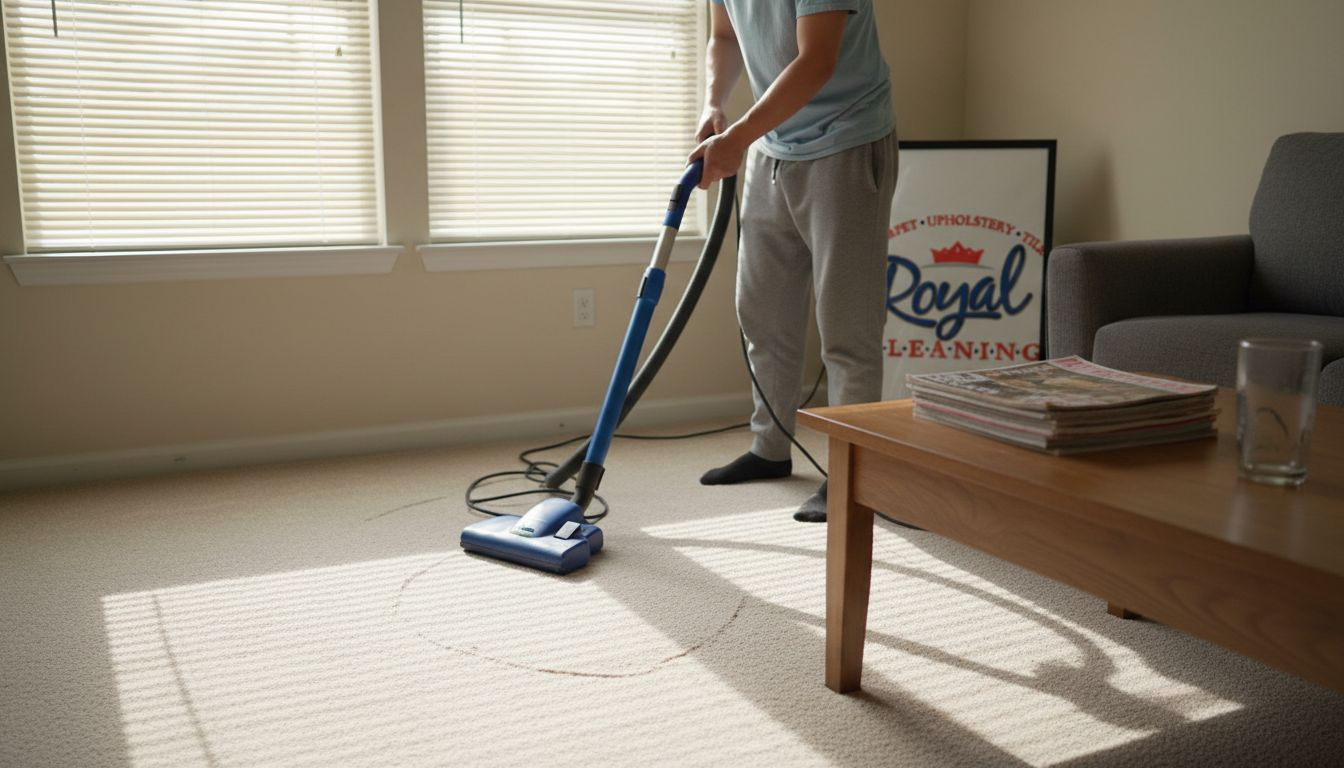
1. Vacuum the Area Thoroughly
Remove all loose dirt, dust, and particles from the stained area and surrounding carpet. This prevents grinding contaminants deeper during treatment. Use overlapping passes and multiple directions for best results.
2. Blot Fresh Stains Immediately
Immediate blotting with white cloths absorbs liquids before they penetrate carpet backing. Press firmly without rubbing. Replace cloths as they saturate to continue lifting moisture.
3. Remove Solid Residues Gently
Use a spoon or dull knife to scrape up solids from the outside toward the center. This prevents spreading. Never grind solids into fibers by pressing down.
4. Conduct a Spot Test
Apply cleaning solution to an inconspicuous area like a closet corner. Wait 10 minutes and check for discoloration or texture changes. This critical step prevents costly damage.
5. Apply Stain Remover Sparingly
Spray or pour a small amount of your chosen cleaner onto the stain. Too much product attracts dirt and leaves residue. Follow manufacturer instructions for dwell time, typically 3 to 5 minutes.
6. Blot Up Solution and Residues
After dwell time, blot the treated area with clean white cloths. Work from the outside in, replacing cloths frequently. If the stain persists, repeat application once more.
7. Rinse and Final Blotting
Spray clean water lightly over the treated area to remove cleaning solution residue. Blot thoroughly with dry cloths. Residue attracts dirt and can cause rapid resoiling.
8. Air Dry Completely
Allow 4 to 6 hours for complete drying. Open windows or use fans to speed the process. Never walk on damp carpet, as this transfers dirt and compresses wet fibers.
Pro Tip: Place white paper towels over the damp area and weigh them down with a heavy book. This wicking method pulls remaining moisture and stain residue up into the towels as the carpet dries.
For stubborn stains that resist this workflow, professional carpet cleaning uses truck-mounted equipment that extracts more water and soil than home methods allow. Professionals also have access to specialized spot treatments for challenging stains.
Additional strategies for persistent problems are available through deep stain removal tips that address set-in or aged stains. The Forbes stain removal guide offers visual demonstrations and product recommendations.
Choosing the Right Cleaning Solutions
Product selection makes or breaks your stain removal success. The wrong cleaner damages fibers, voids warranties, or simply fails to remove the stain.
CRI Seal of Approval certification guarantees that a product removes stains effectively while protecting carpet fibers and maintaining manufacturer warranties. This independent testing eliminates guesswork and protects your investment.
Enzymatic cleaners break down organic stains like pet urine, blood, and food by digesting proteins at the molecular level. These biological solutions eliminate odors at their source rather than masking them with fragrances.
Cleaner Types by Stain Category:
- Water-based spills: Mild detergent solution or plain water
- Protein stains: Enzymatic cleaners with protease enzymes
- Oil and grease: Solvent-based spot removers
- Tannin stains (coffee, wine): Acidic cleaners or oxygen-based formulas
- Dye stains: Professional-grade reducers only
Concentrated formulas offer better value and control. You dilute them to the exact strength needed, avoiding waste and reducing storage space. Ready-to-use sprays cost more per cleaning and often contain unnecessary propellants.
Avoid harsh chemicals like bleach, ammonia, or high-pH cleaners unless specifically recommended for your carpet type. These damage fibers, remove color, and degrade backing materials. They also leave residues that attract dirt faster.
| Product Type | Best For | Avoid For | Average Cost |
|---|---|---|---|
| Enzymatic | Pet stains, food, blood | Synthetic dyes, old stains | $15-25/bottle |
| Oxygen-based | Wine, coffee, organic | Wool, silk blends | $12-20/bottle |
| Solvent | Oil, grease, tar | Water-based stains | $18-30/bottle |
| pH-neutral | General maintenance | Set-in stains | $10-18/bottle |
Always test new cleaners on hidden carpet sections before treating visible areas. Wait 24 hours after testing to ensure no delayed discoloration or texture changes appear.
For pet-related challenges, specialized pet stain removal solutions combine enzymatic action with odor elimination. The CRI Seal of Approval database lists hundreds of certified products across all price ranges.
Reviews from independent testing organizations like eco-friendly enzymatic cleaners review provide unbiased performance data to guide your purchases.
Common Mistakes and Troubleshooting
Even well-intentioned homeowners make errors that worsen stains or damage carpets. Recognizing these pitfalls helps you avoid costly repairs.
Scrubbing drives soil deeper and decreases success rates by up to 50%. The aggressive motion damages fiber tips, creating a worn appearance that attracts more dirt. Always blot with vertical pressure instead.
Over-wetting causes multiple problems. Excess moisture penetrates backing and padding, leading to mold growth, delamination, and shrinkage. Carpets should feel damp, never soaked. If water squishes underfoot, you’ve used too much.
Critical Errors to Avoid:
- Skipping spot tests on new products or hidden areas
- Using colored cloths that transfer dye to carpet
- Applying heat to set-in stains, which bonds them permanently
- Mixing different cleaning products, creating harmful fumes
- Walking on damp carpet before complete drying
- Using too much product, leaving sticky residue
Stubborn stains need pretreatment before your regular cleaning workflow. Apply a small amount of cleaner, let it dwell for 15 minutes, then proceed with the full removal sequence. This softens dried or oxidized stains.
If stains return after cleaning, you’re seeing wicking. Stain residue deep in padding migrates upward as the carpet dries. Extract more water during cleaning or call professionals with truck-mounted systems that provide superior suction.
Pro Tip: Document your cleaning attempts with photos and notes about products used. If you eventually need professional help, this information helps technicians choose the most effective treatment and avoid incompatible chemicals.
Some stains exceed DIY capabilities. Permanent dye transfer, chemical burns, or extensive pet damage often require replacement rather than cleaning. Professionals can assess whether restoration is feasible or if carpet replacement makes more financial sense.
The Forbes stain removal mistakes article documents the most common errors with visual examples of the resulting damage.
When to Consider Professional Cleaning
DIY stain removal handles fresh spills and routine maintenance, but professional services deliver deeper cleaning that extends carpet life significantly.
Schedule deep cleaning every 12 to 18 months to remove embedded dirt, allergens, and residues that vacuuming and spot cleaning miss. This interval balances cost with carpet health, preventing premature wear from accumulated soil.
Hot water extraction, the gold standard method, removes over 90% of deep contaminants. Truck-mounted systems heat water to 200 degrees and generate powerful suction that home machines cannot match. This process refreshes carpet appearance, eliminates odors, and improves indoor air quality.
Professionals use CRI-certified detergents and methods that preserve warranties. Many carpet manufacturers require professional cleaning at specific intervals to maintain warranty coverage. Keep receipts and documentation for warranty claims.
Professional Cleaning Benefits:
- Removes soil embedded 3 to 4 inches deep in padding
- Extracts 95% more water than rental machines
- Applies protective treatments that repel future stains
- Identifies hidden damage like delamination or pet urine in padding
- Speeds drying with air movers and dehumidifiers
Consider professional help for set-in stains that resist multiple DIY attempts. Technicians have access to specialty chemicals and equipment not available to consumers. They can also determine if a stain is permanent or removable.
“Professional carpet cleaning transforms not just appearance but indoor air quality by removing allergens, dust mites, and bacteria that accumulate in carpet fibers over months of normal use.”
Extensive staining from flooding, sewage backup, or pet accidents requires immediate professional intervention. These situations involve biohazards and moisture levels that create health risks if not properly addressed within 24 to 48 hours.
Learn more about the advantages through reasons to hire a professional carpet cleaner and explore service options through professional carpet cleaning services. The CRI professional cleaning recommendations outline industry standards for frequency and methods.
Expected Outcomes and Success Metrics
Realistic expectations prevent frustration and help you evaluate whether your stain removal efforts are working. Not all stains disappear completely, but significant improvement is achievable.
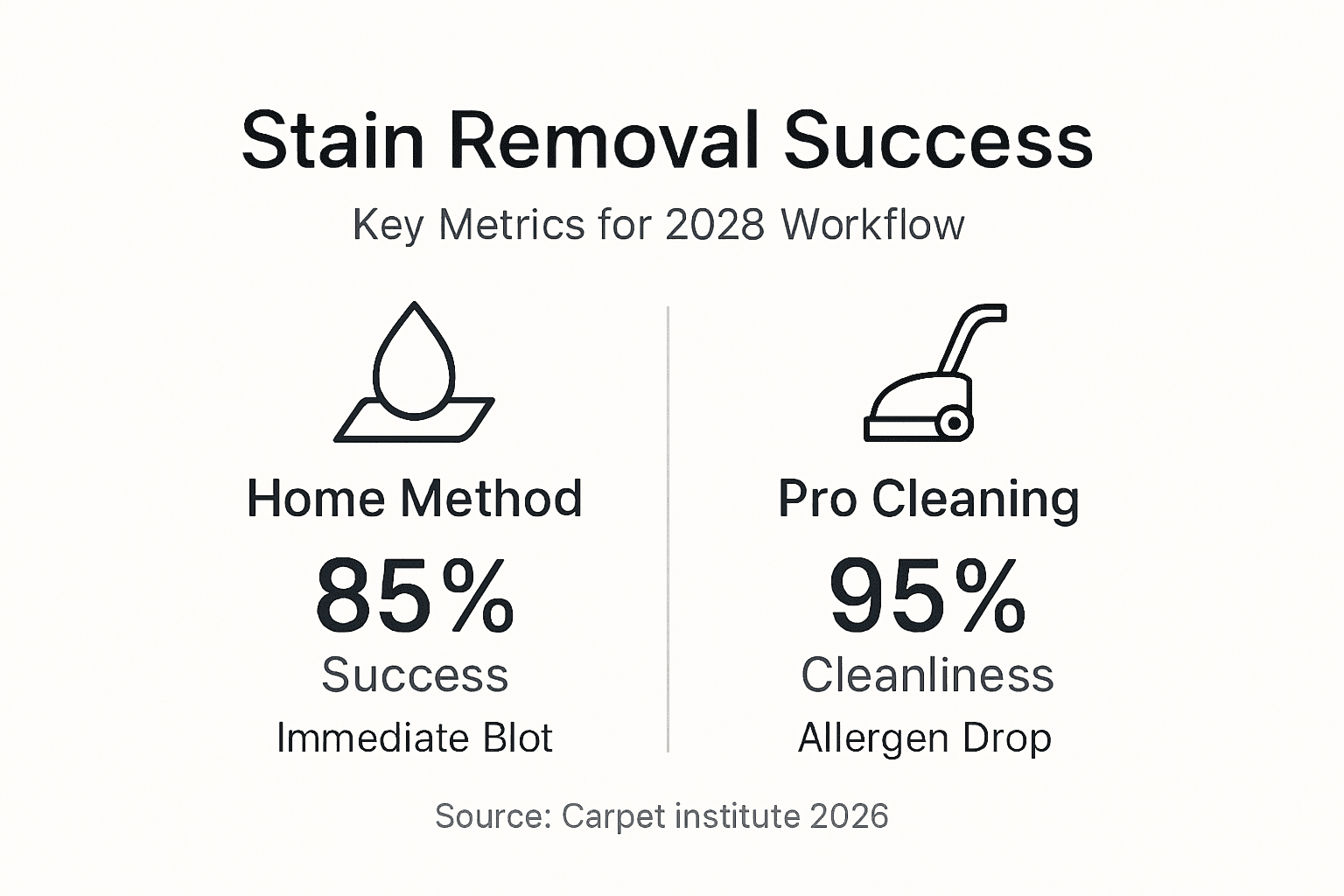
Fresh stains treated within minutes typically show 70% to 90% visible reduction immediately. Complete removal often requires a second treatment after the carpet dries fully. Patience during the process yields better results than aggressive repeated scrubbing.
Proper technique preserves fiber integrity and color. You should see no texture changes, color loss, or browning after treatment. If these occur, you’ve damaged the carpet and should stop immediately.
Professional cleaning restores carpets to 90% to 95% of their original cleanliness. Heavily trafficked areas and aged stains may show residual shading, but overall appearance improves dramatically.
| Outcome Metric | Successful Result | Warning Sign |
|---|---|---|
| Stain visibility | 70-90% reduction on first try | No change or spreading |
| Fiber condition | Soft, original texture intact | Matting, brittleness, frizzing |
| Drying time | 4-6 hours fully dry | Still damp after 12 hours |
| Odor | Neutral or slight cleaning scent | Musty, sour, or chemical smell |
| Color | Original shade maintained | Lightening, darkening, yellowing |
Reduced odors indicate successful cleaning. Lingering smells suggest inadequate extraction or residue buildup. If odors return after drying, the stain source remains in padding or backing.
Allergen reduction improves indoor air quality measurably. Family members with allergies or asthma often notice easier breathing and fewer symptoms after thorough carpet cleaning.
Extended carpet lifespan results from consistent maintenance. Carpets cleaned regularly last 5 to 10 years longer than neglected ones, offsetting the cost of professional services many times over.
Discover Expert Carpet Cleaning Services in Albuquerque
Your DIY stain removal workflow keeps carpets fresh between professional cleanings, but partnering with local experts ensures long-term carpet health. Albuquerque homeowners benefit from specialized services that complement daily maintenance.
Royal Cleaning New Mexico combines eco-friendly methods with CRI-certified products to deliver results that protect your investment. Their multi-step process removes stains you cannot reach with home equipment while preserving fiber quality and color.
Schedule professional carpet cleaning in Albuquerque every 12 to 18 months to remove embedded soil and refresh your entire home. Between visits, apply the carpet cleaning tips shared in this article to maintain peak appearance.
Comprehensive home cleaning extends beyond carpets. Consider adding upholstery cleaning services to refresh furniture, drapes, and other fabric surfaces using the same careful, eco-conscious approach.
Frequently Asked Questions
How soon should I start treating a carpet stain?
Begin treatment within 5 minutes of the spill occurring. Fresh stains absorb quickly into fibers, and immediate blotting removes up to 90% of the liquid before it sets permanently.
Are eco-friendly stain removers as effective as traditional chemicals?
CRI-certified eco-friendly products perform equally well or better than harsh chemicals for most stains. They remove soil without damaging fibers, leaving harmful residues, or creating indoor air quality concerns.
What types of stains need enzymatic cleaners?
Protein-based stains like pet urine, blood, vomit, and food require enzymatic cleaners. These biological formulas break down organic matter at the molecular level, eliminating both visible stains and odor-causing bacteria.
How often should I get professional carpet cleaning?
Schedule professional deep cleaning every 12 to 18 months for optimal results. High-traffic homes with pets or children may need service every 6 to 12 months to prevent permanent soil buildup.
Can I use homemade cleaners safely on carpets?
Mild solutions like diluted white vinegar or dish soap work for fresh water-based spills. However, untested homemade recipes risk damaging fibers or leaving residues. Always spot test any solution, even common household items, before treating visible areas.