

 (505) 280-5216
Stop Returning Black Dust From Vents: 5 Quick Tests for Homeowners
Black dust coming from your vents is almost always one of four things: soot from combustion or candles, “ghosting” from thermal tracking, mold that needs a moisture source, or flaking duct insulation and rust. Most cases are not an emergency, but if the pattern points to soot, check your combustion appliances and carbon monoxide detectors right away. Start with a simple smear test on the residue and swap in a fresh HVAC filter before you do anything else.
TL;DR:
- Soot from combustion appliances is the most common cause of black dust, and it can be identified by a smear that rubs away easily.
- Ghosting results from thermal tracking along wall studs and is not caused by contamination, typically leaving linear dark patterns that do not smear.
- Persistent mold in ducts needs moisture sources fixed first, as it often reappears if dampness remains, and visible mold generally has a fuzzy or slimy texture.
- DIY fixes include replacing HVAC filters, vacuuming registers, and wiping surfaces, but active mold requires professional removal to prevent spores spread.
- External pollution from traffic, wildfire smoke, or construction debris contributes to darker dust buildup, especially near busy roads or ongoing nearby building work.
Table of Contents
- What Causes Black Dust From Vents?
- Simple Diagnostics to Confirm the HVAC Is the Source
- Immediate Ways to Clean Up Black Dust Yourself
- When to Call a Professional and What to Expect
- Preventing Black Dust From Coming Back
- Why a Trained Cleaner Matters for Duct and Vent Work
- How Outdoor Pollution and Construction Add to Black Dust
- Telling Mold, Soot, and Other Particles Apart With Testing
- A Calm, Methodical Way to Approach Black Dust
- Book a Professional Duct or Vent Inspection
- Sources
- FAQ
What Causes Black Dust From Vents?
The residue collecting around your registers falls into a handful of well-documented categories, and each one behaves differently once you touch it.
Soot and combustion byproducts are the most common culprit in homes with gas appliances, wood stoves, or frequent candle use. Soot particles are fine, carbon-based, and tend to smear into a gray or black streak when you rub them. They often cluster near appliances that vent poorly or near rooms where candles burn regularly.
Ghosting, also called thermal tracking, shows up as linear or blotchy dark patterns that follow wall studs, ceiling joists, or nail heads. This happens because those framing members conduct heat differently than the surrounding drywall, and airborne dust particles get pulled toward the cooler surfaces through a process called thermophoresis. It is a physics problem, not a contamination problem, and it rarely smears the way soot does.
Mold is the one that demands moisture. Active mold growth needs spores, an organic food source like household dust, and consistent dampness, according to EPA guidance on mold in HVAC systems. Visible mold usually comes with a musty smell and a fuzzy or slightly slimy texture that does not wipe away cleanly. It also tends to reappear within days if the underlying moisture problem is not fixed.
Deteriorating duct materials round out the list. Old fiberglass duct liner can flake apart and pull loose dark fibers into the airflow, and metal ducts exposed to moisture can rust and shed dark particulate.
A quick way to sort these out is:
- Smears into a gray streak and stays gone: likely soot.
- Follows a striped pattern on walls or ceilings: likely ghosting.
- Fuzzy, slimy, or smells musty, and returns after cleaning: likely mold.
- Fibrous or gritty with no smell: likely aging insulation or rust.
A black film around vents is frequently misdiagnosed as mold when it is actually soot or ghosting, which matters because the fix for each is completely different. Treating soot like mold with biocide sprays wastes money and does nothing for the actual source.
Simple Diagnostics to Confirm the HVAC Is the Source
Before you assume the vents themselves are the problem, run through a short diagnostic sequence that takes less than an hour.
- Set a white-media trap. Tape a piece of white polyester filter media over one or two supply diffusers for a few days. UL Solutions recommends this method to capture whatever the airflow is actually carrying, and you can send the trapped material to a lab if you want a definitive particle identification.
- Map the deposit pattern. Dark residue fanning out from a single register points to the duct system. Deposits scattered evenly across ceilings and walls, regardless of vent location, point to something in the room air itself, like candle soot or outdoor pollution infiltrating through gaps.
- Run the smear test. Wipe a small area with a damp white cloth. If it smears and lifts cleanly, you’re looking at soot or dust. If it stays fuzzy, spreads unevenly, or leaves a slimy film, treat it as a possible mold indicator.
- Check combustion appliances. If soot is your working theory, inspect your furnace, water heater, and any gas fireplace for backdrafting, then confirm your carbon monoxide detectors are working. Investigators have linked unexplained soot near registers to appliances that vent improperly, which is a safety issue, not just a cleaning issue.
- Inspect for moisture. Look at condensate drain pans, nearby plumbing, and humidity levels. Clogged condensate lines are a common hidden mold trigger inside air handlers.
Pro Tip: Keep the white-media trap up for at least three full HVAC cycles before checking it. A single heating cycle rarely deposits enough material to give you a reliable read.
Immediate Ways to Clean Up Black Dust Yourself
Once you have a reasonable idea what you’re dealing with, several fixes can knock down visible dust the same day.
- Replace the HVAC filter with a fresh one rated for your system, and mark your calendar to swap it again in 60 to 90 days.
- Vacuum the grilles and registers with a HEPA-equipped vacuum, then wipe surrounding ceiling and wall surfaces with a damp microfiber cloth.
- For soot specifically, use a mild degreasing cleaner rather than a general all-purpose spray. Soot is oil-based residue from combustion, and plain water tends to smear it further.
- Skip biocide sprays on residue you haven’t identified. Spraying a mold killer on soot does nothing but waste product and mask the real cause.
- Remove obvious particle sources temporarily: stop burning candles for a week, run your kitchen exhaust fan whenever you cook, and hold off on indoor wood burning while you diagnose the issue.
Pro Tip: If the smear test shows fuzzy, non-lifting residue and you can smell mustiness anywhere near the vent, stop cleaning and call a professional instead. Disturbing active mold without containment can spread spores through the rest of your ductwork.
DIY cleaning works well for surface soot and light dust buildup you can reach with a vacuum and a cloth. It is not the right move for mold you can see, or for contamination deep inside ducts you cannot physically access.
When to Call a Professional and What to Expect
A handful of red flags mean it’s time to bring in a specialist rather than keep cleaning on your own:
- Visible mold growth, especially with a persistent musty smell.
- Soot that keeps returning even after you’ve eliminated candles and checked appliances.
- Flaking insulation or rust visible inside accessible duct sections.
- Any sign your furnace, water heater, or gas fireplace is backdrafting.
For soot tied to appliance problems, call an HVAC technician first. For confirmed mold, look for a mold remediation specialist who addresses the moisture source, not just the visible growth. For general duct contamination, a duct cleaning provider following NADCA-standard sampling and cleaning protocols will document conditions before and after the work, not just run a hose through the system.
Before hiring anyone, ask what vacuum collection method they use, whether they carry insurance, and whether they’ll provide written scope and photos. Cost typically depends on system size, how contaminated the ducts are, and how hard the ductwork is to access, so a phone quote without an inspection is rarely accurate. The EPA notes that duct cleaning hasn’t been proven to prevent health problems on its own, and recommends it mainly when ducts show visible contamination, mold, or pest activity.
Preventing Black Dust From Coming Back
Fixing the immediate mess matters less than stopping the cycle that caused it.
- Upgrade to a higher-rated filter if your particle load is heavy, and consider whole-house filtration if allergy symptoms or visible dust are a recurring problem.
- Seal and re-insulate ducts where liner material is deteriorating, since flaking insulation only gets worse with time.
- Air-seal and insulate walls and ceilings where ghosting appears, which reduces the temperature differences that pull dust toward studs in the first place.
- Keep kitchen and bathroom exhaust fans running during and after use, and limit indoor sources like candles or unvented space heaters.
- Hold indoor humidity between 30% and 50%, and check that your HVAC condensate drain isn’t clogged, since standing moisture is a primary driver of mold growth in ductwork.
Why a Trained Cleaner Matters for Duct and Vent Work
A trained technician does more than run a hose through your ductwork. A trained technician uses a multi-step inspection and cleaning process built to catch the root cause, whether that’s a moisture problem feeding mold, a combustion appliance venting incorrectly, or insulation that’s simply worn out. Professionals coordinate the actual repair, not just the cleanup, and a reputable provider documents findings with before-and-after photos and a written scope. Such cleaning services bring accountability and transparent pricing to every inspection, so homeowners know exactly what was found and what was done about it.
How Outdoor Pollution and Construction Add to Black Dust
Your ducts don’t operate in a sealed bubble. Outdoor particulate from traffic exhaust, wildfire smoke, or nearby construction dust gets pulled into your HVAC system through fresh-air intakes, gaps around windows, and even small leaks in return ductwork. Homes near busy roads or active construction sites often see darker, more frequent dust buildup around vents simply because the intake air is carrying more particulate to begin with.
Construction work is a particularly overlooked source. Drywall dust, concrete particulate, and demolition debris are fine enough to travel through window gaps and settle inside return air ducts, where they mix with household dust and eventually blow back out through supply registers. If black dust buildup started or worsened around the same time a neighbor began a renovation project or a road crew started nearby work, that timing is a real clue worth factoring into your diagnosis.
Seasonal shifts play a role too. Homes that seal up tightly for winter heating season sometimes see a spike in dust as furnaces kick on for the first time and blow loose particulate that settled in the ductwork over the summer. That’s less about new contamination and more about disturbed dust finally moving.
Telling Mold, Soot, and Other Particles Apart With Testing
Visual inspection gets you most of the way there, but definitive identification sometimes requires lab analysis. When you use a white-media trap over a supply register, the material captured can be sent for particle analysis, which can confirm whether you’re dealing with fungal fragments, carbon-based soot, mineral fibers from insulation, or rust particulate.
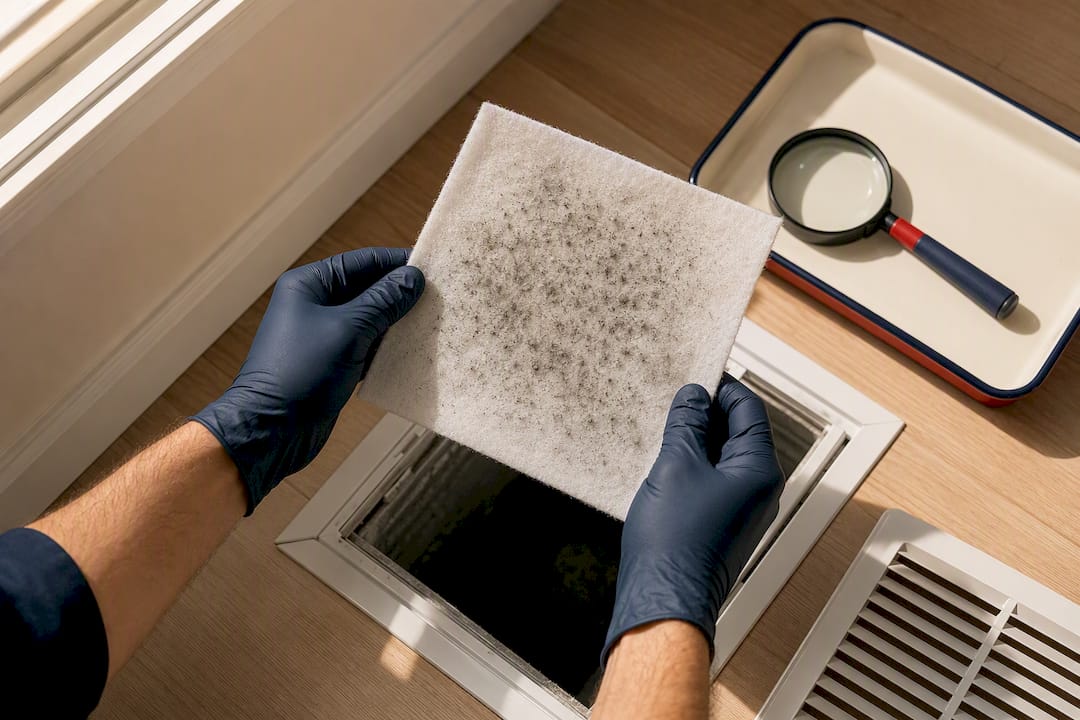
Professional mold testing typically involves either surface sampling, where a swab or tape lift is taken directly from the suspect area, or air sampling, which measures spore counts in the surrounding air. Soot analysis, by contrast, usually relies on visual and chemical characteristics under magnification, since soot has a distinct carbon structure that differs from organic mold fragments.
The practical sequence experts recommend is straightforward: map where the deposits appear, trap particles at the source, run a smear test, inspect combustion appliances and the condensate drain, and only then call in lab testing if the visual and physical evidence remains ambiguous. This stepwise approach avoids paying for expensive lab work when a five-minute smear test already gives you the answer.

A Calm, Methodical Way to Approach Black Dust
Most black dust cases resolve once you correctly identify the source, and that usually takes less time than people expect. Document what you find with photos before you clean anything, since that record helps a technician if you do end up calling one. If soot is even a possibility, check your combustion appliances and carbon monoxide detectors before you worry about anything cosmetic. Everything else can wait until you know what you’re actually dealing with.
— Bernadette
Book a Professional Duct or Vent Inspection
Royal Carpet and Tile Cleaning gives Albuquerque homeowners a direct alternative to guessing at DIY fixes or hiring a contractor who skips the inspection step. Every visit includes a transparent look at what’s actually happening inside your system, with photos and a clear scope before any work begins, and no hidden charges added on afterward.

If black dust or soot keeps returning near your vents, professional air duct cleaning addresses the buildup at its source rather than just knocking it down for a week. Dryer vents deserve the same attention, since lint buildup is both a dust source and a documented fire hazard; Royal Carpet and Tile Cleaning’s dryer vent cleaning service runs from $159 to $229 for a standard one-off visit, with add-ons like a commercial-grade vent tube or critter guard available if your setup needs them. Schedule an inspection now and get a written scope before any cleaning begins.
FAQ
Is Black Dust Harmful?
It depends on what it is. Soot and dust can irritate breathing for people with asthma or allergies, while mold exposure carries added respiratory risks, especially with prolonged contact in damp conditions. Identifying the source with a smear test or particle trap tells you how seriously to treat it.
Can Black Mold in Air Vents Make You Sick?
Mold growing in ducts can trigger respiratory irritation, allergic reactions, or worse symptoms in sensitive individuals, particularly when moisture keeps feeding the growth. The EPA notes mold requires ongoing moisture to persist, so fixing the dampness is as important as any cleaning.
Are Dusty Vents a Fire Hazard?
Dust buildup in HVAC ducts is not typically a fire risk on its own, but lint buildup in dryer vents absolutely is. If your black dust is near a dryer exhaust rather than an HVAC register, dryer vent cleaning addresses a genuine safety concern, not just an appearance issue.
What Kills Black Mold in Air Ducts?
Killing visible mold requires both cleaning the affected surfaces and correcting the moisture source feeding it, since mold returns quickly if dampness persists. Professional remediation combines cleaning with drain and humidity fixes rather than relying on a spray-on product alone.



