(505) 280-5216
No More Huffing and Puffing—Asthma Safe Carpet Cleaning Explained
Asthma Safe Carpet Cleaning: 7 Powerful Ways for Healthier Homes 2025
Why Clean Carpets Are Essential for Asthma Sufferers
Asthma safe carpet cleaning uses specific methods and products designed to remove allergens without triggering respiratory symptoms. Here’s what makes carpet cleaning asthma-safe:
- Hot water extraction at high temperatures (160°F+) to kill dust mites
- HEPA filtration during cleaning to capture 99.97% of particles
- Low-VOC or fragrance-free cleaning solutions to avoid chemical irritants
- Quick drying (under 8 hours) to prevent mold growth
- Professional equipment that extracts moisture thoroughly
If you’ve been told that carpets are the enemy of asthma sufferers, you’re not alone. Many homeowners in Albuquerque have heard this advice and wondered if they need to rip out all their carpeting. But here’s the surprising truth: properly cleaned carpets can actually trap allergens and improve your indoor air quality – when you know how to clean them safely.
The problem isn’t carpets themselves. It’s that over 50% of allergic asthmatics are sensitive to house dust mites, which love to burrow deep into carpet fibers where regular vacuuming can’t reach them. Add pet dander, pollen, and cleaning chemicals with volatile organic compounds (VOCs), and your cozy carpet becomes a trigger zone.
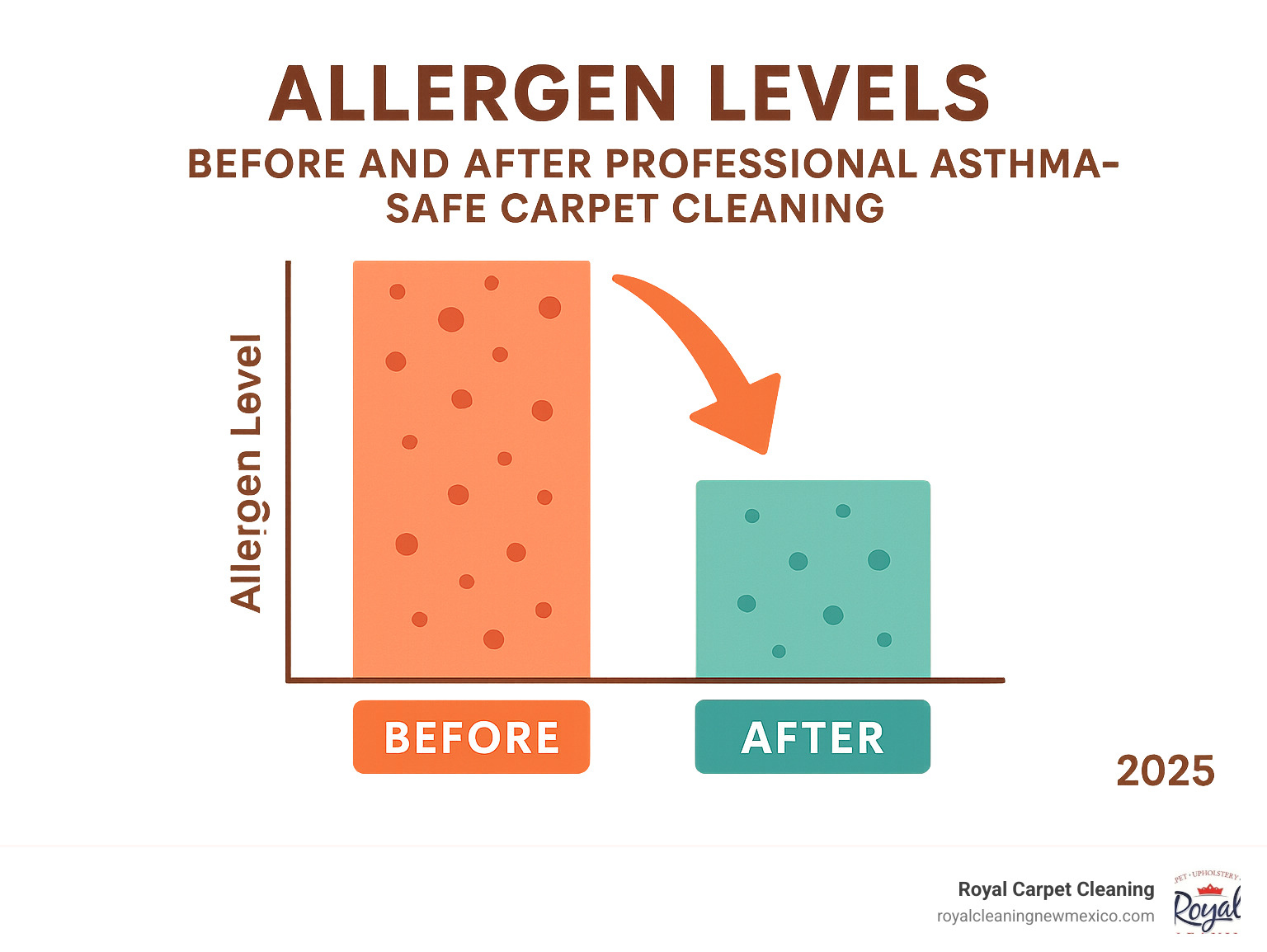
But don’t grab the crowbar just yet. Research shows that carpets act like giant air filters when maintained correctly. A 2012 study found that well-cleaned carpets significantly reduced indoor allergen levels. The key is using the right cleaning methods, products, and schedule.
I’m Bernadette King RCC, and I’ve spent years helping cleaning professionals master asthma safe carpet cleaning techniques that protect both their clients’ health and their carpets’ longevity. Through my work with franchise owners and cleaning teams, I’ve seen how the right approach to asthma safe carpet cleaning can transform a home’s air quality and give families their comfort back.
Why Carpets Can Be Friend or Foe for Asthmatics
Your carpet isn’t automatically the villain in your asthma story. The truth is more nuanced than most people realize.
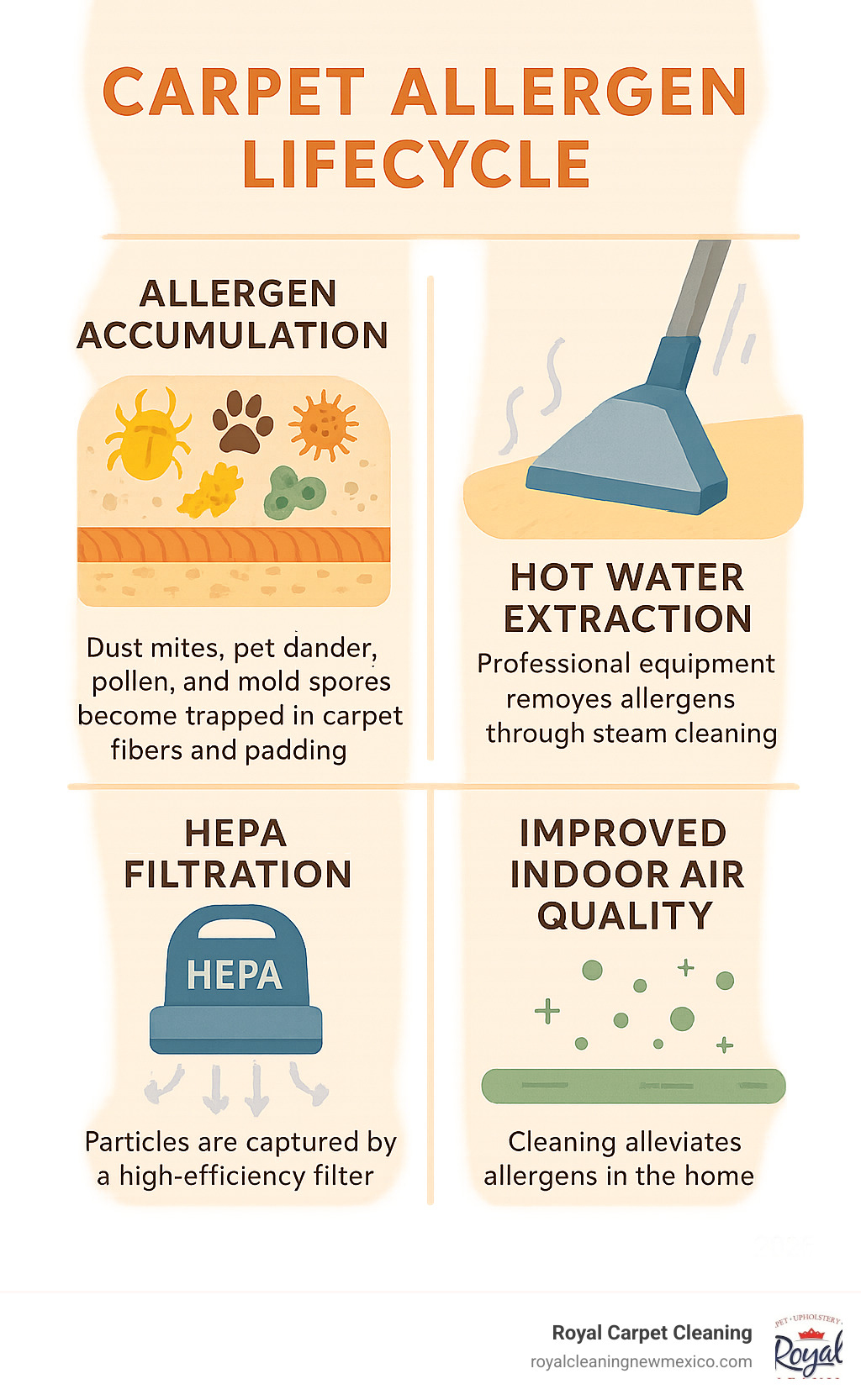
Dust mites are the biggest troublemakers, affecting over 50% of people with allergic asthma. These microscopic creatures burrow deep into carpet fibers, where they feast on dead skin cells and multiply. Add pet dander, pollen tracked in on shoes, and VOCs from cleaning products, and you’ve got a perfect storm of respiratory triggers.
But here’s the surprising twist: removing your carpet won’t necessarily solve your dust mite problem. Scientific research on dust-mites shows that these creatures simply relocate to your bedding, upholstery, and curtains when you rip out carpet. Meanwhile, hard floors can actually kick up more airborne particles every time you walk across them.
The real culprits are humidity levels above 50% and infrequent deep cleaning. Without proper asthma safe carpet cleaning, your flooring becomes a five-star resort for allergens.
How Allergens Accumulate in Pile and Padding
Think of your carpet as a three-layer trap system. Those visible carpet fibers work like magnets, using static charge to grab airborne particles. Foot traffic pushes these trapped allergens deeper into the pile, eventually reaching the underlay where real problems begin.
Your carpet padding acts like a sponge, soaking up moisture from spills and humidity. This is where dust mites set up permanent residence, completely out of reach of regular vacuuming. It’s also where mold can develop if water doesn’t get fully extracted during cleaning.
This deep-layer contamination is why surface cleaning with rental machines often disappoints – they can’t reach where allergens actually live and multiply.
Do Carpets Increase or Decrease Airborne Particles?
Clean carpets actually work as massive filter systems, trapping dust and allergens that would otherwise float freely through your air. A 2018 review found that properly maintained carpets significantly reduce airborne particles compared to hard flooring.
But dirty carpets flip the script entirely. Instead of filtering your air, they become allergen launching pads. Every footstep sends particles back into the air you breathe. This resuspension effect gives carpets their bad reputation among asthma sufferers.
The tipping point is cleaning frequency. The difference between friend and foe often comes down to staying ahead of allergen buildup with regular, thorough cleaning.
Step-by-Step Guide to Asthma Safe Carpet Cleaning
Asthma safe carpet cleaning uses specific methods and products designed to remove allergens without triggering respiratory symptoms. We use a multi-step process that prioritizes allergen removal while minimizing chemical exposure.
| Method | Temperature | Drying Time | Allergen Removal | Chemical Exposure | Best For |
|---|---|---|---|---|---|
| Hot Water Extraction | 160-200°F | 4-8 hours | Excellent | Low (with right products) | Deep cleaning, dust mites |
| Steam Cleaning | 212°F+ | 6-12 hours | Excellent | Very Low | Sanitization, mold |
| Dry Cleaning | Ambient | 1-2 hours | Good | Low | Quick turnaround |
| Encapsulation | Ambient | 1-3 hours | Good | Very Low | Maintenance cleaning |
The gold standard combines hot water extraction with HEPA filtration and low-VOC cleaning solutions.
Hot Water Extraction: The Gold Standard for Asthma Safe Carpet Cleaning
Hot water extraction is our go-to method for asthma sufferers. The high temperature (160°F or higher) kills dust mites on contact – these creatures die at temperatures above 140°F. Professional truck-mounted equipment achieves these temperatures consistently throughout cleaning.
The deep rinse action flushes allergens from both carpet pile and padding. Unlike surface cleaning, hot water extraction penetrates deep into the carpet structure, loosening embedded allergens before extracting them with powerful suction.
However, Scientific research on cleaning chemicals and asthma shows that exposure to carpet cleaning chemicals can trigger asthma attacks. One case involved a woman who experienced seizures after exposure to sodium tripolyphosphate and VOCs during cleaning.
This is why we use professional equipment with precise temperature controls, plus HEPA filtration to capture particles during extraction.
Chemical Dos & Don’ts for Asthma Safe Carpet Cleaning
The cleaning products you use matter just as much as the method. Many conventional chemicals contain fragrances, VOCs, and harsh detergents that can trigger symptoms even after carpet dries.
Do use:
– EPA Safer Choice certified products
– Fragrance-free, low-VOC detergents
– Neutral pH cleaning solutions (6.5-7.5)
– Biodegradable surfactants
Don’t use:
– Products containing sodium tripolyphosphate above 3.4 mg/m³
– Quaternary ammonium compounds (quats)
– Butyl-based solvents
– High-fragrance shampoos
Eco-friendly solutions often clean better because they don’t leave sticky residues that attract dirt.
Dry & Low-Moisture Options When Dry Time Matters
When you can’t wait 6-8 hours for drying, dry and low-moisture methods work well for asthma sufferers.
Encapsulation cleaning uses polymer crystals that surround allergen particles, then dry to a brittle state for vacuuming. This method uses minimal moisture, preventing mold growth.
Absorbent compound cleaning involves spreading slightly damp, absorbent material across carpet, working it in, then vacuuming up the absorbed allergens.
Both methods allow immediate carpet use and prevent humidity spikes that trigger mold growth. However, they don’t penetrate as deeply as hot water extraction, so we recommend them for maintenance between deep extractions.
Dealing with Stains the Asthma-Friendly Way
Stain removal requires extra caution for asthma sufferers. Many spot removers contain solvents and fragrances that trigger respiratory symptoms.
For fresh spills, blot with clean, dry cloth to absorb liquid. Then use neutral pH spot cleaner or diluted white vinegar (1:10 with water).
Avoid aerosol products entirely – they create airborne particles that asthmatics can inhale. Apply solutions with spray bottles set to stream, not mist.
For protein stains, enzyme cleaners work well without harsh chemicals. Choose fragrance-free options and ensure adequate ventilation.
Daily & Weekly Maintenance Between Deep Cleans
Professional cleaning is just part of the equation. What you do between cleanings determines whether carpets help or hurt your indoor air quality.
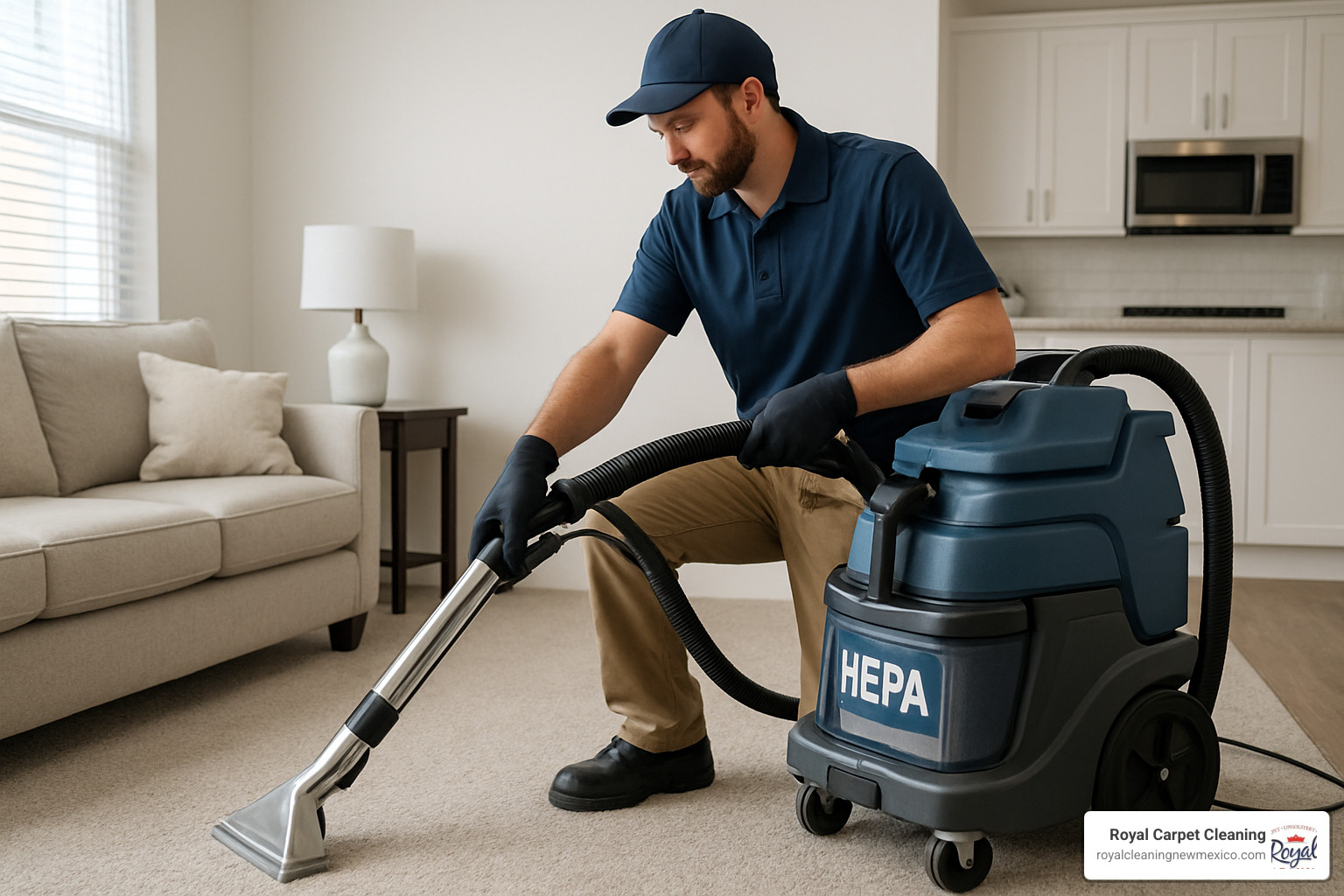
Vacuum twice per week minimum, with daily vacuuming in high-traffic areas. You need a vacuum with true HEPA filtration and a sealed system – many vacuums claim HEPA but leak particles through housing gaps.
Keep indoor humidity between 30-50% using dehumidifiers or air conditioning. This range inhibits dust mite reproduction while preventing static buildup.
Entry mats at every door reduce outdoor allergens tracked inside by up to 80%. Choose washable mats and clean them weekly in hot water (130°F minimum).
Vacuum Like a Pro
Vacuuming technique matters more than you think. Vacuum slowly – about one foot per second – with overlapping strokes. This gives time to remove embedded particles rather than just surface debris.
Use the highest suction setting your carpet can handle. For loop pile carpets, use a vacuum without a beater bar. For cut pile, adjust height so the beater bar just touches the surface.
Empty bagless canisters outside your home to prevent allergens re-entering indoor air. With bagged vacuums, choose high-filtration bags and change when 2/3 full.
More info about carpet cleaning tips – our comprehensive guide covers advanced maintenance techniques.
Tackling Pads, Rugs & Upholstery
Don’t forget carpet padding in your cleaning strategy. If padding has been soaked by flooding or repeated spills, replacement is often the only solution. Wet padding harbors mold and bacteria that surface cleaning can’t eliminate.
Area rugs should be washable when possible. For large rugs, professional cleaning every 6-12 months prevents allergen buildup. Smaller washable rugs can go through hot water laundry cycles weekly.
Upholstered furniture needs attention too. Steam clean upholstery annually to remove dust mites and allergens. Between cleanings, vacuum weekly with HEPA-filtered upholstery attachments.
More info about allergy relief carpet cleaning – learn our specialized allergen-targeting techniques.
Whole-Home Allies: Air Ducts, Filters & Ventilation
Your HVAC system can be your biggest ally or worst enemy against airborne allergens. Install MERV-13 filters and change every 60-90 days. These capture particles as small as 0.3 microns, including dust mite allergens.
Professional air duct cleaning every 3-5 years removes accumulated debris. For severe asthma households, consider annual cleaning.
Run bathroom exhaust fans 15-20 minutes after showering to prevent moisture buildup. Use kitchen fans while cooking to remove airborne particles.
Your Home’s Air Ducts and Your Health – find how clean ductwork supports your carpet cleaning efforts.
Choosing an Asthma-Safe Carpet Cleaning Service
Finding the right service when you have asthma means looking beyond generic “green” marketing. You need professionals who understand that asthma safe carpet cleaning protects your health while improving indoor air quality.
IICRC certified technicians are your first green flag. The Institute of Inspection, Cleaning and Restoration Certification trains professionals in health-safe protocols. These technicians understand how cleaning methods affect indoor air quality.
Truck-mounted equipment with HEPA filtration provides the high temperatures and powerful extraction needed to remove deep allergens. HEPA filtration captures 99.97% of particles during cleaning, preventing recirculation.
EPA Safer Choice certified cleaning products should be standard, not an upgrade. These products are rigorously tested for safety. Reputable services offer fragrance-free, low-VOC options without extra charges.
Quick drying under 8 hours prevents mold growth that triggers asthma symptoms. Professional services achieve this through powerful extraction and proper air circulation.
At Royal Carpet Cleaning, we built our entire process around these standards. Our multi-step approach includes allergen-focused pre-treatment, hot water extraction with HEPA filtration, and strategic air circulation for quick, safe drying.
Questions to Ask Before You Book
A reputable service will welcome your health concerns and provide detailed answers.
“What cleaning method do you use?” The answer should be hot water extraction or steam cleaning. Surface cleaning doesn’t reach deep allergens that trigger symptoms.
“Can you provide ingredient lists for cleaning products?” Professional services should readily share this information and offer fragrance-free alternatives. Evasiveness is a red flag.
“How do you ensure fast drying?” Look for answers about high-powered extraction and air movers. Proper drying prevents humidity spikes that encourage dust mites and mold.
“What’s your satisfaction guarantee?” Reputable companies stand behind their work with clear policies, showing confidence in their methods.
Red Flags & Chemicals to Avoid
Prices significantly below market rates often indicate corner-cutting on equipment, products, or training. Quality asthma-safe cleaning requires investment in proper equipment.
Door-to-door solicitation suggests focus on sales over service quality. Professional services build reputation through referrals.
Reluctance to discuss methods or products is a major red flag. Legitimate services are proud of their asthma-safe approaches.
Certain ingredients trigger asthma symptoms even in small amounts. Butyl cellosolve and glycol ethers are common in cheaper products but cause respiratory irritation. Quaternary ammonium compounds may seem antimicrobial but trigger attacks in sensitive individuals.
High concentrations of sodium tripolyphosphate have been linked to seizures and respiratory distress. Synthetic fragrances can linger in fibers and continue triggering symptoms long after cleaning.
We use only EPA Safer Choice certified products thoroughly tested for human health and environmental safety.
Beyond Carpets: Extra Steps to Boost Indoor Air Quality
Asthma safe carpet cleaning works best when you think bigger picture. Your carpets are part of your home’s entire indoor environment. Combining professional carpet care with smart choices throughout your house creates powerful defense against asthma triggers.
Start with your bedroom – ground zero for dust mites. Wash all bedding weekly in water heated to at least 130°F, including sheets, pillowcases, blankets, and decorative pillows. Front-loading washers’ sanitize cycles are perfect for this.
Swap heavy drapes for washable curtains or easy-to-clean blinds. You’ll cut cleaning time in half and eliminate another allergen hiding spot.
Use washable throw rugs on hard floors in key areas. You get carpet’s comfort with the convenience of machine washing whenever needed.
When Removing Carpet Makes Sense
Sometimes carpet has to go, and I’ll be honest about when that time comes.
If carpet has been severely flooded and padding can’t be properly dried within 48 hours, you’re facing a mold problem. No amount of cleaning fixes soggy padding that’s been wet for days.
Visible mold growth throughout carpet or padding is another deal-breaker. Surface mold can be treated, but widespread growth makes replacement more cost-effective.
When multiple family members have severe asthma that doesn’t improve even after professional asthma safe carpet cleaning, consider other flooring options. Your family’s health comes first.
Very old carpet (20+ years) sometimes reaches a point where cleaning can’t restore healthy standards. The padding breaks down, fibers hold decades of allergens, and replacement becomes the better investment.
But hard floors aren’t automatically the magic solution. They need daily damp mopping to keep dust from going airborne, and you lose the air filtration benefits that clean carpets provide.
Synergy of Routine Cleaning & Smart Flooring Choices
The smartest approach combines the best of both worlds. Use hard flooring in high-traffic areas like kitchens and bathrooms where spills and moisture are common. Add area rugs that can be professionally cleaned or machine washed in living spaces and bedrooms.
This gives easier daily maintenance where needed most, while keeping comfort and air-cleaning benefits where your family relaxes and sleeps.
Think of professional cleaning as part of your healthcare budget. The cost of regular asthma safe carpet cleaning is nothing compared to emergency room visits or missed work days from poorly controlled symptoms.
The key is consistency. Your carpets, HVAC system, bedding, and humidity levels all work together. When you get them all aligned, that’s when you’ll really notice the difference in how everyone breathes.

Frequently Asked Questions about Asthma-Safe Carpet Care
How often should I schedule professional asthma safe carpet cleaning?
For most asthma sufferers, professional asthma safe carpet cleaning every 6-12 months strikes the right balance between health protection and budget considerations.
If you have pets, young children, or severe asthma symptoms, we recommend cleaning every 6 months. Pet dander and extra dirt build up quickly, and frequent cleaning keeps allergen levels manageable.
For households with moderate asthma and normal foot traffic, every 8-10 months usually works well. This prevents significant allergen accumulation while being budget-practical.
Don’t stretch beyond 12 months even with mild symptoms. Think of it like changing your car’s oil – waiting too long means dealing with bigger, more expensive problems.
High-traffic areas like hallways might need attention every 3-4 months. Bedrooms can often go longer since they see less activity.
Consistency matters more than perfection. Regular cleaning prevents dust mite and allergen buildup that triggers serious symptoms.
Can I stay home during the cleaning or should I leave?
Most of our asthma clients stay home during cleaning. We’ve designed our process to make this comfortable and safe, though every person’s sensitivity differs.
You can typically stay home comfortably if you don’t have severe chemical sensitivities and your asthma is reasonably controlled. We use fragrance-free, low-VOC products specifically chosen for sensitive individuals, and truck-mounted equipment keeps most noise and machinery outside.
We work room by room, so you can stay in areas we haven’t started or have finished. Many clients use this time to catch up on reading or work in their home office.
Consider making other plans if you have severe asthma triggered by any chemical exposure. Some clients with the most sensitive respiratory systems prefer running errands during the 2-4 hour cleaning process.
We’re happy to discuss your specific triggers beforehand and can schedule when it’s most convenient for you to step out if needed. We ensure excellent ventilation throughout the process.
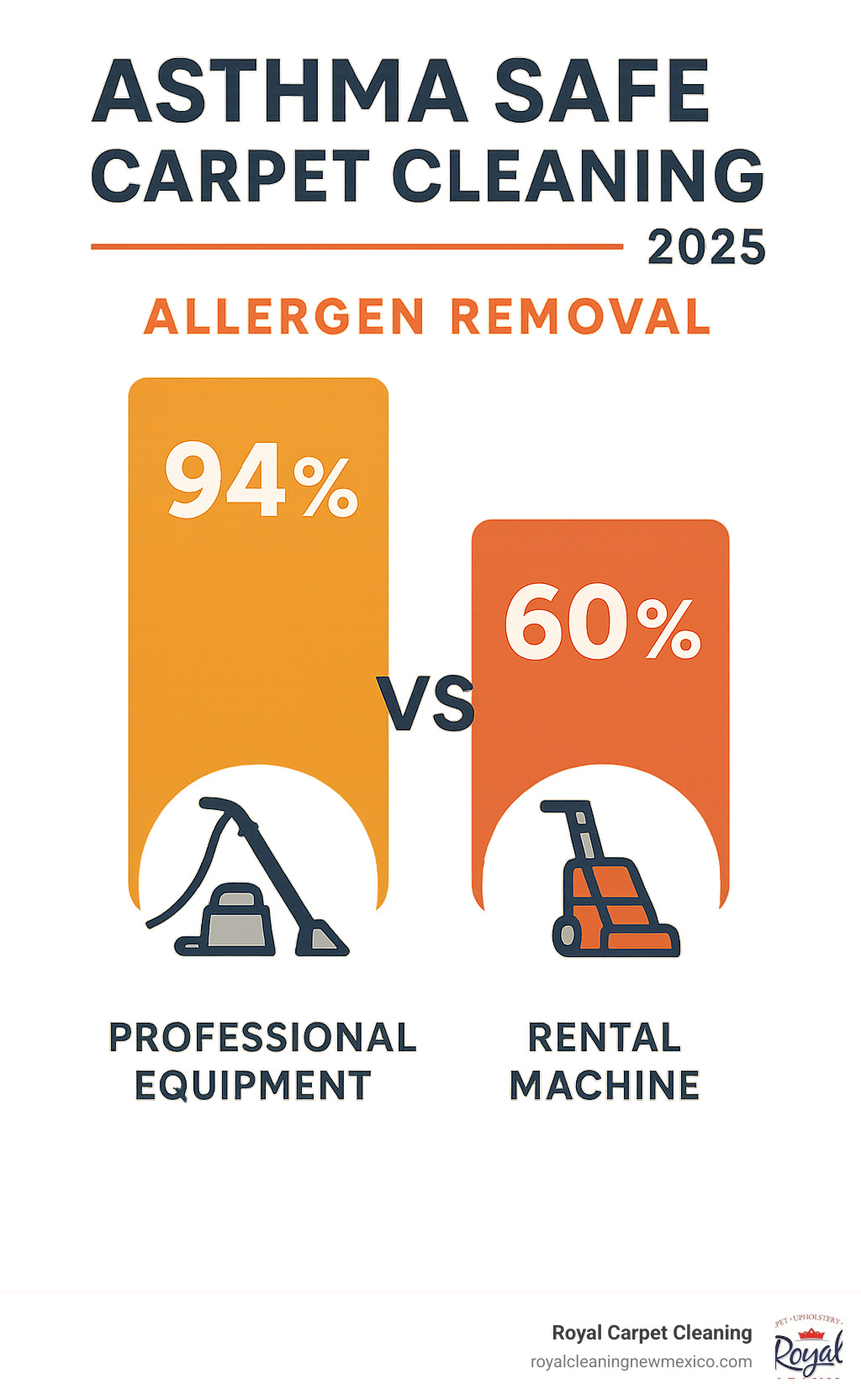
Are steam cleaners I rent from the store asthma safe?
Rental machines aren’t ideal for asthma sufferers. Rental units can’t match professional equipment for factors that matter most for asthma safety. Water temperature in most rentals tops out around 140°F, which isn’t hot enough to reliably kill dust mites. Our truck-mounted systems reach 180-200°F consistently.
The bigger problem is moisture extraction. Rental machines leave carpets wet for 12-24 hours because they lack suction power to remove water effectively. This extended dampness creates perfect mold growth conditions, triggering worse asthma symptoms than original dust mites.
You don’t know what previous renters used in that machine. Someone might have used harsh, fragrant products leaving residues in equipment. Even using gentle products yourself, you could expose your family to chemicals from previous users.
Most rentals lack HEPA filtration, so they can blow allergens around your home during cleaning rather than capturing them.
If budget constraints require occasional rental use, choose fragrance-free solutions and run fans to speed drying. But for asthma safe carpet cleaning that actually reduces symptoms, professional equipment makes significant difference in allergen removal and moisture control.
Conclusion
Living with asthma doesn’t mean choosing between comfortable carpets and clean air. Asthma safe carpet cleaning can turn your carpets from potential triggers into powerful allies in creating healthier indoor air.
You spend most of your time at home, and your family deserves to breathe easily in every room. When carpets are cleaned properly with the right methods and products, they actually trap allergens that would otherwise float freely through your air.
At Royal Carpet Cleaning, we’ve seen how the right approach transforms homes for Albuquerque families dealing with asthma. Our thorough multi-step cleaning process removes dust mites, pet dander, and other triggers that make breathing difficult.
We use only EPA Safer Choice certified products because harsh chemicals can be just as problematic as the allergens we’re removing. Our professional-grade equipment with HEPA filtration captures particles during cleaning rather than releasing them back into your air. Our techniques ensure carpets dry quickly, preventing moisture buildup that leads to mold growth.
Regular professional cleaning every 6-12 months, combined with proper daily maintenance, creates a cycle that keeps allergens under control. Your carpets become part of the solution, not part of the problem.
Our 100% satisfaction guarantee means you can trust us to deliver results that actually improve your family’s quality of life. We understand that for asthma sufferers, this isn’t just about cleaning – it’s about creating a safe haven where everyone can breathe comfortably.
Don’t let fear of carpet cleaning keep you from enjoying the warmth and comfort that quality carpeting brings to your home. With the right professional partner, you can have both beautiful carpets and clean air.
Ready to stop worrying about every breath? More info about carpet-cleaning – contact us today to schedule your asthma safe carpet cleaning service. Your lungs will thank you, and your family will finally have the comfortable, healthy home environment they deserve.