

 (505) 280-5216
Suede Couch Cleaning: Check the Care Code Before Using Water
Blot fresh spills immediately and follow your couch’s care code (W, S, S-W, X): that single rule prevents most damage. Spot-test any cleaner on a hidden inch first, vacuum and brush your suede weekly, and reserve deeper cleaning for the method your care tag allows. Call a professional for X-coded fabric, large saturated stains, lingering odors, or any sign the backing has separated from the nap.
TL;DR:
- W coded suede permits water, S coded suede requires solvent, the combined code permits either, and X coded fabric should be vacuumed or handled professionally.
- Vacuum weekly to monthly and brush weekly; schedule professional cleaning about every six months, since frequent deep cleaning can wear down the fibers.
- Faux suede may contain water soluble adhesive in its backing, so moisture can cause delamination; use soap suds only when the care code permits.
- For oil, cover the mark with cornstarch or baking soda for a few hours, then brush and vacuum; large ink stains need professional treatment.
Table of Contents
- Fast checklist: 6 safe steps to take right now
- How to tell real suede from faux and read the care code
- Regular care: vacuuming, brushing, and a cleaning schedule
- Stain-by-stain: what works for each type of mess
- Deep-cleaning suede and faux suede at home
- How to air-dry, lift the nap, and remove watermarks
- When a professional upholstery cleaner is the right call
- Tools and products that actually help
- Protecting suede for the long run
- A cleaner’s take on DIY versus calling in help
- How Royal Cleaning New Mexico can help with suede and upholstery care
- FAQ
- Sources
Fast checklist: 6 safe steps to take right now
When a spill happens or you’re prepping for a cleaning session, work through these steps in order.
- Blot, never rub, fresh spills with a clean white cloth.
- Spot-test any product on a one-inch hidden area before applying it elsewhere.
- Vacuum loose soil, lift the nap with a suede brush, and sprinkle cornstarch over oily spots.
- Match your method to the care code: W means water is fine, S means solvent only, S-W means either, and X means no liquids at all.
- Air-dry fully and restore the nap once the fabric is dry.
- Stop and call a professional if dye bleeds, fabric darkens, or the care tag reads X.
How to tell real suede from faux and read the care code
Your couch’s care tag, usually stitched under a cushion or along a side seam, tells you exactly what the fabric can handle. The letters are specific: W means water-based cleaners are safe, S calls for a solvent, S-W allows either, and X means vacuum only or leave it to a professional, according to Keck Furniture’s breakdown of upholstery codes.
Natural suede has a soft, consistent nap and a split-leather backing, while microsuede (a polyester-based faux suede) often feels slightly stiffer and more uniform in color. A few checks help you tell them apart:
- Run a finger across the surface. Real suede shows a visible color shift where the nap bends.
- Check the backing. Natural suede has a thin leather layer; microsuede usually has a woven or fused synthetic backing.
- Look for a manufacturer tag listing fiber content. “Polyester” or “microfiber” points to faux suede.
Some faux suede uses water-soluble adhesive in its backing, and Keck Furniture notes that this type of construction can delaminate when water seeps through the nap. That’s exactly why the spot test matters before any liquid touches the cushion.
Regular care: vacuuming, brushing, and a cleaning schedule
Routine maintenance does more to keep suede looking good than any stain remover. A light, consistent schedule prevents the kind of buildup that eventually calls for aggressive cleaning.
- Vacuum weekly to monthly with a soft-brush attachment, moving with the nap direction rather than against it.
- Brush lightly once a week with a dedicated suede brush to prevent matting and keep the texture even.
- Use a throw or cover on heavily used cushions, especially where pets or kids spend time.
- Schedule a full professional clean roughly every six months, a pace The Spruce recommends alongside prompt spot treatment between visits.
This rhythm keeps dust and oils from working into the fibers, which is where most permanent discoloration starts.
Stain-by-stain: what works for each type of mess
Different stains call for different responses, and the care code still governs what’s safe to use.
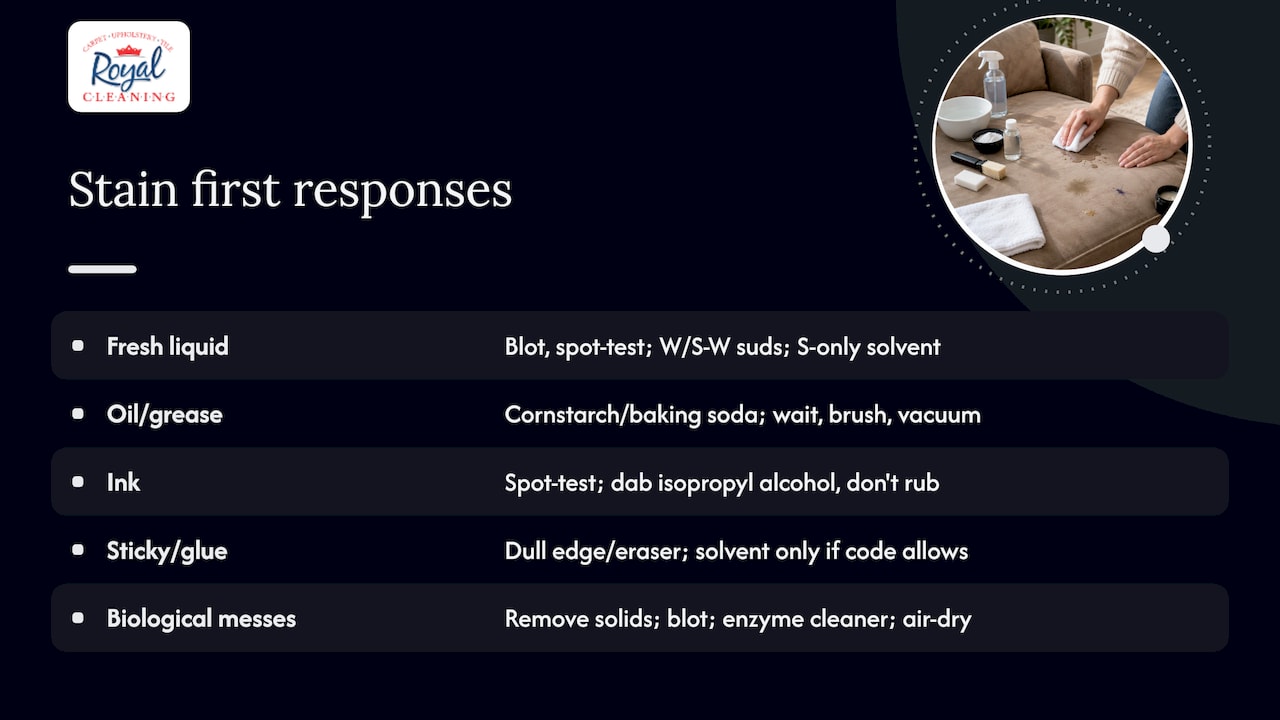
For fresh liquid spills, blot immediately with a white cloth, spot-test, and then treat according to the code. W and S-W fabrics can handle a mild soap-suds solution or diluted white vinegar, while S-only fabrics need isopropyl alcohol or another water-free solvent, both methods The Spruce outlines for suede specifically.
Oil and grease respond well to absorption rather than scrubbing. Sprinkle cornstarch or baking soda over the spot, let it sit for a few hours, then brush gently and vacuum. Repeat if any shadow remains.
Ink calls for a lighter touch: dab, don’t rub, isopropyl alcohol onto a white cloth after spot-testing, and work on the ink dot itself rather than the surrounding area. Large ink runs are a job for a professional, since repeated dabbing on natural suede can spread the stain.
Sticky residue or glue should be lifted mechanically first, using a dull edge or suede eraser, before any solvent touches the spot, and only if your care code permits liquid at all.
Biological messes like vomit or pet urine need solids removed carefully, liquids blotted (not rubbed), and an enzyme cleaner applied per its label directions. Air-dry completely afterward. If odor returns after drying, our couch odor removal guide covers quick fixes, and persistent odor after that is a sign to bring in a professional.
Pro Tip: Keep a stack of plain white cloths near the couch. Colored or printed fabric can transfer dye onto damp suede.
Deep-cleaning suede and faux suede at home
Deeper cleaning is only worth attempting when your care code allows it, and even then, the goal is control, not saturation.
- For microfiber or faux suede, try the soap-suds method: whip a small amount of mild dish soap into suds, apply only the foam with a sponge, then rinse the sponge and blot the area dry. Never soak the fabric.
- For S-coded or solvent-allowed pieces, use isopropyl alcohol or a water-free solvent in a well-ventilated room, and always spot-test first.
- If you use a steam cleaner, keep the wand several inches away and use the lowest vapor setting. Professional steam equipment regulates moisture precisely to avoid watermarks, something a handheld home unit struggles to match.
- X-coded suede should never be wet-cleaned. These pieces are typically more fragile or dye-sensitive, and a professional inspection is the safer route.
How to air-dry, lift the nap, and remove watermarks
Drying technique matters almost as much as the cleaning itself.
- Air-dry cushions flat, away from direct heat or sunlight, since both can darken or shrink suede.
- Once fully dry, use a suede brush, suede eraser, or soft nylon brush to lift the fibers, working in short strokes against the nap to restore texture.
- If the nap looks crushed, a suede stone or gentle hand-rubbing often brings it back; finish with a light vacuum pass.
Pro Tip: If a watermark lingers after drying, our guide on removing water stains from a couch walks through a distilled-water fix that evens out the ring.
When a professional upholstery cleaner is the right call
Some situations outweigh the risk of a DIY attempt: X-coded fabric, large or old set-in stains, dye that bleeds during a spot test, backing that feels separated from the nap, or odor that won’t lift. Biohazard cleanup also belongs with a professional.
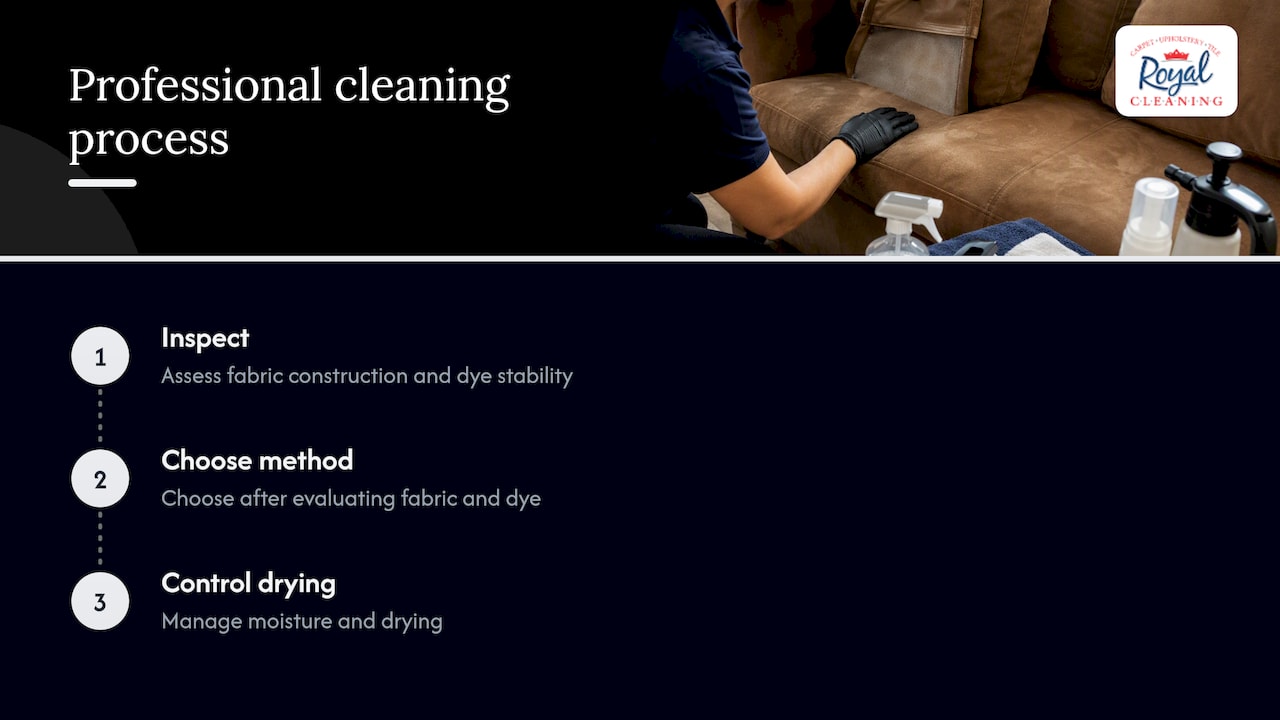
The IICRC S300 standard for upholstery cleaning points to pre-cleaning inspection as the step that separates professional results from guesswork: trained technicians evaluate fabric construction and dye stability before choosing a method, then control moisture and drying in ways a home setup can’t match.
We built our upholstery cleaning process around that same principle. As an owner-operated service, we inspect each piece before cleaning, use a multi-step process with eco-friendly disinfectant options, and back our work with a satisfaction guarantee.
Tools and products that actually help
A short supply list covers nearly every suede situation: a suede brush and suede eraser for nap and marks, a vacuum with a soft-brush attachment, white microfiber cloths, cornstarch or baking soda for oil, isopropyl alcohol for solvent-safe spots, and an enzyme cleaner for biological soils.
- Keep every product to a one-inch spot test before full use, no matter how mild it claims to be.
- A soft brush attachment and microfiber cloths also come in handy for cleaning interior doors and trim, as One Day Doors & Closets notes in their own household cleaning tips.
Protecting suede for the long run
Use a suede protector spray sparingly, and spot-test it first since some formulas darken the nap slightly. Keep food and drinks off the cushions where possible, add a throw in high-traffic spots, and lean on light brushing over frequent deep cleaning. Cleaning too often wears down the fibers faster than normal use does.
A cleaner’s take on DIY versus calling in help
I tell homeowners the same thing every time: if the care tag reads W or S-W and the stain is fresh, handle it yourself. Once you’re looking at an X code, a spreading stain, or a smell that won’t quit after drying, the risk of making it worse outweighs the savings of doing it yourself.
— Bernadette
How Royal Cleaning New Mexico can help with suede and upholstery care
When a stain outlasts the home remedies, we’re ready to step in. Our upholstery services cover suede and fabric cleaning, sealant application to help repel future spills, and pet urine treatments for odor that’s worked into the cushion.

- We inspect the fabric and care code before choosing a method.
- Have the couch’s material (suede or faux suede), care tag, and stain history ready when you call for a faster estimate.
Request a visit through our upholstery cleaning page and we’ll walk you through what to expect before the appointment.
FAQ
What is the best cleaner for a suede couch?
The safest option depends on your care tag: a mild soap-suds solution works for W or S-W fabrics, while isopropyl alcohol or a water-free solvent suits S-coded suede. Always spot-test on a hidden inch first, since Keck Furniture points out that individual pieces can react differently.
What is the best cleaning solution for a suede sofa?
For water-safe suede, a few drops of mild dish soap worked into suds and applied with a barely damp sponge removes most everyday dirt. Rinse the sponge, blot the area, and air-dry fully before brushing the nap back into place.
Is suede ruined once it gets wet?
Not necessarily, though water can leave a ring or stiffen the nap if it dries unevenly. Blotting immediately, air-drying flat away from heat, and brushing the nap once dry usually restores the texture, and our water stain guide covers fixes for lingering rings.
Is a suede sofa easy to clean?
Routine care is simple: weekly brushing and regular vacuuming keep suede looking fresh with little effort. Deeper stains require more care because the method has to match the fabric’s care code, which is why checking that tag before cleaning matters.
Sources
- IICRC S300 standard for professional upholstery cleaning (consolidated draft)
- Upholstery cleaning codes explained (W, S, WS, X) — Keck Furniture
- How to clean a suede couch — The Spruce



