

 (505) 280-5216
Rust Stains on Tile: Match the Cleaner, Know When to Call a Pro
Most rust stains on glazed ceramic and porcelain tile can be removed at home, though natural stone needs more caution because acids can etch its surface. Your first move should be a small spot test with a diluted oxalic acid or sulfamic acid cleaner, or a commercial rust remover in a hidden corner. If you’re not sure what your tile is made of or how deep the stain goes, stop and call a professional before you make it worse.
TL;DR:
- On glazed ceramic or porcelain, start with lemon juice and salt; if needed, spot test oxalic or sulfamic cleaner in a hidden area.
- Wet grout before applying cleaner, follow the label’s contact time, rinse well, and use a poultice or call a professional if two attempts fail.
- Marble, limestone, and travertine can be permanently etched by acids, so skip do it yourself acid treatments and hire a stone care professional.
- Never combine acid based rust removers with bleach or ammonia, ventilate the room, and wear gloves and eye protection throughout treatment.
Table of Contents
- A step-by-step removal process for most tile surfaces
- Matching the method to glazed, stone, or outdoor tile
- Products that actually dissolve rust, and the safety rules that go with them
- Treating set-in rust stains with a poultice
- When a professional tile and grout cleaner makes more sense
- A practical, safety-first view on tackling rust yourself
- Get professional help for stubborn tile rust stains
- FAQ
- Sources
A step-by-step removal process for most tile surfaces
Before you touch a bottle of cleaner, gather a few basic supplies. You’ll want rubber gloves, eye protection, a plastic putty knife or spatula, a non-abrasive pad, a bucket of clean water, and old towels for rinsing and drying.
Open a window or turn on a fan before you start. Fumes from acid-based cleaners build up fast in small bathrooms. Clear away any loose debris or grit first, then pre-wet the grout lines around the stain with plain water. This step matters more than it looks: porous grout draws liquid in through capillary action, and a damp barrier helps keep acidic cleaner from soaking deep into the joints.
Work through the process in order, moving to a stronger option only if the gentler one fails:
- Try a mild household approach first, such as a paste of lemon juice and salt, left on the stain for several minutes.
- If that doesn’t lift the stain, mix a commercial rust remover or diluted oxalic or sulfamic acid cleaner according to the label.
- Apply it as a paste or foam directly onto the stain, avoiding grout lines where possible.
- Let it sit for the manufacturer’s recommended dwell time, usually a few minutes, not hours.
- Agitate gently with the non-abrasive pad. Never scrub hard enough to dull the glaze.
- Rinse thoroughly with clean water and dry the area.
- Repeat once or twice if the stain is faint but present. If it hasn’t budged after two attempts, move on to a poultice or call a pro.
Pro Tip: Photograph the stain before you start treating it, so you can judge real progress instead of guessing from memory.
A successful treatment leaves no orange or brown tint and no roughness on the glaze. If the tile looks duller, cloudier, or scratched afterward, stop immediately and rinse the area well.
Matching the method to glazed, stone, or outdoor tile
Not every tile tolerates the same chemistry, and guessing wrong can leave permanent damage behind.
- Glazed ceramic and porcelain: oxalic acid or sulfamic acid cleaners are generally safe once you’ve spot-tested, though preservation guidance for ceramic tile floors recommends starting with the gentlest method and checking a hidden area first, since acids can still dull some glazes.
- Natural stone (marble, limestone, travertine): acids react with the calcium carbonate in these materials and can etch the surface permanently. Skip DIY acid treatments here and bring in a professional who works with stone.
- Unglazed outdoor or quarry tile: these surfaces handle scrubbing and stronger cleaners better than polished stone, but they’re still worth testing in a corner before a full application.
- Grout protection: pre-wet the joints and never let a concentrated cleaner pool or soak into grout lines, regardless of the tile type you’re treating.
If you have hard water feeding recurring stains on outdoor patio tile, our guide to preventing sprinkler rust stains on siding covers prevention steps worth pairing with any removal method you choose here.
Products that actually dissolve rust, and the safety rules that go with them
A handful of active ingredients do the real work in rust removal. Oxalic acid and sulfamic acid both break down iron oxide chemically, and most commercial ferrous-stain removers are built around one or the other, sold as powders, foams, or concentrated liquids. Household options like lemon juice with salt, or a borax paste, sometimes help with light surface staining, but they work more slowly and less reliably than a dedicated acid cleaner.
Washington State’s Department of Health warns that mixing bleach with acid-based cleaners can release toxic chlorine gas, a hazard that applies directly to rust removers combined with household bleach or ammonia-based products. Keep these chemical families completely separate, both during use and in storage.
Before you reach for any rust remover, run through this checklist:
- Read the safety data sheet (SDS) and label before opening the product.
- Wear gloves and eye protection the entire time you’re working.
- Ventilate the room with an open window or fan.
- Never combine acid-based cleaners with bleach or ammonia products.
- Rinse the treated area thoroughly once the job is done.
Spot-test every product first, follow the manufacturer’s stated contact time exactly rather than guessing, and rinse until no residue or odor remains. A foaming rust remover formulated for tile and porcelain is often a gentler choice on finished surfaces than an undiluted acid solution, provided you still follow the label.
Treating set-in rust stains with a poultice
When a stain has soaked into the tile body rather than sitting on the surface, a quick wipe-on treatment won’t cut it. A poultice holds the active cleaning agent directly against the stain long enough for it to dissolve the iron oxide, instead of running off before it can work.
GSA preservation guidance on poulticing rust stains describes mixing oxalic acid powder with an inert material like talc or whiting into a thick paste, or using a premixed commercial ferrous-stain poultice, each with its own recommended dwell time.
- Mix the paste to a consistency similar to peanut butter, not runny.
- Spread it thickly over the stain, extending slightly past its edges.
- Cover with plastic wrap and tape the edges to slow evaporation.
- Let it sit for the time stated on the product or in the guidance you’re following.
- Lift the dried poultice off with a plastic spatula and rinse well.
- Repeat if a faint shadow remains.
Don’t poultice polished stone without professional advice. Some poultice chemistries can etch or discolor finished stone surfaces permanently.
When a professional tile and grout cleaner makes more sense
Some jobs are better handed off. Natural stone, stains that have set in for months or years, recurring rust from iron-rich water, or any spot where a DIY attempt has already started to etch the glaze are all good reasons to call in a pro rather than keep experimenting.
A professional service selects the right chemistry for your specific tile, applies poultices with monitored contact times instead of guesswork, and neutralizes and extracts residue completely before resealing or restoring the grout. Our tile and grout cleaning technicians follow a multi-step process with eco-friendly disinfectant options, which matters when a stain has already outlasted a few rounds of home treatment.
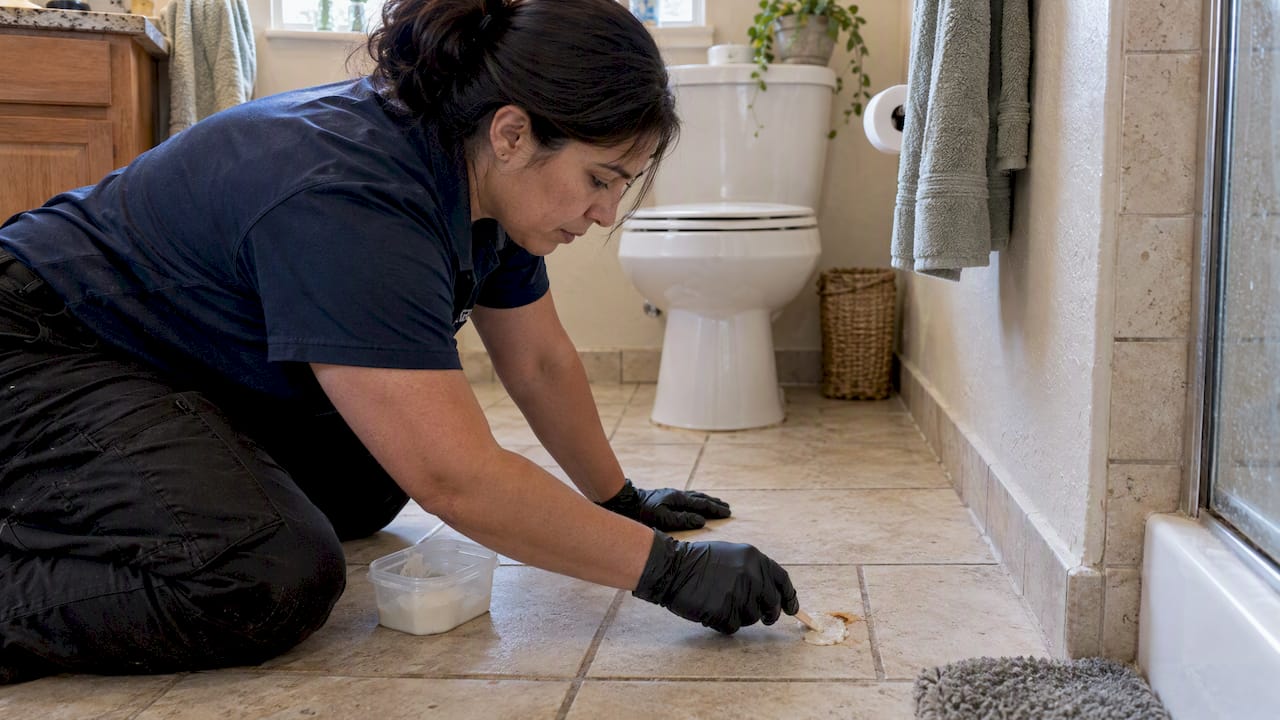
A practical, safety-first view on tackling rust yourself
Most homeowners can handle a fresh rust stain on glazed tile with patience and the right product, as long as they test first and follow the dwell time on the label instead of leaving a cleaner on longer than it should sit. Where I’d draw the line is natural stone and anything that’s resisted two honest attempts: at that point, further scrubbing usually causes more damage than the stain itself.
— Bernadette
Get professional help for stubborn tile rust stains
When a rust stain outlasts a couple of careful DIY attempts, or it’s sitting on natural stone, we take over from there with tools and techniques built for exactly this problem.

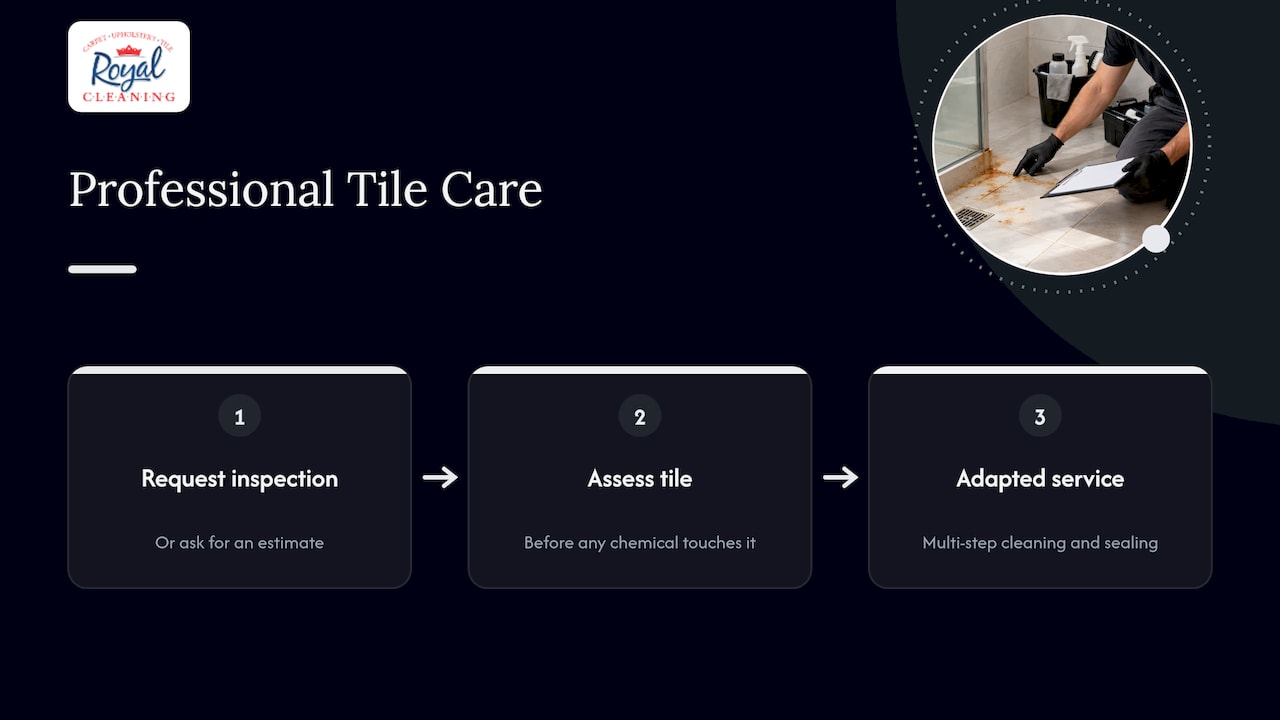
Our tile and grout services include various cleaning and sealing options designed to address mineral and rust stains and to help resist future staining and water penetration, using a multi-step process adaptable to different tile types.
Request an inspection or estimate through our tile and grout cleaning page, and we’ll walk you through what your tile needs before any chemical touches it.
FAQ
Can rust stains be removed from tile?
Yes, most rust stains on glazed ceramic and porcelain tile respond well to oxalic acid, sulfamic acid, or commercial rust removers when applied correctly. Natural stone tile is more sensitive and often needs a professional approach to avoid etching.
Can WD-40 remove rust from tiles?
WD-40 is a lubricant designed to loosen rusted metal parts, not a formulated tile cleaner, so it isn’t a reliable choice for rust stains on tile or grout. Stick with oxalic acid, sulfamic acid, or a commercial rust remover made for hard surfaces instead.
Are rust stains permanent?
Rust stains are rarely permanent on glazed tile when treated with the right acid-based cleaner or a poultice for deeper staining. Stains caused by iron in your water supply tend to return unless you address the water source itself, such as installing an iron filter.
Does Dawn dish soap remove rust stains?
Dawn dish soap can help lift loose surface dirt but doesn’t contain the acid needed to dissolve iron oxide, so it won’t remove an actual rust stain on its own. Pair it with a proper spot-test and an oxalic or sulfamic acid product for real results.
Sources
- Iron and manganese in water (USGS Water Science School)
- Poulticing rust stains from limestone and marble (GSA)
- Dangers of mixing bleach with cleaners (Washington State Department of Health)
- Preservation Brief 40: Preserving Historic Ceramic Tile Floors (NPS)



