

 (505) 280-5216
Homeowners: Remove Grout Haze Safely, Acid for Cement and Alkaline for Epoxy
For cementitious grout haze, an acidic grout-haze remover formulated for Portland cement works fastest and most reliably. For epoxy, urethane, or premixed grout, switch to a non-acid alkaline remover instead, since acid will not break down resin-based residue and can ruin the finish. Light, fresh haze often responds to plain cheesecloth or a dish soap solution. Never use acid on marble, travertine, or other natural stone, and always follow the product’s label and safety instructions.
TL;DR:
- Acid-based grout haze removers effectively clean cementitious grout but can damage natural stone surfaces like marble or travertine.
- Non-acid alkaline products are necessary for resin-based grouts such as epoxy or urethane, especially for cured or older haze.
- Light, surface haze can often be removed with simple methods like cheesecloth, dish soap, or diluted vinegar on glazed tiles, but these are ineffective on hardened residues.
- Always test cleaning products on a small, hidden area first and use PPE, ventilation, and gentle tools to avoid damaging tiles or grout lines.
- Professional cleaning is recommended for large areas, stubborn cure haze, or natural stone to prevent etching and ensure effective removal.
Table of Contents
- Quick checklist: choose the right method by grout and tile type
- Cementitious grout haze: step-by-step acidic-cleaner method
- Non-cement (epoxy, urethane, single-component) haze: non-acid procedure
- Gentle DIY options: cloths, dish soap and diluted vinegar (and limits)
- Tools, PPE, and safe work practices
- Prevention and timing: cleanup windows, additives and final checks
- When to call a pro and what pros will do differently
- Pro perspective: common field observations and practical shortcuts
- Consider a professional tile and grout cleaning service
- FAQ
- Sources
Quick checklist: choose the right method by grout and tile type
Before you grab any cleaner, confirm what you are working with. Cement grout feels powdery and sands off slightly when scratched; epoxy and urethane grouts feel smooth, slightly flexible, and resist scratching. Glazed ceramic and porcelain tolerate mild acids better than natural stone, which can etch or dull permanently.
Work through the options in order of gentleness:
- Wipe with a dry cloth or cheesecloth first to see how much haze is just surface dust.
- Try a warm water and dish soap solution for light films.
- Move to a manufacturer grout-haze remover matched to your grout type if soap fails.
- Call a professional if haze persists after one careful product attempt.
Put on nitrile gloves and eye protection before opening any cleaner, and open a window or run a fan since fumes from acidic products build up fast in small bathrooms.
Cementitious grout haze: step-by-step acidic-cleaner method
Cement-based grout leaves a chalky residue that water alone will not fully dissolve once it cures. The Aqua Mix® Cement Grout Haze Remover (TDS-313) is built for exactly this job, but its manufacturer sheet is explicit that it should never touch marble or polished stone.
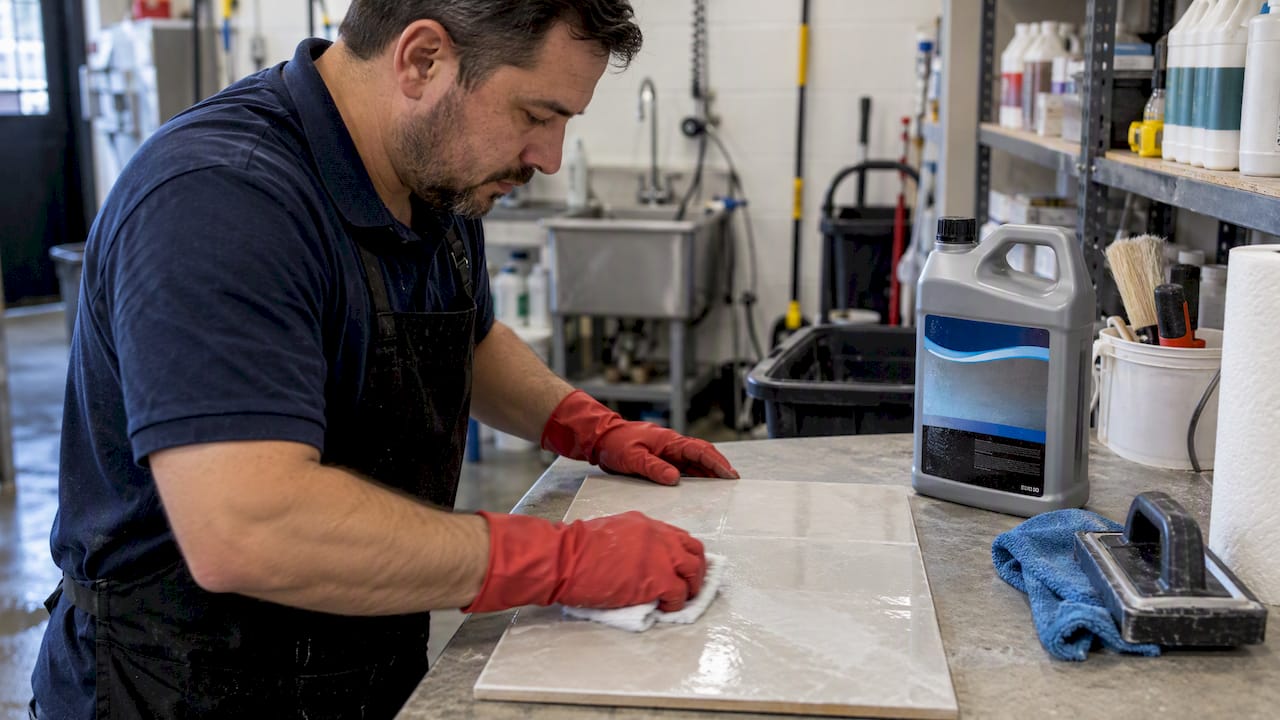
Statistic Callout: Standard acidic grout haze removers run at a pH of roughly 2 to 3, strong enough to dissolve cement film but harsh enough to etch sensitive stone surfaces on contact.
Work through these steps:
- Test the cleaner on a small, hidden tile section first and wait a few minutes to check for etching or color change.
- Dilute according to severity: a lighter mix (roughly 1:20) for recent haze, a stronger mix (roughly 1:10) for stubborn residue, per the Aqua Mix® Cement Grout Haze Remover label.
- Pre-wet the tile with plain water so the acid does not absorb unevenly into dry grout.
- Apply the solution, let it dwell briefly, then agitate with a white nylon pad rather than steel wool, which can leave metal marks.
- Rinse thoroughly with clean water several times, since leftover acid residue keeps working after you walk away.
Avoid letting the solution pool near metal fixtures or trim, and never mix acidic cleaners with bleach or other household chemicals.
Non-cement (epoxy, urethane, single-component) haze: non-acid procedure
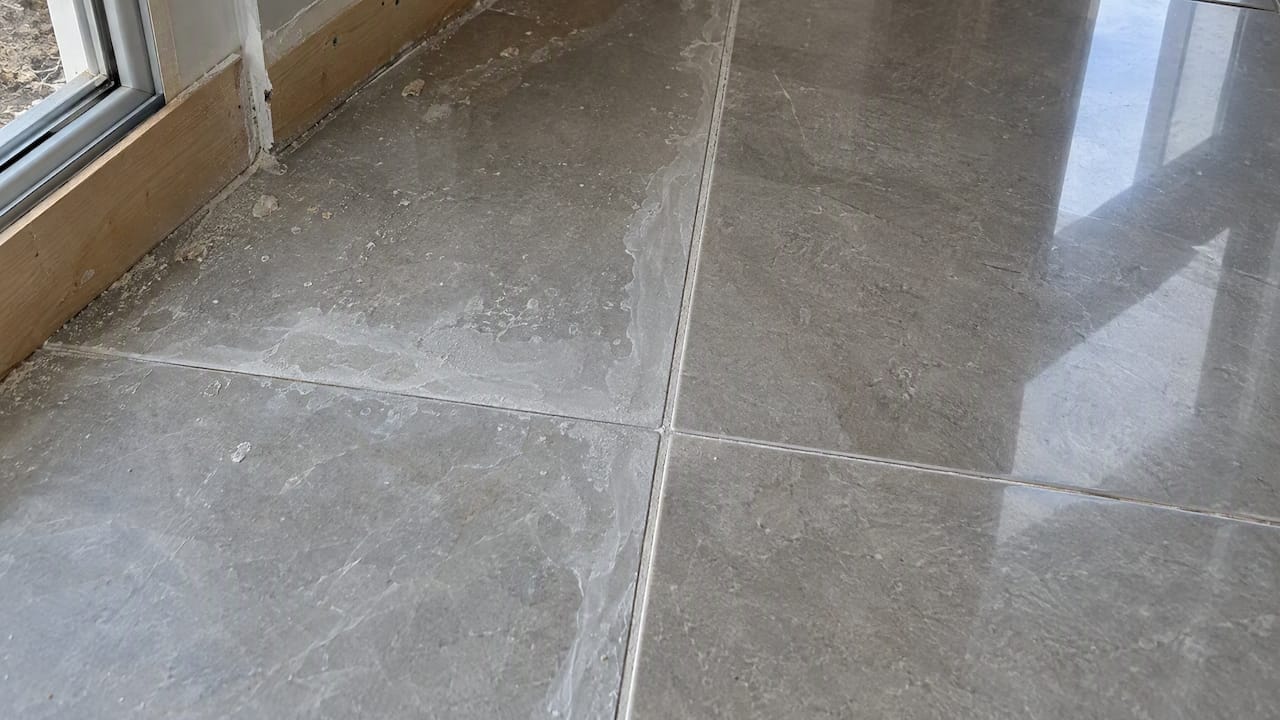
Epoxy, urethane, and single-component grouts are resin-based, so acid simply will not touch the haze they leave behind, and it risks damaging the glaze instead. The Aqua Mix® Non-Cement Grout Haze Remover (TDS-315) uses an alkaline formula, typically a pH of 11 to 12, to break down resin film without attacking the tile surface.
Follow this sequence:
- Check how long the grout has been curing, since dwell time scales with age: the manufacturer TDS lists roughly 5 to 10 seconds for haze under 24 hours old, about 1 minute for 4 to 7 days, and 3 to 5 minutes for grout cured 28 days or more.
- Apply the solution sparingly and avoid soaking the joints, since excess water can wash pigment out of colored epoxy grout.
- Agitate gently with a nylon pad, then wipe and rinse quickly rather than letting the solution sit.
- For haze cured past 7 days that resists this treatment, step up to a dedicated sealer and coating remover, since standard non-cement products reach their limit here.
Pro Tip: Test pigment stability on a hidden joint before treating a full floor, since epoxy color can lift faster than the haze itself.
Gentle DIY options: cloths, dish soap and diluted vinegar (and limits)
Light, fresh haze often comes off without any specialty product. These low-risk methods are worth trying first, especially on glazed tile where you want to avoid introducing acid at all:
- Buff dry haze off with cheesecloth or a clean microfiber cloth before adding any liquid.
- Mix a few drops of Dawn dish soap into warm water and wipe in circular motions, then rinse with clean water.
- For mild cement haze on tile (never on stone), try a diluted vinegar solution of about one part white vinegar to four parts water, applied briefly and rinsed well.
- Change cloths often so you are not redepositing haze back onto the surface.
These methods work on light film and recent residue, not on cured cement haze or hardened epoxy, which need a formulated remover. If soap or vinegar makes no visible difference after one or two attempts, stop and move to a manufacturer product rather than scrubbing harder.
Tools, PPE, and safe work practices
The right tools protect both your grout lines and your tile surface. Keep white nylon scrub pads or soft brushes on hand rather than steel wool, along with grout sponges, cheesecloth, a plastic window scraper used with care on stubborn spots, and a bucket or pump sprayer for mixing solutions.
- Wear nitrile gloves and eye protection any time you use an acidic or alkaline cleaner.
- Ventilate the room well, or use a respirator rated for chemical fumes with stronger products.
- Mix small batches so leftover solution does not sit around, and always test a hidden patch first.
- Rinse tools immediately after use so dried cleaner does not damage sponges or pads.
Pro Tip: Keep two separate buckets, one for cleaner and one for rinse water, so you are not reapplying contaminated rinse water onto fresh grout.
Prevention and timing: cleanup windows, additives and final checks
Haze is far easier to prevent than to remove once it cures. Adding Aqua Mix® Grout Haze Clean-Up (TDS-223) directly to your cleanup water during installation heads off most of the residue before it ever sets, and the manufacturer sheet confirms it can also be used full strength within 10 days if haze still appears after the tile dries.
- Wipe diagonally across joints during installation cleanup rather than along the grout lines, which helps avoid dragging haze back into the joints.
- Expect haze to show up gradually as tile dries, sometimes a day or two after grouting looked clean.
- Do a final check in good lighting once tile is fully dry, since haze is often invisible under wet conditions.
- Hold off on sealing grout until haze is fully removed, since sealer will lock residue in place.
When to call a pro and what pros will do differently
Some situations call for professional help rather than another round of DIY attempts. Large floor areas, epoxy haze that has cured for weeks, any risk of etching natural stone, or grout that has already survived one failed cleaning attempt are all good reasons to bring in a specialist rather than escalate the chemicals yourself.
- Ask what products and dilution rates a contractor plans to use on your specific grout and tile type.
- Request details on their rinse and extraction process, since leftover chemical residue causes ongoing problems.
- Confirm they test a hidden area before treating the full floor.
- Ask whether the service includes grout sealing afterward to protect the work.
Our tile and grout cleaning team relies on industrial-strength strippers and sealer removers for cured epoxy haze that household products cannot touch, with controlled rinsing to limit any etching risk on sensitive stone.
Pro perspective: common field observations and practical shortcuts
The most common rookie mistake we see is over-applying acid on stone that should never have touched it, followed by washing grout pigment right out of epoxy joints with too much water. Haze timing varies more than people expect: it can show up a day after grouting or two weeks later. A small test patch, every time, saves far more trouble than it costs.
— Bernadette
Consider a professional tile and grout cleaning service
When haze has cured hard, spans a large floor, or you are not confident working around natural stone, our tile & grout cleaning and grout sealing service gives you a guaranteed result without the trial and error. We keep pricing transparent with no hidden charges, use advanced equipment matched to your grout and tile type, and back every job with our satisfaction guarantee.

Reach out to get your tile and grout assessed and request a straightforward quote before haze turns into a bigger restoration job.
FAQ
Will grout haze eventually go away on its own?
Light haze sometimes fades slightly with normal foot traffic and cleaning, but cured cementitious or epoxy haze generally will not disappear without active treatment. Waiting usually makes it harder to remove since haze bonds more firmly to the tile over time.
Will Dawn dish soap remove grout haze?
Dawn dish soap diluted in warm water can lift light, fresh haze or surface film, especially right after grouting. It will not dissolve cured cement haze or hardened epoxy residue, which need a formulated grout haze remover instead.
Does vinegar get rid of grout haze?
A diluted white vinegar solution can help with mild cement grout haze on glazed tile, but it should never be used on natural stone since the acid can etch the surface. For heavier or cured haze, vinegar is usually too weak compared to a manufacturer acidic remover.
What should you not clean grout with?
Avoid acidic cleaners, including vinegar, on marble, travertine, limestone, and other natural stone, since they can etch or dull the surface permanently. Also skip steel wool and abrasive scrubbers, which can scratch glazed tile and leave metal residue in the grout lines; a non-cement grout haze remover is the safer choice for epoxy or urethane grout haze.



