

 (505) 280-5216
Homeowners: When to Clean Carpets, 12 to 18 Months for Most, 3 to 6 with Pets
Most homeowners should schedule a professional deep clean every 12 to 18 months, following Carpet and Rug Institute guidance. Households with pets, small children, or allergy sufferers usually need service every 3 to 6 months instead. Between those visits, vacuum at least weekly, more often in high-traffic zones, and rely on hot water extraction as the professional standard for anything a vacuum cannot reach.
TL;DR:
- Homes with pets, children, or allergy concerns should schedule deep cleaning every 3 to 6 months to effectively manage dander, stains, and allergens.
- High-traffic areas require professional cleaning at least every 3 to 6 months, while less-used rooms can extend to 12–18 months, depending on household risk factors.
- Regular vacuuming, at least weekly, and prompt spot cleaning with enzymatic solutions help reduce soil buildup and delay the need for deep cleaning.
- Hot water extraction is the recommended method for deep cleaning, providing superior soil removal and preserving warranty coverage when documented properly.
- Failing to follow the manufacturer’s specified cleaning schedule without proof can void carpet warranties, making timely professional treatments essential.
Table of Contents
- How Often Should You Deep Clean Carpets by Household Type?
- What Maintenance Actually Reduces How Often You Need a Deep Clean?
- What Do Professional Cleaners Do That Vacuuming Can’t?
- Does Your Carpet Warranty Require Professional Cleaning?
- Your Carpet Cleaning Timeline Checklist
- A Publisher’s View on Sticking to the Schedule
- Get a Professional Deep Clean Scheduled
- Sources
- FAQ
How Often Should You Deep Clean Carpets by Household Type?
Not every home wears out its carpet at the same rate, so a single number never covers every household. The Carpet and Rug Institute’s baseline of every 12 to 18 months works well for a single adult or a couple with low foot traffic and no pets. Add kids, dogs, or allergy concerns, and that window shrinks fast, because soil load and airborne allergens build up faster than the fibers show it visually.
Zone-based rotation solves the problem of treating a whole house like one uniform space. High-traffic areas such as hallways, living rooms, and stairs collect soil at a much faster rate than a guest bedroom that gets used twice a year, and the CRI 204 Commercial Carpet Standard builds its maintenance charts around exactly that distinction. Cleaning your entryway and family room every 6 months while stretching a rarely used den to 18 months isn’t cutting corners. It’s matching effort to actual wear.
| Household Type | Recommended Deep-Clean Interval | Why |
|---|---|---|
| Single adult, low traffic | 12–18 months | Minimal soil accumulation, few allergens introduced |
| Family, moderate traffic | 12 months | Regular foot traffic and daily activity increase soil load |
| Homes with pets | 3–6 months | Dander, oils, and accidents accelerate soiling and odor buildup |
| Homes with young children | 3–6 months | Spills, crawling, and floor play increase contact and staining |
| Allergy or asthma sufferers | 3–6 months | Trapped allergens need more frequent extraction for air quality |
| High-traffic zones (any home) | Every 3–6 months, independent of the rest of the house | Concentrated soil wears fibers and dulls color faster |
If your household fits more than one row, follow the shorter interval. A family with a dog and a toddler isn’t an edge case anymore. It’s the CRI’s definition of a higher-risk home, and stretching past 6 months usually means visible traffic lanes before your next scheduled clean even arrives.
What Maintenance Actually Reduces How Often You Need a Deep Clean?
Vacuuming does more work than most homeowners give it credit for. Dry soil acts like sandpaper on carpet fibers, and every pass you skip lets that grit grind deeper into the pile. The Carpet and Rug Institute recommends daily to several-times-weekly vacuuming in entryways, 2 to 3 times a week in living areas, and once or twice weekly in bedrooms.
Technique matters as much as frequency. Slow, overlapping strokes pull more embedded soil than quick back-and-forth passes, and a clogged bag or canister cuts suction dramatically even on a brand-new machine.
- Vacuum entryways and mudrooms often, multiple times weekly, as they accumulate outdoor debris quickly.
- Vacuum living rooms and hallways several times per week due to higher use.
- Vacuum bedrooms once or twice weekly, reflecting lower foot traffic.
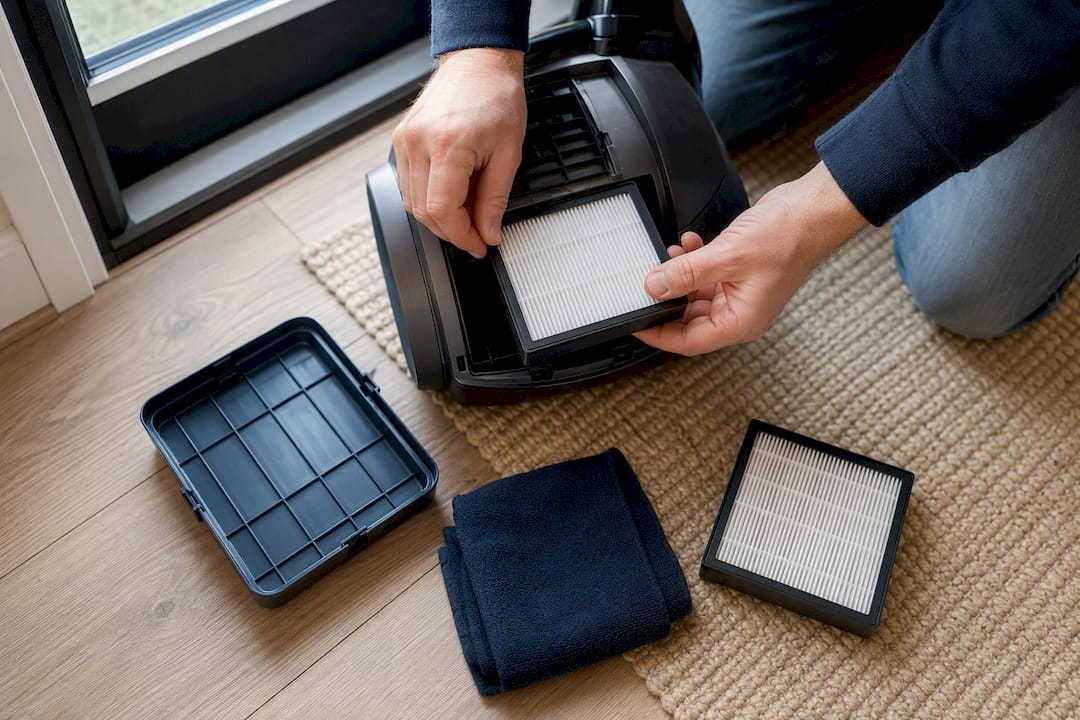
- Change or empty the vacuum bag or canister regularly. A half-full bag can lose significant suction before it looks full.
- Blot spills immediately with a clean cloth. Never rub, which pushes the stain deeper and spreads it.
Spot cleaning between deep cleans catches problems before they set. Skip heat on any pet accident. The Humane Society warns that heat sets both the stain and the odor into the fiber permanently. Cool water extraction paired with an enzymatic cleaner breaks down the uric acid that causes lingering smell, and products carrying the CRI Seal of Approval are tested to lift soil without leaving a sticky residue that attracts more dirt. For appearance upkeep between professional visits, a rental low-moisture machine can refresh a room, but it’s a stopgap for surface soil rather than a substitute for the deep extraction your carpet’s warranty likely requires.
Pro Tip: Keep a second, dedicated vacuum filter or bag on hand for entryways during muddy seasons. Swapping it out mid-week, rather than waiting until it’s full, keeps suction strong when soil load spikes.
What Do Professional Cleaners Do That Vacuuming Can’t?
Hot water extraction is the method most manufacturers specify by name in their warranty language, and it’s the reason the industry treats it as the deep-clean standard rather than one option among many. The process injects hot water and cleaning solution deep into the pile, then immediately extracts it along with the dissolved soil, which pulls contaminants a vacuum or a rented surface cleaner simply can’t reach.
Specialty situations call for more targeted approaches. Enzymatic pet-odor protocols break down uric acid crystals rather than masking them. Wool-safe, low-pH methods protect natural fibers that hot water at the wrong temperature can damage. Truckmount extraction delivers higher heat and suction than portable units, which speeds drying time and lifts more embedded soil in a single pass.
Call a professional now if you notice any of these:
- Odors that return within days of spot cleaning, especially pet-related smells.
- Stains that darken or reappear after DIY extraction attempts.
- Visible traffic lanes or flattened pile in hallways and living areas.
- Your warranty documentation is due and you have no proof of a recent professional cleaning.
- Water damage, flooding, or a musty smell that suggests moisture trapped in the pad.
- New or worsening allergy symptoms that seem tied to time spent indoors.
Reviewing the benefits of professional carpet treatment helps explain why extraction outperforms surface cleaning for allergen removal specifically, not just visible dirt.
Does Your Carpet Warranty Require Professional Cleaning?
Most carpet manufacturers write warranty language around a specific maintenance schedule, and skipping it can cost you the coverage entirely. The typical clause requires documented professional hot water extraction every 12 to 18 months, tied to the same CRI guidance that drives the broader industry standard.
Save every receipt and service report a contractor gives you. If a manufacturer ever questions a claim about premature wear or fiber defects, that paperwork is your proof of compliance. Check your carpet’s care label and cross-reference it against CRI or IICRC recommendations before choosing a cleaning method, since some fibers and backings have specific restrictions that a generic cleaning schedule won’t catch.
Your Carpet Cleaning Timeline Checklist
- Right now: if you’re dealing with pet accidents, set-in stains, strong odors, or visible traffic lanes, stop scheduling around a calendar and call a professional this week.
- Routine baseline: match your household to the interval in the schedule above, then rotate high-traffic zones onto a shorter cycle than bedrooms or guest rooms.
- Vacuum weekly at minimum, with entryways and living spaces getting extra passes between deep cleans.
- Document every professional visit with a receipt or service report, especially if your carpet is still under manufacturer warranty.
- Budget smart: ask about combining upholstery and carpet service in one visit, or timing your deep clean around seasonal promotions, to get more done per appointment.
Homeowners managing multiple rooms on different cycles often find it easier to track everything alongside a broader residential cleaning checklist rather than trying to remember dates room by room.
A Publisher’s View on Sticking to the Schedule
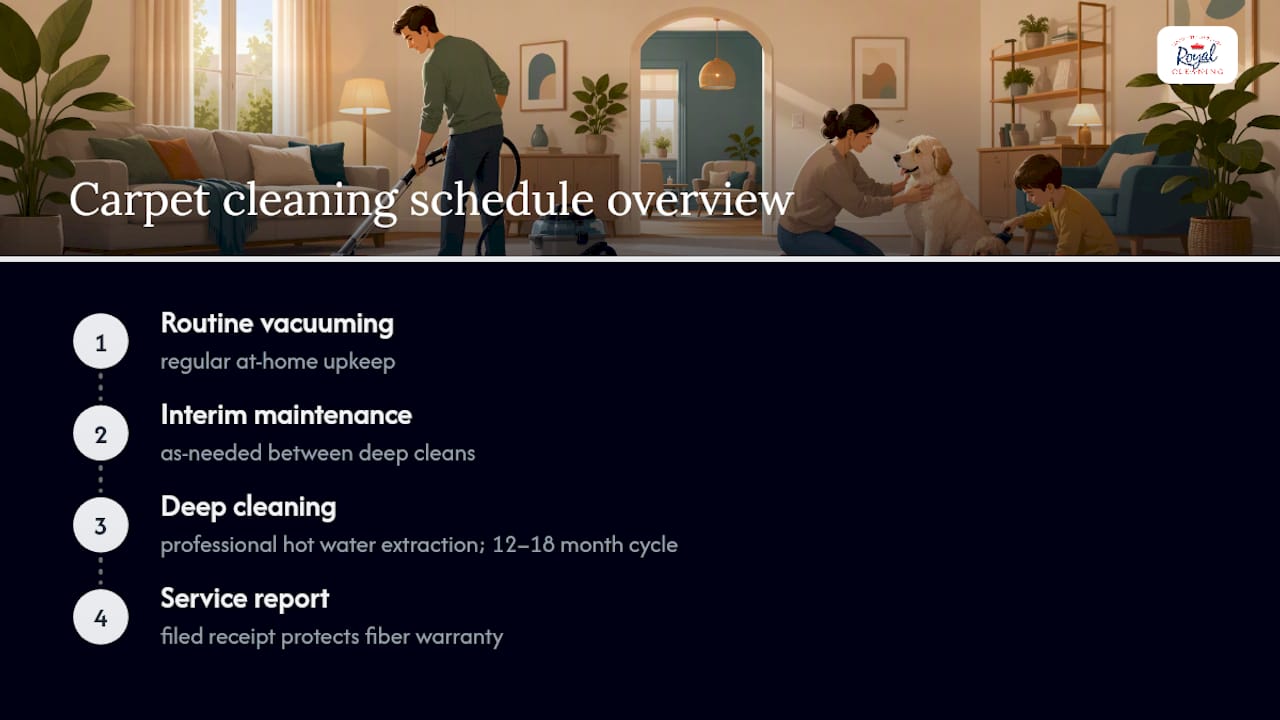
A typical professional cleaning process follows a three-tiered structure: routine vacuuming at home, interim maintenance as needed, and scheduled deep cleaning on a 12 to 18 month cycle. In practice, professional service involves a multi-step hot water extraction process, with eco-friendly disinfectant options sometimes available for households managing allergies, pets, or indoor air quality concerns.
What tends to get overlooked is the paperwork. Every completed job should come with a service report you can file away, because that single piece of paper is what protects a fiber warranty when a manufacturer asks for proof of maintenance history. A missed cleaning cycle is inconvenient. A voided warranty because nobody kept the receipt is a far costlier mistake, and it’s an entirely preventable one.
— Bernadette
Get a Professional Deep Clean Scheduled
Professional cleaning services typically offer hot water extraction, pet stain and odor treatment using enzymatic methods rather than heat, and upholstery cleaning add-ons for homes with multiple rooms requiring attention; for additional household cleaning strategies, see our best tips to clean your beautiful interior doors. For detailed service information, see the Professional Carpet Cleaning page.
Requesting a quote takes just a few minutes through that same page, and if you’re also due for tile, grout, or air duct service, it’s worth asking about combining visits. Reserve your appointment now and get a documented service report you can keep on file, whether it’s for warranty compliance or just your own peace of mind.
Sources
- Cleaning and Maintenance – The Carpet and Rug Institute
- How to remove pet stains and odors – Humane Society
FAQ
How often should carpets be professionally cleaned?
Every 12 to 18 months for most households, per Carpet and Rug Institute guidance. Homes with pets, kids, or allergy concerns often need service every 3 to 6 months.
How often should you vacuum carpet?
Vacuum entryways frequently, daily or multiple times weekly; living areas a few times per week; and bedrooms weekly or twice weekly, increasing vacuum frequency as needed for pets or heavy traffic.
How often should you clean area rugs?
Area rugs generally follow the same interval as the room they sit in, meaning 12 to 18 months for low-traffic spaces and every 3 to 6 months for entryways, pet areas, or rugs under dining tables.
What is hot water extraction and why do professionals use it?
Hot water extraction injects hot water and cleaning solution into carpet fibers, then immediately extracts it along with dissolved soil. It’s the method most manufacturers require by name in warranty documentation.
Will not cleaning my carpet on schedule void the warranty?
Possibly. Many manufacturer warranties require documented professional hot water extraction at set intervals, and missing that schedule without proof of service can invalidate a fiber or defect claim.
Can I clean pet stains myself between professional visits?
Yes, but avoid heat, which sets the stain and odor permanently. Use cool water extraction with an enzymatic cleaner, and call a professional if the odor returns within days.



