

 (505) 280-5216
Test a One Inch Patch First: Microfiber Couch Cleaning for Homeowners
Check the care tag under your cushions first: a W code means mild soap and water, S means a solvent like isopropyl alcohol, WS means either works, and X means vacuum only, no liquids at all. Match your method to that letter and you’ll avoid the two most common mistakes: water rings on solvent-only fabric and dull, matted patches from over-wetting. If the stain is old, large, or smells like pet urine, that’s your cue to call a professional instead of reaching for another spray bottle.
TL;DR:
- Using the correct cleaning method depends on the care code: W for water-based cleaners, S for solvent-based, WS for either, and X for vacuum only.
- Always test your cleaner on a hidden patch before full cleaning, especially on suede-style or delicate microfiber fabrics.
- Vacuum thoroughly before any liquid treatment, and avoid saturating the fabric to prevent staining or damage.
- Spot stains like oil or pet urine may require specific pre-treatments such as baking soda, enzyme cleaners, or professional help if deeply soaked.
- Deep cleaning with extractors or steam should be reserved for heavy soil or annual maintenance, not small stains, and always followed by thorough drying.
Table of Contents
- What You Need Before You Start Cleaning Microfiber Furniture
- How Do You Read a Microfiber Couch’s Care Code?
- Step-By-Step Cleaning by Fabric Code
- Fixing Food, Ink, Grease, and Pet Stains on Microfiber
- When Should You Use an Extractor or Steamer on Microfiber?
- Restoring the Nap After Cleaning
- How Often Should You Clean a Microfiber Couch?
- When Is It Time to Call a Professional?
- Why Testing First Beats Rushing to Deep Clean
- Get Professional Help for Stubborn Microfiber Stains
- Sources
- FAQ
What You Need Before You Start Cleaning Microfiber Furniture
Gather your supplies before you touch the couch. Rushing this step is how people end up scrubbing with the wrong cloth and staining the fabric a shade darker.
- Vacuum with a soft-brush attachment
- White microfiber cloths (color matters here)
- Soft-bristle brush
- Spray bottle, mild clear dish soap, and 70 to 90 percent isopropyl alcohol
- Baking soda and a sponge
- Fan or hair dryer for airflow
- Optional: a handheld steamer or portable extractor, used carefully
Stick to white cloths. Colored towels can bleed dye onto damp fabric, and you won’t notice until it’s dry and set. If you’re working with alcohol, open a window. Fumes build up fast in a closed living room, and the EPA’s indoor air quality guidance recommends good ventilation any time you’re cleaning and drying household fabric. Gloves are a smart call if you have sensitive skin.
How Do You Read a Microfiber Couch’s Care Code?
The tag sewn under a cushion or along the frame carries a letter that tells you exactly what the fabric can handle. Skip this step and you’re guessing, and guessing is how nap gets crushed or fabric gets a permanent water stain.
- W means water-based cleaners only. Mild soap and water is safe.
- S means solvent-based cleaners only, like isopropyl alcohol. Water can leave rings.
- WS means either water-based or solvent-based cleaners are safe.
- X means vacuum or brush only. No liquid of any kind.
Once you know the code, test it. Pick a hidden spot, like the back of a cushion or the underside of an armrest, and apply a small amount of your cleaner to a one-inch patch. Wait and check for color change, ring marks, or texture shift before treating the visible cushion. Care tags and this exact test-patch habit come straight from Home Depot’s microfiber cleaning guide, and it holds for every fabric code. No tag on your couch? Treat it as S-coded and test conservatively. Suede-look microfiber is especially prone to water spotting, so when in doubt, alcohol first.
Step-By-Step Cleaning by Fabric Code
Every method starts the same way, regardless of what letter is on your tag. Vacuum the entire surface with a soft-brush attachment to lift crumbs, dust, and pet hair before any liquid touches the fabric. If there’s an odor, sprinkle baking soda over the cushions, let it sit for a while, then vacuum it off.
From there, your care code decides the next move.
- S fabrics (solvent only): Fill a spray bottle with undiluted isopropyl alcohol and mist a small section at a time. Blot with a white cloth, then agitate gently with a soft-bristle brush in small circles. Let the alcohol evaporate completely before moving to the next section.
- W fabrics (water-based): Mix a few drops of mild clear dish soap into a cup of warm water. Spray lightly, work it into light suds with a damp sponge, then blot with a cloth barely dampened in clean water to rinse. Never saturate the fabric.
- WS fabrics (either): Start with the water method since it’s gentler on color and texture. If a stain resists, move to the solvent method after a fresh test patch on that same section.
Alcohol works so well on S-coded microfiber because it evaporates quickly, which is exactly why it rarely leaves the ring marks water does, according to Rug Doctor’s cleaning guidance. Work in small sections, never more than a couple square feet at a time, and let each one dry before starting the next. This isn’t a race. Rushing a whole cushion at once is how you end up with uneven color and a soggy couch that takes two days to dry.
Pro Tip: Keep a second spray bottle filled with plain water nearby when you’re solvent cleaning. If the alcohol starts drying a spot lighter than the rest, a light water mist and quick brush can even out the tone before it sets.
Fixing Food, Ink, Grease, and Pet Stains on Microfiber
Different stains call for different first moves, and getting the order wrong is often what turns a five-minute fix into a permanent mark.
- Food and beverage spills: Blot immediately, then clean using the method your care tag allows. For red wine, sprinkle salt or baking soda over the spot first to pull moisture out before you apply any cleaner.
- Oil and grease: Cover the spot with baking soda or cornstarch, let it absorb for 15 minutes, then vacuum. Follow with a solvent spot-clean if your tag allows it. Skip water entirely on greasy spots, especially on suede-style microfiber.
- Ink and marker: On S-coded fabric, alcohol usually lifts it if you catch it early. On W-coded fabric, deep-set ink often outlasts DIY effort and needs professional attention.
- Pet urine: Blot thoroughly and repeatedly before applying anything. An enzyme cleaner can work if a test patch shows no discoloration, but urine that’s soaked into the cushion core usually needs professional remediation to fully remove the odor, a point Rug Doctor makes clear for anyone tackling pet accidents on their own.
When Should You Use an Extractor or Steamer on Microfiber?
A whole-couch refresh, heavy soiling across multiple cushions, or an annual deep clean is when a machine earns its place over spot cleaning. For anything smaller, stick with the manual methods above.
- Test a hidden area with the machine before running it over visible cushions.
- Use low-solution wet passes, never a heavy soak.
- Follow every wet pass with a dry pass to pull moisture back out.
- Give the couch several hours of airflow to dry completely.
- Go easy with water on suede-style microfiber. It spots more readily than smooth-weave fabric.
Portable extractors and rental units work on microfiber, but operators should favor light passes and let the machine’s dry cycle do its job rather than over-wetting for a deeper clean, per StitchDesk’s microfiber handling guide. A handheld steamer can refresh the surface and cut down on dust mites, but only on W or WS-coded fabric. Steam is a form of moisture, so X-coded microfiber is off limits.
Restoring the Nap After Cleaning
Microfiber often looks crushed or blotchy right after cleaning, and that’s normal, not damage. While the fabric is still slightly damp, brush the nap gently in one direction with a soft-bristle brush to revive the texture. This single step resolves most of the “my couch looks ruined” panic homeowners feel right after cleaning, according to StitchDesk’s upholstery guide.
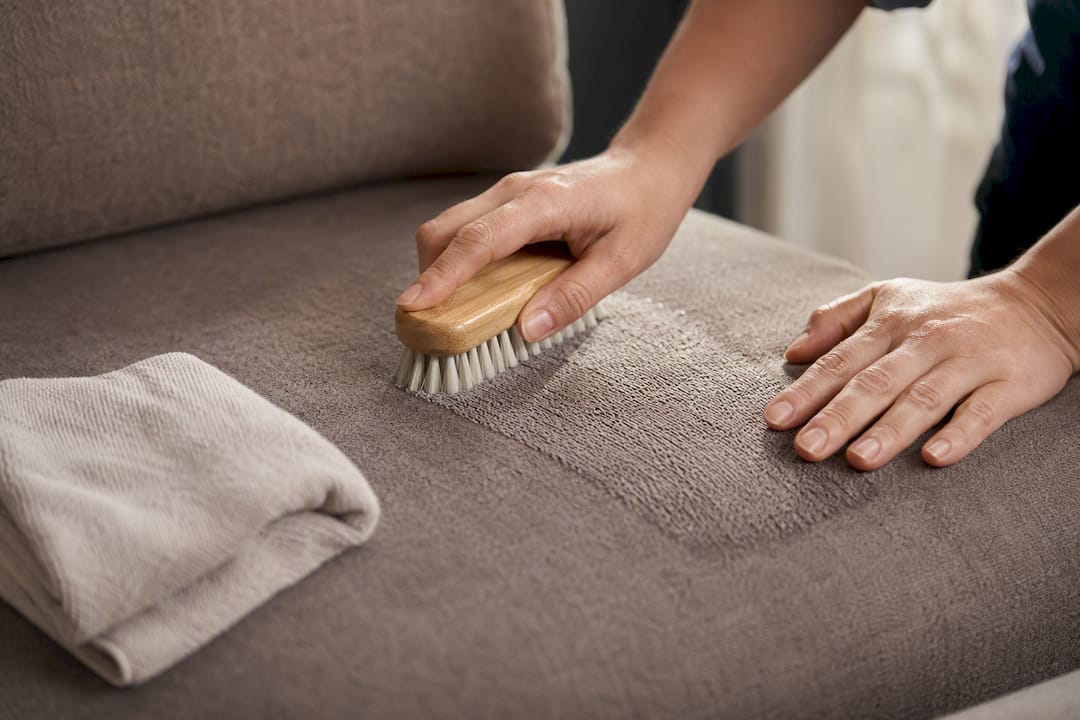
If a faint water ring remains, re-dampen just that spot lightly and brush it out while damp. Persistent rings that won’t budge are worth handing to a professional rather than repeating the process and risking a bigger blotch. Vacuum once more after everything dries fully, and give the couch a few hours before anyone sits on it.
How Often Should You Clean a Microfiber Couch?
A simple rhythm keeps microfiber looking new far longer than occasional deep cleans ever will.
- Weekly: Vacuum with the soft-brush attachment and blot any fresh spills the moment they happen.
- Monthly: Deodorize with a baking soda treatment and check high-use spots for early staining.
- Yearly or as needed: Run a full deep clean, either DIY with an extractor or through a professional service, and consider a throw or removable cover over armrests and cushion edges where wear shows first.
For more between-clean tricks that pair well with this schedule, our guide to simple home remedies for upholstery covers everyday fixes worth keeping in rotation.
When Is It Time to Call a Professional?
Some jobs are worth handing off, especially set-in stains that have been there for weeks, pet urine that’s reached the cushion core, smoke or musty odors, stubborn water rings, or a care tag you genuinely can’t decode. Trying to force a DIY fix past that point usually makes the fabric worse, not better.
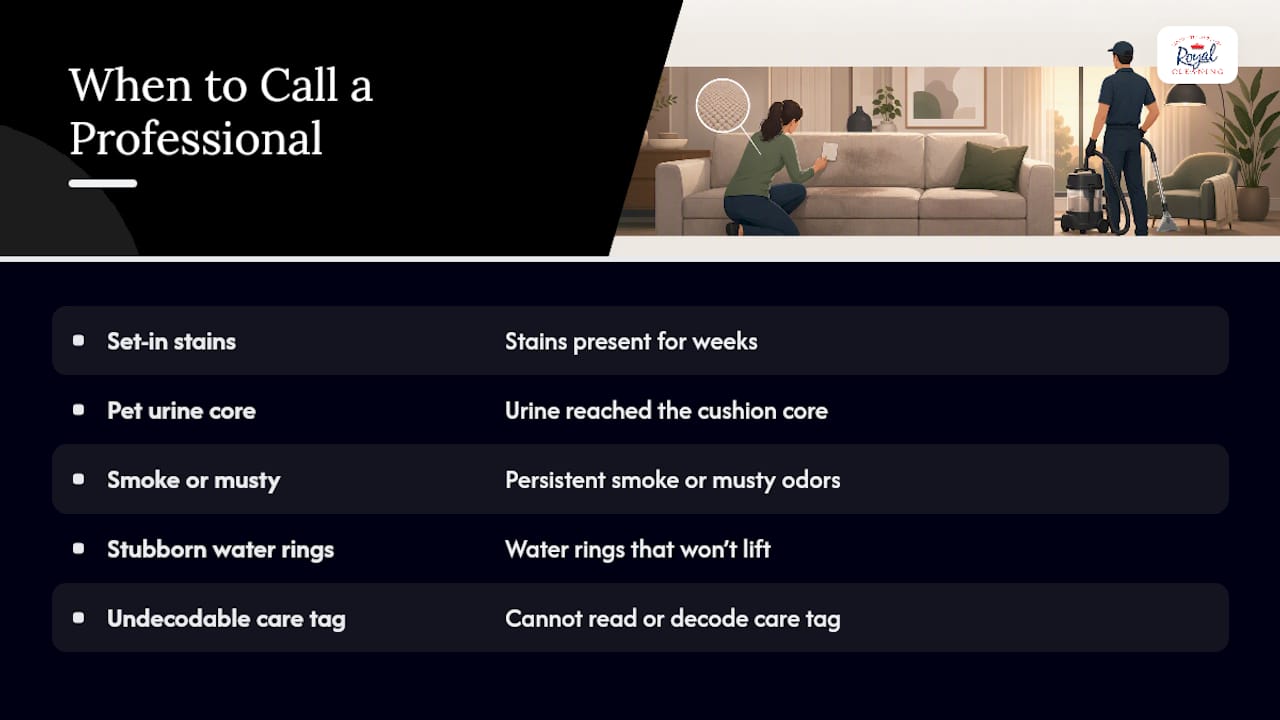
Professional cleaning brings controlled extraction, faster drying times, full nap restoration, and eco-friendly disinfectant options that most home setups can’t match. Royal Carpet and Tile Cleaning serves homeowners across Albuquerque and Rio Rancho with transparent, upfront pricing and a detailed upholstery cleaning process built specifically around fabric-safe methods like the ones covered above.
Why Testing First Beats Rushing to Deep Clean
Start gentlest, test small, and escalate only when you have to. That’s the whole method, and it’s the same rule labs and experienced cleaners keep landing on. DIY handles most spills. Set-in stains and odor problems are where a professional’s controlled equipment genuinely earns its cost.
— Bernadette
Get Professional Help for Stubborn Microfiber Stains
DIY testing and solvent methods handle most spills, but professional cleaning services are worth calling when a stain has soaked in, an odor won’t lift, or you’re simply out of patience with spray bottles and cloths. Unlike one-size-fits-all store-bought cleaners, experienced technicians match the cleaning method to your couch’s actual care code before touching the fabric, helping you skip the guesswork and the risk of a ruined cushion.

Our on-site upholstery service uses a multi-step extraction process with eco-friendly disinfectant options, transparent pricing, and fast drying times, serving homeowners throughout Albuquerque and Rio Rancho. If your couch has stains that have outlasted a few cleaning attempts, or the odor keeps coming back after a DIY fix, request a quote through our upholstery cleaning page and we’ll walk you through what a proper inspection and clean actually involves.
Sources
- Clean a Microfiber Couch – The Home Depot
- How to Clean Microfiber Couches – Rug Doctor
- Text version of the indoor air quality house tour – EPA
FAQ
What Is the Best Cleaner for a Microfiber Couch?
It depends entirely on the care tag. Isopropyl alcohol is the standard choice for S-coded fabric, while a mild dish soap and water solution works for W-coded fabric, and testing either on a hidden patch first is non-negotiable.
Are Microfiber Sofas Easy to Clean?
Yes, microfiber is generally easier to maintain than many upholstery fabrics because it resists staining and responds well to both vacuuming and spot treatment, but the right method still depends on the care code.
Can I Use Windex to Clean a Microfiber Couch?
It’s not recommended. Glass cleaners often contain ammonia and additives that can discolor microfiber or leave residue behind, and neither Home Depot’s nor Rug Doctor’s guidance lists it as a safe option.
Can I Use Rubbing Alcohol to Clean a Microfiber Couch?
Yes, on S-coded and WS-coded fabric. Isopropyl alcohol between 70 and 90 percent evaporates quickly, which is why it’s the go-to solvent for lifting stains without leaving water rings.



