

 (505) 280-5216
Reseal Grout Every 6 to 24 Months? Water Bead Test for Homeowners
Seal cement-based grout every 6 to 24 months on wet or high-traffic tile, adjusting for the area and how hard you clean it. The single best gauge is not a date on your calendar but the water-bead test: drip water on the grout, and if it soaks in within about 30 seconds instead of beading up, the sealer has failed. Epoxy grout is the exception. It’s typically non-porous enough that it rarely needs sealing at all.
TL;DR:
- Reseal grout every 6 to 12 months in showers and high-moisture areas, and up to 3 years on less-wet surfaces based on water-bead tests.
- Use the water-bead test to verify if the sealer remains effective, checking for beads that last 30 seconds or longer.
- Wait at least 24 hours after grouting before sealing, extending to 48-72 hours in humid environments for proper curing.
- Select appropriate sealer types: penetrating sealers last 12-24 months, while topical sealers need more frequent resealing every 6-12 months.
- Avoid sealing over dirt or before the grout is fully cured to prevent trapping moisture, discoloration, or peeling.
Table of Contents
- How Often to Reseal Grout by Location
- How to Test if Grout Needs Resealing
- How Long to Wait Before Sealing New Grout
- Sealer Types and How Long Each One Lasts
- Step-by-Step Grout Sealing (and Mistakes to Avoid)
- When to Call a Professional for Grout Maintenance
- A Maintenance Habit Worth Building
- Get Your Grout Professionally Sealed and Protected
- Sources
- FAQ
How Often to Reseal Grout by Location
Where your tile sits, and how much water and foot traffic it takes, decides how often you need to reseal far more than any generic rule does. A shower floor and a kitchen backsplash age at completely different rates, even with identical grout.
- Showers: reseal every 6 to 12 months with a standard penetrating sealer, or stretch to 12 to 24 months with a higher-grade penetrating product if your household showers less often or ventilates well.
- Bathroom and kitchen floors: plan on 1 to 3 years, depending on foot traffic and how aggressively you scrub with acidic or abrasive cleaners.
- Backsplashes and other rarely-wet tile: 3 to 5 years is common, since these surfaces see splashes rather than standing water.
- Outdoor tile, pool decks, and entryways: expect to reseal more often than any indoor surface, because UV exposure, deicing chemicals, and constant foot abrasion break sealers down faster.
These ranges are starting points, not deadlines. The Spruce’s home-care guidance notes that cleaning habits and daily use shift the schedule considerably, which is exactly why a physical test beats counting months on a calendar.
How to Test if Grout Needs Resealing
You don’t need a moisture meter or a contractor visit to check your sealer’s condition. A simple water-bead test tells you in under a minute whether the grout is still protected.
- Clean the grout normally and let it dry completely. Testing on damp or freshly rinsed grout gives a false reading.
- Drop a few drops of plain water onto a joint in a representative spot, not just the cleanest-looking tile.
- Watch the water. If it beads up and sits on the surface for 30 seconds or longer, the sealer is still working.
- If the water soaks in and darkens the grout quickly, the sealer has failed and it’s time to reseal.
Beyond the water test, watch for grout that looks darker than it used to, holds onto stains after cleaning, or grows mildew faster than it once did. Run this test every 6 to 12 months in showers and other wet zones, since that’s where sealer failure shows up first.
Pro Tip: Always test after your grout has fully dried from its last cleaning. Testing on damp grout can make a healthy sealer look like it’s failing when it isn’t.
How Long to Wait Before Sealing New Grout
Sealing fresh grout too early traps moisture underneath the sealer, and that moisture has nowhere to go. The result is often discoloration, a musty smell, or a sealer that never bonds properly and peels within months.
- Wait a minimum of 24 hours after grouting before applying any sealer.
- A 48 to 72 hour window is the safer bet for most bathroom and kitchen projects.
- In a cool basement, an unheated space, or anywhere humidity runs high, extend that to 96 hours or more before testing.
- Skip the guesswork with a press test: press a fingernail firmly into the grout joint. If it dents or feels soft, it needs more time.
Manufacturer instructions on your specific grout and sealer packaging always take priority over general timelines, since formulas vary.
Sealer Types and How Long Each One Lasts
Not every sealer works the same way, and picking the wrong type for your tile is one of the more common reasons homeowners feel like they’re resealing constantly. Penetrating sealers, sometimes called impregnating sealers, are the most common choice for grout because they soak into the grout rather than sitting on top of it. They’re invisible, let the grout breathe, and typically hold up for 12 to 24 months in showers and floors.
- Penetrating/impregnating sealers: 12 to 24 months, the standard pick for wet or high-traffic areas.
- Membrane or topical sealers: 6 to 12 months in wet zones; they form a surface film that’s easy to spot when it’s worn but wears out faster than a penetrating formula.
- Enhancing sealers: 12 to 18 months; these deepen or richen grout color while sealing, a good option if you also want a cosmetic refresh.
- Epoxy grout: usually non-porous by design, so most installations skip sealing entirely.
Match the sealer type to the reseal ranges from the location section above; a penetrating sealer in a shower and a topical sealer on a backsplash will land on very different maintenance calendars even in the same house. For a deeper breakdown of formulas by room, see our guide to grout sealer types.
Step-by-Step Grout Sealing (and Mistakes to Avoid)
Sealing over dirty grout is one of the most common do-it-yourself mistakes, and it locks stains and grime under the sealer instead of protecting clean grout.
- Clean thoroughly first. Remove mold, soap scum, and old cleaner residue completely; a stiff brush and a grout-safe cleaner work better than anything acidic that can etch the joint.
- Let the grout dry fully, following the curing guidance above if the grout is newly installed.
- Apply the sealer according to the product label, working in small sections so you don’t lose track of coverage.
- Buff off excess sealer before it dries on the tile surface, since dried residue is far harder to remove later.
- Add a second coat only if the grout visibly absorbs the first one, which usually signals more porous or older grout.
- Keep the area dry for the product’s stated cure window, typically 24 to 72 hours before the tile gets wet again.
The three mistakes that undo this process fastest: sealing grout that isn’t fully clean, sealing before the recommended cure time has passed, and applying so much sealer it pools and leaves a hazy film. For the cleaning step itself, our guide on deep cleaning tile grout walks through the prep in more detail.
When to Call a Professional for Grout Maintenance
Some situations call for more than a weekend project. Persistent staining that won’t lift with home cleaners, active mold in shower grout, large floor areas, or historic tile that needs careful handling are all good reasons to bring in a professional rather than risk damage or a rushed job.
- Professionals use specialized cleaners and high-volume extraction equipment that lift embedded grime a household mop or brush can’t reach.
- They select the correct sealer type for your specific grout and environment, rather than guessing between penetrating, membrane, or enhancing formulas.
- Commercial-grade drying equipment shortens the wait between cleaning and sealing, which matters most in humid climates.
- The upfront cost typically pays off in longer-lasting protection and fewer resealing cycles down the line.
Royal Carpet and Tile Cleaning’s tile and grout cleaning process covers exactly this kind of deep clean and sealer application for homeowners who’d rather skip the trial and error.
A Maintenance Habit Worth Building
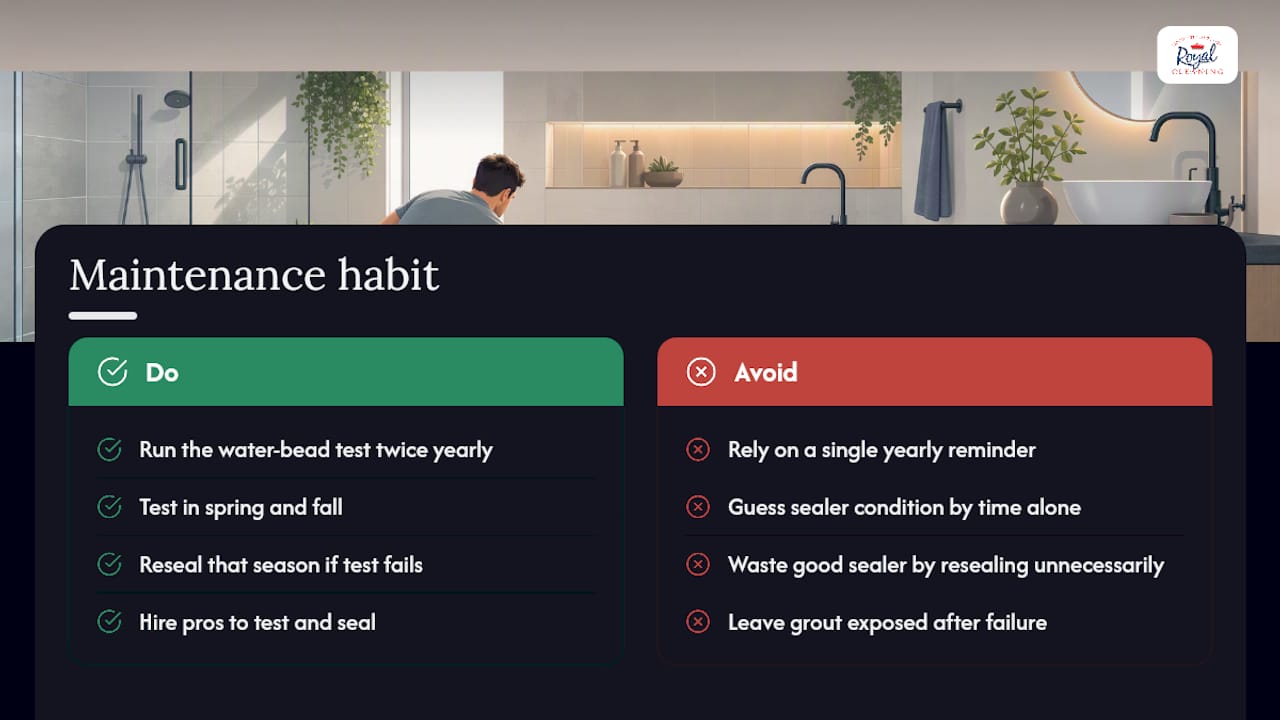
Most homeowners think about grout sealer the same way they think about smoke detector batteries: something to worry about once, then forget. That’s backwards. Grout sealer breaks down unevenly depending on how often you shower, what cleaner you grab under the sink, and whether your bathroom fan actually works. A fixed yearly reminder is a decent habit, but the water-bead test is the only honest answer.
My practical recommendation: run the water-bead test twice a year in showers and other high-moisture spots, spring and fall, and let the result decide whether you reseal that season or wait. It takes two minutes and saves you from either wasting a good sealer or leaving grout exposed for months after it’s already failed. Some professional cleaning services offer to perform the water-bead test and grout sealing for homeowners who prefer to have it done by experienced providers.
— Bernadette
Get Your Grout Professionally Sealed and Protected
Hiring professional grout maintenance services instead of managing it yourself between other projects can help skip the guesswork of sealer aisles and cure-time math. Such services handle the deep clean first, since sealing over grime just traps it, then select the appropriate sealer for your specific grout and environment before applying it and letting it cure properly.

The process includes a full evaluation of your existing grout condition, sealer application suited to your tile type, and a transparent look at what our cleaning services cover so there are no surprises on the invoice. If your shower grout has gone dark, your kitchen floor hasn’t been sealed in years, or you just want it done right the first time, request an estimate through our tile and grout cleaning page and we’ll walk you through timing and pricing for your space.
Sources
- Does Grout Need to be Sealed | Mapei
- Do You Have to Seal Grout in Your Shower? Here’s What You Need to Know
- How Long Should Grout Set Before Sealing? | Cabinlodger
- How to Seal Grout: Basics and Application Guide | The Spruce
FAQ
Is Sealing Grout Really Necessary?
The tile industry doesn’t require sealing cement-based grout, but it’s strongly recommended for better water, stain, and chemical resistance since unsealed grout absorbs spills and grime far more easily.
Why Do Builders Not Seal Grout During Installation?
Builders often treat sealing as optional maintenance rather than a required installation step, and project timelines rarely allow for the cure wait, so the responsibility usually falls to the homeowner afterward.
What Happens if You Seal Grout Too Soon?
Sealing before the grout fully cures traps moisture underneath, which can cause discoloration, mold, a lingering odor, and a sealer that fails to bond and peels away within months.
Is It Ever Too Late to Seal Grout?
No. Even grout that’s been unsealed for years can still be cleaned and sealed effectively, though heavily stained or damaged grout may need a professional deep clean first to restore it before sealing locks anything in.
How Long Does Grout Sealer Typically Last?
Most penetrating sealers last 12 to 24 months in showers and floors, while topical sealers wear out faster at 6 to 12 months in wet areas; the water-bead test confirms the actual condition at any point.



