

 (505) 280-5216
Homeowners: Remove Water Stains on Your Couch With Distilled Solutions
If you spot a water ring on your couch, blot it immediately with a clean white cloth, then re-wet the whole cushion panel with distilled water and blot again working from the edges in. Never rub, never grab tap water, and never soak one small spot. If the mark looks chalky or crusty rather than fresh, switch to a diluted white vinegar solution instead.
TL;DR:
- Fresh water stains on water-safe fabrics often come out with distilled water, blotting, and even treatment of the entire panel to prevent uneven drying.
- Old or set-in stains typically require vinegar solutions or professional extraction, especially if mineral deposits or detergent residues are involved.
- Always check the upholstery’s cleaning code before treating and perform a colorfastness test to avoid damaging the fabric.
- Proper drying with a fan or dehumidifier and brushing fibers afterward prevent new rings from forming and restore fabric texture.
- When DIY methods fail or fabric has a strict cleaning code, professional upholstery cleaning offers deep extraction and residue removal for stubborn stains.
Table of Contents
- Supplies and Safety Checks Before You Start
- How to Remove Fresh Water Stains From a Couch
- How to Treat Old, Mineral, or Set-In Water Stains
- Fabric-Specific Rules for Cleaning Codes and Delicate Materials
- Drying and Finishing to Prevent Rings From Coming Back
- Preventing Water Stains on Your Couch Going Forward
- When DIY Fails: A Cleaning Contractor’s Take
- Get Professional Upholstery Cleaning From Royal Carpet and Tile Cleaning
- Sources
- FAQ
Supplies and Safety Checks Before You Start
Grab your supplies before you touch the stain. You need distilled water (tap water leaves its own mineral deposits behind), white microfiber cloths or plain white paper towels, a small fan, and a hair dryer set to cool, not warm. Skip colored towels. Dye can transfer onto damp fabric and create a second stain worse than the first.
Before any water touches the cushion, check the manufacturer’s cleaning code, usually stitched onto a tag under the seat cushion or on the frame.
- W: water-based cleaners are safe
- S: solvent-based cleaners only, no water
- WS: either water or solvent-based cleaners work
- X: vacuum only, no liquid of any kind
Then run a 10-minute colorfastness test on a hidden spot, like the back panel or under a cushion. Dab distilled water on the area, press a white cloth against it, and check for color transfer before you treat the visible stain.
How to Remove Fresh Water Stains From a Couch
A stain that happened an hour ago behaves very differently than one that set in over a week. Fresh spills respond well to a simple, low-risk method that rarely needs repeating.
- Blot, don’t rub. Press a dry white cloth straight down onto the wet area to lift excess liquid. Rubbing pushes moisture and any dissolved minerals deeper into the fibers and padding.
- Dampen the entire cushion panel, not just the ring, with distilled water on a clean cloth. This step feels counterintuitive, but treating only the visible spot is exactly what causes a fresh ring to dry back in as a new one, since uneven drying leaves residue concentrated at the stain’s edge.
- Work from the outer edge toward the center. Feathering the moisture inward prevents a hard line from forming where wet fabric meets dry fabric.
- Blot repeatedly with a dry section of cloth, switching to a fresh dry spot every few passes so you’re lifting moisture out rather than just pushing it around.
- Dry the whole panel evenly. Position a fan a few feet away and let it run across the entire cushion face for 20 to 30 minutes. A hair dryer on the cool setting, held eight inches away, speeds things up without adding heat that can set any residue.
- Groom the fibers once dry, running a soft brush or your fingers across the nap in one direction to restore the fabric’s original texture.
Pro Tip: Keep a small spray bottle filled with distilled water near your cleaning supplies. Spills happen fast, and treating a stain in the first ten minutes, before it has time to dry and concentrate, makes full removal far more likely.
Most fresh spills on water-safe (W or WS coded) fabric come out completely with this method alone. If you’re dealing with something that’s been there a while, the fresh-stain approach usually won’t cut it.
How to Treat Old, Mineral, or Set-In Water Stains
A stain that’s already dried, or one that keeps reappearing after you’ve cleaned it, usually isn’t a water problem at all. It’s a mineral or detergent residue problem. Hard water leaves behind calcium and magnesium deposits as it evaporates, and old cleaning products leave their own film. Both show up as that stubborn tan or gray ring that plain water alone won’t touch.
Mix a solution of roughly one part distilled white vinegar to two parts distilled water, and always test it on a hidden area first, the same way you tested plain water.
- Dampen a clean cloth with the vinegar solution and gently work it into the stained area and feather out toward the edges.
- Blot to lift the loosened residue, switching to clean sections of cloth as they pick up buildup.
- Follow immediately with a distilled-water rinse on a fresh cloth to pull out any leftover vinegar and dissolved minerals.
- If the stain seems more like a soap or detergent crust than a mineral ring, try a drop of mild dish soap diluted in distilled water instead, and rinse thoroughly. Soap residue left behind causes the exact ring problem you’re trying to fix.
- Two treatment passes are generally the limit. If the stain hasn’t lifted noticeably after that, further scrubbing risks pushing residue into the cushion padding rather than removing it.
Watch for a few warning signs that DIY has reached its limit: the fabric stays damp for more than a few hours, a musty smell develops, or the stain looks like it’s spreading rather than shrinking. At that point, continued wetting and detergent use can actually leave more residue behind, which is precisely what professional extraction is built to correct.
Fabric-Specific Rules for Cleaning Codes and Delicate Materials
The cleaning code on your couch’s tag isn’t a suggestion. It’s the manufacturer telling you exactly what the fabric can survive. A W-coded cotton or synthetic blend tolerates the distilled water and vinegar methods above without much risk. WS fabrics give you flexibility to use either water or solvent-based products.
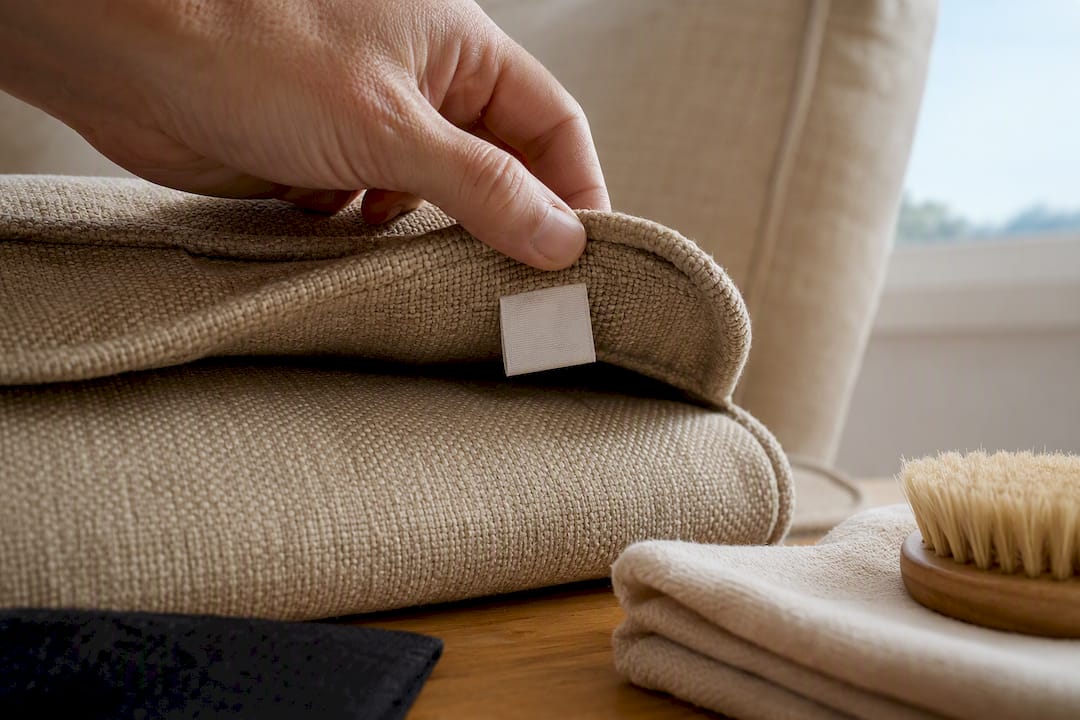
S-coded and X-coded upholstery are a different story entirely. S means solvent-only; introducing water can cause shrinking, puckering, or permanent watermarks that no amount of blotting will fix. X means dry cleaning or vacuuming only, full stop.
A few materials deserve extra caution regardless of their code:
- Silk stains easily and can water-spot permanently within seconds of contact.
- Suede mats and discolors when wet, and home fixes rarely restore the original texture.
- Vintage or antique fabrics often have weakened fibers and unstable dyes that weren’t tested against modern cleaning products.
If you notice color bleeding onto your test cloth during the colorfastness check, stop. That’s your fabric telling you it can’t handle moisture, and pushing forward risks a permanent mark where there wasn’t one before.
Drying and Finishing to Prevent Rings From Coming Back
The single biggest reason a treated stain reappears a day later isn’t bad cleaning. It’s uneven drying. As moisture evaporates from fabric, it carries dissolved minerals and residue toward the edges of the wet area, concentrating them right at the boundary line as the water leaves. That’s the wicking effect, and it’s why treating only the visible stain circle almost guarantees a new ring forms around it.
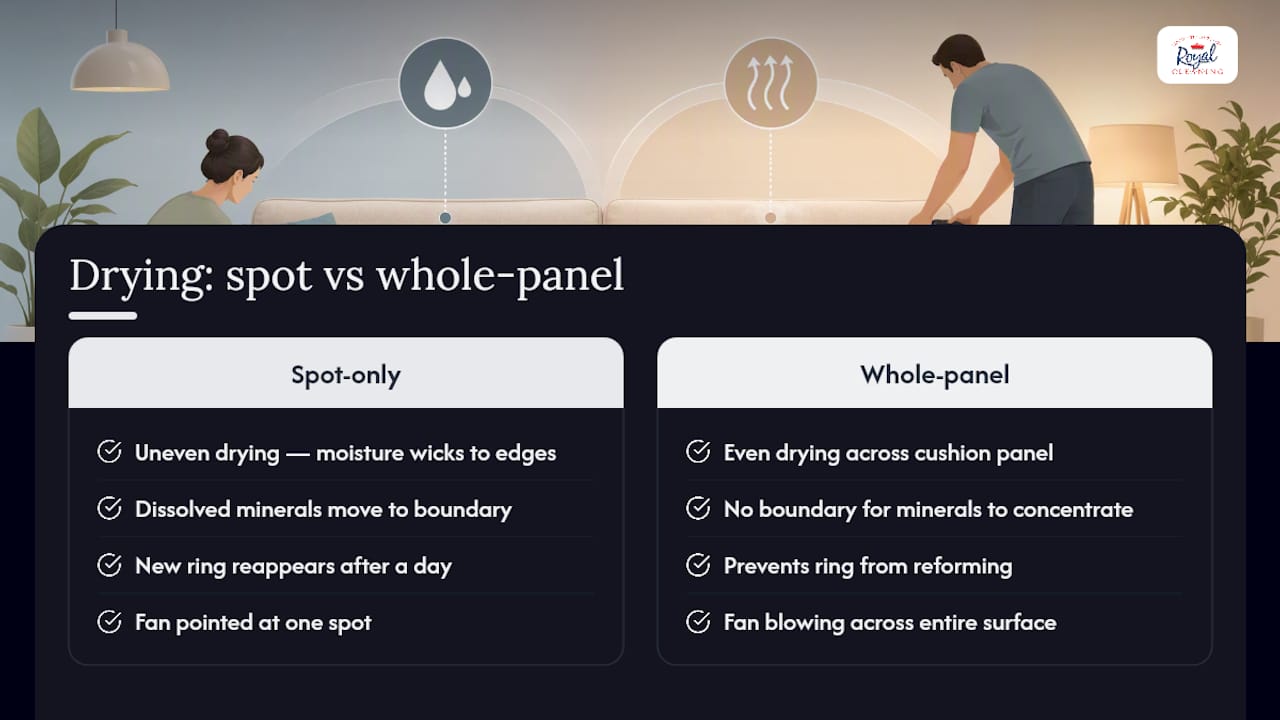
Drying the entire cushion panel evenly eliminates that boundary line altogether. Position a fan to blow across the whole surface rather than pointing it at one spot, and give it a full 20 to 30 minutes even if the fabric feels dry sooner. A dehumidifier running in the room helps on humid days when air-drying alone takes too long.
Once everything’s dry, brush or comb the fibers in their natural direction. This single step restores the nap so the treated area blends visually with the rest of the cushion instead of looking flattened or matted.
Preventing Water Stains on Your Couch Going Forward
Most future water stains trace back to a handful of habits, and each one is easy to fix. Always reach for distilled water when you spot-clean, since it carries far fewer dissolved minerals than tap water and reduces the chance of residue that causes rings.
- Vacuum your upholstery weekly to remove embedded dust and body oils that mix with moisture and worsen staining.
- Skip setting wet glasses, plants, or damp towels directly on cushions; a coaster or tray takes seconds to grab.
- Keep indoor humidity moderate, since consistently damp air slows drying time on any spill you do get.
- Book periodic professional extraction to pull out the deep buildup that surface cleaning never reaches.
Pro Tip: Rotate your seat cushions every few weeks if they’re reversible. Even wear spreads out oil and moisture exposure instead of concentrating it in one high-traffic cushion, which is usually where you’ll spot the first ring anyway.
A quick read through our home remedies for upholstery covers a few more everyday habits worth building into your routine.
When DIY Fails: A Cleaning Contractor’s Take
I’ve seen the same three DIY failure patterns walk through the door for years: mineral residue that’s worked its way past the fabric surface into the padding, detergent crust from one too many “just try dish soap” attempts, and dye migration where a colored throw or dark denim bled onto lighter upholstery during a damp cleanup. None of those respond to more blotting. They need extraction equipment that pulls moisture and residue out of the cushion rather than just off the fabric surface.
The signs that it’s time to hire a pro are consistent: a stain that’s returned after two honest cleaning attempts, fabric that stays damp longer than it should, or any musty smell, which usually means moisture has reached the padding and mold risk is real. Royal Carpet and Tile Cleaning built its upholstery process around a multi-step extraction method with advanced equipment and eco-friendly disinfectant options specifically because DIY tools can’t reach what’s soaked into the padding underneath.
— Bernadette
Get Professional Upholstery Cleaning From Royal Carpet and Tile Cleaning
Royal Carpet and Tile Cleaning gives you the option a spray bottle and a fan can’t: full extraction that pulls mineral and detergent residue out of the padding instead of just off the fabric surface, without the guesswork of a second or third DIY attempt.

Our upholstery cleaning service starts with an inspection to identify the stain type and confirm your fabric’s cleaning code, then moves through multi-step cleaning, extraction, deodorizing, and targeted spot treatment matched to what that fabric can safely handle. It’s the right call for set-in mineral rings that won’t budge, S or X-coded upholstery you shouldn’t touch with water at all, and lingering odors that outlast a surface clean.
You’ll benefit most if you’ve already tried the distilled water and vinegar steps above without full success, or if your couch’s tag rules out DIY entirely. Reach out through our upholstery cleaning page to request a quote. We’ll ask a few questions about the fabric and stain, then schedule a visit where our technician inspects the piece on-site, confirms the approach, and completes the cleaning that same appointment.
Sources
- How to Remove Water Stains From Fabric
- How to Remove Water Stains From Upholstery – StainWise
- How to clean water stains
- How to Clean Water Stain on Couch | 10 Easy Steps (2026)
FAQ
Are Water Stains Permanent on a Couch?
Not usually. Most fresh stains lift completely with distilled water and proper drying, though old mineral or detergent residue sometimes needs the vinegar method or professional extraction to fully disappear.
What Can I Use to Remove Water Stains From My Sofa?
Distilled water and a white microfiber cloth handle fresh stains, while a diluted white vinegar solution targets mineral deposits and set-in marks on water-safe (W or WS coded) fabric.
Why Has Water Stained My Sofa?
Visible rings almost always come from mineral deposits in tap water or leftover detergent residue rather than pure water itself, which is why switching to distilled water for spot cleaning matters so much.
How Do I Get Dried Water Stains Out of Fabric?
Dampen the stained area and its surrounding panel with a distilled white vinegar solution, blot to lift the residue, rinse with plain distilled water, and dry the entire cushion evenly to keep the ring from reappearing.



