(505) 280-5216
Why Use Non-Toxic Cleaners for a Healthier Home
TL;DR:
- Non-toxic cleaners are formulated without harsh chemicals, making them safer for health and the environment. Switching reduces the risk of injuries to children, asthma, hormonal disruption, and indoor air pollution. They are effective for daily cleaning tasks when used with proper techniques and verified certifications.
Non-toxic cleaners are products formulated without harsh synthetic chemicals, volatile organic compounds (VOCs), or endocrine disruptors, making them a safer choice for your family and the environment. Conventional cleaning products carry real risks: nearly 241,000 children aged 5 or younger were treated in US emergency departments from 2007 to 2022 due to unintentional cleaning product injuries. That number alone makes the case for switching. Understanding why use non-toxic cleaners goes beyond preference. It is a health decision backed by growing regulatory pressure, clinical evidence, and practical results in everyday homes.
What are the health benefits of non-toxic cleaners?
The most direct reason to switch is protecting the people inside your home, especially children. Children inhale more air relative to body weight than adults and engage in behaviors that increase dermal and oral exposure to chemical residues left on floors and surfaces. That means a product that feels harmless to you can deliver a much higher chemical dose to a toddler crawling across a freshly mopped floor.
The injury data is specific and sobering. Of the 241,000 emergency department visits for cleaning product injuries in children, 64% involved poisoning, 14.1% involved chemical burns, and 11.2% involved dermatitis or conjunctivitis. Bleach and detergent packets were the most common culprits. Switching to non-toxic alternatives removes these products from the home entirely, which is the most reliable form of prevention.
Respiratory health is the other major concern. Adults who use conventional cleaning products heavily face a 3.24 times higher risk of current asthma compared to those who do not. That risk is measured by lung function decline across two key markers: FEV1 and FVC z-scores. Choosing safer cleaning alternatives reduces weekly exposure to the sprays, bleach, solvents, and acids that drive this decline.
The benefits of non-toxic cleaners also extend to hormonal health. Conventional products often contain endocrine disruptors, chemicals that interfere with hormone signaling even at low doses. Reducing chemical load over time stabilizes hormonal balance and lowers the body’s cumulative toxic burden. This is not a short-term fix. It is a long-term investment in your family’s health that compounds with every cleaning session you complete without harsh chemicals.
Key health risks reduced by switching to non-toxic cleaners:
- Poisoning risk from bleach, detergent packets, and spray bottles, especially for children under 5
- Asthma and lung function decline linked to weekly use of conventional sprays and solvents
- Chemical burns and skin irritation from direct contact with harsh cleaning agents
- Hormonal disruption from endocrine disruptors present in many standard formulas
- Eye and respiratory irritation from VOCs released during and after product use
Are non-toxic cleaners effective compared to traditional products?
The most common objection to switching is that natural products simply do not clean as well. This concern is understandable but largely based on a confusion between cleaning and disinfecting. Cleaning and disinfecting serve distinct purposes, and most households need the first far more often than the second. Cleaning removes dirt, grease, and organic matter. Disinfecting kills microbes and should be reserved for high-risk situations like illness recovery or food prep surfaces after handling raw meat.
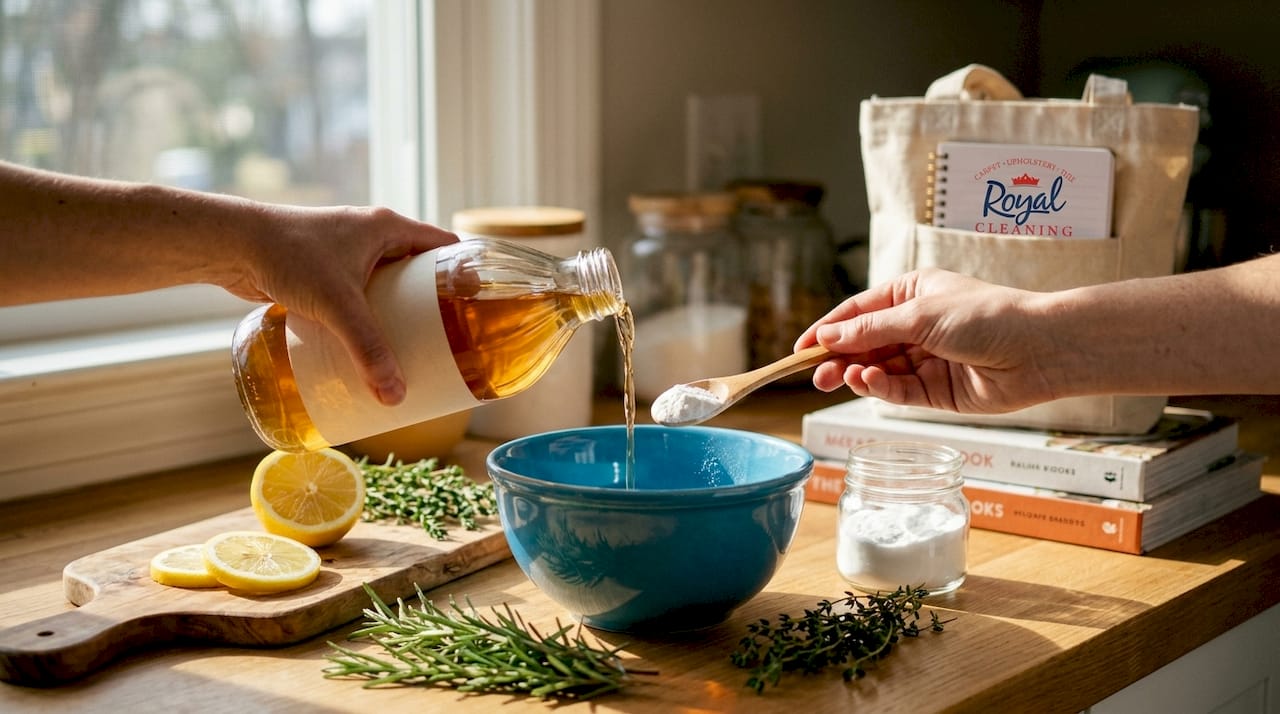
For everyday cleaning tasks, white vinegar, baking soda, and hydrogen peroxide handle the vast majority of household jobs effectively. Vinegar cuts through mineral deposits and grease. Baking soda acts as a mild abrasive for scrubbing. Hydrogen peroxide disinfects when disinfection is genuinely needed. Plant-based surfactants, found in many certified non-toxic products, lift and suspend dirt just as effectively as their synthetic counterparts without leaving harmful residues.
| Task | Non-toxic approach | When to disinfect |
|---|---|---|
| Daily surface wipe-down | Diluted white vinegar or plant-based cleaner | Not required |
| Bathroom scrubbing | Baking soda paste with castile soap | After illness only |
| Kitchen counters | Plant-based spray, wipe clean | After raw meat contact |
| Floor mopping | Diluted vinegar solution | Rarely needed |
| Glass and mirrors | Diluted vinegar with water | Never required |
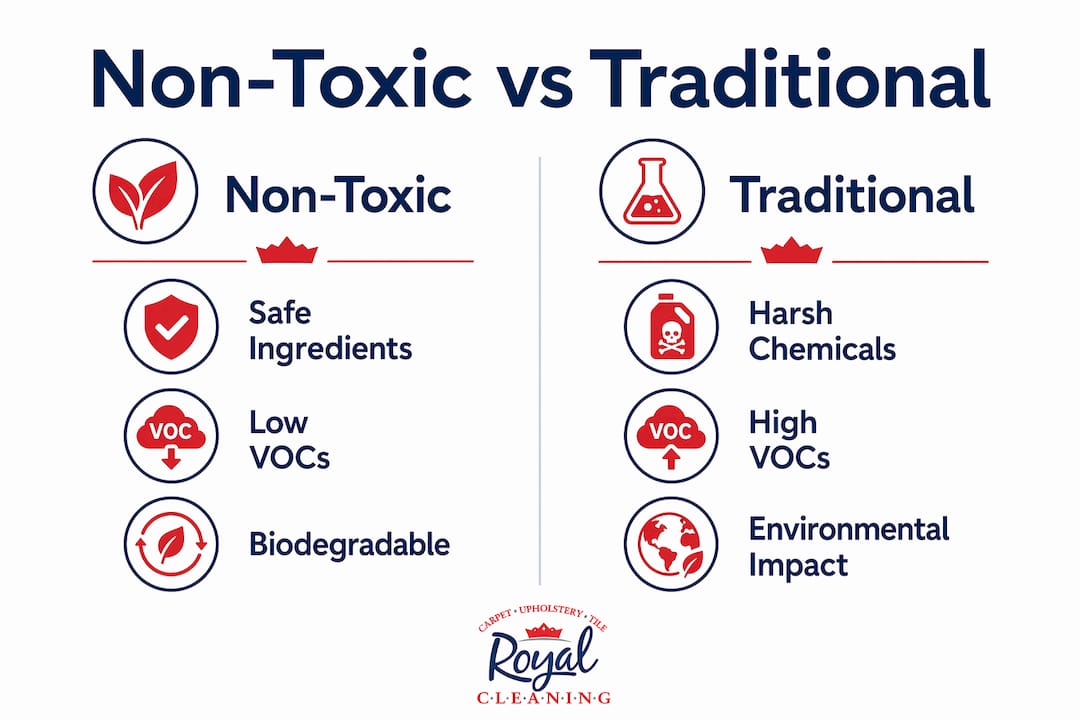
The honest limitation is that non-toxic cleaners do not always match the speed of heavy-duty chemical products on extreme buildup. Grease that has baked onto a stovetop for months may need more scrubbing time with a plant-based formula. That is a trade-off most families find acceptable once they understand the role of disinfectants and stop over-applying them out of habit.
Pro Tip: Combine a small set of DIY staples like vinegar and baking soda with one or two EPA Safer Choice certified products for tasks that need more power. This keeps your cleaning kit simple, effective, and free of unnecessary chemicals.
How to choose non-toxic cleaning products without getting misled
Greenwashing is the single biggest obstacle families face when selecting safe cleaning alternatives. A product labeled “natural,” “green,” or “plant-based” carries no legal requirement to disclose all ingredients or avoid harmful compounds. The label is marketing, not a safety guarantee.
The criteria that actually matter when choosing non-toxic cleaning products:
- Full ingredient disclosure. Choose products that list every ingredient, including preservatives and fragrance components. Vague terms like “fragrance” can mask dozens of undisclosed chemicals.
- EPA Safer Choice certification. The EPA Safer Choice label verifies that every ingredient in a product meets safety standards for human health and the environment. This is the most reliable third-party signal available.
- Fragrance-free formulas. Synthetic fragrances are a leading source of VOCs and skin sensitizers in cleaning products. Fragrance-free is not the same as unscented; unscented products may still contain masking fragrances.
- No unnecessary dyes or colorants. Color serves no cleaning function and adds chemical load without benefit.
- EPA registration number on disinfectants. If a product makes pesticidal or disinfecting claims, it must carry an EPA registration number. Unregistered disinfectants bypass safety reviews and carry unknown risks. In 2026, the EPA issued stop-sale orders for unregistered pesticides found during inspections in multiple cities.
Pro Tip: Search the EPA Safer Choice product database before buying. It lists verified products by category, so you can find a certified dish soap, floor cleaner, or laundry detergent without guessing.
The homeowner’s guide to cleaning safety covers regulatory standards in more detail if you want to go deeper on what certifications actually require. Reading ingredient lists takes practice, but it becomes fast once you know which terms to flag.
How does non-toxic cleaning support your home’s environment?
The advantages of eco-friendly cleaners extend well beyond the surfaces you clean. Conventional cleaning products release VOCs into your indoor air during and after use. Indoor VOC levels frequently exceed outdoor levels, making source control one of the most effective strategies for improving indoor air quality. Switching products is the most direct form of source control available to any homeowner.
Non-toxic cleaners also reduce environmental impact downstream. Biodegradable formulas break down in wastewater without releasing persistent toxins into aquatic ecosystems. Many certified products come in concentrated form, which means less plastic packaging per cleaning use. Refillable packaging options, now offered by a growing number of certified brands, reduce plastic waste further.
The indoor air quality connection is worth emphasizing for families with children or anyone with respiratory conditions. Cleaner indoor air means fewer airborne irritants, which supports better sleep, fewer allergy symptoms, and reduced asthma triggers. Pairing non-toxic products with good ventilation and regular filter changes in your HVAC system creates a compounding effect. Each layer of protection builds on the last. For more on managing indoor air pollutants, the connection between cleaning products and air quality is well documented.
Environmental benefits of non-toxic cleaning at a glance:
- Biodegradable formulas break down safely in water systems without harming aquatic life
- Concentrated products reduce plastic packaging waste per cleaning use
- Lower VOC emissions improve indoor air quality immediately after switching
- Reduced chemical runoff protects local water sources from persistent synthetic compounds
- Refillable packaging cuts single-use plastic consumption over time
Key Takeaways
Non-toxic cleaners reduce chemical exposure, protect children from injury, lower asthma risk, and improve indoor air quality without sacrificing cleaning effectiveness for everyday household tasks.
| Point | Details |
|---|---|
| Child safety is the top priority | Nearly 241,000 children were treated in ERs for cleaning product injuries from 2007 to 2022. |
| Asthma risk drops significantly | Heavy users of conventional cleaners face a 3.24 times higher asthma risk than non-heavy users. |
| Cleaning and disinfecting differ | Disinfect only in high-risk situations; non-toxic cleaners handle most daily tasks effectively. |
| EPA Safer Choice is the gold standard | Look for this certification to avoid greenwashing and confirm ingredient safety. |
| Indoor air quality improves immediately | Switching products reduces VOC emissions at the source, the most direct air quality fix available. |
What I have learned from years of watching families clean the wrong way
I have spent a long time watching families invest in expensive cleaning routines that actually made their homes less healthy. The pattern is consistent: more products, stronger formulas, and a belief that a stronger smell means a cleaner surface. None of that holds up.
The shift I recommend is not about buying a full set of new products on day one. Start with three things: white vinegar, baking soda, and one EPA Safer Choice certified all-purpose cleaner. Those three cover 90% of what a household needs. The rest is habit and education, specifically teaching everyone in the home that cleaning removes dirt and disinfecting kills germs, and that the second step is rarely necessary.
What surprises most families is how quickly their symptoms change. People who have dealt with chronic headaches, skin irritation, or persistent coughing often see improvement within weeks of switching. That is not coincidence. It is the result of stopping the daily reintroduction of VOCs and irritants into a closed indoor space.
The environmental piece matters too, but I find it motivates families less than the immediate health payoff. Lead with health. The environmental benefits follow naturally once the habit is in place. And if you are working with a professional cleaning service, ask directly what products they use and whether they carry EPA Safer Choice certified options. That question alone tells you a lot about whether they take your family’s health seriously.
— Bernadette
Professional cleaning in Albuquerque that takes your family’s health seriously
Royal Carpet and Tile Cleaning serves homeowners across Albuquerque and Rio Rancho with professional cleaning services built around health-conscious methods and eco-friendly product options. Every service, from professional carpet cleaning to upholstery, tile and grout, air duct, and dryer vent cleaning, is performed with your family’s safety in mind.
Royal Carpet and Tile Cleaning uses advanced equipment and multi-step cleaning processes that remove allergens, soil, and residues without leaving behind harsh chemical traces. If you want a cleaner home that is also a healthier one, the team at Royal Carpet and Tile Cleaning is ready to help. Contact Royal Carpet and Tile Cleaning today to schedule a service and ask about eco-friendly cleaning options for your home.
FAQ
What are non-toxic cleaning products?
Non-toxic cleaning products are formulated without harsh synthetic chemicals, VOCs, or endocrine disruptors. They rely on ingredients like plant-based surfactants, vinegar, and baking soda to clean effectively without posing health risks.
Are non-toxic cleaners as effective as conventional ones?
Non-toxic cleaners handle the vast majority of everyday household cleaning tasks effectively. For extreme buildup or genuine disinfection needs, a targeted EPA Safer Choice certified product closes the gap.
How do I know if a product is truly non-toxic?
Look for the EPA Safer Choice certification, full ingredient disclosure, and fragrance-free labeling. Avoid products that use vague terms like “natural” or “green” without third-party verification.
Why are conventional cleaners risky for children?
Children inhale more air relative to body weight and have more skin and oral contact with treated surfaces. Cleaning product injuries sent nearly 241,000 children to US emergency departments from 2007 to 2022, with poisoning as the leading cause.
Do I need to disinfect every surface every time I clean?
No. The EPA advises prioritizing regular cleaning over disinfecting for daily use. Disinfectants contain purposely toxic chemicals and should be reserved for high-risk situations like illness recovery or food prep surfaces after raw meat contact.