(505) 280-5216
Why trust certified cleaners for a healthier home
TL;DR:
- Certification ensures cleaners have completed rigorous training and ongoing education for optimal results.
- Certified professionals provide safer, more effective cleaning that improves indoor air quality and health.
- Verifying certification and insurance protects homeowners from poor service and potential damages.
Many homeowners in Albuquerque assume that one cleaning service is as good as the next. After all, cleaning is cleaning, right? The reality is quite different. The gap between a certified cleaner and an uncertified one can mean the difference between truly clean indoor air and a home that still harbors allergens, dust mites, and chemical residue after the service is done. This article walks you through exactly what certification means, why it matters for your health and your home’s condition, and how to confidently choose the right certified professional in the Albuquerque area.
Table of Contents
- What does it mean to be a certified cleaner?
- Certified vs. uncertified cleaners: What’s the real difference?
- How certified cleaning improves indoor air quality and health
- Choosing certified cleaners in Albuquerque: What to look for
- Our perspective: Why certification is the non-negotiable standard for healthy homes
- Trust certified professionals for a safer Albuquerque home
- Frequently asked questions
Key Takeaways
| Point | Details |
|---|---|
| Certification means quality | Certified cleaners follow industry standards that ensure better results and homeowner safety. |
| Lower risks, higher trust | Ongoing training helps certified pros avoid costly mistakes and delivers higher-quality service. |
| Better air quality | Certified cleaning methods improve indoor air quality, directly benefiting your family’s health. |
| Know what to look for | You can confidently choose a reputable, certified cleaner by verifying credentials and training. |
What does it mean to be a certified cleaner?
With the need for clarity established, let’s demystify what sets a certified cleaner apart from someone who simply owns a vacuum and a bottle of cleaner.
Certification in the cleaning industry means a technician has completed formal training, passed exams, and met specific standards set by recognized professional bodies. The most widely respected credential in the field is issued by the IICRC, which stands for the Institute of Inspection, Cleaning and Restoration Certification. IICRC-certified technicians are trained in carpet cleaning, upholstery care, water damage restoration, and more. Each specialty requires its own course of study and examination.
What separates IICRC certification from a simple weekend training course is the depth and ongoing nature of the education involved. Technicians must complete continuing education to keep their credentials active. This means they are not relying on skills learned years ago. They are regularly updated on new cleaning methods, chemical safety standards, and equipment advances. As detailed by carpet cleaning certifications, IICRC certification ensures technical expertise, safety protocols, and insurance company preference, leading to better outcomes in cleaning and restoration.
Here is a quick look at common certifications and what they cover:
| Certification | Issuing body | Key focus areas |
|---|---|---|
| IICRC CRT | IICRC | Carpet cleaning, fiber care |
| IICRC UFT | IICRC | Upholstery and fabric care |
| IICRC ASD | IICRC | Applied structural drying |
| NADCA ACR | NADCA | Air duct cleaning and inspection |
Understanding which credentials apply to your specific service needs helps you ask better questions before hiring anyone.
Certification also matters for insurance reasons. Many homeowners insurance policies favor or even require certified technicians when a cleaning or restoration job is tied to a claim. A certified cleaner carries proper liability insurance and follows industry protocols that protect your property during service. If something goes wrong, you have a clear path to resolution.
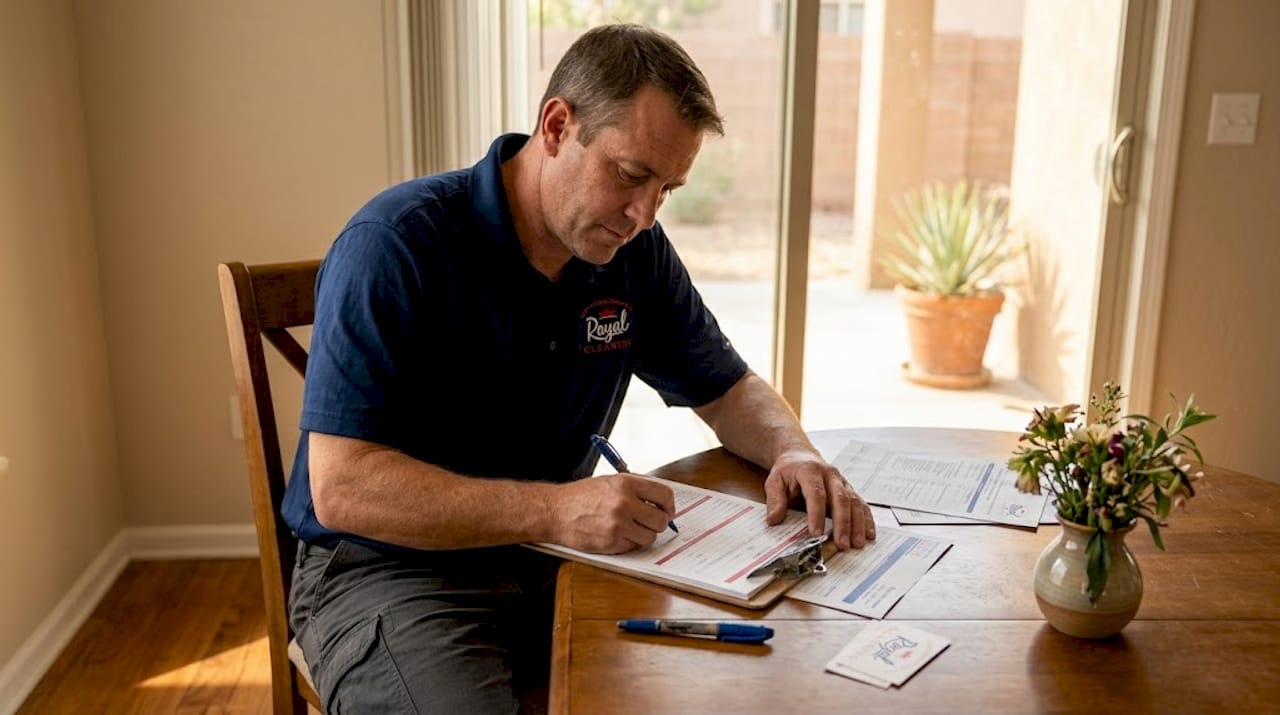
The certified cleaners explained resource breaks down what local Albuquerque homeowners should specifically look for when evaluating credentials.
Here are the key benefits that certification delivers:
- Verified training in specific cleaning methods
- Knowledge of proper chemical handling and dilution ratios
- Understanding of fabric and surface types to prevent damage
- Adherence to safety protocols that protect your family
- Ongoing education to stay current with industry standards
Pro Tip: Always ask a cleaning company for their IICRC certificate number. You can verify it directly on the IICRC website at no cost. A legitimate certified cleaner will always welcome this request.
Certified vs. uncertified cleaners: What’s the real difference?
Now that the certification process is clear, it’s important to see how this translates to service quality in the real world.
The difference between certified and uncertified cleaners often becomes obvious only after the job is done. By then, the damage, or the quality, is already visible. Certified professionals bring a structured approach to every job. They assess the surfaces before they begin, identify fiber types or contamination levels, and select the right cleaning method. Uncertified cleaners often apply a one-size-fits-all approach that may clean the surface while leaving deeper contaminants behind, or worse, causing damage to delicate materials.
Here is a direct comparison:
| Factor | Certified cleaner | Uncertified cleaner |
|---|---|---|
| Training | Formal, tested, renewed regularly | Informal or self-taught |
| Equipment knowledge | Advanced, calibrated to surface type | Basic or misapplied |
| Chemical handling | Trained in proper dilution and safety | Often guessed or misused |
| Indoor air quality outcomes | Measurable improvement | Unpredictable, often poor |
| Liability and insurance | Carries proper coverage | May be uninsured |
| Customer outcomes | Consistent, documented results | Variable, often disappointing |
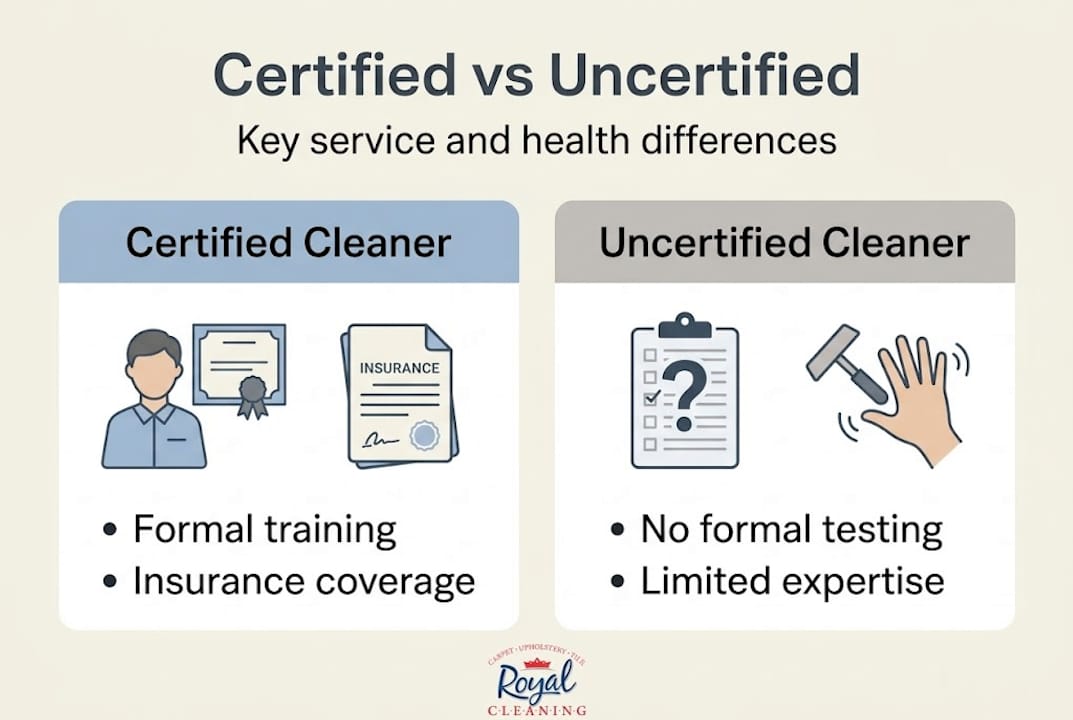
When it comes to earnings, certified cleaners earn 15 to 30% more per job than their uncertified counterparts, which directly reflects the trust customers place in verified expertise and the better outcomes they receive.
The risks of hiring uncertified cleaners go beyond a mediocre result. Common problems include:
- Overwetting carpets or upholstery, leading to mold growth beneath the surface
- Using the wrong cleaning chemicals on natural fibers, causing discoloration or shrinkage
- Failing to properly extract cleaning solutions, leaving residues that attract more dirt
- Missing deeply embedded allergens that continue to affect air quality
- Causing structural or cosmetic damage with improper equipment pressure settings
The reasons to hire certified cleaners are clear when you see the full picture of what can go wrong without them. And when comparing providers, reviewing what each service actually covers, as shown in the cleaning services comparison guide, helps you make a genuinely informed decision.
“Certified cleaners benefit from continuing education that directly reduces risk for the homeowner. When a technician keeps their credentials current, they are applying today’s best practices, not yesterday’s guesswork.” — Industry professional perspective on certified training programs
This ongoing education requirement is not just a formality. It reflects a real commitment to quality that uncertified cleaners simply cannot match.
How certified cleaning improves indoor air quality and health
Quality of cleaning isn’t just about appearances. It’s about creating a healthier living space for everyone in your home.
Indoor air quality, often abbreviated as IAQ, refers to the condition of the air inside your home. It is affected by dust, pet dander, mold spores, pollen, chemical residues, and biological contaminants. Most homeowners in Albuquerque deal with high dust levels due to the desert climate, which makes IAQ a real concern year-round. Certified cleaners are trained to address these specific conditions using techniques that genuinely reduce the load of airborne and surface contaminants.
As noted in certified cleaning research, uncertified cleaners risk property damage, chemical misuse, and poor IAQ outcomes. The risk isn’t theoretical. Incorrect cleaning can stir up contaminants and redistribute them through your home rather than removing them entirely.
Here are three key ways certified cleaning improves your indoor air quality:
-
Proper extraction removes deeply embedded allergens. Certified technicians use high-powered extraction equipment calibrated to the surface type. This pulls allergens like dust mites, pet dander, and mold spores out of carpet fibers rather than just lifting surface-level debris.
-
Safe chemical selection protects your air. Certified cleaners are trained to choose cleaning solutions that do not leave harmful residues. Incorrect chemicals can off-gas volatile organic compounds (VOCs) that linger in your indoor air long after the technician leaves.
-
Complete drying protocols prevent mold growth. Mold is one of the most significant threats to indoor air quality. Certified cleaners follow specific drying time protocols and use air movers or dehumidifiers to ensure surfaces dry fully, cutting off the conditions mold needs to grow.
The role of professional air duct cleaning is especially important for Albuquerque homeowners. Your HVAC ducts distribute air throughout your entire home, and if they carry dust, allergens, or microbial growth, certified cleaning of those ducts can create a significant improvement in the air your family breathes. For a thorough walkthrough, the air quality improvement guide explains what a professional duct cleaning service involves from start to finish.
Pro Tip: After any certified cleaning service, change your HVAC filter within 24 to 48 hours. The cleaning process can temporarily release particulates into the air, and a fresh filter will catch them before they settle back into cleaned surfaces.
For households with allergy or asthma sufferers, certified cleaning can provide measurable relief. Studies consistently show that reducing allergen loads in carpets, upholstery, and ducts reduces symptom frequency. When a certified professional removes contaminants correctly the first time, you get lasting results rather than a temporary improvement that fades within days.
Choosing certified cleaners in Albuquerque: What to look for
Knowing the value of certified cleaning, here’s how to choose the right provider in Albuquerque with confidence and clarity.
Not every company that markets itself as “professional” holds current certifications. The good news is that verifying credentials is straightforward when you know what to check. Taking a few minutes to vet a cleaning provider before booking can protect both your home and your budget.
IICRC-certified pros renew their training regularly to keep up with best practices, which means the most current techniques are applied to your home. This ongoing renewal is something you can verify before you hire.
Here is a checklist for evaluating any certified cleaning company in Albuquerque:
- Confirm current IICRC certification. Ask for their certificate number and verify it on the IICRC website. Certification lapses if continuing education is not completed.
- Check for liability insurance. A certified cleaner should carry general liability insurance at minimum. Ask for proof before any work begins.
- Look for local reviews and testimonials. Google reviews, Yelp listings, and neighborhood referrals give you real-world feedback. Look for patterns, not just a single glowing review.
- Ask about their cleaning process. A certified cleaner should be able to explain their multi-step process clearly, including pre-inspection, treatment, extraction, and drying.
- Inquire about equipment and products. Are they using truck-mounted extraction systems or portable units? Do they offer eco-friendly or low-VOC cleaning solutions?
- Verify specialization. If you need upholstery cleaning, confirm they hold the relevant upholstery certification, not just a general carpet cleaning credential.
- Ask about satisfaction guarantees. Reputable certified cleaners stand behind their work and will return to address any issues at no additional charge.
Questions to ask a prospective cleaner before booking:
- What certifications do your technicians currently hold?
- How long have you been operating in the Albuquerque area?
- Do you carry liability insurance, and can I see proof?
- What is your process for a home with pets or severe allergen concerns?
- How do you handle situations where damage occurs during cleaning?
Understanding the connection between regular cleaning and health helps you see why choosing the right provider is a long-term investment. For homes that have not had a thorough cleaning in some time, exploring the benefits of deep cleaning gives you a realistic picture of what a certified professional can accomplish in a single visit.
For additional guidance on preparing surfaces and appliances before a professional cleaning, expert kitchen appliance cleaning tips offer practical steps you can take as a homeowner to maximize the results of any professional service.
Ongoing training matters just as much as initial certification. A company that invests in keeping its technicians current is one that takes quality seriously. When you ask a company how they stay current, the answer tells you a lot about their culture and commitment.
Our perspective: Why certification is the non-negotiable standard for healthy homes
We hear it regularly from new clients: “We tried to save some money with a cheaper service, and now we need help fixing the results.” Uncertified cleaners may charge less upfront, but the hidden costs appear quickly. Damaged upholstery, lingering odors, or a carpet that looks worse within days of cleaning all point to work done without proper training.
From where we stand, certification is not a premium add-on. It is the baseline. Every home in Albuquerque deserves a cleaning service that follows tested protocols, uses the right equipment, and takes responsibility for the outcome. The value of advanced cleaning equipment used by certified pros cannot be overstated. These are not the same machines available at a grocery store rental station. They are professional-grade systems calibrated to deliver the best results without risking your surfaces.
Trained and certified professionals also adapt. When new cleaning methods or safer chemical formulations become available, certified technicians learn them. Your home benefits from that continuous improvement in real terms, through better air quality, longer-lasting results, and fewer callbacks for problems that were not resolved the first time.
Long-term health, asset protection, and peace of mind are worth more than the short-term savings of choosing the cheapest option. Certification is how you know your home is in capable hands.
Trust certified professionals for a safer Albuquerque home
Ready to experience the difference with certified professionals? Here’s how to get started with services that deliver real, lasting results.
At Royal Cleaning New Mexico, our certified technicians bring verified expertise to every job in Albuquerque and the surrounding communities. Whether your carpets need a deep extraction treatment, your furniture fabric needs careful upholstery cleaning, or your ducts need a full inspection and clean, you get the same commitment to certified standards every time. Our professional carpet cleaning and certified upholstery cleaning services address allergens at the source, while our air duct cleaning services protect the air your family breathes daily. Reach out today for transparent pricing and a satisfaction guarantee you can count on.
Frequently asked questions
What does IICRC certification in cleaning mean?
IICRC certification means a cleaner has met specific standards in technical skills, safety protocols, and best practices, and stays current through ongoing education requirements that must be renewed on a regular basis.
Can uncertified cleaners really cause harm to my home?
Yes. Uncertified cleaners may misuse chemicals or apply incorrect equipment settings, which can lead to property damage and poor IAQ outcomes that are often difficult and costly to reverse.
How do I verify a cleaner’s certification in Albuquerque?
Ask the company for their IICRC certificate number, then check it directly on the IICRC website. You should also ask to see proof of current liability insurance before any work begins.
Does certification make a real difference for allergy sufferers?
Absolutely. Certified cleaners use extraction techniques and approved equipment that effectively reduce allergens in carpets, upholstery, and ducts, making a measurable difference for households dealing with allergies or asthma.