(505) 280-5216
Why Regular Home Cleaning Matters for Your Health
Every family in Albuquerque and Rio Rancho faces the challenge of keeping their home clean enough to protect everyone’s health. Poor indoor air quality can trigger allergies and asthma, especially when dust and pet dander build up. Regular cleaning makes a real difference, as highlighted by Harvard Health, with strategies like vacuuming and removing clutter helping reduce allergens. This guide offers practical insight on measurable cleaning standards and professional services that help homeowners achieve a truly hygienic living environment.
Table of Contents
- Defining Regular Home Cleaning Standards
- Impact on Indoor Air Quality and Allergens
- Reducing Health Risks for Families
- Protecting Surfaces and Avoiding Costly Repairs
- Professional Services Versus Diy Approaches
Key Takeaways
| Point | Details |
|---|---|
| Establish Cleaning Standards | Defining measurable cleaning standards ensures consistency and effectiveness in maintaining a clean home environment. |
| Prioritize Allergen Control | Regular cleaning and proper product selection can significantly improve indoor air quality and reduce allergens, especially in arid climates. |
| Professional Cleaning Benefits | Utilizing professional cleaning services maximizes health benefits and efficiency, particularly for homes with allergies, asthma, or vulnerable occupants. |
| Regular Maintenance is Key | Consistent daily and weekly cleaning routines help prevent dirt buildup, making deeper cleaning easier and more effective over time. |
Defining Regular Home Cleaning Standards
Regular home cleaning isn’t just about making your space look nice. It’s about establishing a baseline for health and safety in the environment where you and your family spend the most time.
So what exactly counts as “regular” cleaning? The answer depends on understanding measurable standards that professionals use. The APPA’s Five Levels of Clean provides a systematic framework for evaluating cleanliness by examining dust, stains, odors, and surface conditions on floors and furniture.
For Albuquerque and Rio Rancho homeowners, this means having a clear picture of what “clean” actually looks like. Without standards, cleaning efforts become reactive and incomplete.
Understanding Cleaning Categories
Regular cleaning typically falls into three main categories:
- Daily maintenance: Light tidying, dishes, basic surface wiping to prevent dirt buildup
- Weekly deep-focus areas: Bathroom sanitation, kitchen surfaces, floor vacuuming where dust and allergens accumulate
- Monthly attention zones: Baseboards, light fixtures, inside appliances, areas that require more thorough work
Daily and weekly routines create the foundation. Monthly tasks address the deeper layers of dust and debris that settle over time.
Product Standards and Allergen Control
What you use to clean matters as much as how often you clean. Understanding household cleaning product types like disinfectants, sanitizers, and detergents helps you choose effectively without introducing harmful chemicals into your home.
For families concerned about respiratory health and allergies—common issues in the drier New Mexico climate—product selection directly impacts indoor air quality.
Key product standards include:
- Using EPA-registered disinfectants for bacteria and virus elimination on high-touch surfaces
- Selecting fragrance-free or naturally scented options to avoid respiratory irritation
- Understanding that sanitizers reduce germs rather than eliminate them completely
- Recognizing that detergents clean surfaces without killing bacteria
Regular cleaning standards aren’t one-size-fits-all—your routine should match your family’s needs, pet activity, and local environmental factors like dust levels.
Frequency Standards for New Mexico Homes
Due to the high desert climate in the Albuquerque area, dust penetration happens faster than in more humid regions. Homes with pets, children, or family members with allergies may need more frequent attention to air quality and surface cleanliness.
Established standards suggest:
- Vacuuming high-traffic areas 2-3 times weekly instead of once
- Dusting surfaces weekly rather than biweekly
- Air duct cleaning annually, or every 6 months with pets or dust sensitivities
- Changing HVAC filters monthly during peak dust seasons
When life gets busy, maintaining these standards alone becomes overwhelming. That’s where professional home maintenance cleaning services bridge the gap between your daily efforts and the deeper cleaning your home actually needs.
Pro tip: Start by assessing your home against the APPA cleanliness standards, then identify which areas fall short most often—those are your priority zones for either increased personal effort or professional cleaning support.
Impact on Indoor Air Quality and Allergens
The air inside your home affects your family’s health every single day. Poor indoor air quality triggers respiratory issues, aggravates asthma, and causes allergic reactions that compound over time.
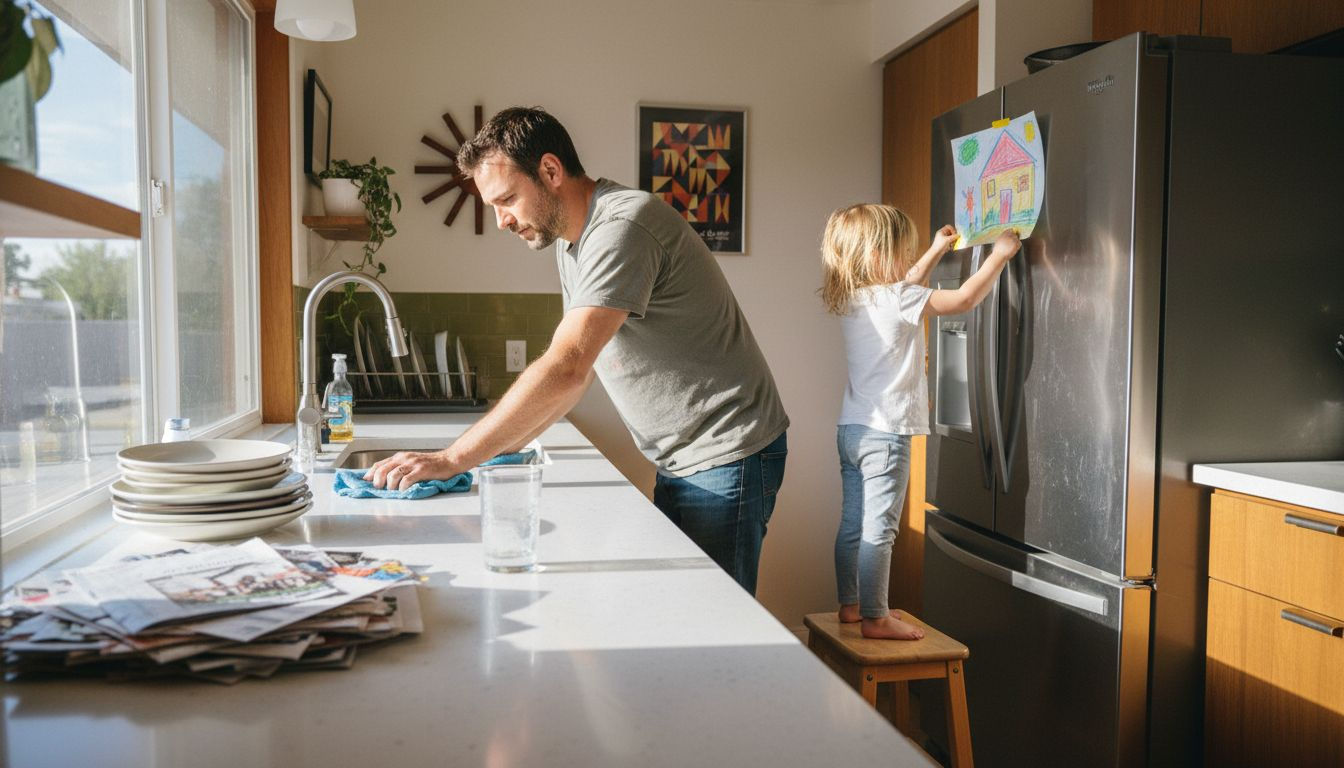
Regular cleaning directly combats this. When dust settles on surfaces, it carries allergens like dust mites, pet dander, and mold spores that become airborne when disturbed. Improving indoor air quality requires consistent effort to remove these particles before they accumulate.
For Albuquerque and Rio Rancho families, the dry desert climate amplifies these problems. Low humidity allows dust to remain suspended longer, and our region’s outdoor dust blows indoors constantly.
How Allergens Build Up in Your Home
Allergens don’t announce themselves. They accumulate silently on surfaces, in carpets, and within HVAC systems before anyone notices breathing difficulties.
Common indoor allergen sources include:
- Dust mites thriving in bedding, upholstered furniture, and carpet fibers
- Pet dander settling on all surfaces even after vacuuming
- Mold spores growing in moisture-prone areas like bathrooms and kitchens
- Pollen tracked indoors on clothing and shoes daily
- Particulate matter from cooking, heating, and outside air infiltration
Each source requires different cleaning strategies. Vacuuming alone won’t eliminate dust mites hiding deep in carpet pile. Wiping surfaces catches visible dust but misses airborne particles circulating through your ventilation system.
The Connection Between Cleaning and Respiratory Health
Children and adults with asthma respond dramatically to allergen reduction. Reducing allergens at home through dust control and pest management decreases asthma triggers significantly, particularly in children who spend most time indoors.
Regular cleaning interrupts the allergen cycle:
- Frequent vacuuming with HEPA filters traps 99.97% of particles
- Washing bedding weekly in hot water kills dust mites
- Decluttering removes dust-catching surfaces and hiding spots
- Air duct cleaning prevents circulating allergens through your entire home
- Cleaning upholstered furniture eliminates pet dander accumulation
Your indoor air quality directly reflects your cleaning consistency. Skip two weeks of regular cleaning, and allergen levels spike noticeably for sensitive family members.
Professional Intervention for Maximum Results
Life gets busy, and consistent allergen management becomes unrealistic without help. That’s where professional allergen removal services provide what DIY efforts cannot—access to commercial-grade equipment and systematic deep cleaning targeting hidden allergen sources.
Professional cleaning reaches areas you can’t access alone: deep carpet fibers, ductwork, behind appliances, and inside furniture crevices where allergens concentrate.
Pro tip: If your family has asthma or allergies, combine weekly personal maintenance with professional deep cleaning every 1-2 months to interrupt allergen cycles before they trigger respiratory symptoms.
Reducing Health Risks for Families
A clean home isn’t a luxury—it’s a health investment for your family. Every surface, carpet fiber, and air duct either protects or exposes your loved ones to preventable illness and chronic conditions.
Regular cleaning directly reduces the germs, allergens, and contaminants that trigger infections and respiratory problems. Understanding when to clean, sanitize, and disinfect helps families protect vulnerable members like babies, elderly relatives, and immune-compromised individuals.
Albuquerque families face additional challenges from our desert dust environment, making consistent cleaning even more critical for long-term health outcomes.
Common Health Threats in Untidy Homes
Your home harbors invisible health hazards that accumulate silently. Most families don’t realize how quickly pathogens multiply on commonly touched surfaces.
Key health risks in homes with inconsistent cleaning include:
- Bacterial infections spreading through high-touch surfaces like doorknobs, light switches, and remote controls
- Viral transmission accelerating during cold and flu seasons without regular disinfection
- Mold growth thriving in moisture-prone areas, triggering respiratory issues and allergies
- Pest infestations introducing droppings that contain harmful pathogens and allergens
- Dust accumulation harboring dust mites, their waste products, and other microscopic irritants
Children under five and seniors over sixty-five face the greatest risk from these contaminants.
Protecting Vulnerable Family Members
Your cleaning routine directly impacts vulnerable household members. Babies have developing immune systems that can’t fight infections as effectively as adults. Elderly family members often have weakened immunity. People managing chronic conditions need extra protection.
Regular home cleaning reduces dust, pet dander, and mold that exacerbate respiratory problems in children and seniors. High-touch surface disinfection prevents bacterial and viral spread within your household.
Specific strategies for protecting vulnerable members include:
- Disinfecting high-touch surfaces daily during illness season
- Washing toys and soft items frequently in hot water
- Vacuuming with HEPA filters twice weekly to trap particles
- Decluttering to eliminate dust-collecting surfaces
- Using low-VOC cleaning products to avoid chemical irritation
Families with young children or immunocompromised members need more aggressive cleaning schedules—what works for healthy adults leaves your vulnerable family members at risk.
Long-Term Health Prevention Through Cleaning
Consistent cleaning prevents chronic health conditions from developing in the first place. Asthma, allergies, and respiratory infections often emerge from prolonged exposure to home contaminants.
Children raised in cleaner homes develop fewer respiratory problems and miss fewer school days. Families experience fewer emergency room visits for asthma attacks and allergic reactions. The cumulative health benefit compounds year after year.
Pro tip: For families with babies or vulnerable members, establish a dedicated disinfection routine for high-touch surfaces and toys daily, focusing on bathrooms and kitchen areas where pathogens concentrate fastest.
Protecting Surfaces and Avoiding Costly Repairs
Your home’s surfaces—carpet, countertops, tile, upholstery—represent significant financial investments. Neglecting regular cleaning doesn’t just compromise health; it accelerates surface degradation and leads to expensive replacements you could have avoided.
Dirt, dust, and contaminants accumulate on surfaces over time, breaking down fibers and finishes. Proper cleaning techniques for different surface types prevent damage while maintaining material integrity and protecting your home investment.
Albuquerque’s dusty environment makes this even more critical—our dry climate and outdoor dust require aggressive surface protection strategies.
How Neglected Surfaces Deteriorate
Surface damage rarely happens overnight. It’s the cumulative effect of weeks and months without proper maintenance.
Common surface degradation in homes with poor cleaning routines includes:
- Carpet fiber breakdown from embedded dirt particles cutting and matting fibers
- Grout discoloration and deterioration when mold and mildew penetrate porous materials
- Countertop etching and staining from acidic spills and improper cleaning products
- Upholstery fading and wear from dust accumulation and sunlight damage combined
- Tile glaze damage from acidic or abrasive cleaners damaging protective coatings
Each type of damage requires expensive professional restoration or complete replacement.
The Cost of Delaying Surface Cleaning
Skipping regular cleaning transforms manageable maintenance into crisis-level repairs. A carpet that costs $50 to professionally clean every few months costs $8,000 to replace entirely.
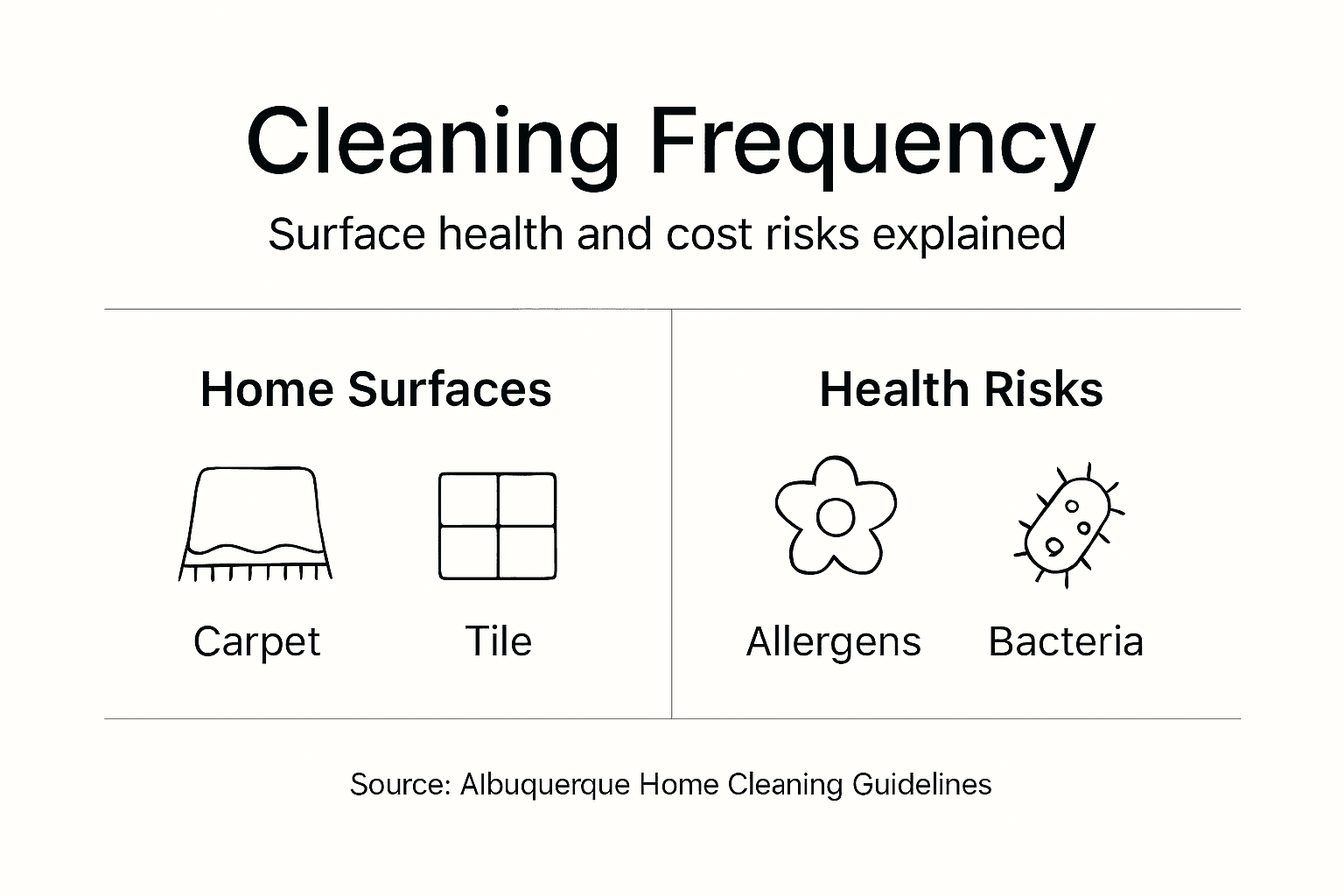
Carpet replacement in a typical Albuquerque home runs $3,000 to $8,000 depending on square footage. Tile and grout restoration costs $1,500 to $3,000 for kitchen and bathroom areas. Upholstery replacement can exceed $2,000 for quality furniture pieces.
Regular cleaning extends surface lifespan dramatically. A well-maintained carpet lasts 10-15 years; neglected carpet deteriorates in 5-7 years.
To understand how cleaning practices protect your home investment, review these typical surface maintenance and replacement costs:
| Surface Type | Cleaning Frequency | Cost to Clean | Replacement Cost |
|---|---|---|---|
| Carpet | Every 6-12 months | $50-$300 | $3,000-$8,000 |
| Tile & Grout | Monthly/biannual | $80-$400 | $1,500-$3,000 |
| Upholstery | Every 6-12 months | $75-$200 | $2,000+ |
| Hard Floors | Weekly/annual | $30-$250 | $4,000-$10,000 |
Protective Cleaning Practices for Major Surfaces
Different surfaces require different care approaches. Using the wrong products or techniques accelerates damage rather than preventing it.
Surface-specific protection strategies:
- Carpet and rugs: Vacuum high-traffic areas 2-3 times weekly; professional deep cleaning every 6-12 months prevents fiber matting
- Kitchen countertops: Wipe spills immediately; avoid acidic cleaners that etch surfaces; use pH-neutral products
- Tile and grout: Clean with food-safe, gentle cleaning solutions rather than harsh chemicals that degrade grout
- Upholstered furniture: Vacuum regularly to remove dirt before it embeds in fibers; address spills immediately
- Hard floors: Use appropriate floor cleaners for your surface type; avoid excessive moisture
Protective cleaning isn’t about perfection—it’s about preventing damage that costs thousands to repair or replace.
Professional Cleaning Extends Surface Life
Professional cleaning reaches depths that household vacuums and surface wiping cannot. Commercial-grade equipment and extraction methods remove embedded contaminants that break down materials.
When you invest in protecting your carpet through professional deep cleaning, you’re extending its lifespan and maintaining your home’s value simultaneously.
Pro tip: Schedule professional deep cleaning on a fixed schedule—every 6-12 months for carpets depending on foot traffic—rather than waiting until surfaces look visibly dirty, which means damage is already occurring.
Professional Services Versus DIY Approaches
Not every cleaning task is created equal. Some you can handle yourself; others require professional expertise and equipment to deliver genuine health and safety benefits.
The choice between DIY and professional cleaning depends on your situation, available time, and the specific cleaning challenge. Understanding when each approach makes sense helps you allocate resources effectively and actually achieve the cleanliness standards your family needs.
For Albuquerque homeowners, professional services become increasingly valuable given our region’s unique dust challenges and the difficulty of reaching hidden allergen sources.
What DIY Cleaning Can Accomplish
Regular personal maintenance forms the foundation of home cleanliness. You handle daily and weekly routines that prevent dirt from accumulating to problematic levels.
DIY cleaning works well for:
- Daily surface wiping to reduce visible dust and prevent immediate germ spread
- Weekly vacuuming of high-traffic areas with your household vacuum
- Regular laundry and bedding washing in hot water to address dust mites
- Kitchen and bathroom maintenance between deeper cleaning cycles
- Decluttering efforts that reduce dust-collecting surfaces
These tasks require consistency rather than special expertise. Your personal routine matters enormously for baseline health maintenance. Skipping them undermines any professional cleaning you invest in.
Here’s a comparison of DIY cleaning versus professional cleaning to help homeowners decide which approach fits their needs:
| Aspect | DIY Cleaning | Professional Cleaning |
|---|---|---|
| Equipment | Basic household tools | Commercial-grade systems |
| Depth | Surface-level maintenance | Deep extraction and sanitization |
| Efficiency | Time-consuming | Quick and thorough |
| Allergen Removal | Limited effectiveness | High removal rate, HEPA filtration |
| Costs | Minimal, ongoing | Higher per session, less frequent |
| Ideal For | Routine upkeep | Homes with allergies, deep cleaning |
Where DIY Cleaning Falls Short
Your household vacuum has limitations you might not realize. Standard home vacuums don’t trap fine particles the way commercial HEPA-filtered systems do. They miss allergens hidden deep in carpet fibers, inside upholstery cushions, and within air ducts.
Surfaces requiring professional attention include:
- Deep carpet and rug cleaning reaching fibers below surface level
- Air duct systems where circulating allergens hide from view
- Upholstered furniture with embedded pet dander and dust mite colonies
- Tile and grout requiring specialized chemical treatments and extraction
- High-volume disinfection in homes with vulnerable family members
Understanding proper cleaning techniques for different materials helps you recognize when DIY approaches risk damaging surfaces rather than protecting them.
The Professional Advantage
Professionals bring three critical advantages: specialized equipment, trained expertise, and efficiency. Commercial-grade extractors remove moisture and contaminants your household equipment cannot reach.
Key benefits of professional services:
- HEPA filtration traps 99.97% of particles versus standard vacuum efficiency
- Hot water extraction reaches carpet fibers at depths household cleaning misses
- Commercial disinfectants eliminate pathogens more effectively than household products
- Trained technicians know surface-specific care preventing accidental damage
- Time savings—what takes you six hours gets completed in two hours professionally
Professional cleaning isn’t a luxury for perfectionists; it’s a health necessity for families managing allergies, asthma, or vulnerable members.
When You Need Professional Help
Certain situations demand professional intervention immediately. Don’t attempt these yourself—the health and financial stakes are too high.
Scenarios requiring professional services:
- Recent water damage or flood affecting carpets and subflooring
- Active mold growth in visible areas or suspected in ductwork
- Family members with diagnosed asthma or severe allergies
- Homes with multiple pets generating significant dander accumulation
- Post-illness disinfection after household infections or illness outbreaks
Professional deep cleaning services provide what DIY efforts cannot—systematic, thorough cleaning targeting hidden health hazards.
Pro tip: Establish a hybrid approach: maintain weekly DIY routines for consistency, then schedule professional deep cleaning every 6-12 months to address what household cleaning cannot reach, maximizing both health benefits and budget efficiency.
Experience the Health Benefits of Professional Home Cleaning Today
Maintaining clean indoor air and surfaces goes beyond simple chores. The challenges of Albuquerque’s dry climate mean dust, allergens, and germs build up faster, affecting your family’s respiratory health and increasing risks to vulnerable members. This article highlighted how consistent cleaning routines and targeted allergen removal are essential for protecting your home environment and preventing costly damage.
Royal Carpet Cleaning offers expert solutions designed specifically for your needs. Our multi-step cleaning process uses advanced equipment and eco-friendly disinfectants to deeply clean carpets, upholstery, tile and grout, and air ducts. We target hidden allergens and harmful contaminants that DIY efforts often miss. Understanding the importance of professional intervention can transform your home into a healthier sanctuary where your family truly breathes easier.
Ready to protect your home and loved ones from airborne allergens and surface contaminants right now? Visit our Home Improvement Archives to learn about the cleaning services that address Albuquerque’s unique environmental challenges. Then schedule your customized cleaning at Royal Cleaning New Mexico to experience trusted local expertise, transparent pricing, and satisfaction guaranteed. Don’t wait until allergens control your family’s health—act today for a cleaner, safer home.
Explore how professional cleaning elevates your health standards beyond regular routines with insights from our Uncategorized Archives and take the first step toward lasting indoor wellness.
Frequently Asked Questions
What are the benefits of regular home cleaning for health?
Regular home cleaning reduces germs, allergens, and contaminants that can trigger respiratory issues and infections, making it essential for maintaining a healthy living environment.
How often should I clean my home to ensure good air quality?
It is recommended to vacuum high-traffic areas 2-3 times a week, dust surfaces weekly, and do a deeper clean of areas like air ducts annually to maintain good air quality.
What types of cleaning products should I use to reduce allergens?
Using EPA-registered disinfectants for high-touch surfaces, fragrance-free options to avoid respiratory irritation, and understanding the difference between sanitizers and detergents are crucial for effective allergen control.
How does professional cleaning differ from DIY cleaning?
Professional cleaning uses commercial-grade equipment and techniques that reach deeper levels of dirt and allergens that typical household cleaning cannot, making it more effective for improving health and reducing allergens.