(505) 280-5216
Why Prioritize Indoor Air Quality for a Healthier Home
TL;DR:
- Indoor air can be more harmful than outdoor air, especially during Albuquerque’s dust storms and wildfires, due to higher pollutant levels inside. Improving indoor air quality involves controlling sources, increasing ventilation, and using filtration methods to reduce health risks for vulnerable populations. Professional cleaning and timely maintenance are essential for effectively removing pollutants and safeguarding long-term health.
Most people assume the air outside is the bigger threat to their health. But the air inside your home can actually be more harmful, especially during Albuquerque’s dust storm seasons and wildfires. According to the EPA, indoor pollutant levels can be significantly higher than outdoors, and since you spend the vast majority of your time inside, this matters more than most homeowners realize. This guide breaks down what indoor air quality really means, what puts your family at risk, and exactly what you can do to breathe easier every day.
Table of Contents
- What is indoor air quality and why does it matter?
- The overlooked dangers of poor indoor air
- Effective strategies to improve indoor air quality
- The role of professional cleaning in indoor air quality
- What most homeowners miss about indoor air quality
- Get professional help for cleaner indoor air
- Frequently asked questions
Key Takeaways
| Point | Details |
|---|---|
| Indoor air is often riskier | Pollutant levels inside can exceed outdoors, making home air quality critical for health. |
| Health impacts are wide-ranging | Contaminated air causes symptoms from allergies to serious long-term diseases in your household. |
| Clean smarter, not just harder | Effective, source-based cleaning and proper tools remove rather than redistribute harmful particles. |
| Pro cleaning amplifies results | Trained professionals deliver deeper, safer cleaning for persistent allergens, dust, and VOCs. |
| Local strategies matter | Albuquerque homes face unique air issues, so choose solutions that address outdoor particulates and local alerts. |
What is indoor air quality and why does it matter?
Indoor air quality, often shortened to IAQ, refers to the condition of the air inside and around buildings, especially as it affects the health and comfort of the people living there. It sounds technical, but the idea is simple: the air in your home contains particles, gases, and biological contaminants that you breathe in all day and night.
Most people picture outdoor smog or factory emissions when they think about air pollution. But your home has its own set of pollution sources. Cooking fumes, cleaning product vapors, pet dander, mold spores, and even furniture can release harmful substances into the air you breathe. In a tightly sealed home, these substances have nowhere to go.
The numbers are striking. Research from the EPA confirms that people spend about 90% of their time indoors, and indoor pollutant levels can be several times higher than what you’d find outdoors. That’s not a small difference. It means the air you breathe at home deserves far more attention than most of us give it.
Common indoor pollutants include:
- Particulate matter from cooking, candles, or tracked-in dust
- Volatile organic compounds (VOCs) from paint, cleaning supplies, and new furniture
- Biological contaminants like mold, mildew, bacteria, pet dander, and dust mites
- Combustion byproducts from gas stoves, fireplaces, or attached garages
- Radon, a naturally occurring gas that seeps up through the ground
For Albuquerque homeowners specifically, the local environment adds extra pressure. The region experiences high-wind dust events, frequent wildfire smoke, and dry conditions that allow particulates to stay airborne longer. When outdoor air quality drops during these events, those particles can infiltrate your home and compound existing indoor pollution levels. Reading our Albuquerque-specific IAQ guide gives you a clearer picture of the regional factors at play.
The health consequences range from minor irritation to serious disease. The EPA notes that indoor air pollution can cause immediate symptoms like irritation, headaches, and dizziness, and longer-term diseases including respiratory disease, heart disease, and cancer. Staying on top of your home’s IAQ is not just about comfort. It’s about protecting your family’s long-term health. You can also explore practical air quality steps to get started right away. Making sure you also regularly service your HVAC system is another important step that many homeowners overlook until problems arise.
The overlooked dangers of poor indoor air
One of the most frustrating things about poor indoor air quality is how easy it is to miss. Symptoms often look and feel exactly like a common cold or seasonal allergy. You might experience a scratchy throat, watery eyes, fatigue, or a persistent cough and simply blame the weather, a virus, or stress.
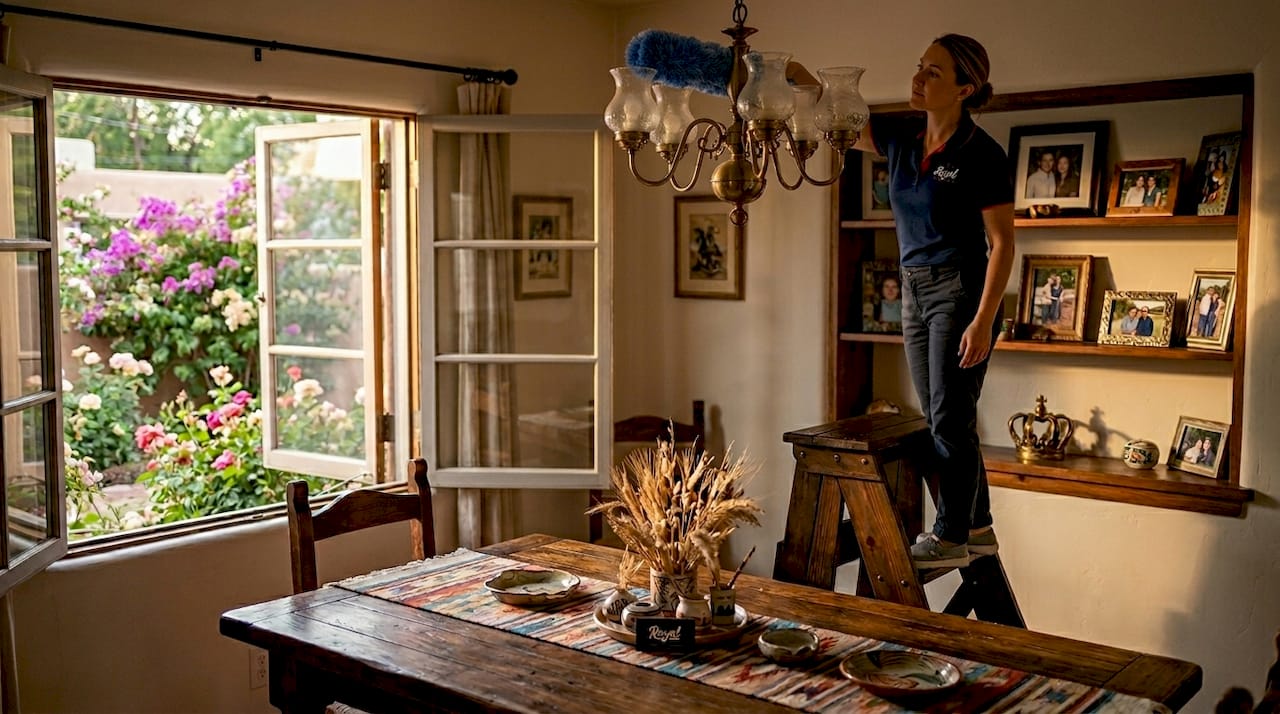
This creates a dangerous pattern. People treat the wrong problem and never investigate the actual cause inside their home. The health and air quality link is well established, but connecting your personal symptoms to your home environment takes awareness and some detective work.
Here’s what makes this particularly tricky. Indoor air pollution can cause immediate effects after a single exposure, or it can take years of repeated exposure before serious disease develops. Radon exposure, for example, builds up silently over time. Mold in ductwork can circulate spores for months before anyone connects the dots between ongoing respiratory issues and what’s lurking in the HVAC system.
The groups most at risk include:
- Children, whose lungs are still developing and who breathe more air relative to their body size
- Older adults, who may have reduced lung capacity or pre-existing conditions
- People with asthma or chronic respiratory conditions, whose symptoms can worsen dramatically
- Pregnant women, where air quality affects both mother and baby
- Pets, who spend even more time close to the floor where particles settle
“Poor indoor air quality is not always about smell or visible dust. Some of the most harmful pollutants are invisible and odorless, which is why monitoring and professional evaluation are so valuable.”
Routine surface cleaning helps, but it’s often not enough on its own. If your cleaning methods redistribute dust rather than remove it, if you’re using harsh chemical products that off-gas VOCs, or if your vacuum lacks proper filtration, you may actually be stirring up more particles than you’re eliminating. Improving air quality and your wellbeing starts with understanding what’s really in your air, not just what you can see.
Pro Tip: If your symptoms seem to get better when you leave home and return when you come back, that’s a strong signal that something in your indoor environment is the source. Track the timing and location of your symptoms before your next doctor’s visit.
Effective strategies to improve indoor air quality
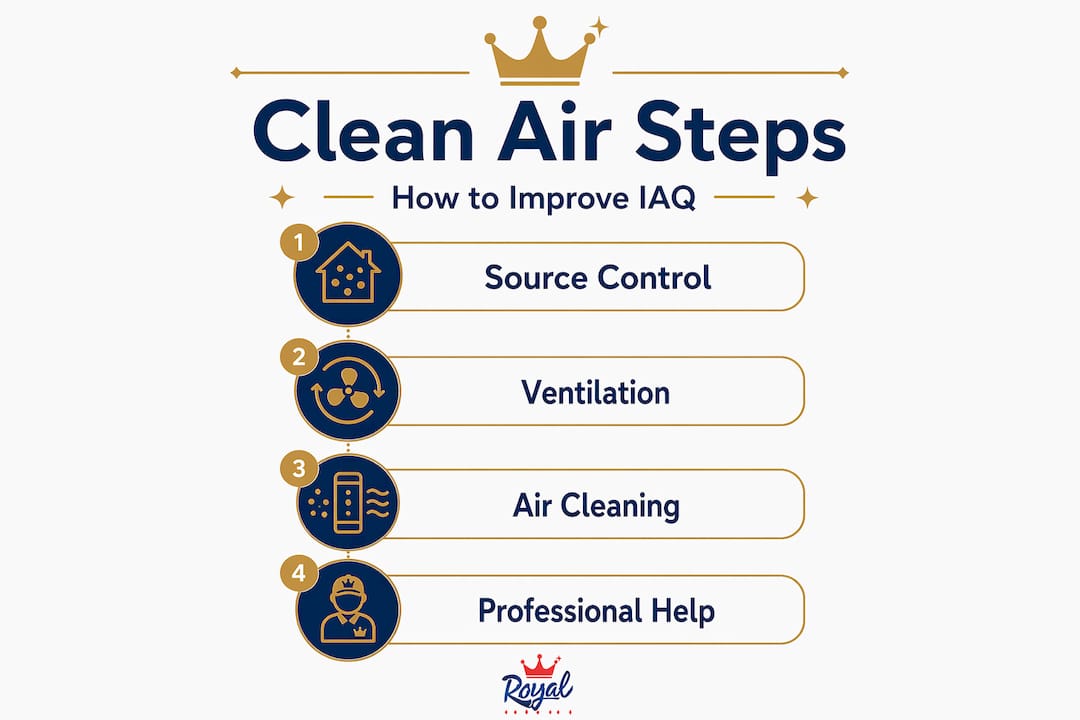
Knowing the risks is one thing. Knowing what to do about them is where most homeowners get stuck. The good news is that a clear, three-pillar framework exists that covers nearly every situation.
-
Source control — Remove or reduce the pollutant at its origin. This is always the first and most effective step. Replace chemical cleaning products with low-VOC options, fix moisture problems before mold develops, ban smoking indoors, and maintain appliances that could produce combustion gases.
-
Ventilation — Increase the flow of fresh air into your home. Open windows when outdoor air quality is good, use exhaust fans in kitchens and bathrooms, and make sure your HVAC system circulates air properly. During wildfire smoke events or Albuquerque dust storms, keep windows closed and rely on filtered indoor air instead.
-
Filtration and air cleaning — Use high-efficiency air filters in your HVAC system and consider standalone air purifiers with HEPA filtration in high-use rooms. This is especially useful when ventilation is limited.
The EPA confirms that source control is typically the most effective solution, with ventilation and air cleaning as supporting strategies. Don’t skip straight to buying an air purifier if there are controllable sources you haven’t addressed first.
The CDC also points out that cleaner indoor air can reduce the risk of respiratory illness by improving airflow and using targeted air cleaning. This is especially relevant for households with children in school or adults who work in crowded settings and bring pathogens home.
For Albuquerque homeowners, local conditions add another layer of planning. The city’s air quality alerts show that particulate events from dust and smoke can increase indoor exposure significantly, particularly when outdoor air infiltrates the home. Watching local alerts and responding quickly protects your family on high-pollution days.
| Action | Category | Effort Level | IAQ Impact |
|---|---|---|---|
| Fix water leaks and dampness | Source control | Low | High |
| Switch to low-VOC cleaning products | Source control | Low | High |
| Use exhaust fans while cooking | Ventilation | Low | Medium |
| Open windows on low-pollution days | Ventilation | Low | Medium |
| Upgrade to MERV-13 HVAC filter | Filtration | Low | High |
| Add HEPA air purifier to bedroom | Filtration | Medium | High |
| Schedule duct cleaning | Professional | Medium | Very High |
| Get radon test and mitigation | Source control | Medium | Very High |
Our expert cleaning tips page covers practical options for each of these pillars. If you want to go deeper on filtration options, our home air purification guide explains what to look for in a quality air purifier for New Mexico conditions.
Pro Tip: Replace your HVAC filter every 60 to 90 days in Albuquerque. The regional dust load clogs filters faster here than in most other cities, reducing airflow and filtration efficiency before the manufacturer’s standard replacement interval.
The role of professional cleaning in indoor air quality
Many homeowners underestimate how directly cleaning practices connect to indoor air quality. ISSA research confirms that cleaning reduces contaminants that can otherwise become airborne or get recirculated through your HVAC system. Done correctly, cleaning is one of the most powerful IAQ tools available to you.
But “cleaning” covers a wide range of methods, and the wrong approach can cause more harm than good.
Consider carpet. Carpets trap enormous quantities of dust, dander, pollen, and fine particles from outside. Regular vacuuming helps, but a standard household vacuum without HEPA filtration can actually exhaust fine particles back into the air. Professional carpet cleaning uses truck-mounted extraction equipment that removes deeply embedded contaminants and dries the carpet quickly to prevent mold growth.
The same logic applies to air ducts. Over time, ductwork accumulates dust, debris, mold spores, and sometimes pests. Every time your HVAC system runs, it circulates whatever is sitting in those ducts throughout your home. Understanding duct contamination and how it affects your air is an important step most homeowners skip.
| Cleaning Method | DIY Approach | Professional Approach | IAQ Benefit |
|---|---|---|---|
| Carpet cleaning | Rental shampooer, slow drying | Truck-mounted extraction, fast dry | Removes allergens, prevents mold |
| Dusting | Dry cloth redistributes particles | Microfiber + HEPA vacuum | Captures, doesn’t spread particles |
| Air duct cleaning | Not feasible for most homeowners | Specialized equipment, full system | Eliminates circulated contaminants |
| Upholstery cleaning | Spot cleaning only | Deep extraction, fabric-safe products | Removes embedded allergens |
| Tile and grout | Surface scrubbing | Steam and extraction | Kills mold and bacteria at the source |
Choosing the right cleaning tools for IAQ matters just as much as how often you clean. Monitoring local air quality alerts during high-dust periods can also help you time your cleaning efforts for maximum effect.
When should you call in professional cleaning services? Watch for these signs:
- Visible dust buildup returning quickly after cleaning
- Musty or unexplained odors that don’t go away
- Increased allergy or asthma symptoms at home
- No professional duct cleaning in the past three to five years
- Recent remodeling, water damage, or pest activity
Pro Tip: After any water damage or flooding, don’t wait more than 24 to 48 hours to begin drying and professional cleaning. Mold can begin developing within that window and will significantly worsen your indoor air quality once established.
What most homeowners miss about indoor air quality
After working with many Albuquerque homeowners on indoor air concerns, one thing stands out clearly: most people focus on odor rather than actual air quality. They reach for air fresheners, scented candles, or plug-in deodorizers when something smells off. These products don’t remove pollutants. They add VOCs to the air and mask the signal your home is sending you.
This is one of the most common and costly mistakes. Air fresheners can make a room smell clean while VOC levels are rising. That’s the opposite of what you want.
Another overlooked mistake is using cleaning equipment that isn’t suited to the job. A vacuum without sealed HEPA filtration, for example, can pull fine particles into the motor and exhaust them back into the room. It’s not cleaning your air; it’s moving pollution around. Investing in quality advanced cleaning equipment makes a measurable difference in actual results.
The truth is, genuine IAQ improvement requires three things working together: identifying and controlling the source, containing particles during cleaning rather than redistributing them, and using the right tools and techniques for each surface and system. No single product does all of that.
For Albuquerque homeowners, consulting local professionals who understand the regional environment, the dust load, the wildfire smoke season, and the dry climate conditions, gives you a genuine advantage. It’s not just about elbow grease. It’s about applying the right intervention to the right problem at the right time.
Get professional help for cleaner indoor air
If you’ve recognized warning signs in your home, or simply want to take a proactive step toward better health, professional cleaning delivers results that DIY methods can’t match. Deep extraction, sealed filtration equipment, and trained technicians who know what to look for make a real difference in your home’s air quality.
At Royal Cleaning New Mexico, we specialize in the cleaning services that directly impact indoor air quality for Albuquerque and Rio Rancho homeowners. From air duct cleaning to carpet and upholstery extraction, every service we offer is designed to reduce the contaminants that circulate through your home. Explore our full range of professional cleaning services or learn more about the specific air duct cleaning benefits that so many local families have experienced. We’re locally owned, transparent about pricing, and committed to your satisfaction.
Frequently asked questions
What are the main causes of indoor air pollution in Albuquerque homes?
Main sources include dust, pollen, pet dander, VOCs from cleaning products, and outdoor particulates from dust storms or wildfires. Albuquerque’s particulate events from dust and smoke can significantly increase indoor exposure when particles enter through gaps in windows, doors, and HVAC systems.
Can cleaning alone really improve indoor air quality?
Proper cleaning significantly reduces harmful particles, but optimal IAQ also requires good ventilation and sometimes air filtration. Cleaning reduces contaminants that can become airborne or recirculate through your HVAC, making it a critical but not standalone solution.
How can I tell if my home’s air quality is affecting my health?
Watch for symptoms that appear or worsen at home and improve when you’re away, such as headaches, eye irritation, or respiratory discomfort. Paying attention to when and where symptoms occur helps you identify whether your home environment is the source.
What’s the best first step to improve indoor air quality?
Start with source control by removing or reducing pollutant sources, then add ventilation and filtration as needed. The EPA confirms that source control is typically the most effective strategy, making it the logical starting point before investing in purifiers or filters.