(505) 280-5216
Why Indoor Air Quality Matters for Your Health at Home
TL;DR:
- Poor indoor air quality arises from pollutant sources and inadequate ventilation, impacting health over time. Contaminants like radon, VOCs, and combustion gases accumulate indoors, especially in tightly sealed homes, increasing long-term disease risks. Effective strategies include source control, proper ventilation, humidity management, and professional cleaning to ensure a healthier indoor environment.
Indoor air quality (IAQ) is defined by the U.S. EPA as the condition of the air within and around buildings, directly affecting occupants’ health, comfort, and quality of life. Most people assume outdoor pollution is the bigger threat, but indoor pollutant sources and inadequate ventilation are the primary drivers of air quality problems inside your home. The importance of indoor air quality becomes clear when you consider that people spend the vast majority of their lives indoors, making the air inside your home far more consequential to your long-term health than the air outside. Understanding what degrades your IAQ and what fixes it gives you real control over one of the most significant health factors in your daily life.
What health effects does poor indoor air quality cause?
Poor IAQ produces both immediate and long-term health consequences, and the absence of symptoms does not mean the absence of risk. The EPA confirms that some health effects appear shortly after exposure, while others develop only after years of cumulative contact with indoor pollutants. This distinction matters because many households never connect chronic headaches, fatigue, or recurring respiratory irritation to the air they breathe every day.
Short-term effects typically include:
- Eye, nose, and throat irritation
- Headaches and dizziness
- Fatigue and difficulty concentrating
- Worsening of asthma or allergy symptoms
Long-term exposure to poor indoor air carries far more serious consequences. SEI’s 2026 research identifies delayed severe health risks including respiratory disease, cardiovascular disease, and certain cancers linked to prolonged pollutant exposure indoors. These are not rare outcomes reserved for industrial settings. They develop gradually in ordinary homes with poor ventilation, unmanaged moisture, or persistent pollutant sources.
Vulnerable groups face disproportionate risk. Children, elderly adults, and people with asthma, heart disease, or compromised immune systems experience more severe effects from the same pollutant levels that cause only mild discomfort in healthy adults.
The impact of air quality on health is cumulative. Pollutants accumulate when ventilation is inadequate, meaning even low-level daily exposure adds up over months and years. Treating IAQ as a long-term health strategy, not just a comfort issue, is the correct frame for every homeowner and renter.
Which indoor air pollutants matter most in your home?
Indoor air contains a wider range of pollutants than most people realize, and they enter your home through sources you interact with every day. The EPA categorizes these into gases and particles, each with distinct sources and health implications.
| Pollutant type | Common sources | Primary health concern |
|---|---|---|
| Radon (gas) | Soil beneath foundation | Lung cancer (leading cause in non-smokers) |
| VOCs (gases) | Paints, cleaning products, furniture | Headaches, liver/kidney damage, cancer risk |
| Combustion gases (CO, NO2) | Gas stoves, fireplaces, attached garages | Cardiovascular stress, neurological effects |
| Particulate matter | Dust, pet dander, mold spores, smoke | Respiratory irritation, asthma triggers |
| Biological allergens | Carpets, upholstery, HVAC ducts | Allergic reactions, asthma exacerbation |
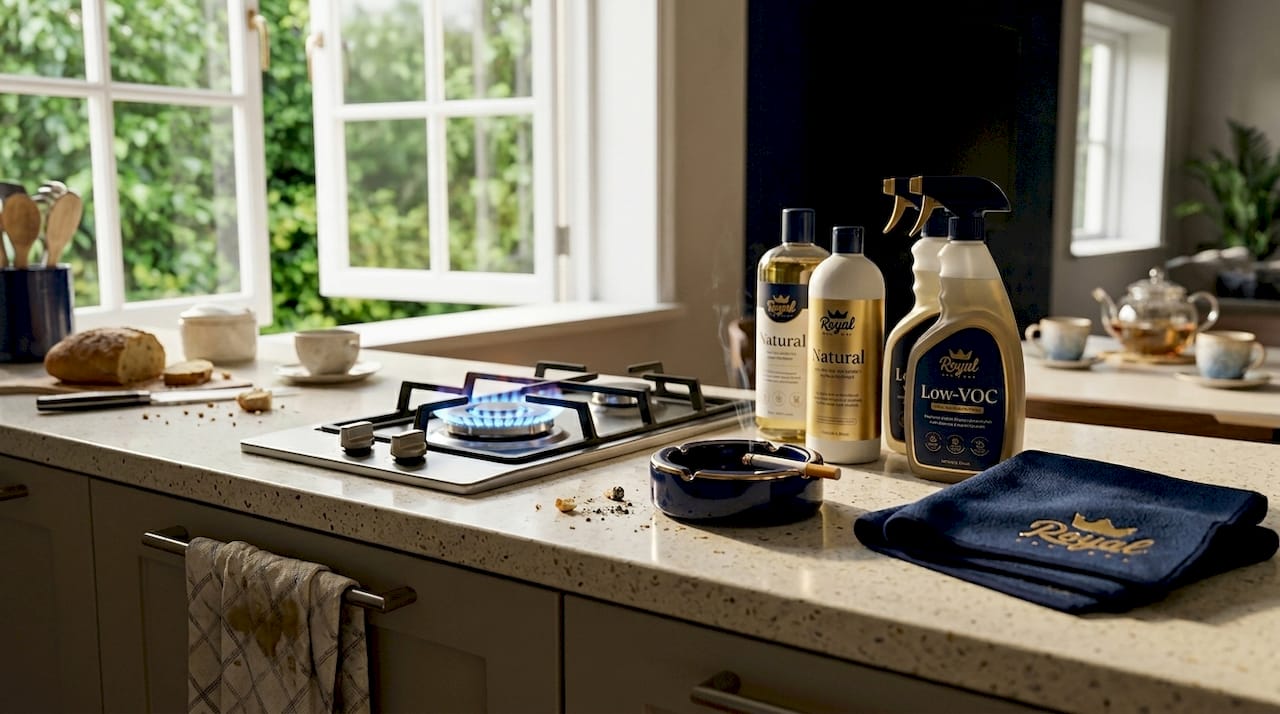
Tobacco smoke remains one of the most damaging indoor pollutants, releasing over 7,000 chemicals into your home’s air. Cooking on a gas stove without ventilation generates nitrogen dioxide and fine particles at levels that exceed outdoor air quality standards within minutes. Even common household cleaning products release volatile organic compounds (VOCs) that linger long after the smell fades.
Building tightness plays a significant role. Modern energy-efficient homes seal out outdoor air effectively, which is great for heating bills but problematic for pollutant dilution. Without deliberate ventilation, gases and particles accumulate to concentrations that would never occur in older, draftier construction. External pollution, including wildfire smoke and vehicle exhaust, can also infiltrate through gaps and HVAC systems, adding outdoor sources to an already complex indoor mix.
Pro Tip: Check your cleaning products for labels listing VOC content. Products marketed as “low-VOC” or “zero-VOC” genuinely reduce chemical off-gassing inside your home, especially in poorly ventilated bathrooms and kitchens.
How does ventilation and humidity control improve your air?
Ventilation is the single most effective mechanism for diluting and removing indoor pollutants, and adequate outdoor air exchange directly reduces airborne exposure risk, particularly in crowded indoor spaces. A 2026 Nature Communications study confirmed that modest increases in spaciousness and ventilation measurably improve effective clean airflow and lower respiratory infection risk. This finding applies directly to your home, not just offices or schools.
The EPA recommends maintaining indoor humidity between 30 and 50 percent to prevent mold growth and suppress dust mite populations. Both mold and dust mites are major allergen sources, and both thrive when humidity climbs above 60 percent. A basic digital hygrometer costs under $15 and tells you exactly where your home stands.
The table below shows how ventilation and humidity choices affect specific IAQ outcomes:
| Action | IAQ outcome | Health benefit |
|---|---|---|
| Open windows when outdoor air is clean | Dilutes VOCs, CO2, and particles | Reduces headache, fatigue, irritation |
| Run bathroom exhaust fan during showers | Removes moisture before mold forms | Prevents allergen buildup |
| Use kitchen range hood while cooking | Captures combustion gases and particles | Reduces respiratory irritant exposure |
| Keep humidity at 30 to 50 percent | Suppresses mold and dust mites | Lowers allergy and asthma triggers |
| Improve HVAC airflow and filtration | Captures airborne particles continuously | Reduces long-term particulate exposure |
Ventilation strategy requires one important nuance. During wildfire events or high-pollution days, opening windows pulls contaminated outdoor air inside and worsens your IAQ. The EPA recommends checking AirNow before ventilating and keeping windows closed when outdoor air quality is rated unhealthy. Albuquerque and the surrounding New Mexico region experience seasonal wildfire smoke, making this conditional approach especially relevant for local homeowners.
Pro Tip: Run your HVAC fan continuously on low rather than only during heating or cooling cycles. This keeps air circulating through your filter even when the system is not actively conditioning the air, which meaningfully reduces particle buildup.
What practical steps actually improve indoor air quality at home?
The EPA’s hierarchy for improving home IAQ places source control first, ventilation second, and air filtration third. This order matters because air purifiers alone cannot solve IAQ problems rooted in active pollutant sources and inadequate air exchange. Filtration is a supplement, not a substitute.
Here are the most effective steps, organized by priority:
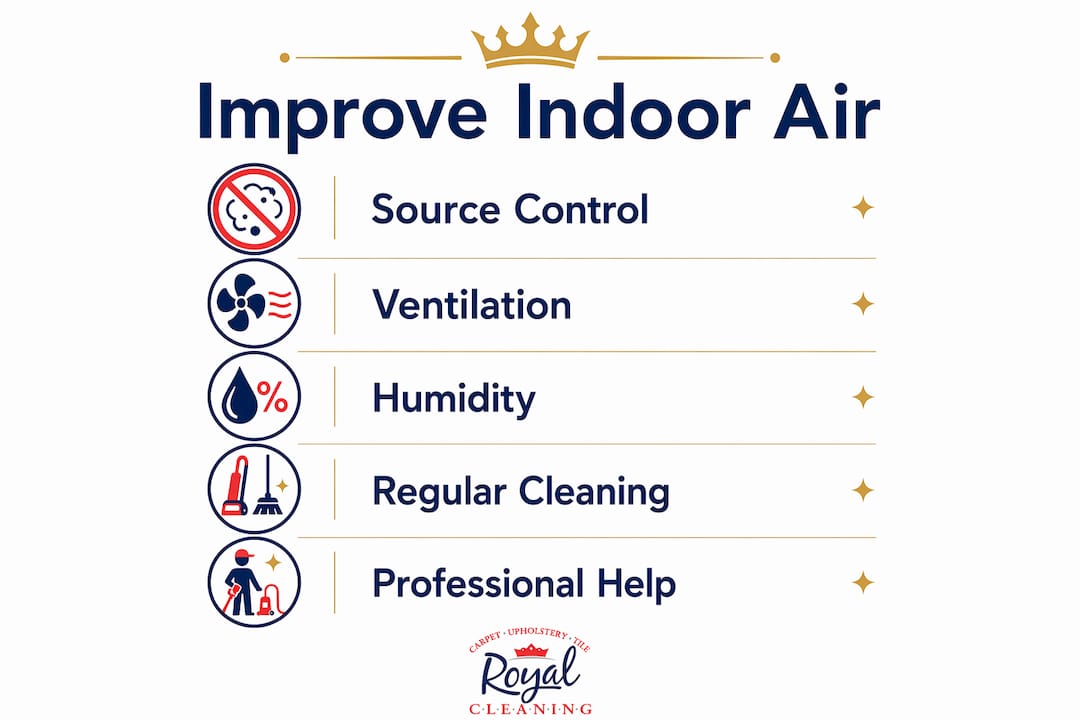
- Eliminate or reduce pollutant sources. No smoking indoors. Switch to low-VOC paints and cleaning products. Test your home for radon using an EPA-approved kit, especially if you live in a basement or ground-floor unit. Vent all combustion appliances, including gas dryers and water heaters, to the outside.
- Ventilate during pollution-generating activities. Run exhaust fans in kitchens and bathrooms every time you cook or shower. The EPA’s IAQ checklist specifically identifies these daily behaviors as high-impact habits for both comfort and long-term health.
- Clean regularly and thoroughly. Dust, pet dander, and mold spores settle into carpets, upholstery, and HVAC ducts. Vacuuming with a HEPA-filter vacuum, washing bedding weekly in hot water, and scheduling professional carpet and duct cleaning significantly reduces the allergen load in your home. Royal Carpet and Tile Cleaning’s air duct cleaning service removes accumulated debris that recirculates through your HVAC system every time it runs.
- Use appropriate air filtration. A MERV 8 or higher pleated filter, such as a 20x20x1 MERV 8 filter, captures a meaningful percentage of airborne particles without restricting airflow in standard residential HVAC systems. Replace filters on schedule, typically every 60 to 90 days.
- Avoid ozone-emitting air cleaners. Devices marketed as “ionic purifiers” or “ozone generators” release ozone, which is itself a respiratory irritant. The EPA advises against these products specifically because they add a pollutant while claiming to remove them.
- Monitor outdoor air quality before ventilating. Use AirNow.gov to check your local air quality index daily. On clean-air days, open windows freely. On smoke or high-pollution days, keep the home sealed and rely on your HVAC filter for particle removal.
Renters have more control than they often realize. Moisture management, exhaust fan use, low-VOC product choices, and regular cleaning are all renter-accessible actions that do not require landlord approval or structural changes. The indoor air safety tips from Royal Carpet and Tile Cleaning cover these renter-friendly strategies in detail.
Key takeaways
Healthy indoor air requires source control, ventilation, and regular cleaning working together. No single product or habit replaces the full strategy.
| Point | Details |
|---|---|
| Source control comes first | Eliminate or reduce pollutant origins before relying on filters or purifiers. |
| Humidity must stay at 30 to 50 percent | Levels above this range feed mold and dust mites, two of the most common allergen sources. |
| Ventilation is conditional | Check AirNow before opening windows. Outdoor smoke worsens indoor air during wildfire events. |
| Cleaning reduces allergen load | Regular vacuuming and professional carpet and duct cleaning remove settled pollutants that ventilation cannot reach. |
| Symptoms are not a reliable indicator | Poor IAQ causes long-term disease risk even when residents feel no immediate discomfort. |
Why I think most people are solving IAQ backwards
I have worked with enough homeowners to recognize a consistent pattern. Someone buys an air purifier, places it in the living room, and considers the problem handled. The purifier hums reassuringly, the air smells cleaner, and the job feels done. But the primary IAQ problem in most homes is not floating particles in the living room. It is the gas stove venting combustion byproducts into an unventilated kitchen, the bathroom accumulating moisture that feeds mold behind the drywall, or the HVAC ducts redistributing years of accumulated dust and allergens with every cycle.
Air purifiers are not useless. They genuinely help with airborne particles when sized and positioned correctly. But they are the third tool in a three-step strategy, not the first. I have seen homes where the occupants suffered from chronic fatigue and respiratory irritation for years, and the fix was not a new device. It was running the range hood consistently, fixing a bathroom exhaust fan that had been broken for two years, and scheduling a professional duct cleaning.
The other misconception worth addressing is the idea that IAQ improvement is a one-time project. It is an ongoing practice. Dust accumulates. Humidity fluctuates with seasons. Filters clog. The home cleanliness connection to air quality is not a metaphor. It is a direct, measurable relationship. Treat IAQ maintenance the same way you treat any other home health habit: consistent, scheduled, and non-negotiable.
— Bernadette
How professional cleaning supports healthier air in your home
Professional cleaning addresses the IAQ problems that daily habits cannot fully reach. Carpets trap allergens, pet dander, and fine particles deep in their fibers, well beyond what a household vacuum removes. Upholstery holds dust mites and skin cells in concentrations that contribute directly to allergy and asthma symptoms. HVAC ducts accumulate debris over years and redistribute it through every room every time your system runs.
Royal Carpet and Tile Cleaning offers professional cleaning services specifically designed to reduce the allergen and pollutant load in Albuquerque and Rio Rancho homes. From professional carpet cleaning that extracts embedded allergens to air duct cleaning that clears your HVAC system of accumulated debris, each service directly supports cleaner, healthier indoor air. Scheduling a professional cleaning is one of the most direct steps you can take toward measurably better air quality in your home.
FAQ
What is indoor air quality and why does it matter?
Indoor air quality refers to the condition of the air inside homes and buildings as it affects occupant health and comfort. The EPA links poor IAQ directly to both immediate symptoms and long-term diseases including respiratory illness and cardiovascular disease.
How do I know if my indoor air quality is poor?
Common signs include persistent headaches, fatigue, eye or throat irritation, and worsening allergy or asthma symptoms indoors. However, the EPA notes that poor IAQ can cause long-term health risks even when no symptoms are noticeable.
What is the recommended indoor humidity level?
The EPA recommends keeping indoor humidity between 30 and 50 percent. Levels above this range promote mold growth and dust mite populations, both of which are significant allergen sources.
Does an air purifier fix indoor air quality problems?
Air purifiers help reduce airborne particles but do not address the root causes of most IAQ problems. Source control and ventilation are the primary strategies; filtration is a secondary support tool.
Can renters improve their indoor air quality without landlord help?
Yes. Renters can manage moisture through exhaust fan use, choose low-VOC cleaning products, vacuum regularly with a HEPA-filter vacuum, and use AirNow to guide ventilation decisions. These steps are independent of structural changes and deliver real IAQ improvements.