(505) 280-5216
Why Homeowners Need Deep Cleaning Services
Every homeowner in Albuquerque or Rio Rancho knows that the fight against dust and hidden allergens never really ends. With our desert environment, keeping your space truly clean goes far beyond routine chores. Deep cleaning is a scientifically validated process that removes embedded debris, microbes, and contaminants, making a real difference for your family’s health and comfort. Discover how a professional approach targets the areas standard cleaning skips, creating a fresher and safer home.
Table of Contents
- Defining Deep Cleaning In Residential Homes
- Types Of Deep Cleaning Services Explained
- How Deep Cleaning Improves Indoor Air Quality
- Protecting Home Value And Health Risks
- Professional Vs. Diy Deep Cleaning Methods
Key Takeaways
| Point | Details |
|---|---|
| Deep Cleaning vs. Regular Cleaning | Deep cleaning targets hidden contaminants, while regular cleaning only addresses visible messes. This difference is crucial for maintaining a healthier home environment. |
| Importance of Target Areas | Deep cleaning effectively removes allergens from places often overlooked, like carpets, air ducts, and upholstery. Regular attention to these areas improves overall air quality. |
| Professional vs. DIY | Professional deep cleaning provides superior results and thoroughness compared to DIY methods, making it a worthwhile investment for maintaining home value and health. |
| Seasonal Scheduling | Scheduling deep cleaning at least quarterly, especially before peak allergen seasons, can significantly enhance indoor air quality and reduce allergens. |
Defining Deep Cleaning in Residential Homes
Deep cleaning goes far beyond your weekly vacuuming or surface wipe-downs. It’s a comprehensive approach to cleaning that targets areas most homeowners never think about, creating a genuinely healthier living space for your family.
At its core, deep cleaning is a scientifically validated process that removes contaminants, microbes, and embedded debris that routine cleaning misses. According to the Journal of Cleaning Science, deep cleaning removes dirt, microbes, and residues far beyond what surface-level tasks can accomplish. Think of it like the difference between dusting a shelf and actually cleaning inside the cabinet where dust accumulates over months.
What Makes Deep Cleaning Different from Regular Cleaning
Regular cleaning handles visible messes. You sweep the floors, wipe counters, and toss clutter off surfaces. Deep cleaning tackles what you can’t see—the buildup that’s been hiding.
Here’s where the two diverge:
- Regular cleaning: Visible surfaces, quick maintenance, once or twice weekly
- Deep cleaning: Hidden areas, embedded grime, foundational removal, typically quarterly or seasonally
- Surface focus: Regular cleaning; Comprehensive focus: Deep cleaning
- Goal: Maintain appearance; Goal: Restore cleanliness and health
Deep cleaning includes all parts of something, not just visible surfaces, addressing areas like baseboards, ceiling fans, inside cabinets, and beneath furniture. In Albuquerque and Rio Rancho, where desert dust and allergens infiltrate homes year-round, this distinction matters significantly.
The Hidden Problem Areas Deep Cleaning Addresses
Your home accumulates contaminants in places that standard cleaning never reaches. These areas are specifically what deep cleaning targets to protect your family’s health.
- Carpet fibers and padding underneath
- Grout lines between tiles
- Inside air ducts and vents
- Ceiling corners and light fixtures
- Behind and under appliances
- Upholstery fabric layers
- Window sills and tracks
For families in our area dealing with dust-heavy environments, addressing these spaces regularly prevents allergens from building up in your breathing space. When you invest in professional deep cleaning services, you’re investing in air quality and health—not just appearance.
Deep cleaning removes contaminants from hidden areas that accumulate over time, creating measurably healthier indoor environments for your family.
Why This Matters for Your Home Specifically
Homeowners often assume their homes stay clean because the visible surfaces look good. That’s rarely accurate. Dust, bacteria, and allergens settle in places you can’t easily access, and they multiply over time without intervention.
Deep cleaning addresses this reality by methodically targeting every zone in your home. When you’re looking at what professional cleaning services offer, comprehensive deep cleaning should be a priority option that covers multiple surface types and hidden spaces.
The result? Lower allergen levels, reduced bacteria and mold growth, and a genuinely cleaner home environment. For families with allergies, asthma, or young children, the difference becomes immediately noticeable.
Pro tip: Schedule deep cleaning seasonally—ideally before spring and fall when allergen levels spike in New Mexico. This prevents seasonal buildup and maintains consistent air quality year-round.
Types of Deep Cleaning Services Explained
Deep cleaning isn’t one-size-fits-all. Different areas of your home have different contamination risks and require different approaches. Understanding the types of services available helps you choose exactly what your home needs.
Core Deep Cleaning Service Categories
Professional deep cleaning services fall into distinct categories based on what they target and how they work. Deep cleaning services include general surface cleaning, microbial remediation, and sanitization aimed at improving safety throughout your home.
Here are the main types:
- General deep surface cleaning: Targets visible dirt, dust, and debris on all surfaces
- Microbial remediation: Removes bacteria, viruses, and mold from high-risk areas
- Stain and soil removal: Addresses embedded discoloration in carpet, upholstery, and tile
- Sanitization: Applies antimicrobial treatments to high-touch surfaces and vulnerable zones
Each service type uses different methods—chemical treatments, mechanical extraction, thermal cleaning, or combinations of all three. The approach depends entirely on the surface and contamination level.
Surface-Specific Deep Cleaning Services
Your kitchen, bathroom, carpet, and furniture each need different treatment strategies. One method doesn’t work for all materials, which is why professionals specialize in different surfaces.
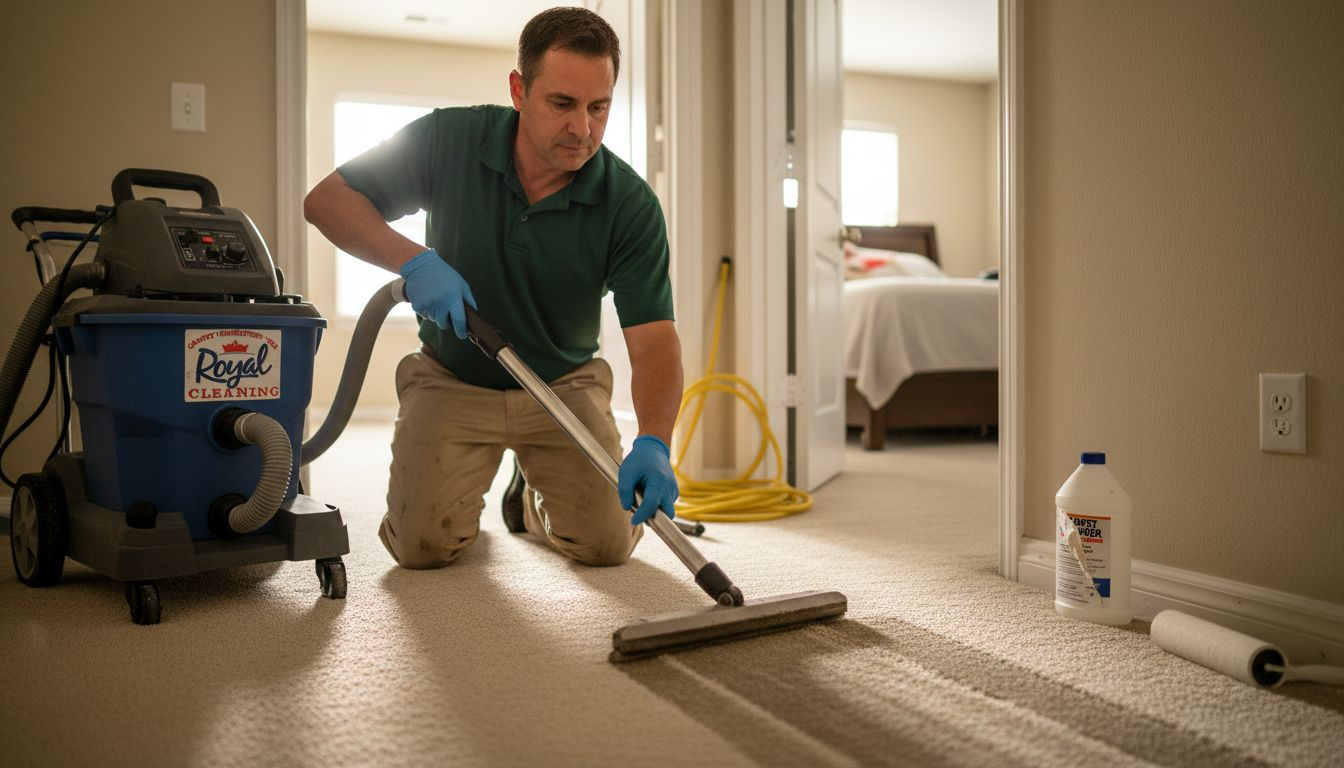
Deep carpet cleaning removes embedded dirt from fibers and backing that regular vacuuming can’t reach. Upholstery requires gentler techniques but still targets deep soil. Tile and grout cleaning uses both mechanical scrubbing and chemical treatment to restore grout lines.
Professional sofa cleaning protects fabric while extracting deeply embedded allergens and odors. Hard surfaces like counters and floors demand different sanitization approaches than porous materials.
Risk-Based Cleaning Approaches
Professionals organize deep cleaning by contamination risk levels. Kitchen surfaces, for example, require a tiered approach where critical risk areas get more intensive treatment than lower-risk zones.
This means:
- High-risk areas: Countertops, appliances, cutting boards—cleaned most frequently
- Medium-risk areas: Floors, cabinet exteriors, light switches—cleaned regularly
- Lower-risk areas: Upper shelves, baseboards, corners—cleaned periodically
This strategic approach prevents over-cleaning some areas while ensuring no contaminated zones get neglected. Your cleaning professionals will assess your home’s specific risk zones based on foot traffic, moisture, and use patterns.
Different surfaces and areas require tailored deep cleaning methods—one approach doesn’t effectively address all contamination types throughout your home.
Why Service Type Matters for Your Home
Choosing the right deep cleaning services means matching the method to your actual needs. A home with young children might prioritize antimicrobial sanitization and allergen removal. A household with pets might focus on odor elimination and fabric restoration.
Albuquerque and Rio Rancho homes face specific challenges: desert dust infiltration, dry air affecting wood surfaces, and intense sun exposure affecting certain materials. Your deep cleaning service should address these regional factors.
Pro tip: Ask your cleaning provider which specific surfaces they’re treating with which methods—understanding the approach ensures you’re getting the targeted service your home actually needs.
How Deep Cleaning Improves Indoor Air Quality
Your home’s air quality directly affects your family’s health. What you can’t see—dust, mold spores, pet dander, and chemical residues—circulates through your breathing space every single day. Deep cleaning removes these invisible threats.
The Hidden Air Quality Problem
Most homeowners don’t realize how contaminated their indoor air actually is. Regular cleaning only addresses what’s visible, leaving behind layers of pollutants that accumulate on surfaces and become airborne.
Deep cleaning reduces dust, mold spores, pet dander, and chemical residues that directly worsen your indoor air quality. These particles settle on furniture, carpets, and in air ducts where vacuum cleaners can’t reach them.
When family members walk across carpet, adjust bedding, or open cabinets, they disturb this accumulated debris. It becomes airborne, and you breathe it in. For families in Albuquerque and Rio Rancho where desert dust infiltrates homes constantly, this problem multiplies.
How Deep Cleaning Removes Airborne Contaminants
Deep cleaning uses specialized equipment and methods to eliminate the source of air quality problems, not just mask them. You’re removing the actual contamination, not just pushing it around.
The process targets:
- Carpet fibers and padding where dust and allergens embed
- Upholstery fabrics that trap pet dander and skin cells
- Air ducts and vents circulating contaminated air
- Hard surfaces where chemical residues accumulate
- Grout lines and baseboards collecting biological agents
Proper deep cleaning controls airborne contaminants by removing dust and pollutants that settle on surfaces. Combined with your home’s ventilation system, this dramatically lowers the concentration of particles you’re breathing.
Health Benefits You’ll Actually Notice
When air quality improves, your family notices. Reduced coughing, better sleep, fewer allergy flare-ups—these changes happen relatively quickly after professional deep cleaning.
The health improvements include:
- Reduced asthma symptoms: Fewer airborne triggers means less wheezing and difficulty breathing
- Allergy relief: Lower allergen concentration reduces sneezing, itching, and congestion
- Better sleep quality: Cleaner air reduces nighttime breathing issues
- Fewer respiratory infections: Fewer airborne pathogens circulating through your home
- Improved overall wellness: Better air quality supports lung health and immune function
Families with children, elderly members, or anyone with respiratory conditions notice these benefits most dramatically. For managing allergies through deep cleaning, targeting air quality becomes a health priority.
Removing airborne contaminants at their source through deep cleaning creates measurably better air quality and noticeable health improvements for your family.
Making Air Quality Work Long-Term
One deep cleaning session improves air quality significantly. Maintaining that improvement requires scheduling deep cleaning seasonally, especially before high-pollen seasons in New Mexico.
Combine deep cleaning with basic practices for sustained improvement: regular vacuuming with HEPA filters, maintaining humidity levels between 30-50%, and ensuring proper ventilation.
Pro tip: Schedule deep cleaning before spring and fall allergy seasons—this removes accumulated allergens before pollen counts spike, giving your family maximum relief when outdoor air quality is poorest.
Protecting Home Value and Health Risks
Deep cleaning protects two things homeowners care about most: their family’s health and their financial investment. Neglect in either area costs money eventually—either through medical bills or through lost home value when selling.
The True Cost of Neglected Cleaning
You might think skipping professional deep cleaning saves money. It doesn’t. Hidden damage accumulates quietly until it becomes expensive.
Deep cleaning prevents moisture buildup, pest infestations, and contaminant accumulation that lead to structural damage and health risks. Mold growing behind walls, pest damage in insulation, and stains embedded in carpet create costly repair bills that dwarf the cost of regular deep cleaning.
In Albuquerque and Rio Rancho, where dry air and intense sun exposure stress home materials, preventative cleaning becomes even more critical. A single mold remediation project can cost thousands of dollars.
How Neglect Damages Home Value
Buyers notice what deep cleaning prevents. They see stains, smell odors, and sense the cleanliness of a home the moment they walk in.
Neglected cleaning leads to damage such as mold growth, stains, and pest problems that degrade both structural and aesthetic quality. These issues don’t just look bad—they raise red flags during home inspections, significantly reducing buyer confidence and purchase offers.
Consider this reality: carpet quality directly impacts buyer perception when preparing homes for sale. Professional deep cleaning restores appearance and addresses hidden contamination that buyers worry about.
Health Risks That Accumulate Over Time
Untreated buildup creates documented health hazards. Mold causes respiratory issues, pest contamination spreads disease, and accumulated allergens worsen asthma and allergies.
The health consequences of neglect include:
- Mold-related illnesses: Respiratory infections, allergic reactions, asthma exacerbation
- Pest-borne diseases: Rodent droppings contain hantavirus; cockroach allergens trigger severe reactions
- Allergen accumulation: Dust mites, pet dander, and pollen trigger or worsen allergies
- Chemical residue exposure: Pesticides and cleaning products accumulate without proper removal
- Bacterial growth: High moisture areas become breeding grounds for harmful bacteria
For families with children, elderly members, or anyone with respiratory conditions, these risks demand attention.
Regular deep cleaning protects both your home’s financial value and your family’s physical health by preventing costly damage and health hazards.
The Financial Case for Deep Cleaning
Think of professional deep cleaning as insurance. You’re preventing thousands in future repairs and protecting hundreds of thousands in home equity.
When you maintain your home through consistent deep cleaning, you’re:
- Preventing mold remediation costs (often $5,000-$10,000+)
- Avoiding pest control damage and extermination expenses
- Preserving carpet, upholstery, and materials from premature deterioration
- Maintaining buyer confidence and market value
- Reducing medical expenses linked to poor indoor air quality
This isn’t an expense—it’s an investment that pays dividends in health and wealth.
Here’s how deep cleaning directly benefits both your home’s condition and your family’s health:
| Benefit Area | Deep Cleaning Impact | Why It Matters |
|---|---|---|
| Indoor Air Quality | Removes allergens and pollutants | Reduces asthma and allergies |
| Home Value | Prevents stains and material damage | Maintains buyer confidence |
| Family Health | Eliminates bacteria, mold, pests | Lowers risk of illness |
| Material Longevity | Extends carpet and upholstery life | Saves money on replacements |
Pro tip: Document your deep cleaning schedule and keep receipts; when selling your home, showing consistent professional maintenance increases buyer confidence and justifies higher asking prices.
Professional vs. DIY Deep Cleaning Methods
You can rent a carpet cleaner from the hardware store, but that doesn’t mean you’re getting deep cleaning. There’s a massive difference between DIY approaches and professional methods—one leaves your home genuinely clean, and the other leaves you exhausted and disappointed.
Why DIY Deep Cleaning Falls Short
Rental equipment looks impressive until you try using it. Most homeowners underestimate both the physical effort required and the skill needed to operate professional-grade equipment effectively.
DIY deep cleaning typically has these limitations:
- Insufficient equipment power: Rental machines lack the extraction force of professional equipment
- Lack of training: Improper technique can damage surfaces or leave soap residue
- Time-intensive: Deep cleaning an entire home takes 12-20+ hours of physical labor
- Incomplete coverage: Hard-to-reach areas get skipped or inadequately cleaned
- Chemical risks: Without proper knowledge, you may use incorrect or unsafe cleaning agents
- Limited effectiveness: Stubborn stains, embedded allergens, and microbial contamination often remain
When rental carpet cleaners prove insufficient for thorough results, you’re left with partially cleaned carpets and wasted time.
What Professional Equipment Actually Delivers
Professional deep cleaning utilizes scientifically validated procedures and specialized equipment that achieve cleanliness levels impossible with consumer rental machines. The difference isn’t subtle—it’s dramatic.
Professional equipment includes:
- Industrial-grade extractors: Remove 40-50% more moisture and contaminants than rentals
- Truck-mounted systems: Provide continuous power and water temperature control
- Specialized tools: Target baseboards, air ducts, grout lines, and hard-to-reach spaces
- Advanced cleaning agents: Industrial-strength solutions that break down specific contaminant types
- Validation and safety: Professionals understand chemical interactions and ventilation requirements
Professional-grade carpet cleaners use controlled methods that ensure comprehensive cleaning without damaging delicate fibers or leaving harmful residues. The equipment cost alone—often $15,000-$30,000—explains why rentals can’t compete.
Training, Knowledge, and Safety
Professionals aren’t just operating equipment—they’re solving problems. They identify what needs cleaning, why contamination occurred, and which method works for each specific situation.
Professional cleaners are trained to identify hard-to-reach areas and handle chemicals safely, minimizing health risks during and after cleaning. They know manufacturer guidelines for carpet, upholstery, and tile. They understand ventilation, drying times, and when chemical combinations create hazards.
DIY cleaners often lack this knowledge, risking property damage or health issues.
Professional deep cleaning achieves contaminant removal levels that DIY methods simply cannot match, protecting both your home and your family’s health.
The Real Cost Comparison
You might think renting equipment saves money. Actually, you’re trading time and results for a lower upfront cost.
Consider the full picture:
- Rental cost: $50-$150 per machine per day
- Your time: 12-20 hours of physical labor (worth $150-$400 in lost time)
- Incomplete results: Often requires repeat attempts or professional intervention later
- Professional service: $200-$600 for comprehensive whole-home deep cleaning, done right once
When you factor in your time, the actual cost difference shrinks dramatically. Professional service costs less when calculated honestly.
Compare DIY and professional deep cleaning to understand the differences in results and investment:
| Aspect | Professional Cleaning | DIY Cleaning |
|---|---|---|
| Equipment Power | Industrial-grade (high extraction) | Rental (limited extraction) |
| Coverage & Thoroughness | Full home, hard-to-reach areas | Misses hidden and deep spots |
| Time Investment | 2-4 hours (team) | 12-20+ hours (solo effort) |
| Health & Safety | Trained, safe chemical use | Higher risk of errors or exposure |
Pro tip: Get quotes from multiple local professionals; many offer package deals for multiple services (carpet, tile, upholstery) that cost less than hiring separately and deliver superior results.
Elevate Your Home’s Cleanliness and Health with Professional Deep Cleaning
Homeowners understand that regular cleaning only scratches the surface. The real challenge lies in removing hidden dust, allergens, and microbial contaminants that silently affect your indoor air quality and family’s well-being. Deep cleaning addresses this by targeting the most overlooked problem areas using proven methods and advanced equipment. If you want to protect your home from damage and create a truly healthy environment, it is essential to choose expert services that specialize in comprehensive deep cleaning solutions.
Discover how our team at Royal Carpet Cleaning in Albuquerque and Rio Rancho transforms homes through our multi-step deep cleaning process. From carpet and upholstery cleaning to tile and grout sanitization, we tailor our services to meet your specific needs and the unique challenges of our local environment. Don’t wait until allergens and contaminants worsen your family’s health or lower your home’s value. Take the first step today by exploring our Home Improvement Archives and learn why professional deep cleaning is the smart investment every homeowner should make now.
Frequently Asked Questions
What is deep cleaning, and how does it differ from regular cleaning?
Deep cleaning is a comprehensive cleaning process that targets hidden areas and embedded grime that regular cleaning misses. While regular cleaning involves visible surface maintenance, deep cleaning aims to restore overall cleanliness and health by addressing contaminants in hard-to-reach places.
How often should I schedule deep cleaning for my home?
It is recommended to schedule deep cleaning at least quarterly or seasonally. Doing so can help maintain indoor air quality and prevent allergen buildup, particularly before high-pollen seasons.
What areas of the home should be prioritized during a deep cleaning?
Prioritized areas for deep cleaning include carpets, upholstery, air ducts, kitchen surfaces, and bathrooms. Special attention should also be given to places like grout lines, behind appliances, and other areas that accumulate allergens and contaminants over time.
How can deep cleaning improve my home’s indoor air quality?
Deep cleaning removes hidden dust, mold spores, pet dander, and chemical residues that circulate in the air. By eliminating these airborne contaminants, you can enhance your home’s air quality, potentially reducing asthma symptoms and allergy flare-ups.