(505) 280-5216
Why Eco-Friendly Cleaning Products Are Better for Your Home
TL;DR:
- Eco-friendly cleaning products reduce indoor VOC exposure, support aquatic ecosystems, and perform effectively when used correctly. Certified formulas from EPA Safer Choice, Green Seal, or EWG Verified ensure genuine safety and environmental standards, helping consumers avoid greenwashing. Proper application techniques and ingredient transparency are essential for maximizing green cleaning benefits and effectiveness.
Eco-friendly cleaning products are scientifically formulated alternatives to conventional cleaners that minimize toxic chemical exposure and reduce environmental harm while maintaining effective cleaning performance. The term “green cleaning” is the recognized industry standard for this practice, and it goes well beyond swapping one bottle for another. Green cleaning replaces guesswork with ingredient intelligence and measured outcomes, focusing on reduced asthma triggers, lower aquatic toxicity, and preserved surface integrity. Certifications from the EPA Safer Choice program, Green Seal, and EWG Verified give you a reliable way to confirm that a product actually delivers on its claims. Understanding why eco-friendly cleaning products matter is the first step toward making choices that protect your family and your home environment.
Why eco-friendly cleaning products are better for your health
The most direct reason to switch to green cleaning products is what they keep out of your home’s air and off your surfaces. Conventional cleaners release volatile organic compounds, known as VOCs, that linger in indoor air long after you’ve finished cleaning. Switching to certified green alternatives reduces VOC exposure and can meaningfully improve indoor air quality, which matters most for people who spend the most time indoors.
Children are the population most at risk from conventional cleaning chemicals. According to 2026 guidance from the American Academy of Pediatrics, children breathe more air relative to body weight than adults, and their habits of crawling and mouthing objects increase their contact with chemical residues on floors and furniture. Safer cleaning agents directly reduce that exposure pathway. If you have young children at home, this single fact makes the case for green products on its own.
For people with asthma or chemical sensitivities, the benefits are equally clear. Switching to safer cleaning agents supports indoor air quality improvements that reduce asthma exacerbations and allergic reactions. EPA Safer Choice certified products screen ingredients against toxicity thresholds, and certified products eliminate harmful surfactants like nonylphenol ethoxylates while limiting allergenic fragrances. That is a meaningful difference from the ingredient lists on most conventional cleaners.
The active ingredients in green products are also worth knowing by name. Hydrogen peroxide and citric acid are both recognized as effective disinfectants that break down safely after use. Enzymatic cleaners using protease and amylase blends effectively hydrolyze biofilms, outperforming many generic scent-based natural sprays. These are not weaker options. They are targeted formulations that clean without leaving behind a chemical burden.
Here is what to watch for when evaluating health claims on cleaning products:
- VOC content: Look for products that disclose VOC levels or carry certifications that cap them.
- Fragrance disclosure: Certified products limit or fully disclose fragrance ingredients, which are a leading cause of contact dermatitis.
- Surfactant type: Avoid nonylphenol ethoxylates. Prefer plant-based surfactants from coconut or potato sources.
- Disinfection claims: Hydrogen peroxide and citric acid are proven active ingredients. Vague “antibacterial” claims without active ingredient disclosure are a red flag.
- Child and pet safety: Products certified by EWG Verified or EPA Safer Choice have been screened specifically for household safety.
Pro Tip: If anyone in your home has asthma or allergies, start your green cleaning transition in the bedroom and bathroom first. These are the rooms where chemical residues accumulate most and where sensitive individuals spend the most time.
What are the environmental advantages of switching to green cleaning products?
Conventional cleaning agents do not simply disappear after you rinse them down the drain. A 2026 review identifies ingredients like synthetic musks, phosphates, and quaternary ammonium compounds (quats) as persistent environmental hazards that accumulate in aquatic ecosystems and harm wildlife. These chemicals create complex toxic mixtures in waterways that persist far longer than their cleaning task requires. Choosing products formulated without these ingredients directly reduces that downstream harm.
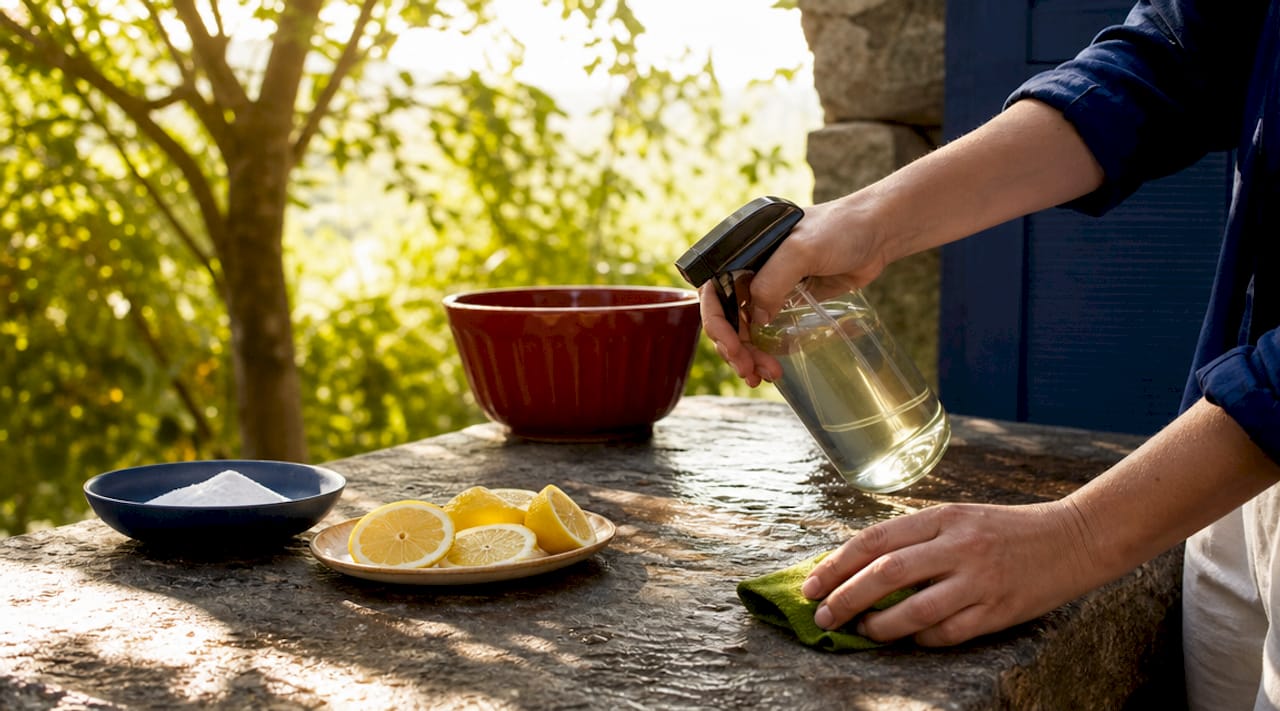
Biodegradability is a core advantage of well-formulated green products, but it requires careful interpretation. Some biodegradable claims can mask toxic degradation intermediates, meaning the breakdown products of a compound can be just as harmful as the original. Reputable certifications like EPA Safer Choice evaluate both the original compound and its breakdown products, which is why third-party certification matters more than a “biodegradable” label alone.
Phosphates in conventional cleaners are a well-documented driver of nutrient loading in lakes and rivers, causing algal blooms that deplete oxygen and kill aquatic life. Green cleaning formulations avoid phosphates by design. Many also use plant-based surfactants from coconut and potato sources, which contribute to lower fossil resource depletion across the product’s lifecycle.
Packaging is the environmental factor most consumers overlook. Packaging innovations like recyclable materials, minimal plastic, and bulk shipping reduce carbon footprints throughout the product lifecycle. Buying concentrated formulas that you dilute at home is one of the most effective ways to reduce plastic waste per cleaning task.
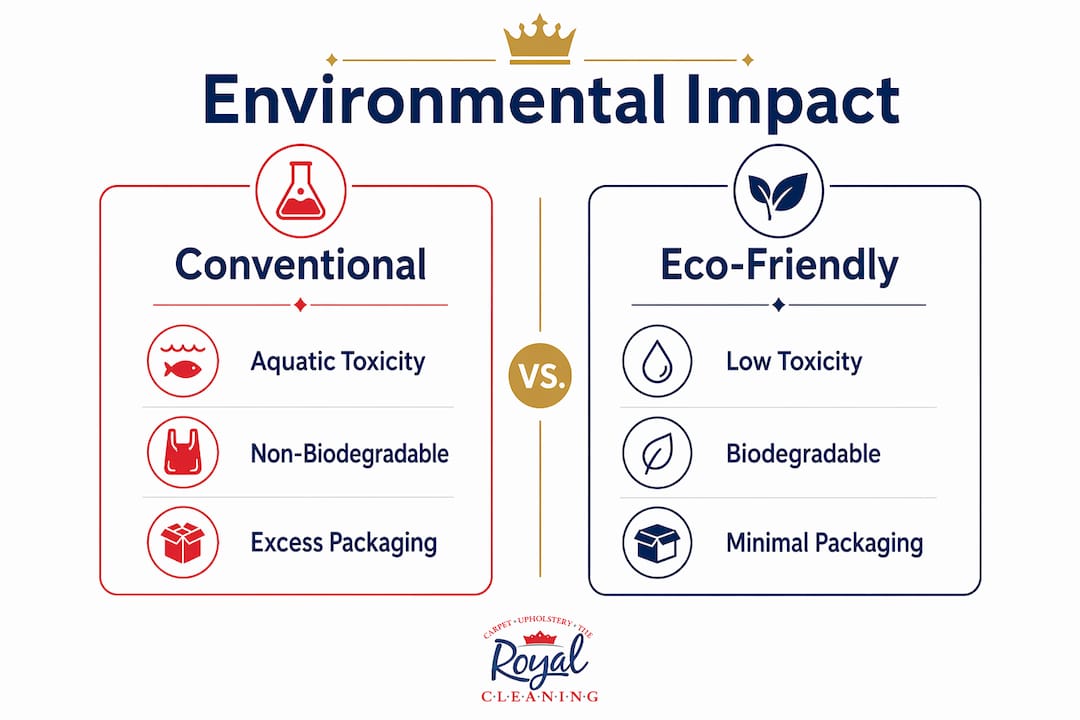
| Environmental Factor | Conventional Products | Eco-Friendly Products |
|---|---|---|
| Aquatic toxicity | High; synthetic musks and quats persist in waterways | Low; formulated to minimize aquatic harm |
| Biodegradability | Partial; breakdown products often toxic | Full evaluation required; certified products screen both compound and intermediates |
| Packaging waste | High plastic use; single-use formats common | Recyclable, minimal plastic, bulk options available |
| Fossil resource use | Petroleum-based surfactants standard | Plant-based surfactants from coconut and potato sources |
| Carbon footprint | Higher from production to disposal | Reduced through concentrated formulas and sustainable sourcing |
Pro Tip: Choose concentrated, refillable formats when available. A single concentrated bottle can replace three to five standard-size bottles, cutting both plastic waste and shipping emissions significantly.
How to identify truly eco-friendly products and avoid greenwashing
Greenwashing is the practice of using vague or misleading marketing language to make a product appear more environmentally responsible than it actually is. Terms like “natural,” “non-toxic,” “plant-based,” and “green” carry no legal definition and no regulatory standard. Consumer guidance from the EPA in 2026 recommends avoiding these vague terms and instead looking for verified third-party certifications.
The certifications worth trusting are specific and rigorous. EPA Safer Choice screens over 65 ingredients for toxicity and environmental impact. Green Seal evaluates products against performance, health, and environmental criteria. EWG Verified requires full ingredient disclosure and prohibits ingredients of concern. Design for the Environment, now integrated into the Safer Choice program, applies similar standards to institutional and commercial products. Each of these programs requires ongoing compliance, not just a one-time application.
Ingredient transparency is the clearest signal of a genuinely green product. Brands like ECOS commit to full ingredient disclosure and lifecycle sustainability, publishing what is in their formulas and why. If a brand cannot or will not tell you what is in their product, that is a meaningful data point.
Here is a practical checklist for evaluating any cleaning product:
- Does it carry EPA Safer Choice, Green Seal, or EWG Verified certification?
- Does the label disclose all active and inactive ingredients?
- Does it avoid synthetic musks, phosphates, nonylphenol ethoxylates, and quats?
- Is the packaging recyclable or made from post-consumer recycled content?
- Does the brand publish a sustainability or ingredient transparency report?
A “yes” on three or more of these points is a strong indicator of a genuinely green product. One certification alone is sufficient to confirm basic health and environmental standards.
Are eco-friendly cleaning products as effective as conventional ones?
Green cleaning products perform as well as conventional cleaners when used correctly. This is the part most people get wrong. Most performance issues relate to misuse rather than product formulation. Contact time, dilution ratio, and surface compatibility all affect results, and these factors matter just as much with green products as with conventional ones.
Here is a practical approach to getting full performance from eco-friendly products:
- Read the label for contact time. Disinfectants require a specific dwell time on the surface to be effective. Wiping immediately after application defeats the purpose.
- Follow dilution instructions exactly. Over-diluting reduces efficacy. Under-diluting wastes product and can leave residue.
- Match the product to the surface. Citric acid works well on mineral deposits and hard water stains. Enzymatic cleaners are best for organic matter like food residue and body oils.
- Do not mix home remedies without checking chemistry. Vinegar and baking soda neutralize each other when combined, eliminating the cleaning benefit of both. This is one of the most common mistakes in DIY green cleaning.
- Standardize your product selection. Using a consistent set of two or three certified products and learning them well produces better results than rotating through many options.
Standardized usage and clear instructions improve cleaning outcomes more than switching to stronger chemicals. This principle applies directly in your home. Once you know how your chosen green products behave, you will clean more effectively with less product.
Practical steps to integrate green cleaning into your routine
Starting a green cleaning routine does not require replacing everything at once. A stepwise approach reduces cost, prevents waste, and gives you time to learn each product properly.
- Audit one cleaning task first. Choose the task you do most often, such as kitchen counter cleaning or bathroom disinfection, and replace that single product with a certified green alternative. Evaluate the result before moving on.
- Pair products with the right tools. Microfiber cloths trap particles mechanically, reducing the amount of cleaning solution needed. Natural fiber sponges and brushes complement green formulas without introducing synthetic materials.
- Train everyone in the household. Show family members the correct dilution and contact time for each product. Consistent technique is what separates effective green cleaning from disappointing results.
- Store products properly. Heat and light degrade some plant-based formulas faster than conventional ones. Keep products in a cool, dark cabinet to maintain efficacy.
- Track what works. After 30 days, note which products performed well and which did not. Replace underperformers with alternatives that carry the same certifications.
For a deeper look at how these principles apply room by room, the eco-friendly cleaning methods guide from Royal Carpet and Tile Cleaning covers research-backed approaches for every area of your home. If you have children or sensitive family members, the child-safe cleaning guide offers additional detail on protecting the people most at risk from chemical residues.
Key takeaways
Eco-friendly cleaning products reduce toxic chemical exposure, protect aquatic ecosystems, and perform as well as conventional cleaners when used correctly with certified formulations.
| Point | Details |
|---|---|
| Health protection | Green products reduce VOC exposure and allergens, with direct benefits for children and asthma sufferers. |
| Environmental impact | Avoiding phosphates, synthetic musks, and quats prevents aquatic toxicity and nutrient loading in waterways. |
| Certification matters | EPA Safer Choice, Green Seal, and EWG Verified are the only labels that confirm genuine health and environmental standards. |
| Performance depends on use | Contact time, dilution, and surface matching determine results more than chemical strength. |
| Sustainable lifecycle | True sustainability includes ingredient sourcing, packaging choices, and biodegradation of both compounds and their breakdown products. |
What I’ve learned after years of watching green cleaning evolve
I have seen the green cleaning category go from a niche shelf in health food stores to a mainstream product category, and the biggest shift has not been in the products. It has been in consumer expectations. People now ask better questions. They want to know what is actually in the formula, not just what the label says about it.
The skepticism I still encounter most often is about performance. Homeowners assume that if a product is safer, it must be weaker. That assumption is simply not supported by the science. What I have found is that the gap between green and conventional performance almost always traces back to training and technique, not chemistry. When you use a certified green disinfectant correctly, with the right contact time and the right dilution, it does the job.
What I find genuinely exciting about where this category is heading is the focus on full lifecycle accountability. The next generation of green products will not just be safer to use. They will be designed so that every stage, from raw material sourcing through manufacturing, use, and disposal, meets a documented environmental standard. That is a higher bar than most products meet today, but the certifying bodies are already moving in that direction.
My advice is to stop treating green cleaning as a compromise. Treat it as a more informed version of what you were already doing. The indoor air quality benefits alone are worth the transition, and the environmental case only strengthens that decision.
— Bernadette
Professional eco-friendly cleaning services for your Albuquerque home
Royal Carpet and Tile Cleaning brings certified green cleaning protocols to residential homes across Albuquerque and Rio Rancho, using EPA Safer Choice compliant products and professional-grade equipment that delivers results you cannot replicate with off-the-shelf solutions.
Carpets and upholstery hold onto chemical residues, allergens, and VOCs far longer than hard surfaces. Royal Carpet and Tile Cleaning’s eco-friendly carpet cleaning service uses safer extraction methods that remove embedded contaminants without leaving behind harsh chemical residues. For fabric furniture, the upholstery cleaning service applies green-certified solutions matched to each fabric type. Contact Royal Carpet and Tile Cleaning to schedule a service or get personalized advice on integrating green cleaning into your home maintenance routine.
FAQ
What is eco-friendly cleaning, exactly?
Eco-friendly cleaning, also called green cleaning, uses products formulated to minimize toxic chemical exposure and environmental harm while maintaining effective cleaning performance. Third-party certifications like EPA Safer Choice and Green Seal confirm that a product meets documented health and environmental standards.
Why choose eco-friendly cleaning products over conventional ones?
Conventional cleaners release VOCs and contain ingredients like phosphates and synthetic musks that persist in aquatic environments and harm wildlife. Green cleaning products use safer active ingredients, reduce indoor air contamination, and are formulated to biodegrade without leaving toxic residues.
Are green cleaning products safe for children and pets?
Products certified by EWG Verified or EPA Safer Choice are screened specifically for household safety, including exposure risks for children and pets. Children are especially vulnerable to chemical residues because they breathe more air relative to body weight and have more contact with treated surfaces.
Do eco-friendly products actually disinfect as well as conventional cleaners?
Yes, when used correctly. Hydrogen peroxide and citric acid are proven disinfectants, and enzymatic cleaners effectively break down biofilms. Most performance gaps trace back to incorrect contact time or dilution, not the product itself.
How do I avoid greenwashing when buying green cleaning products?
Look for EPA Safer Choice, Green Seal, or EWG Verified certification rather than relying on terms like “natural” or “non-toxic,” which carry no legal standard. Full ingredient disclosure on the label is an additional sign of a genuinely transparent product.