(505) 280-5216
Why Child-Safe Cleaning Matters for Your Family’s Health
TL;DR:
- Child safety concerns extend beyond household hazards to include risks from cleaning products stored improperly. Although labels like “non-toxic” can be misleading, certified products with third-party safety verification significantly reduce injury risks for children under five. Implementing safe storage routines, choosing certified lower-toxicity products, and practicing proper ventilation can protect families while improving indoor environmental quality.
Most parents assume the biggest household risks for children are sharp corners or open electrical outlets. But the cleaning products stored under your sink may pose a more serious threat than you realize. Understanding why child-safe cleaning — what health professionals more precisely call “non-toxic or low-hazard cleaning” — is a priority means looking at real injury data, not just warning labels. This article breaks down which products are most dangerous, what certifications actually mean, and how to build practical routines that keep your kids safer every single day.
Table of Contents
- Key takeaways
- Why child-safe cleaning is a child injury issue
- What “child-safe cleaning” actually means
- Detergent packets vs. spray bottles: different dangers, different fixes
- How to choose and use safer products at home
- The bigger picture: home health benefits of safer cleaning
- My honest take after years of seeing how families clean
- How Royal Carpet and Tile Cleaning can support your family’s clean home
- FAQ
Key takeaways
| Point | Details |
|---|---|
| Injuries happen more than you think | Children under 5 account for over 240,800 ER visits tied to cleaning products over 15 years. |
| Two products lead the risk | Detergent packets and spray bottles cause the majority of injuries, each through different hazards. |
| Labels can mislead you | “Non-toxic” is a marketing claim, not a certification. Third-party seals like EPA Safer Choice verify actual safety. |
| Packaging alone is not enough | Child-resistant caps slow children down but do not stop them. Locked storage and immediate put-away are non-negotiable. |
| Routines protect as much as products | Ventilation, supervision, and consistent storage habits reduce risk significantly alongside safer product choices. |
Why child-safe cleaning is a child injury issue
The numbers are striking. From 2007 to 2022, household cleaning products sent children 5 and younger to the emergency department at a rate of one injury every 35 minutes. That adds up to more than 240,800 documented cases over 15 years. These are not minor incidents. Common outcomes include poisoning, chemical burns, conjunctivitis, and dermatitis.
The two biggest culprits are products most families have on hand without a second thought. Detergent packets account for 33% of those injuries. Spray bottles follow at 28%. Together, they represent the majority of cleaning-related harm to young children.
“Injuries from household cleaning products in young children remain a significant and preventable public health problem.” — Nationwide Children’s Hospital Research
Why are young children so vulnerable? Their bodies process toxins differently than adults. Children’s faster breathing rates and frequent hand-to-mouth behavior mean they absorb more chemical exposure through their skin, lungs, and digestive systems relative to their body weight. A child crawling on a freshly cleaned floor is in direct contact with chemical residue in a way an adult walking the same surface is not.
Many caregivers operate under the assumption that if a product is sold at a grocery store, it is safe to use around children. That assumption carries real risk. The importance of child-safe cleaning lies precisely in closing the gap between what parents assume and what the research shows.
What “child-safe cleaning” actually means
The term “child-safe” is used loosely in marketing, so it helps to understand what the concept actually covers. It breaks down into three areas: product formulation, packaging, and usage habits.
Safer formulations use ingredients with lower toxicity profiles. Think hydrogen peroxide instead of bleach, or plant-based surfactants instead of synthetic compounds with long exposure warnings. Safer does not mean zero risk, but it does mean reduced harm if accidental contact or ingestion occurs.
Safer packaging includes child-resistant caps and closures. Innovations like bitter-tasting and opaque detergent packet films have helped reduce injuries. Injuries peaked in 2015 then declined as packaging improved. But detergent packets remained the leading injury source in 2022. Packaging is a delay, not a solution.
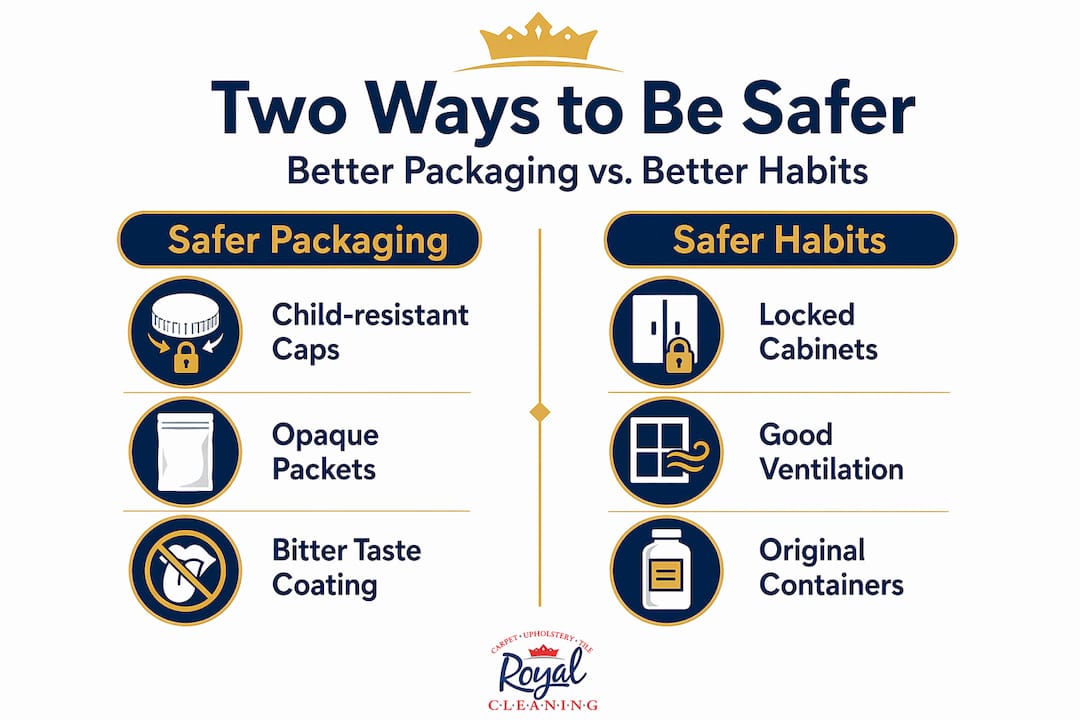
Safer habits are where most parents have the most control. Ventilation during cleaning, keeping products in their original containers, and putting everything away immediately after use all reduce exposure risk significantly.
Now, about those labels. The phrase “non-toxic” sounds reassuring, but the FTC requires substantiation for such claims, and many brands simply do not have it. “All-natural” is equally vague. An ingredient being natural does not make it safe for children at any concentration.
Here is what to look for instead:
- EPA Safer Choice label: Verifies that every ingredient in the product meets safety standards for human health and the environment.
- Design for the Environment (DfE) label: Indicates the product formulation has been reviewed for chemical safety.
- MADE SAFE certification: Screens for known hazards including carcinogens, endocrine disruptors, and neurotoxins.
Pro Tip: When shopping for child-friendly cleaning solutions, pull up the EPA Safer Choice product search online before you buy. It takes 30 seconds and gives you verified results instead of marketing claims.
Detergent packets vs. spray bottles: different dangers, different fixes
Understanding the distinct hazards of these two product types helps you manage them more effectively at home.
| Feature | Detergent packets | Spray bottles |
|---|---|---|
| Primary hazard | Ingestion | Eye contact, inhalation |
| Why children are attracted | Colorful, soft, candy-like appearance | Often within reach on counters |
| Common injury | Poisoning, chemical burns to mouth/throat | Eye burns, conjunctivitis, skin irritation |
| Key storage rule | Locked cabinet, never left out | High shelf or locked cabinet, nozzle facing away |
| Supervision need | Never leave child unattended near them | Do not spray near children; keep them out of the room |
Detergent packets are one of the most deceptive hazards in the average home. Their bright colors and soft, squishy texture make them genuinely appealing to toddlers. When a child bites into one, the concentrated detergent releases instantly into the mouth, often causing serious chemical burns and respiratory distress. This is a medical emergency, not a “wait and see” situation.
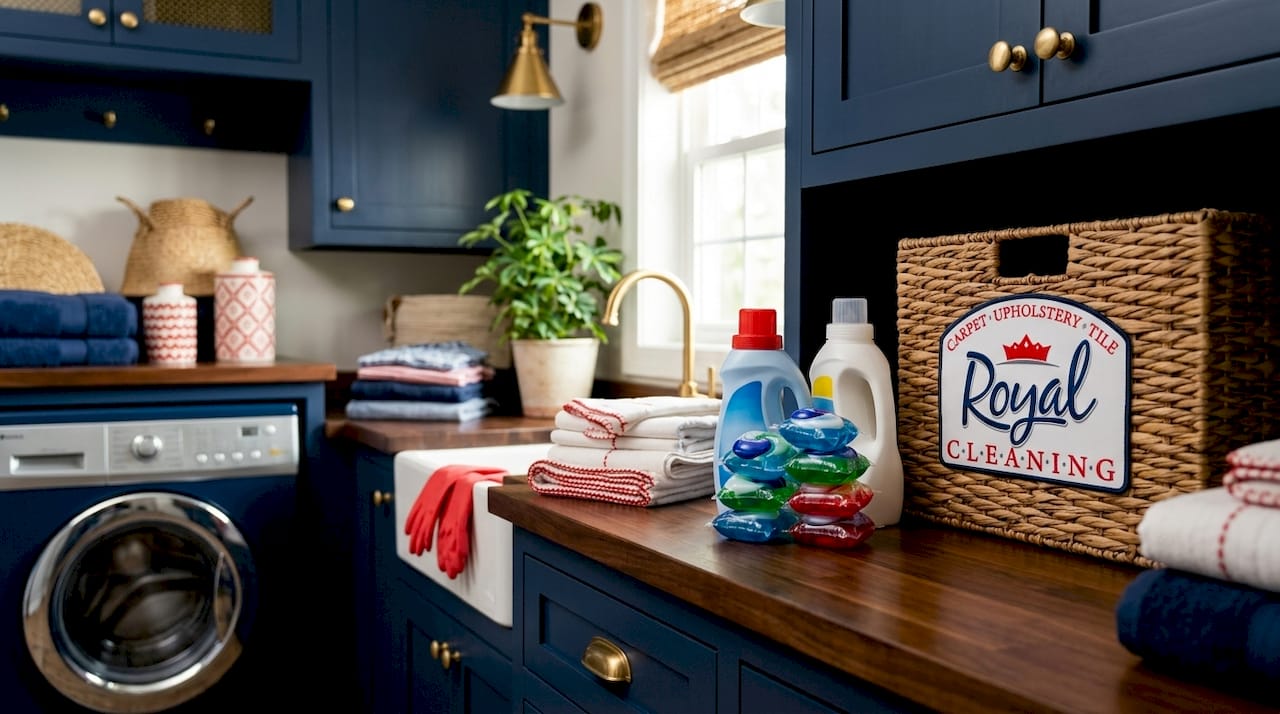
Spray bottles cause 28% of cleaning product injuries mostly through eye contact, and many of those incidents happen when an adult accidentally sprays a child who wanders into the room during cleaning. Eye burns from cleaning sprays can be serious and require immediate flushing with water followed by medical evaluation.
Pro Tip: Make it a rule to clear children from the room before using any spray cleaner. It takes ten extra seconds and eliminates the most common spray bottle injury scenario entirely.
The tailored approach to each product type matters because the same storage strategy does not work for both. Detergent packets need a locked cabinet. Spray bottles need a high shelf at minimum, preferably locked. Treating all products the same way leaves gaps.
How to choose and use safer products at home
Choosing the right products is only half the work. How you use and store them matters just as much. Here is a practical approach that covers both sides.
-
Start with certified products. Look for EPA Safer Choice or DfE labels before buying. These third-party certifications cut through marketing language and give you verified safety data. Check the EPA’s online product database if you are not sure about a specific brand.
-
Choose safer active ingredients. Products using hydrogen peroxide, citric acid, or plant-based surfactants as their primary cleaning agents generally pose lower risks than those relying on bleach, ammonia, or synthetic solvents. Read the ingredient list, not just the front label.
-
Ventilate every time. Open windows, run exhaust fans, or use both. Ventilation during cleaning reduces children’s inhalation exposure to fumes, even from products marketed as gentle or green. This matters especially in small bathrooms or laundry rooms.
-
Keep products in their original containers. Transferring cleaners to unlabeled bottles creates identification problems and removes safety information. The original container is always the safest storage option.
-
Store everything locked and out of reach. Locked storage away from children is more effective at preventing injuries than any packaging innovation. A cabinet latch costs a few dollars and takes minutes to install.
-
Put products away immediately after use. Do not leave a spray bottle on the counter while you answer a phone call or tend to another child. The moment cleaning is done, the product goes back in its locked storage. This single habit reduces exposure risk significantly.
You can review more specific child-safe cleaning routines to see how these steps translate into a full home safety plan.
Pro Tip: Do a five-minute “cleaning product audit” in your home right now. Pull everything out from under the sink and identify what has a third-party certification and what is stored without a lock. Most families find at least two or three products that need to move immediately.
The bigger picture: home health benefits of safer cleaning
Adopting non-toxic, lower-hazard cleaning practices does more than reduce injury risk. The benefits of non-toxic cleaners extend to your family’s overall health and your home’s indoor environment.
- Better indoor air quality. Many conventional cleaners release volatile organic compounds (VOCs) that linger in the air long after cleaning is done. Switching to products with fewer synthetic chemicals means cleaner air for children who spend most of their time at home. Explore indoor air quality tips to understand how cleaning choices affect what your family breathes.
- Reduced allergen and irritant exposure. Fragrances and harsh surfactants in conventional cleaners are among the most common triggers for respiratory irritation and skin reactions in children with sensitivities.
- Support for healthy development. Children’s neurological and immune systems are still developing. Reducing their chemical exposure during these formative years is one of the most practical things a caregiver can do.
- Reduced environmental impact. Products formulated with biodegradable ingredients and lower chemical loads reduce what goes down your drain and into the water supply. This matters for families who think about why to use eco-friendly cleaners beyond just their immediate household.
- Consistent habits protect all family members. When everyone in the home follows the same storage and ventilation routines, you remove the variability that leads to accidents. Safety through integrated practices consistently outperforms relying on any single product or packaging feature alone.
My honest take after years of seeing how families clean
I have spent a lot of time in family homes, and the pattern I see most often is this: parents buy decent products and then undermine their own efforts through storage habits. A bottle of EPA Safer Choice dish soap sitting unlocked on the counter at child height is still a risk. A conventional cleaner locked away in a high cabinet is safer than the “green” one left on the bathroom counter.
In my experience, over-reliance on child-resistant packaging is the single most common mistake I see among well-meaning caregivers. Parents see the child-resistant cap and mentally check the box. But a determined two-year-old with five uninterrupted minutes can sometimes defeat packaging that an adult struggles with. The cap is a delay. Your locked cabinet is the actual protection.
The other misconception I encounter constantly is around “non-toxic” labels. I have watched parents pick up a product, see those two words, and put it in the cart without reading another word. The FTC has been clear that unsubstantiated claims are a problem in this category. Third-party certifications exist precisely because self-reported marketing claims are not reliable. If a product does not carry a recognized seal, treat it as unverified.
My practical advice: make the storage rule non-negotiable for everyone in the house, including grandparents and babysitters. One lapse in routine is often all it takes. Educating every caregiver who enters your home about where products are stored and why is not overcautious. It is the one thing that makes every other safety measure actually work.
— Bernadette
How Royal Carpet and Tile Cleaning can support your family’s clean home
Choosing safer products and building better routines at home is a strong foundation. But deep cleaning tasks like carpet extraction, upholstery treatment, air duct cleaning, and tile and grout work require equipment and expertise that go beyond what most households can manage alone. Royal Carpet and Tile Cleaning uses eco-friendly disinfectant options and follows strict handling protocols designed to protect families with children.
If you want professional results without worrying about harsh chemical residue in your home, explore Royal Carpet and Tile Cleaning’s residential cleaning services for every surface. You can also start with the 2026 residential cleaning checklist to see how professional-grade best practices complement your at-home safety efforts.
FAQ
What makes a cleaning product child-safe?
A child-safe cleaning product uses lower-toxicity ingredients and carries third-party certifications like EPA Safer Choice or DfE. No product is completely risk-free, so safe storage and usage habits are equally necessary.
Are “non-toxic” cleaning products actually safe for kids?
Not necessarily. The FTC requires brands to substantiate “non-toxic” claims, but many do not. Always look for recognized third-party certifications rather than relying on front-label marketing language.
How should cleaning products be stored to protect children?
Store all cleaning products in their original, labeled containers in a locked cabinet out of children’s reach. Put products away immediately after every use rather than leaving them on counters.
Which household cleaners are most dangerous for young children?
Detergent packets and spray bottles cause the most injuries in children under 5, accounting for 33% and 28% of cases respectively. Detergent packets pose the highest ingestion risk due to their appearance.
Does using eco-friendly cleaners improve indoor air quality?
Yes. Products formulated without synthetic fragrances and high-VOC solvents release fewer airborne irritants during and after cleaning, supporting better indoor air quality for children who spend most of their time indoors.