(505) 280-5216
What Is Disinfectant Fogging? A Homeowner’s Guide
TL;DR:
- Disinfectant fogging atomizes liquid disinfectant into fine droplets for broad surface and airspace coverage. It requires pre-cleaning, proper preparation, and adherence to dwell and ventilation times for effectiveness. Using EPA-approved products and professional services ensures safe, reliable sanitation for homes and businesses.
Disinfectant fogging is defined as a no-touch disinfection method that atomizes liquid disinfectant into ultra-fine droplets, dispersing them across surfaces and airspaces for broad sanitation coverage. The industry standard term for this process is ULV (ultra-low volume) fogging, and it goes well beyond what a spray bottle or mop can reach. Professional ULV foggers produce droplets sized between 1 and 50 microns, small enough to behave almost like a gas and settle evenly on every exposed surface. For homeowners and facility managers in Albuquerque and beyond, understanding what is disinfectant fogging means knowing both its real power and its real limits before investing in a treatment.
How does the disinfectant fogging process work?
The disinfectant fogging process follows a clear, five-step sequence. Skipping any step reduces effectiveness significantly.
-
Pre-clean all surfaces. Fogging cannot penetrate biofilms or heavy organic layers. Visible dirt shields microorganisms from the disinfectant, so manual cleaning must come first. Wipe down counters, floors, and high-touch points before a fogger enters the room.
-
Prepare the space. Remove all occupants, children, and pets. Seal or cover food, aquariums, and sensitive electronics. Close windows and internal doors to contain the mist within the target area.
-
Apply the ULV fog. The operator loads an EPA-approved disinfectant into the fogger and moves through the space at a steady pace. The machine converts the liquid into a fine aerosol that fills the room, coating surfaces and suspending in the air. Professional fogging is a 5-step process that includes this application phase as its core step.
-
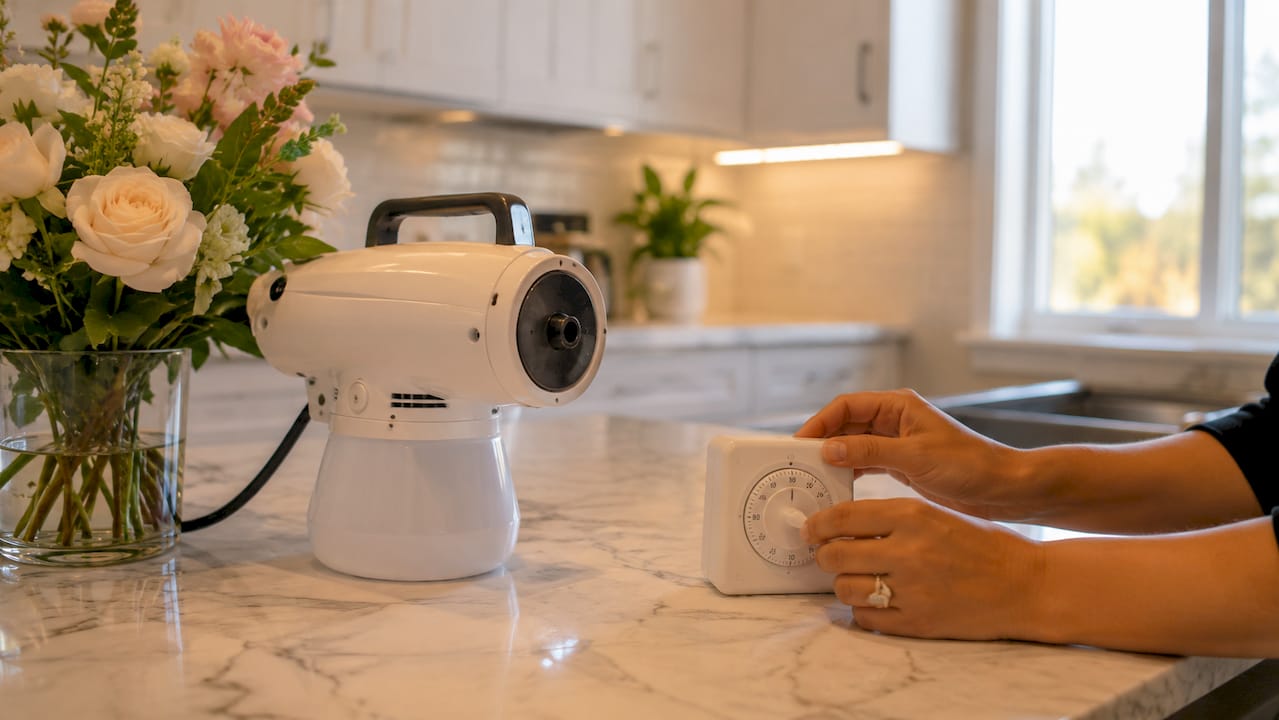
Allow dwell time. After fog application, the space needs 15–30 minutes of dwell time before anyone re-enters. Dwell time is the period the disinfectant must remain wet on a surface to kill pathogens. Room temperature, humidity, and airflow all influence how quickly the disinfectant dries, directly affecting whether it works. A warm, dry room in New Mexico’s climate can shorten contact time faster than you expect.
-
Ventilate before re-entry. Open windows and run ventilation for the time specified on the product label. Re-entry before adequate ventilation risks respiratory irritation.
Pro Tip: Set a timer for the full dwell period and post a sign on the door. Cutting dwell time short is the single most common reason fogging treatments underperform.
Thermal fogging vs. cold fogging: which one is right for you?
Not all fogging treatments are the same. The two main methods differ in how they generate the aerosol, and that difference matters for your home or business.
| Feature | Thermal Fogging | Cold Fogging (ULV) |
|---|---|---|
| How it works | Uses heat to vaporize the disinfectant | Uses mechanical pressure at room temperature |
| Residue level | Higher; may leave oily film | Low residue; preferred indoors |
| Best environment | Outdoor pest control, large warehouses | Homes, offices, medical facilities |
| Safety indoors | Requires extra precautions | Safer for sensitive indoor settings |
| Common disinfectants used | Pyrethrin-based solutions | Hypochlorous acid, hydrogen peroxide |
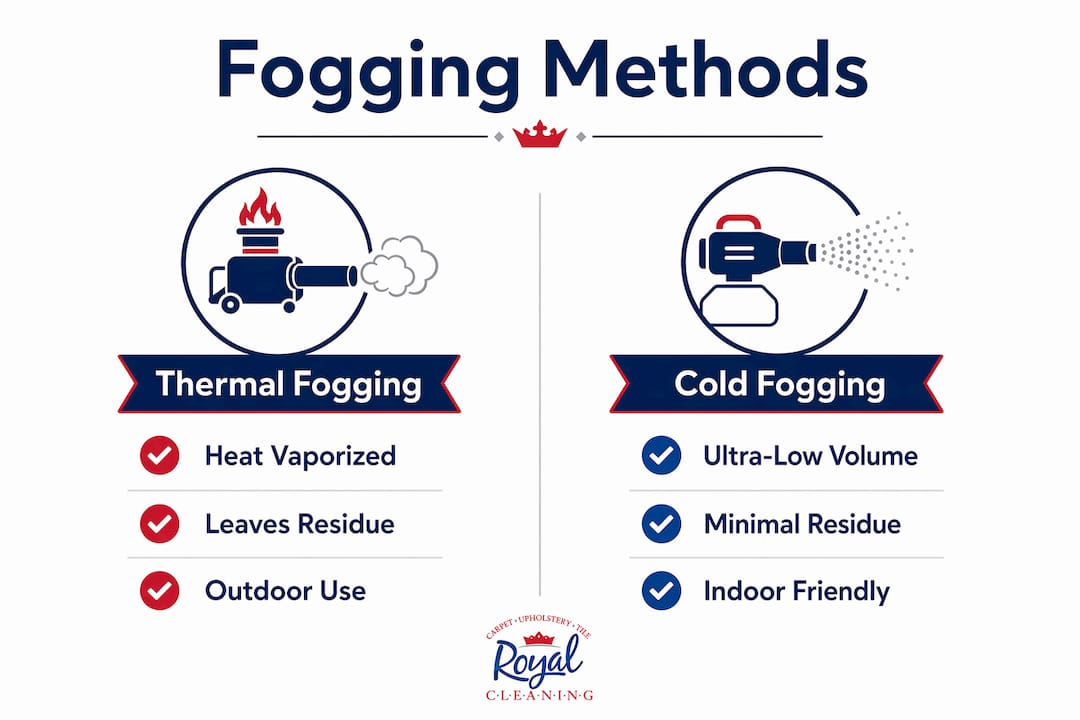
Cold fogging is favored indoors for residential use because it leaves minimal residue and operates at room temperature. That makes it the right choice for kitchens, bedrooms, and offices where surfaces and air quality matter. Thermal fogging produces a denser cloud but deposits more residue and generates heat, which limits its use to outdoor or industrial settings.
The disinfectant chemical matters as much as the method. Hypochlorous acid is a popular choice for residential fogging because it is effective against a broad range of pathogens and breaks down into water and salt after use. Hydrogen peroxide vapor is common in medical settings for its proven efficacy against bacterial spores. Neither chemical should be fogged unless the product label explicitly permits it.
Pro Tip: Ask any fogging service provider to show you the product’s EPA registration number and confirm it lists fogging as an approved application method. If they cannot produce that information, choose a different provider.
What are the benefits and limitations of fogging for sanitization?
Benefits worth knowing
Fogging for sanitization delivers real advantages that manual cleaning cannot replicate on its own.
- Broad, consistent coverage. Fogging adds consistency by reaching areas manual wiping misses, including ceiling corners, behind appliances, and inside cabinet interiors.
- Airborne pathogen reduction. Fogging kills airborne and surface pathogens including those in ducts, reducing allergens and supporting better health outcomes indoors.
- HVAC and air duct support. When paired with air duct cleaning, fogging can extend the benefits of cleaner ductwork by reducing microbial load in the air circulating through your home.
- Speed. A professional fogging treatment covers an entire room in minutes, far faster than manual surface-by-surface disinfection.
Limitations you should not ignore
Fogging is an enhanced disinfection layer, not a substitute for manual cleaning. Organic matter such as dust, grease, and biofilm blocks disinfectant from reaching the microorganisms underneath. No fog can fix a surface that was not cleaned first.
The most common misconception about fogging treatment is that it replaces mopping, wiping, and scrubbing. It does not. Fogging should not replace cleaning because organic matter shields microorganisms from the disinfectant. Think of fogging as the final step in a cleaning sequence, not the only step.
Safety compliance is another real limitation. The EPA advises using fogging only when the disinfectant label explicitly includes fogging directions. Products not labeled for fogging may create health hazards or simply fail to disinfect. This is a regulatory requirement, not a suggestion.
How to safely use disinfectant fogging in your home or business
Safe and effective fogging comes down to preparation, product selection, and following the label. Here is what to do before, during, and after any fogging treatment.
Before treatment:
- Choose only EPA-approved disinfectants that list fogging as an approved application method on the label.
- Clear the space of all people, pets, and food items. Covering aquariums is especially important because fish are highly sensitive to airborne chemicals.
- Review the home safety guidelines for using disinfectants, particularly if you have children or elderly residents.
During treatment:
- Monitor environmental conditions. High ventilation dries surfaces too fast, reducing contact time. Low ventilation risks excessive moisture buildup. Aim for a balanced, closed environment during the dwell period.
- Keep the operator’s exposure time minimal. Even with low-residue cold foggers, prolonged inhalation is not safe.
After treatment:
- Follow the product label for ventilation time before re-entry. Do not shorten this period.
- Fogger machines require maintenance after each use to prevent cross-contamination between treatments. Residual disinfectant left in the tank can degrade and contaminate the next application.
- Wipe down any surfaces where visible residue has settled, particularly food preparation areas.
When to hire a professional vs. doing it yourself: DIY foggers are available at hardware stores, but they vary widely in droplet size and output consistency. For whole-home treatments, post-illness disinfection, or commercial spaces, professional services deliver more reliable results. Professionals use calibrated ULV equipment, carry EPA-compliant products, and follow protocols that protect both occupants and the structure.
Pro Tip: If you are fogging after a confirmed illness in your home, consult a professional service. The disinfecting high-touch surfaces guide from Royal Carpet and Tile Cleaning outlines which areas need the most attention before and after fogging.
Key takeaways
Disinfectant fogging works only when surfaces are pre-cleaned, EPA-approved products are used, and full dwell time is observed before re-entry.
| Point | Details |
|---|---|
| Pre-cleaning is non-negotiable | Organic matter blocks disinfectant; always clean surfaces before fogging. |
| Cold fogging suits most homes | ULV cold foggers leave minimal residue and are safer for indoor residential use. |
| Dwell time determines effectiveness | Surfaces must stay wet for 15–30 minutes; temperature and airflow affect this window. |
| EPA label compliance is required | Only fog with products that explicitly list fogging as an approved application method. |
| Fogging supports, not replaces, cleaning | Use fogging as the final disinfection layer after thorough manual cleaning. |
Why fogging works best as part of a bigger plan
I have seen fogging misused more times than I can count. A client calls after a stomach bug swept through the household, and their first instinct is to fog every room and call it done. The problem is that the surfaces were never properly cleaned first. The fog settled on counters still covered in residue, and the disinfectant never reached the pathogens underneath. The treatment looked thorough. It was not.
What I have learned from working with residential and commercial clients is that fogging is genuinely powerful when it is the last step, not the only step. Pair it with a proper wipe-down of high-touch surfaces, a thorough vacuuming of soft furnishings, and ideally a professional air duct cleaning to address what circulates through your HVAC system. That combination actually moves the needle on indoor air quality.
I also want to address the safety piece directly. I have seen homeowners purchase generic fogger solutions online without checking EPA registration. Some of those products are not labeled for fogging at all. Using them that way is not just ineffective. It can be genuinely hazardous, especially in homes with children or pets. Always check the label. Always follow the ventilation instructions. And if you are not sure, hire someone who is.
Fogging is not a magic fix. It is a precision tool that rewards preparation and punishes shortcuts. Used correctly, it is one of the most effective ways to raise the sanitation standard in your home or commercial space beyond what manual cleaning alone can achieve.
— Bernadette
Professional fogging and cleaning services in albuquerque
If you are ready to add fogging to your home’s sanitation routine, the right support makes all the difference.
Royal Carpet and Tile Cleaning offers professional cleaning services designed to complement disinfectant fogging treatments. From high-touch surface disinfection to full-room sanitization prep, the team uses EPA-compliant products and proven multi-step processes. Whether you need a one-time post-illness treatment or a recurring sanitation program for your home or commercial space, Royal Carpet and Tile Cleaning brings the equipment, expertise, and local knowledge to do it right. Explore the full range of professional cleaning services available for Albuquerque and Rio Rancho residents, or review the deep cleaning benefits to understand how fogging fits into a complete home health plan.
FAQ
What is disinfectant fogging used for?
Disinfectant fogging is used to sanitize surfaces and reduce airborne pathogens in homes, offices, medical facilities, and commercial spaces. It reaches areas that manual cleaning cannot, including ceiling corners, behind furniture, and inside HVAC systems.
How long does fogging disinfection take?
The fogging application itself takes 10–20 minutes for a standard room. Add 15–30 minutes of required dwell time plus the product-specified ventilation period before re-entry, so plan for at least one to two hours total per treated space.
Is fogging effective against viruses and bacteria?
Fogging is effective when EPA-approved disinfectants are used correctly and surfaces are pre-cleaned. Organic matter reduces efficacy by shielding pathogens, so pre-cleaning is a required step, not optional.
Can i fog my home myself?
DIY fogging is possible with consumer-grade ULV foggers, but results depend heavily on product selection, droplet size calibration, and proper dwell time. For whole-home treatments or post-illness disinfection, professional services deliver more consistent and verifiable results.
How often should disinfectant fogging be done?
Frequency depends on the environment and risk level. High-traffic commercial spaces may benefit from monthly treatments, while residential homes typically use fogging after illness, renovation, or as part of a seasonal home sanitization program.