

 (505) 280-5216
Vomit on a Couch: 5 First Steps and When to Call a Pro
Contain the mess right away, remove solids with a dull spoon, blot liquids with paper towels, and ventilate the room. If illness may be the cause, follow up with the cleaning steps below and disinfect according to CDC guidance. Acting within the first few minutes limits staining and keeps the mess from working deeper into the cushion.
TL;DR:
- Check the tag: W permits water based cleaners, S requires solvents, WS allows either, and X allows vacuuming only; test products on a hidden spot.
- For stains, use fresh enzyme cleaner or one teaspoon of mild detergent per cup of warm water, blotting rather than scrubbing and avoiding soaked foam.
- Disinfect only after cleaning; CDC guidance calls for fresh bleach at 1,000 to 5,000 ppm for five minutes, but porous upholstery may not be fully disinfectable at home.
- For lingering odor, leave baking soda on the spot for several hours or overnight, then vacuum; use fresh enzyme treatment for stubborn organic smells.
- Call a professional when stains or odors persist or contagious illness is suspected; ask about hot water extraction, drying time, disinfectant, upfront pricing, and a guarantee.
Table of Contents
- What to do in the first 5 to 15 minutes
- Step-by-step cleaning for fabric-upholstered couches
- How to disinfect safely when illness is a concern
- Removing lingering odor and drying cushions safely
- When to call a professional upholstery cleaner
- A cleaning professional’s take on what actually works
- Professional upholstery cleaning when DIY isn’t enough
- FAQ
- Sources
What to do in the first 5 to 15 minutes
Speed matters more than technique in the first few minutes. The goal is to stop the mess from spreading or soaking into the foam before you start any real cleaning.
- Put on disposable gloves, and a mask if the vomiting was caused by illness, then keep other household members away from the area.
- Lift loose solids with a dull spoon or spatula and bag them; scraping too hard pushes material deeper into the fabric.
- Blot liquid with white paper towels or clean cloths, working from the outer edge toward the center so you don’t spread a ring outward.
- Unzip and remove any removable cushion covers, and label them for washing separately; leave non-removable cushions alone if soaking them further risks damage.
- Open windows and run a fan to start clearing odor and moisture from the room.
These steps buy you time. Nothing here is a permanent fix, but doing them correctly sets up everything that follows, including how easily the stain lifts and how much odor settles into the padding.
Step-by-step cleaning for fabric-upholstered couches
Before you reach for any cleaner, check the manufacturer’s upholstery tag. A “W” means water-based cleaners are fine, “S” calls for a solvent-based cleaner, “WS” allows either, and “X” means vacuum only, no liquid. Skipping this step is the single most common reason a stain gets worse instead of better. Always test any solution on a hidden spot first and wait a few minutes to check for color change.
- Once any remaining solids have dried, scrape gently with a spoon, then vacuum to lift debris before applying any liquid.
- For protein-based stains like vomit, an enzyme cleaner breaks down the organic material; a mild detergent solution also works if you don’t have one on hand.
- Mix about one teaspoon of non-optical-brightener detergent per cup of warm water, following guidance from the University of Illinois Extension on upholstery stain treatment.
- Apply the suds with a sponge, working from the edge of the stain toward the center, and blot frequently instead of scrubbing.
- Rinse with a sponge dampened in plain water, then blot again. Avoid soaking the fabric since excess moisture travels straight into the foam.
- Stack clean, dry towels over the spot and weight them down to wick moisture upward and out, rather than pushing it deeper.
- If the stain carries traces of milk, coffee, or grease, follow the detergent step with a rinse of equal parts white vinegar and water, per the Illinois Extension recommendation, then blot dry.
- Skip household bleach on colored fabrics. It can strip dye permanently and leave a lighter patch that’s harder to fix than the original stain.
Pro Tip: Mix enzyme or detergent solutions fresh right before use. Enzymes lose their stain-breaking power quickly once mixed, so a solution that sat in a spray bottle overnight won’t perform the same as a fresh batch.
If you’d rather try a few household options before buying a specialty product, our guide to simple home remedies for upholstery walks through what’s already likely in your kitchen cabinet.
How to disinfect safely when illness is a concern
Disinfecting before you’ve removed the organic material doesn’t work well. Soil and vomit residue block disinfectants from reaching the surface they’re meant to kill germs on, so cleaning always comes before disinfecting, never the other way around.
One option the CDC outlines for norovirus exposure is a freshly prepared chlorine bleach solution with concentration and contact time as specified in CDC guidance, left on the surface for at least five minutes. This dilution and contact time come directly from CDC norovirus guidance, and the bleach solution needs to be mixed fresh and used within 24 hours to stay effective.
Where available, an EPA-registered disinfectant labeled for soft surfaces is another option, applied according to its label’s contact time. Most disinfectant products are formulated and tested for hard, non-porous surfaces, and EPA guidance on soft-surface claims shows how much stricter the testing standards are for anything applied to fabric, which is part of why residential options for upholstery are limited.
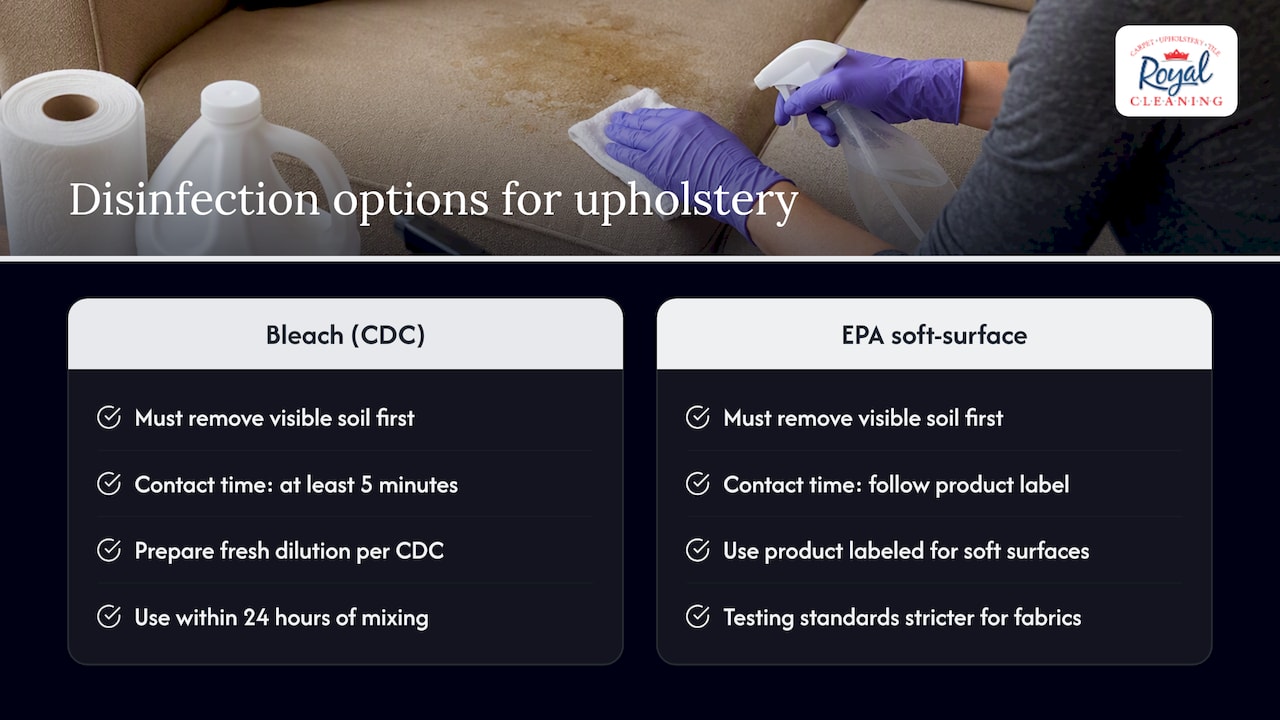
Wear gloves throughout, add eye protection or a mask if splashing is possible, and bag any disposable materials before washing your hands thoroughly. Porous cushions and fabric may never be fully disinfectable at home. CDC environmental infection control guidance notes that upholstery is difficult to disinfect completely, which is why professional hot-water extraction, or in high-risk cases replacement, is worth considering.
Removing lingering odor and drying cushions safely
Odor usually means some residue is still trapped in the padding, even after the visible stain is gone. Fixing that means getting air and gentle treatment into the foam, not just the surface fabric.
- Sprinkle a generous layer of baking soda over the area, let it sit for several hours or overnight, then vacuum thoroughly.
- Move cushions outdoors into direct sun when you can; sunlight combined with airflow helps pull out lingering odor and speeds drying.
- For stubborn organic odors, an enzyme-based odor eliminator applied fresh and per the product’s instructions targets what baking soda alone may miss.
- Resist the urge to mask the smell with fragrance sprays, and don’t re-wet a spot that’s already dried. Instead, keep wicking any remaining dampness upward with fresh towels and weight.
- Keep fans running and windows open for cross-ventilation, and skip high heat sources like hair dryers, which can set a stain permanently or damage the upholstery backing.
Pro Tip: If you’re not sure where every trace of residue is hiding, a UV flashlight for pet urine makes dried organic stains glow under dark conditions, which is a handy way to confirm you’ve found the full spread of a pet-related accident before you start cleaning.
For a closer look at odor-specific troubleshooting, see our quick fixes for couch odor removal.
When to call a professional upholstery cleaner
DIY cleaning handles most everyday messes, but some situations call for equipment and products that go beyond what’s practical at home.
- Call a professional if the stain or smell is still noticeable after a full cleaning attempt, or if the vomit came from a suspected case of norovirus or another contagious illness.
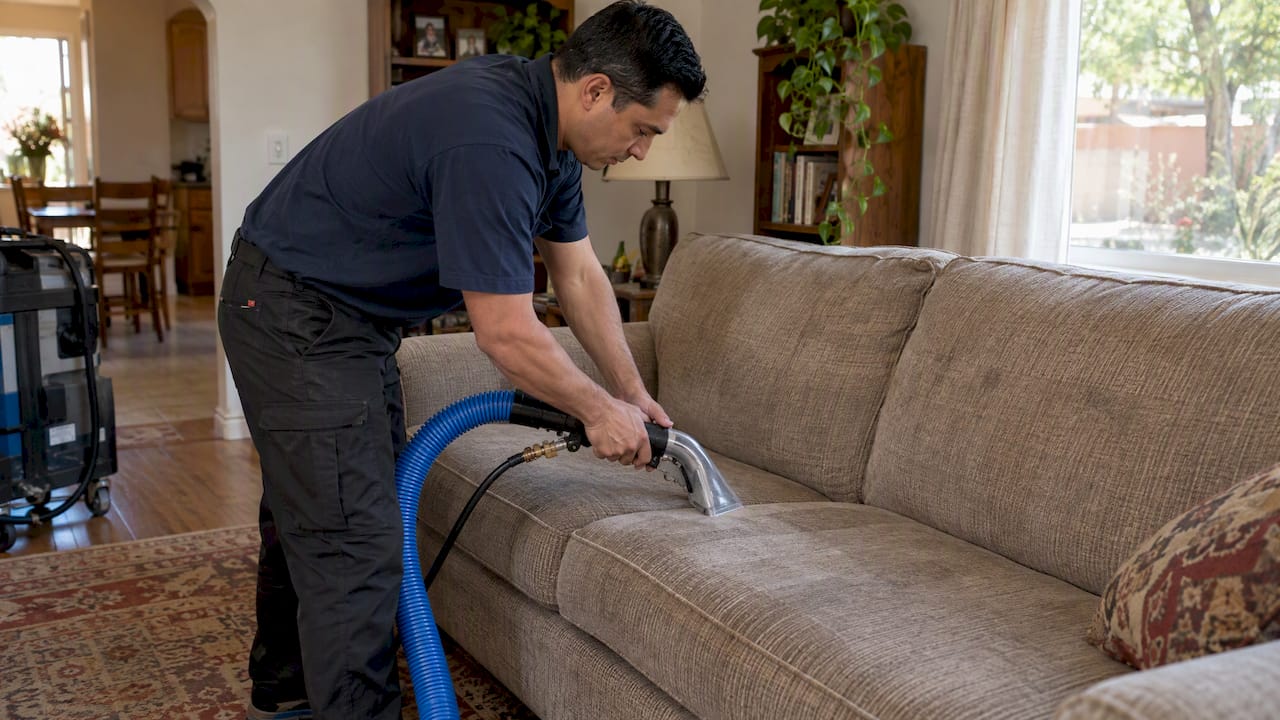
- Ask what method they use. Hot-water extraction reaches deeper into cushions than most home tools, while low-moisture encapsulation suits fabrics that can’t handle much liquid.
- Ask which disinfectant products they apply, how long drying typically takes, and whether an upholstery sealant option is available for future protection.
- Ask for a clear, upfront price before booking, along with a satisfaction guarantee, and look for reviews or references from past customers.
- Set realistic expectations. Professional cleaning dramatically improves stains and odor, but foam that’s been heavily saturated for a long time may never look or smell exactly like new.
Our page on why upholstery cleaning matters covers what a deeper clean actually accomplishes beyond stain removal.
A cleaning professional’s take on what actually works
We see the same mistakes again and again: people over-wet the cushion, scrub instead of blot, or skip the colorfastness test and end up with a faded patch worse than the original stain. A careful DIY approach handles most accidents, but professional extraction reaches odors trapped deep in foam that home methods simply can’t touch, and a sealant applied afterward makes the next spill far easier to manage.
— Bernadette
Professional upholstery cleaning when DIY isn’t enough
When a stain won’t budge or the smell lingers no matter how much baking soda and airflow you throw at it, a deeper clean reaches what home methods can’t. Our upholstery cleaning service uses a multi-step process built around eco-friendly disinfectant options, so you get a thorough clean without harsh chemical residue left behind on fabric your family sits on every day.

- We assess your couch’s fabric type and soiling before recommending a method, so the approach matches what your upholstery can actually handle.
- Pricing is discussed upfront, and we stand behind the work with a satisfaction guarantee.
- An upholstery sealant application is available afterward to make future spills easier to clean and buy you more time before stains set.
If a vomit stain or lingering odor has outlasted your cleaning efforts, book professional upholstery cleaning and let us take care of the rest.
This article is general information, not a substitute for advice from a qualified doctor. Consult a qualified healthcare professional about your own circumstances before acting on anything here.
FAQ
Will vomit smell eventually go away on its own?
Odor from vomit rarely disappears completely without treatment because residue works into the foam and fabric fibers. Removing solids quickly, cleaning with an enzyme or detergent solution, and following up with baking soda and sunlight resolves most cases, though deeply saturated padding may need professional extraction.
How do you clean up dog or cat vomit from a couch?
Pet vomit is treated the same way as human vomit: remove solids first, blot the liquid, then clean with an enzyme cleaner, which works especially well on pet-related protein stains. A UV flashlight can help you spot any residue you missed, which matters since repeat accidents in the same spot often trace back to a trace of leftover odor pulling pets back to that location.
How can I remove vomit stains from my couch?
Start by scraping away solids with a dull spoon, then blot the liquid with a cloth before it sets. Apply an enzyme cleaner or a mild detergent solution of about one teaspoon of detergent per cup of warm water, working from the edge of the stain inward, then rinse and blot dry with University of Illinois Extension recommended technique.
How do you disinfect a couch after someone has been sick?
Remove all solid and liquid residue first since disinfectants don’t work well on soiled surfaces. The CDC recommends a freshly mixed bleach solution of 1,000 to 5,000 ppm, made with 5 to 25 tablespoons of bleach per gallon of water, left on the surface for at least five minutes, or an EPA-registered disinfectant labeled for soft surfaces where one is available.
Sources
- How to Prevent Norovirus | Norovirus | CDC
- General rules for upholstery fabrics; stain solutions | U of I Extension
- Guidance for Products Including or Adding Disinfectant Efficacy Claims for Use on Soft Surface Textiles in Non-Residential Settings | EPA



