(505) 280-5216
Upholstery stain examples and removal tips for homes
Upholstery stains happen to everyone. Whether it’s a coffee spill during your morning routine or muddy paw prints from your pet, these marks can make your furniture look worn and neglected. The good news is that most stains respond well to the right treatment when you act quickly and choose methods suited to the stain type. This guide breaks down common upholstery stains you’ll encounter in your Albuquerque home and gives you practical removal tips to keep your furniture looking fresh. Understanding what you’re dealing with makes all the difference between a quick fix and a permanent mark.
Table of Contents
- Common Examples Of Upholstery Stains
- Effective Stain Removal Techniques For Common Upholstery Stains
- Tips For Safely Cleaning Upholstery Fabrics In Albuquerque Homes
- Comparing Stain Removal Options: Home Remedies Vs. Professional Services
- Professional Upholstery Cleaning In Albuquerque
- Frequently Asked Questions
Key takeaways
| Point | Details |
|---|---|
| Identify stain types | Common upholstery stains include food, beverage, grease, ink, pet accidents, blood, and mud, each requiring specific treatment approaches. |
| Match method to stain | Water-based stains need different solutions than oil-based or protein stains, so choosing the right cleaner prevents fabric damage and improves results. |
| Test before treating | Always spot test cleaning products on hidden upholstery areas and check fabric cleaning codes to avoid permanent damage. |
| Act quickly | Fresh stains are easier to remove than set-in marks, so blot spills immediately and avoid rubbing them deeper into fibers. |
| Know your limits | Professional cleaning services handle stubborn stains, delicate fabrics, and deep odors more effectively than most home remedies. |
Common examples of upholstery stains
Your furniture faces daily threats from various sources. Common upholstery stains include food, beverage, grease, ink, pet urine, blood, mud, and dye transfers. Each category presents unique challenges based on its chemical composition.
Food and beverage stains top the list for most households. Coffee rings, red wine splashes, tomato sauce drips, and chocolate smears all leave visible marks. These water-based stains penetrate fabric quickly but often respond well to prompt cleaning. The tannins in coffee and wine can bond with fibers if left untreated, making them progressively harder to remove.
Grease and oil stains come from cooking splatters, body oils, lotions, and makeup. These stains repel water-based cleaners and require different treatment. They often appear as dark spots that attract dirt over time, making the affected area look progressively dirtier even after the initial stain.
Ink and marker stains challenge homeowners because dye compounds bind tightly to fabric. A leaky pen in your pocket or kids’ art projects can leave permanent marks if treated incorrectly. The alcohol or oil base in different ink types determines which removal method works best.
Pet-related stains require special attention beyond just removing the visible mark. Keeping furniture clean with pets means addressing both stains and odors. Urine contains proteins and bacteria that create lasting smells if not properly treated with enzyme cleaners.
Blood, mud, and dye transfer form another major category. Stains can be protein-based, inorganic, or organic, requiring different attention. Blood requires cold water treatment to prevent protein setting, while mud needs complete drying before removal. Dye transfer from clothing or newspapers happens when moisture allows color to migrate onto upholstery.
Understanding these categories helps you select appropriate home remedies for cleaning upholstery or know when professional help makes more sense. Each stain type responds differently to various cleaning agents and techniques.
Effective stain removal techniques for common upholstery stains
Matching your cleaning method to the stain type dramatically improves your success rate. Water-based stains respond well to mild dish soap and water, making juice, coffee, and tea spills relatively straightforward to handle. Mix a few drops of dish soap with cool water, apply with a clean cloth, and blot from the outside edges toward the center.
Grease and oil stains need absorbent treatment first. Baking soda or cornstarch treatments followed by dish soap work effectively on cooking oil and body oil marks. Sprinkle the powder generously over the stain, let it sit for 15 to 20 minutes to absorb the oil, then vacuum thoroughly before applying a mild soap solution.
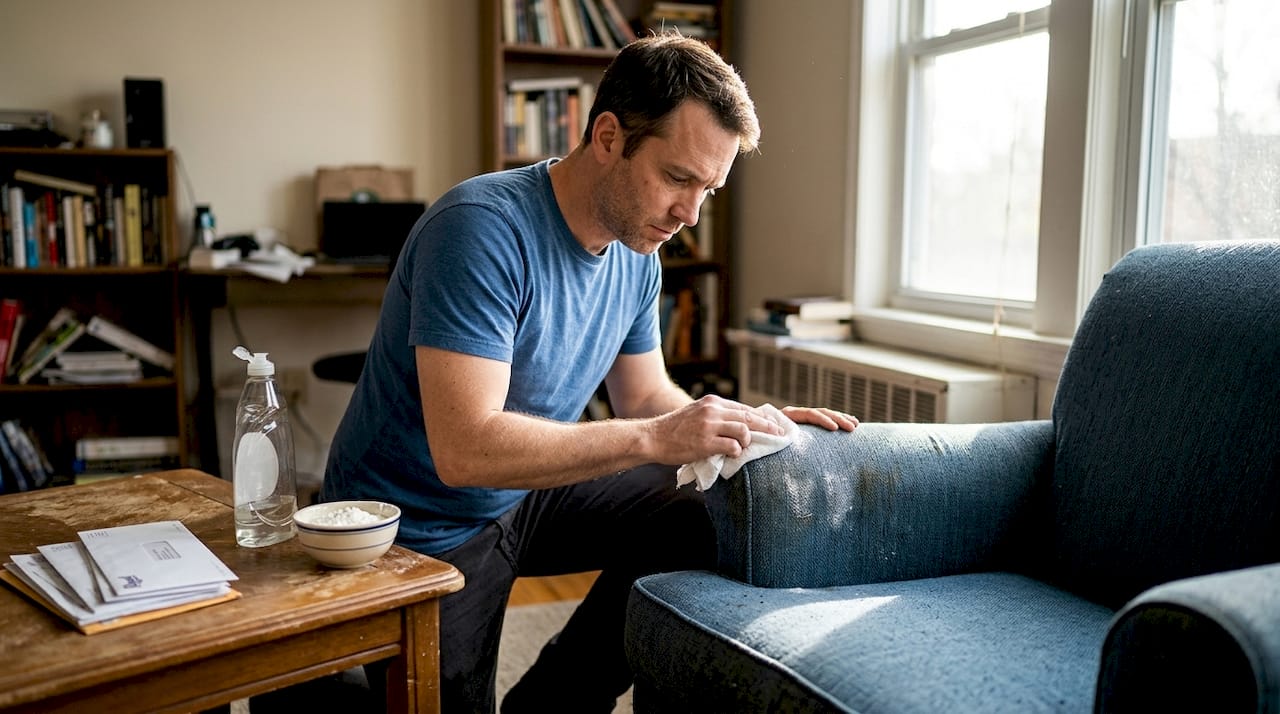
Ink stains require careful handling. Rubbing alcohol tackles ink stains effectively, but you must test it on hidden fabric first. Dab alcohol onto a cotton ball and gently blot the ink, rotating to a clean area of the cotton as it absorbs the dye. Never rub, as this spreads the stain.
Pet accidents demand enzyme-based cleaners. Enzyme cleaners target pet urine stains and odors by breaking down the proteins and bacteria that cause smells. Apply the enzyme cleaner according to package directions and allow sufficient dwell time for the enzymes to work before blotting.
Red wine stains benefit from immediate salt application. Salt then club soda or vinegar creates a two-step approach that neutralizes the wine’s acidity and lifts the color. Pour salt on the wet stain to absorb the liquid, then apply club soda or a vinegar-water mixture after removing the salt.
Always blot rather than rub when treating any stain. Rubbing pushes the stain deeper into fibers and can damage the fabric weave. Use white cloths to avoid dye transfer and work from the stain’s outer edges inward to prevent spreading. Air dry completely and repeat treatment if needed. For comprehensive guidance, check this upholstery cleaning solutions guide and these pet stain cleaning tips.
Pro Tip: Keep a stain emergency kit near your living areas with white cloths, dish soap, baking soda, white vinegar, and rubbing alcohol so you can treat spills immediately before they set.
Tips for safely cleaning upholstery fabrics in Albuquerque homes
Fabric codes determine which cleaning methods are safe for your upholstery. Fabric cleaning codes include W for water-safe fabrics, S for solvent-only cleaning, WS for fabrics that tolerate both approaches, and X for vacuum-only materials. You’ll find these codes on tags attached to your furniture, usually under cushions or on the platform.
W-coded fabrics handle water-based cleaners well, making them the most forgiving for DIY stain removal. You can use mild soap solutions, vinegar mixtures, and most home remedies without risk. S-coded fabrics require dry-cleaning solvents and should not get wet, making professional cleaning the safer choice for most homeowners.
WS-coded upholstery offers flexibility since both water and solvent cleaners work safely. This versatility helps when tackling different stain types on the same piece of furniture. X-coded fabrics only tolerate vacuuming and require professional attention for any wet stains.
Always conduct spot tests before treating visible stains. Apply your chosen cleaner to an inconspicuous area like the back lower edge or under a cushion. Wait 10 to 15 minutes and check for color bleeding, fabric damage, or texture changes. This simple step prevents turning a small stain into furniture-wide damage.
Avoid over-wetting upholstery regardless of fabric code. Excessive moisture can cause mold growth, especially in Albuquerque’s varying humidity levels throughout the year. It can also damage padding, create watermarks, and weaken fabric fibers. Use minimal liquid and maximize blotting to remove moisture.
Natural remedies like vinegar and baking soda work gently on many stains but have limits. Natural remedies are gentle but often less effective on tough stains compared to enzymes or solvent-based products. They excel at maintaining already-clean furniture and handling fresh, light stains.
Consider professional upholstery cleaning for delicate fabrics, antique furniture, or persistent stains that resist home treatment. Professionals have specialized equipment, commercial-grade cleaners, and experience with various fabric types. They can also apply protective treatments that help prevent future staining. For gentle DIY approaches, explore these simple upholstery cleaning remedies.
Pro Tip: Take photos of your furniture’s cleaning code tags and store them on your phone so you always have the information handy when shopping for cleaning products or researching stain removal methods.
Comparing stain removal options: home remedies vs. professional services
Home remedies offer cost-effective solutions for routine maintenance and fresh stains. You probably already have vinegar, baking soda, dish soap, and rubbing alcohol in your home. These gentle options work well on water-based stains and light soiling without harsh chemicals. They give you immediate action capability when spills happen.
However, natural remedies like vinegar and baking soda are gentle but often less effective on tough stains compared to enzymes or solvent-based products. Set-in stains, protein-based marks like blood, and oil-based stains often resist home treatment. DIY methods also risk fabric damage if you ignore cleaning codes or use incorrect techniques.
Professional services bring commercial-grade equipment and stronger cleaning products. Hot water extraction, steam cleaning, and specialized stain removers penetrate deep into upholstery fibers. Professionals understand fabric types, can identify mystery stains, and know which products work best for each situation.
The time investment differs significantly between approaches. DIY cleaning requires research, testing, multiple applications, and drying time. You might spend hours treating a single stubborn stain. Professional cleaning typically takes one to two hours for a whole room of furniture, and technicians handle all the work.
Cost considerations vary based on stain severity and furniture value. Home remedies cost just a few dollars per treatment. Professional upholstery cleaning services range from $75 to $300 depending on furniture size and stain difficulty, but they often succeed where DIY fails, potentially saving you from replacement costs.
| Factor | Home Remedies | Professional Services |
|---|---|---|
| Cost | $2 to $10 per treatment | $75 to $300 per furniture piece |
| Effectiveness | Good for fresh, light stains | Excellent for tough, set-in stains |
| Time Required | 1 to 3 hours including drying | 1 to 2 hours for multiple pieces |
| Risk Level | Moderate if codes ignored | Low with experienced technicians |
| Best For | Routine maintenance, immediate spills | Deep cleaning, delicate fabrics, odor removal |
Your decision should factor in the stain’s age and severity, your furniture’s value, and fabric type. Fresh juice spills on durable cotton upholstery make perfect DIY projects. Month-old wine stains on silk or velvet warrant professional attention. Many homeowners use home upholstery remedies for regular care and call professionals annually for deep cleaning.
Professional upholstery cleaning in Albuquerque
When home methods fall short, expert upholstery cleaning addresses tough stains safely and thoroughly. Professional equipment reaches deep into fabric fibers to extract embedded dirt, allergens, and stubborn marks that surface cleaning misses. The right tools and products can refresh furniture that looks permanently stained, extending its life by years.
Local Albuquerque companies understand area-specific challenges like dust from desert winds and the impact of seasonal temperature swings on indoor humidity. They tailor their approach to fabrics that face these conditions regularly. Combining upholstery cleaning services with carpet or tile cleaning creates a comprehensive home refresh.
Experienced technicians assess fabric codes, test cleaning solutions, and select methods that remove stains without damaging delicate materials. They handle everything from everyday cotton to specialty fabrics like microfiber, velvet, and leather. Many offer eco-friendly cleaning options that protect your family and pets while delivering powerful results.
Scheduling professional cleaning services alongside regular home maintenance keeps your entire living space looking its best. Following a structured residential cleaning checklist for 2026 helps you maintain the results between professional visits and catch new stains before they become permanent problems.
Frequently asked questions
What are the easiest upholstery stains to remove?
Fresh water-based spills like juice, coffee, and tea rank among the easiest stains to tackle. Immediate blotting with a clean cloth removes most of the liquid before it penetrates deep into fibers. A mild dish soap solution typically lifts any remaining color without special products. The key is acting within minutes of the spill, before the liquid has time to bond with fabric fibers or reach the padding underneath.
How do fabric cleaning codes affect upholstery stain removal?
Fabric codes tell which cleaning agents are safe, preventing damage during stain removal. W means water-based cleaners work safely, S requires dry-cleaning solvents only, WS accepts either type, and X means vacuum only with no wet cleaning. Using water on S-coded fabric can cause permanent watermarks, shrinkage, or color bleeding. Always check your furniture’s code before applying any cleaning solution, even for emergency stain treatment.
When should I call professional upholstery cleaners?
Call professional upholstery cleaning for stubborn stains that resist multiple home treatment attempts, especially on delicate or expensive furniture. Professionals excel at removing set-in stains, eliminating odors from pet accidents, and cleaning antique or specialty fabrics safely. If your DIY efforts make a stain worse or you’re unsure about your furniture’s fabric code, expert help prevents costly mistakes. Annual professional cleaning also maintains furniture appearance and extends its lifespan regardless of visible staining.
Can I remove old stains that have been on upholstery for months?
Old stains present greater challenges because they’ve bonded with fabric fibers and often oxidized over time. Some success is possible with repeated treatments using appropriate cleaners for the stain type, but complete removal becomes less likely as stains age. Professional cleaners have stronger products and techniques like hot water extraction that can lift many set-in stains. However, even professionals may only lighten rather than completely eliminate very old marks, especially dye-based stains that have permanently altered fabric color.
What should I avoid when cleaning upholstery stains at home?
Never rub stains, as this pushes them deeper and can damage fabric texture. Avoid using colored cloths that might transfer dye, hot water on protein stains like blood, and bleach on any upholstery unless specifically recommended. Skip over-wetting fabric, which risks mold growth and padding damage. Don’t ignore fabric cleaning codes or skip spot testing new products. Harsh scrubbing, abrasive tools, and mixing different cleaning chemicals can all cause permanent damage that exceeds the original stain problem.