(505) 280-5216
Tile Maintenance Tips That Keep Floors Looking New
TL;DR:
- Proper tile maintenance involves knowing your tile type and using appropriate cleaners to prevent damage.
- Consistent routines like sweeping daily, mopping weekly, and sealing grout every one to two years significantly extend tile lifespan.
Tile flooring has a reputation for being low maintenance, but that reputation gets homeowners into trouble. The truth is that without consistent tile maintenance tips built into your routine, even the toughest porcelain or ceramic floor will dull, stain, and crack ahead of its time. Low maintenance does not mean no maintenance. Neglect builds up fast, and the repairs that follow are far more expensive than a basic cleaning schedule. This guide gives you concrete, practical steps to protect your tile investment starting today.
Table of Contents
- Key takeaways
- 1. Identify your tile type before anything else
- 2. Build a daily and weekly cleaning routine
- 3. Clean and seal grout regularly
- 4. Tackle deep cleaning and stubborn stains
- 5. Apply preventive strategies to extend tile life
- My take on tile care after years of experience
- When professional tile cleaning makes the difference
- FAQ
Key takeaways
| Point | Details |
|---|---|
| Know your tile type | Different tiles require different cleaners; using the wrong product can cause permanent damage. |
| Daily and weekly routines matter | Sweeping daily and damp mopping weekly prevents buildup and avoids the need for aggressive cleaning. |
| Grout needs sealing and inspection | Seal grout after installation, reseal periodically, and check caulk lines annually to prevent water damage. |
| Deep cleaning has a schedule | Plan professional or thorough home deep cleaning every 6 to 12 months to remove embedded grime. |
| Prevention reduces repair costs | Furniture pads, mats, and moisture control protect tile and grout from premature wear. |
1. Identify your tile type before anything else
One of the most overlooked tile maintenance tips is also the most important: know what you are working with before you clean it. Tile types behave very differently under the same products and tools.
Common tile types and their care needs:
- Ceramic tile: Durable and forgiving. Tolerates most pH-neutral cleaners well. Glazed ceramic resists staining, but unglazed ceramic absorbs moisture and needs sealing.
- Porcelain tile: Dense and highly resistant to moisture. Still benefits from pH-neutral cleaners and should be checked for grout vulnerability. For a deeper look, the porcelain tile cleaning guide from Royal Carpet and Tile Cleaning walks through product selection in detail.
- Natural stone (marble, travertine, slate, limestone): The most sensitive category. Porcelain and ceramic tolerate pH-neutral cleaners, but natural stone requires extra care and you must avoid acids and harsh chemicals entirely. Never use vinegar, lemon juice, or bleach on stone.
- Cement tile: Highly porous and requires sealing before use and after any deep cleaning. Cement tile reacts badly to acidic and alkaline cleaners alike.
Pro Tip: Check the manufacturer’s care documentation before trying any new cleaner on your tile. When in doubt, test a small, hidden area first and wait 24 hours to see the result.
The pH range of your cleaner matters more than most people realize. Recommended pH for tile cleaners is 7.0 to 8.5 to protect both the tile surface and grout lines. Anything outside that range risks etching, dulling, or discoloring your floor over time.
2. Build a daily and weekly cleaning routine
Consistent routines are the backbone of good tile care advice. The goal is simple: prevent grit, dirt, and spills from turning into permanent damage.
- Sweep or vacuum daily in high-traffic areas. Sand and grit act like sandpaper under foot traffic and scratch tile surfaces and grout. A soft-bristle broom or a vacuum without a beater bar attachment works best.
- Damp mop weekly with a pH-neutral cleaner. A microfiber mop picks up fine particles without scratching. Daily sweeping, weekly mopping, and prompt spill cleanup form the foundation of tile longevity. Mix your cleaner at the recommended dilution rate.
- Rinse the floor after mopping. This step gets skipped more than any other. Residue buildup from cleaning solution overuse creates a hazy film that dulls your tile’s surface and attracts more dirt. Use a two-bucket system: one for the cleaning solution and one for clean rinse water.
- Spot clean spills immediately. Tile itself may resist staining, but grout will absorb liquids quickly. Blot spills rather than wiping, which spreads the liquid into grout lines.
- Avoid abrasive tools. Steel wool, stiff nylon scrubbers, and abrasive powder cleaners scratch tile glazing permanently. Stick to soft microfiber cloths and gentle brushes.
Pro Tip: For the tile floor cleaning guide published by Royal Carpet and Tile Cleaning, the two-bucket method is one of the most recommended practices to maintain surface shine without chemical buildup.
The best tile cleaning routines are the ones you can realistically stick to. Keep your supplies stored near the area you clean most. A simple setup reduces the time commitment and makes daily upkeep feel automatic rather than burdensome.
3. Clean and seal grout regularly
Grout maintenance is where most homeowners fall behind, and it is the area that causes the most visible damage over time. Grout is porous and absorbs dirt and liquids, which is why it discolors faster than the tile itself.
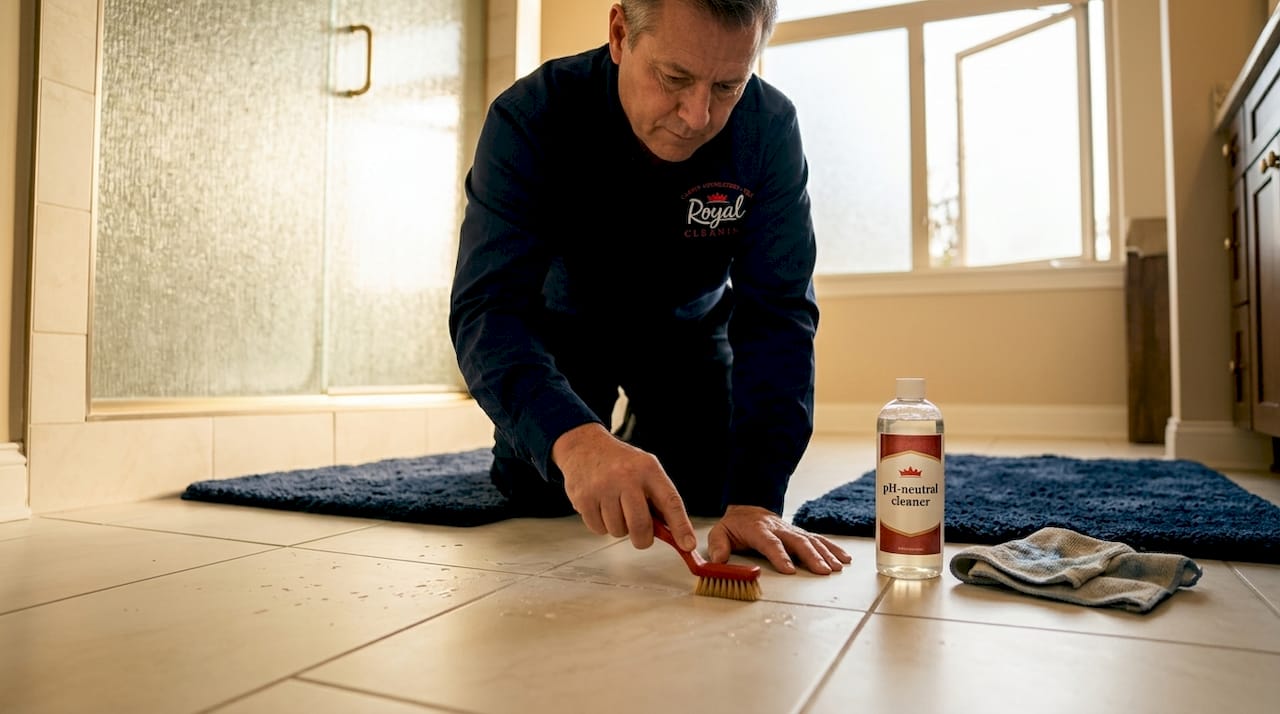
Here is a comparison of common grout cleaning approaches:
| Method | Best for | Avoid if |
|---|---|---|
| pH-neutral cleaner with soft brush | Routine weekly cleaning | Never: works for all grout types |
| Baking soda paste with warm water | Light staining and odors | Deep or set-in stains (not strong enough) |
| Oxygen bleach solution | Moderate mold or mildew buildup | Natural stone surrounds |
| Commercial grout cleaner | Stubborn, ground-in staining | You have unsealed natural stone nearby |
| Acidic cleaners (vinegar, lemon) | Never appropriate for tile | All grout and tile types |
A critical tile upkeep tip: apply a penetrating grout sealer after installation and reapply it periodically. Most grout in residential settings benefits from resealing every one to two years, depending on traffic and moisture exposure. In bathrooms and kitchens, err toward annual resealing.
Grout maintenance best practices:
- Let grout sealer fully cure before exposing it to water or foot traffic.
- Use a small brush or foam applicator for even sealer distribution.
- Scrubbing grout aggressively is less effective and more damaging than applying a cleaner and allowing it to dwell before gently rinsing.
- Inspect caulk lines around showers, bathtubs, and kitchen counters annually. Check silicone caulk around showers annually and reapply if it has separated or cracked.
- Never use a steam cleaner at high heat on unsealed grout. It drives moisture into the substrate.
For grout that has already lost color or developed deep staining, the grout restoration guide from Royal Carpet and Tile Cleaning covers restoration steps before resealing.
4. Tackle deep cleaning and stubborn stains
Even the best tile cleaning routines cannot fully prevent buildup over time. Soap scum, hard water deposits, and ground-in grime require periodic deep cleaning beyond your weekly routine.
Signs your tile needs a deep clean:
- Grout lines look gray or brown despite regular cleaning.
- Tile surface appears dull or hazy even after mopping.
- You notice musty odors near grout lines in the bathroom.
- Hard water deposits have built up around fixtures and drains.
Deep cleaning options at home:
- Hard water deposits respond well to a targeted calcium and lime remover. Apply, let it dwell for the recommended time, and rinse thoroughly.
- Soap scum on ceramic and porcelain tiles can be treated with a dedicated bathroom cleaner or a diluted dish soap solution. Do not use these on natural stone.
- For natural stone tiles, use only cleaners specifically labeled safe for stone. Vinegar etches natural stone surfaces irreversibly due to its pH of 2 to 3. Once that physical damage occurs, professional restoration is often the only fix.
Pro Tip: Before deep cleaning any tile yourself, check whether your grout is sealed. Unsealed grout during deep cleaning can absorb cleaning agents and stain worse than before. Test with a few drops of water: if they absorb in under a minute, the grout needs sealing first.
Professional deep cleaning every 6 to 12 months removes embedded grime that household tools cannot reach. This is especially worth scheduling for bathroom and kitchen floors where moisture and traffic combine to push dirt deep into grout. For a closer look at what that process involves, see the deep clean tile grout resource from Royal Carpet and Tile Cleaning.
5. Apply preventive strategies to extend tile life
The best tile upkeep tips are not cleaning instructions at all. They are habits that reduce how much cleaning you need in the first place.
- Place mats at all entry points. Grit carried in from outside is responsible for more tile and grout wear than most homeowners realize. Entry mats trap particles before they reach your floor.
- Use furniture pads on all chair and table legs. Dragging furniture across tile scratches the glaze and chips grout edges. Felt or rubber pads on every leg prevent this entirely.
- Never drag heavy objects across tile. Appliances, furniture, and heavy boxes should be lifted and carried. Use plywood sheets or moving blankets as protective surfaces when moving large items through tiled areas.
- Control moisture in bathrooms and kitchens. Run exhaust fans during and after showers. Squeegee shower walls and glass after each use to reduce standing water on tile and grout surfaces. Moisture sitting on grout accelerates mold growth and weakens the grout bond.
- Inspect tiles and grout quarterly. Look for loose tiles, cracked grout, or areas where grout has worn away completely. Catching these early prevents water from working its way under the tile and causing substrate damage. If you find tiles that sound hollow when tapped, they have likely lost their adhesive bond and need attention.
- Ventilate rooms with tile floors. Consistent airflow keeps humidity levels lower and reduces the chance of mold or mildew developing in grout lines. This matters most in bathrooms without windows.
When grout damage is already visible, the cleaning tile grouting resource offers targeted advice on removing heavy staining before you reseal.
My take on tile care after years of experience
I have walked through hundreds of homes with damaged tile floors, and the story is almost always the same. The homeowner assumed tile was maintenance-free, used whatever cleaner was under the sink, and skipped resealing grout entirely. By the time the damage was obvious, the grout had crumbled in places, the tile looked permanently stained, and a simple cleaning no longer fixed the problem.
What I have learned is that the damage is almost never caused by one big mistake. It is the accumulation of small ones: wrong cleaner used repeatedly, spills left too long, grout never sealed after installation. Each one alone seems minor. Together, they shorten a floor’s lifespan by years.
The tile maintenance tips that actually make a difference are not complicated or time-consuming. Sweeping regularly, using the right cleaner for your tile type, sealing grout on schedule, and inspecting your floor a few times a year. That routine takes less than 30 minutes a week and saves you from repairs that can cost hundreds or thousands of dollars.
I also tell people: do not wait until the floor looks bad to take action. By the time staining or crumbling is visible, the underlying damage is already done. Build the habit before you need it, and your tile will look good for decades.
— Bernadette
When professional tile cleaning makes the difference
Even the most disciplined home maintenance routine has limits. Household mops and brushes cannot reach embedded grime in grout pores, and DIY products rarely match the results of professional-grade equipment.
Royal Carpet and Tile Cleaning provides professional tile and grout cleaning for homeowners in Albuquerque, Rio Rancho, and surrounding areas. Using hot-water extraction and professional-grade sealing, the team removes staining and buildup that home cleaning leaves behind. Professional cleaning and sealing improves grout stain resistance and makes your regular maintenance routine more effective going forward. Whether your tile needs a routine annual service or a full restoration, Royal Carpet and Tile Cleaning offers transparent pricing, eco-friendly options, and a satisfaction guarantee. Scheduling a professional deep clean once or twice a year is one of the smartest investments you can make in how to maintain tile floors for the long term.
FAQ
How often should you clean tile floors?
Sweep or vacuum tile floors daily in high-traffic areas and damp mop weekly with a pH-neutral cleaner. Spot clean spills immediately to prevent grout staining.
What is the best cleaner for tile floors?
A pH-neutral cleaner in the 7.0 to 8.5 range works safely on ceramic and porcelain tile. Natural stone tiles require cleaners specifically labeled safe for stone, as acidic or alkaline products cause permanent damage.
How often should grout be sealed?
Seal grout after installation and reseal every one to two years depending on traffic and moisture. Bathroom and kitchen grout typically needs annual resealing due to high moisture exposure.
What are the most common tile maintenance mistakes?
Using vinegar or acidic cleaners on natural stone, skipping grout sealing, failing to rinse after mopping, and dragging furniture across tile surfaces are the most damaging mistakes homeowners make.
When should you call a professional for tile cleaning?
Schedule professional tile and grout cleaning every 6 to 12 months, or sooner if grout appears deeply stained, grout lines show mold, or the tile surface has lost its shine despite regular cleaning.