(505) 280-5216
The Role of Cleaning in Seasonal Health at Home
TL;DR:
- Seasonal deep cleaning reduces allergens, mold, and pathogens, supporting respiratory and immune health throughout the year. Proper sequence, targeted focus for each season, and professional services ensure effective removal of embedded pollutants, improving indoor air quality. Consistent routines combined with mindful techniques promote better physical and mental well-being in the home environment.
Most people think of cleaning as something you do when things look dirty. The role of cleaning in seasonal health goes much deeper than that. Your home’s indoor environment shifts with every season, bringing new allergens, pathogens, and air quality challenges through the door. What you clean, how often, and which products you use can directly affect how often your family gets sick, how well you sleep, and how clearly you breathe. This article gives you a practical, science-backed framework for making your cleaning routine work for your health year-round.
Table of Contents
- Key takeaways
- The role of cleaning in seasonal health and air quality
- Tradition, science, and seasonal deep cleaning
- Seasonal cleaning routines for better health, room by room
- Common seasonal cleaning mistakes that undermine your health
- Cleaning, mental health, and the whole-home benefit
- What I have learned after years of watching homes change with the seasons
- How Royal Carpet and Tile Cleaning supports your seasonal health goals
- FAQ
Key takeaways
| Point | Details |
|---|---|
| Cleaning is a health tool | Seasonal cleaning reduces allergen and pathogen levels that directly affect respiratory and immune health. |
| Sequence matters | Cleaning must come before disinfecting. Skipping the order leaves microbes protected under organic matter. |
| Each season needs a different focus | Spring targets dust and pollen, summer targets mold, fall prepares for flu season, and winter prioritizes disinfection. |
| Mental health benefits are real | Structured cleaning reduces anxiety and supports a calmer, more predictable home environment. |
| Professional help fills the gaps | Carpets, upholstery, and air ducts need deeper cleaning than standard routines provide. |
The role of cleaning in seasonal health and air quality
Your home does not exist in a sealed bubble. Every time a window opens, a pet comes inside, or someone walks through the door, the outdoor environment comes with them. Seasonal shifts change what exactly enters your home and how much of it accumulates.
During spring and early summer, pollen counts spike and settle into carpet fibers, upholstery fabric, and HVAC filters. In humid months, mold spores multiply in bathrooms, basements, and any area with poor ventilation. Fall and winter push people indoors, where respiratory viruses survive longer in dry, heated air. Respiratory viruses in cold air have a longer surface survival window, which means shared spaces and high-touch surfaces become more risky from October through February.
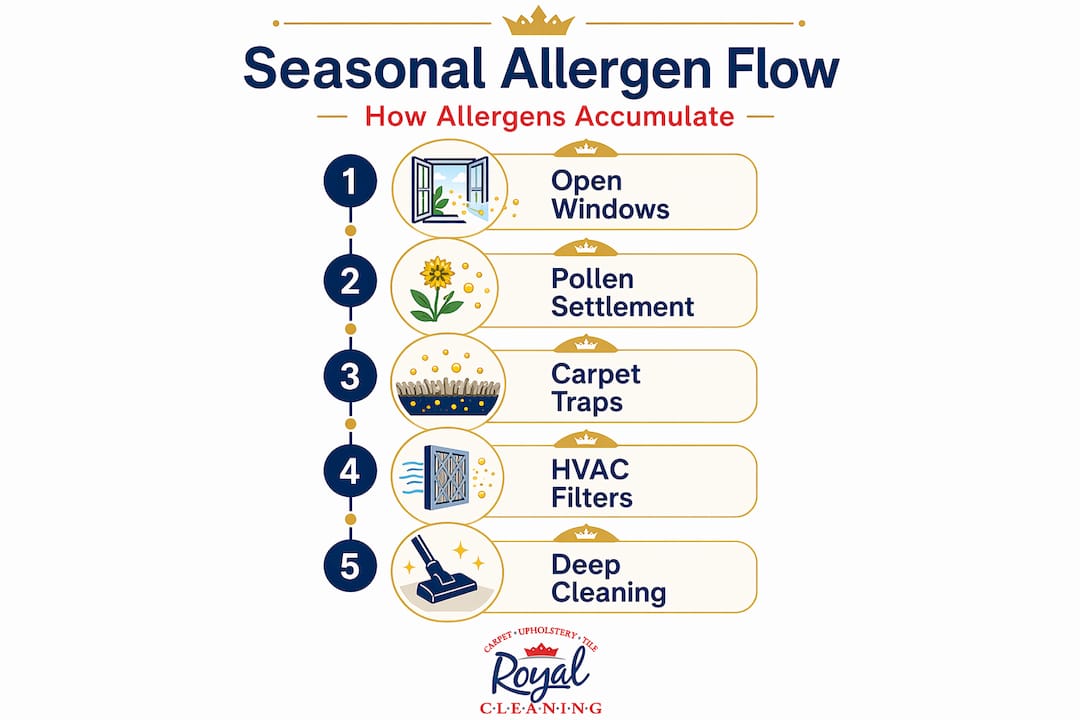
The health consequences are measurable. How cleaning affects seasonal allergies is well documented: when allergen levels in a home drop, so does the frequency and severity of allergy symptoms. The importance of cleanliness in health extends to infection control too. Handwashing alone reduces respiratory infections by 16 to 20%, which shows how basic hygiene practices carry genuine clinical weight.
Here is what accumulates in your home when seasonal cleaning is neglected:
- Dust mite debris, which peaks in late summer and worsens fall allergy symptoms
- Pollen deposits tracked in on clothing and shoes throughout spring
- Mold spores in areas with summer humidity fluctuations
- Viral particles on doorknobs, light switches, and shared surfaces during winter months
- Rodent droppings and dander in rarely cleaned storage areas during cooler months when pests seek warmth
Understanding this list is not meant to alarm you. It is meant to show you that seasonal allergen buildup is predictable, and predictable problems have practical solutions.
Tradition, science, and seasonal deep cleaning
Seasonal deep cleaning is not a modern invention. Pre-holiday winter cleaning traditions across many cultures functioned as infection control long before germ theory existed. Families scrubbed floors, aired out bedding, and removed food scraps before cold weather set in. These habits reduced rodent attractants, cleared respiratory irritants, and eliminated conditions that supported mold growth. The science came later. The behavior was already right.
Modern research now validates what those traditions got right. Deep cleaning at seasonal transitions reduces both allergen levels and viral transmission risk, especially heading into respiratory illness season. This convergence of cultural practice and clinical evidence gives seasonal cleaning routines a stronger foundation than most people realize.
One distinction worth understanding is the difference between cleaning and disinfecting. They are not interchangeable, and you need both.
| Action | What it does | When to prioritize |
|---|---|---|
| Cleaning | Removes dirt, dust, allergens, and organic matter from surfaces | Year-round; before any disinfection step |
| Disinfecting | Kills or deactivates pathogens on already-clean surfaces | Winter, flu season, post-illness |
| Deep cleaning | Targets embedded grime in carpets, ducts, upholstery, and grout | Seasonal transitions, at least twice yearly |
The sequence of cleaning then disinfecting is critical. Organic matter acts as a physical shield for microbes, blocking disinfectants from making full contact. Spraying disinfectant on a dusty countertop is far less effective than wiping it clean first.
Pro Tip: Never apply disinfectant over a visibly dirty surface and assume the job is done. Wipe the surface clean with soap and water first, then apply your disinfectant and allow the full dwell time listed on the label.
Seasonal cleaning routines for better health, room by room
The impact of cleaning on wellness depends heavily on timing and targeting. A generic weekly clean does not address what changes with the seasons. Here is how to build cleaning routines for better health across all four seasons.
-
Spring. Your primary goal is to purge the indoor pollutants that built up over winter. Wash all bedding, curtains, and upholstery covers. Vacuum carpets and upholstered furniture with a HEPA filter vacuum. Clean window sills, door frames, and air vents where settled dust and pollen collect. Change your HVAC filter and wipe down return vents. Use your spring cleaning checklist to make sure nothing gets skipped.
-
Summer. Focus shifts to moisture control. Wipe down bathroom walls and tile grout regularly to prevent mold colonies. Run exhaust fans after every shower and check under sinks for slow drips. Clean refrigerator drip trays, which are a common hidden mold source. Vacuum more frequently if windows stay open, since outdoor air brings in pollen and particulates.
-
Fall. This is your preparation window before respiratory illness season. Deep clean high-touch surfaces throughout the home: doorknobs, remote controls, cabinet handles, and light switches. Wash throw blankets and rugs that will get heavy winter use. Have carpets professionally cleaned before the family spends more time indoors. Check indoor air safety guidance to assess whether your ventilation setup is adequate.
-
Winter. Shift toward targeted disinfection. Winter cleaning as public health means focusing on high-touch surfaces daily and disinfecting shared items like phone chargers, keyboards, and faucet handles more frequently than you might in other seasons. Use a disinfectant appropriate for respiratory viruses and follow dwell time instructions.
Pro Tip: Set a 15-minute seasonal reset routine at the start of each new season. Just changing your HVAC filter, wiping down vents, and doing a quick high-touch surface disinfection takes less time than most people think and delivers outsized health benefits.
Common seasonal cleaning mistakes that undermine your health
Getting the frequency right is only part of the equation. How you clean matters as much as how often you clean. Several common mistakes reduce the health benefits of your efforts or actively create new risks.
-
Skipping the cleaning step before disinfecting. Many people spray and wipe without removing surface grime first. Disinfectants cannot penetrate organic matter, so this approach gives a false sense of security.
-
Neglecting ventilation while cleaning. Using chemical cleaners in a closed space concentrates fumes and irritants. Open windows and run fans when using any spray product. Poor indoor air quality is sometimes caused by cleaning products themselves.
-
Disturbing long-neglected dusty spaces without protection. Cleaning rodent-infested areas without a mask and gloves carries a real risk of inhaling aerosolized pathogens. This applies to attics, storage sheds, and vacation cabins that have sat unused for months. Always wear a mask and disposable gloves when cleaning spaces that may have rodent activity.
-
Over-relying on surface sprays while ignoring soft furnishings. Viruses and allergens settle into carpets and fabric upholstery and cannot be removed with a surface spray. Regular vacuuming and periodic professional extraction are the only ways to address this.
-
Washing hands incorrectly or inconsistently. Frequency matters, but technique matters too. The 40% reduction in diarrheal illness linked to proper handwashing only applies when you lather for the full recommended duration and cover all hand surfaces.
Each of these mistakes is fixable once you are aware of it. The goal is not perfection. It is consistency and correct technique, applied at the right time of year.
Cleaning, mental health, and the whole-home benefit
The health benefits of seasonal cleaning extend past the physical. Structured cleaning routines carry a measurable psychological payoff that most people have experienced but few have formally connected to their cleaning habits.
Cleaning reduces anxiety by engaging the nervous system in a sensory, focused task. The rhythm of wiping, organizing, and clearing space is a form of active mindfulness. When your environment feels ordered, your brain registers lower ambient stress. That is not abstract. It is a physiological response to visual and sensory input.
Seasonal cleaning also creates a sense of renewal. Resetting your home at the start of each season provides a psychological marker that time is progressing and your environment is responsive to care. For people prone to seasonal mood changes, this ritual can be grounding.
“A clean home is a calm home. When you reduce clutter and freshen your space at seasonal transitions, you are not just removing dust. You are creating conditions where both your body and mind can recover more effectively.”
Clutter reduction is part of this picture too. Excess items collect dust, limit airflow, and make thorough cleaning harder. Donating or storing seasonal items when you do your seasonal clean removes both physical obstacles and mental clutter at the same time.
What I have learned after years of watching homes change with the seasons
I have spent years watching how seasonal shifts affect indoor environments, and the most consistent thing I have noticed is this: homeowners who do a little, done correctly and done on schedule, outperform those who do a lot, done sporadically and without a plan.
The biggest gap I see is between what people clean and what they think they are cleaning. Vacuuming a carpet weekly does not replace extracting the allergens embedded deep in the fibers twice a year. Wiping a kitchen counter does not address the air duct system circulating particles through every room.
I have also found that the homes with the best air quality year-round are rarely the ones that smell the most like cleaning products. They are the ones with consistent upkeep between deep cleans, proper ventilation, and professionally maintained soft surfaces and ducts. Smelling clean and being clean are two very different things.
My honest advice: audit your seasonal routine for what is actually getting done versus what you assume is handled. Most people discover at least one or two areas, usually carpets, upholstery, or air ducts, where their routine is falling short.
— Bernadette
How Royal Carpet and Tile Cleaning supports your seasonal health goals
If your seasonal cleaning routine has gaps, Royal Carpet and Tile Cleaning is equipped to fill them. Serving homeowners in Albuquerque, Rio Rancho, and surrounding areas, the team specializes in the deep cleaning work that standard routines cannot cover.
Professional carpet cleaning removes the allergens, dust mite debris, and seasonal pollutants that vacuuming leaves behind. Upholstery cleaning extracts pet dander, pollen, and bacteria embedded in fabric that affect air quality every time someone sits down. For whole-home air quality, air duct cleaning clears the particles circulating through your HVAC system season after season. Royal Carpet and Tile Cleaning uses eco-friendly disinfectant options and advanced extraction equipment, with transparent pricing and a satisfaction guarantee. Scheduling a seasonal service is one of the most effective steps you can take for your home’s health.
FAQ
How does seasonal cleaning directly improve indoor air quality?
Seasonal cleaning removes accumulated allergens, mold spores, and dust that degrade the air you breathe indoors. Targeting carpets, upholstery, and air vents at each seasonal transition produces the most measurable improvements in air quality.
What is the correct order for cleaning and disinfecting?
Always clean surfaces to remove dirt and organic matter before applying a disinfectant. Organic debris shields microbes from disinfectants, making the disinfection step far less effective if you skip cleaning first.
How often should carpets be professionally cleaned for health benefits?
Most health and cleaning experts recommend professional carpet cleaning at least twice per year, ideally at the spring and fall seasonal transitions when allergen loads are at their highest.
Can cleaning routines reduce seasonal allergy symptoms?
Yes. Removing settled pollen, dust mite debris, and mold spores from carpets, upholstery, and air surfaces directly lowers the allergen concentrations that trigger allergy symptoms indoors.
Is there a risk to cleaning long-neglected spaces?
Disturbing dusty or rodent-infested spaces without protection can aerosolize dangerous pathogens. Always wear a mask and gloves when cleaning attics, storage areas, or spaces that have been unused for extended periods.