(505) 280-5216
Spring Cleaning Checklist 2025: Room-by-Room Guide
TL;DR:
- A spring cleaning checklist 2025 provides a structured guide for deep cleaning, decluttering, and organizing homes efficiently. Proper preparation, including gathering supplies and scheduling tasks logically, ensures thorough and manageable cleaning sessions. Professional services like carpet, upholstery, and air duct cleaning enhance results, especially for allergen reduction and hard-to-reach areas.
A spring cleaning checklist 2025 is a step-by-step task guide that helps homeowners and renters deep clean, declutter, and organize every room with efficiency and purpose. Professional cleaners and organizations like the American Cleaning Institute (ACI) define this process as a structured annual reset that goes well beyond routine weekly tidying. Done right, it reduces indoor allergens, eliminates clutter that builds up over winter, and leaves your home genuinely healthier. Brands like Dyson and CVS have published research-backed guidance on everything from vacuuming technique to bedding temperatures, confirming that the right approach matters as much as the effort you put in.
What tools and supplies do you need for your spring cleaning checklist 2025?
Gathering your supplies before you start is the single most effective way to avoid stopping mid-task and losing momentum. The ACI recommends beginning with a full inventory of what you have on hand, then making a shopping list before touching a single room. This prevents duplicate purchases and ensures you have the right product for each surface.
Here is what belongs in a complete spring cleaning supply kit:
- Microfiber cloths (at least 10 to 12, color-coded by room or task)
- HEPA-filter vacuum for capturing fine dust, pet dander, and allergens
- All-purpose cleaner for countertops, cabinets, and hard surfaces
- Disinfectant spray or wipes (EPA-registered for verified pathogen kill claims)
- Glass cleaner for windows, mirrors, and glass doors
- Grout brush and tile cleaner for bathrooms and kitchens
- Mop and bucket or a spray mop for hard floors
- Trash bags in multiple sizes for decluttering
- Rubber gloves to protect your hands from chemical exposure
- Step stool or ladder to reach ceiling fans, light fixtures, and top shelves
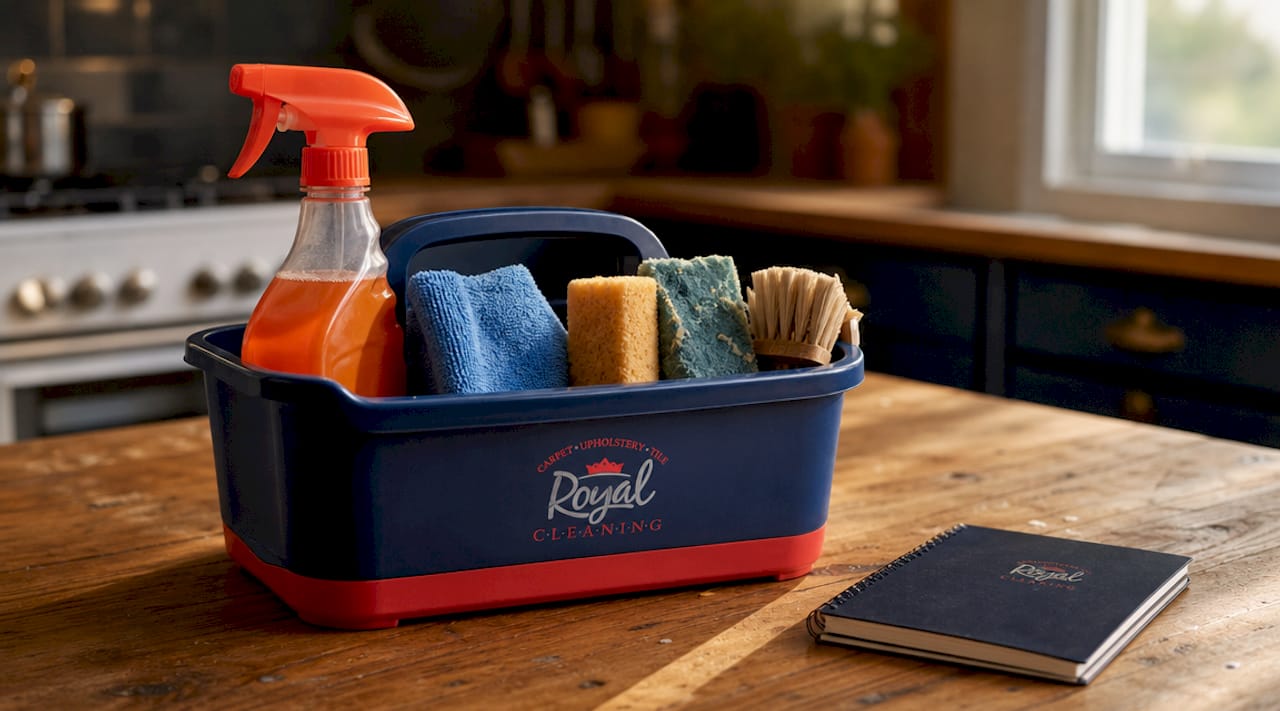
Pro Tip: Pack all your supplies into a portable cleaning caddy before you start. A caddy lets you carry everything from room to room without backtracking, which cuts cleaning time significantly and keeps your workflow uninterrupted.
CVS Health recommends vacuuming mattresses and washing all bedding in hot water at or above 120°F to kill dust mites effectively. That temperature requirement means a standard warm wash cycle is not enough. Check your water heater setting before laundry day if allergen reduction is a priority for your household.
How to structure a cleaning schedule for spring that fits your life
The best cleaning schedule for spring is one you will actually follow. Two proven formats work for most households, and the right choice depends entirely on how much time you can commit at once.
-
The 30-day spring reset. Assign one focused task per day, spending 30 to 60 minutes on each. This approach works well for renters or homeowners with busy schedules who cannot dedicate a full weekend. You clean the oven on Monday, tackle bedroom closets on Tuesday, and scrub the bathroom grout on Wednesday. Clever Home Storage confirms this method is fully achievable and prevents the physical and mental fatigue that comes from trying to do everything at once.
-
The two-day full-home blitz. Dedicate one full weekend and commit 12 to 16 hours across both days. This format suits homeowners who prefer a clean break and want the satisfaction of finishing everything in one push. It requires more physical stamina but delivers faster results.
-
The hybrid approach. Spend two weekday evenings decluttering and organizing, then use a single Saturday for all the actual cleaning. Many households find this the most practical option because decluttering first makes the cleaning phase faster and more thorough.
-
Room sequencing. Regardless of which format you choose, always clean rooms in a logical order. Start with bedrooms and living areas, then move to the kitchen and bathrooms last. Bathrooms accumulate the most chemical residue and moisture, so finishing there prevents cross-contamination.
-
Top-to-bottom within each room. Dyson recommends starting with ceiling fans and upper shelves and working downward. Dust and debris fall as you clean, so vacuuming or mopping floors last means you only do it once.
Pro Tip: Use the 20/10 cleaning rule: 20 minutes of focused cleaning followed by a 10-minute break. This structure keeps your energy consistent across a long cleaning day and prevents the burnout that causes people to quit halfway through.
Room-by-room spring cleaning tasks list
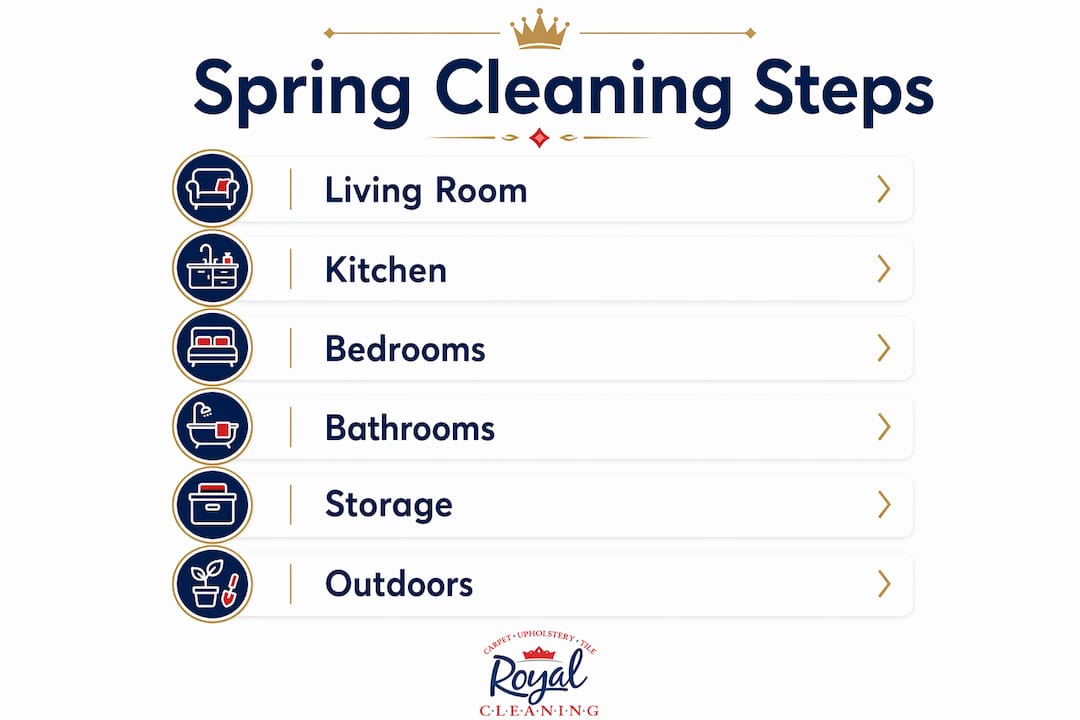
A complete spring cleaning guide covers every room with specific tasks, not just a general reminder to “clean the kitchen.” The checklist below breaks down what to do in each space.
Living room and common areas
| Task | Details |
|---|---|
| Dust ceiling fans and light fixtures | Use a microfiber cloth or extendable duster; work top to bottom |
| Vacuum upholstery | Use a HEPA vacuum on sofas, chairs, and cushions to remove allergens |
| Wash throw pillows and blankets | Follow care labels; most can go in a standard washing machine |
| Clean windows inside and out | Use glass cleaner and a squeegee for streak-free results |
| Wipe baseboards and door frames | Microfiber cloth picks up dust without spreading it |
| Clean high-touch surfaces | Light switches, remote controls, and door handles need disinfecting |
Kitchen
The kitchen requires the most time of any room because of grease buildup on appliances and inside cabinets. Pull the refrigerator away from the wall and vacuum the coils. Clean the oven interior with a degreaser, and wipe down the range hood filter, which traps grease year-round. Empty every cabinet, wipe the shelves, and check expiration dates on pantry items before restocking. Run a cleaning cycle on your dishwasher using a commercial dishwasher cleaner like Affresh or a cup of white vinegar in the bottom rack.
Bedrooms
Allergen reduction is the primary goal in bedrooms. Vacuuming mattresses with a HEPA-filter vacuum removes dust mites that accumulate over winter. Wash all bedding, including mattress covers, pillowcases, and duvet inserts, at or above 120°F. Rotate or flip your mattress if the manufacturer allows it. Clean under the bed thoroughly, since that area collects more dust than almost anywhere else in the home. Wipe down all bedroom furniture, including the tops of wardrobes and dressers that rarely get attention during weekly cleaning.
Bathrooms
Bathrooms need both deep cleaning and disinfection. Scrub tile grout with a stiff brush and a grout-specific cleaner. Clean the toilet thoroughly, including the base, tank exterior, and the area behind the bowl. Descale the showerhead by soaking it in white vinegar for 30 minutes. Replace the shower curtain liner if it shows mold or soap scum that scrubbing cannot remove. Wipe down all cabinet interiors and dispose of expired medications and personal care products.
Closets and storage spaces
Closets are where clutter hides. Pull everything out, donate items you have not used in 12 months, and vacuum the floor and shelves before restocking. Use this opportunity to switch from winter to spring and summer clothing. Clear plastic bins with labels work better than cardboard boxes for long-term storage because they resist moisture and pests.
Outdoor areas
Spring cleaning extends outside. Sweep patios and decks, clean outdoor furniture with a mild soap solution, and prepare your windows for warmer months by washing the exterior glass and checking screens for tears. Inspect your gutters for debris left from winter and clear any blockages before spring rains arrive.
What are the best cleaning practices for disinfecting your home in 2025?
Cleaning and disinfecting are not the same process. Cleaning removes visible dirt and debris. Disinfecting kills pathogens, but only when done correctly. Most people wipe a surface immediately after spraying a disinfectant, which eliminates the product’s effectiveness entirely.
EPA-registered disinfectants must remain visibly wet on a surface for the labeled contact time, which typically ranges from 3 to 10 minutes, to actually kill bacteria and viruses. Wiping the surface dry after 30 seconds means you cleaned it but did not disinfect it. Read the label on every product you use and time your contact periods.
Key disinfecting guidelines for a healthy home:
- Disinfect high-touch surfaces daily during illness and weekly during routine cleaning. These include door handles, faucet handles, toilet flush levers, and light switches.
- Do not mix cleaning products. Bleach and ammonia-based cleaners produce toxic chloramine gas. Bleach and hydrogen peroxide produce chlorine gas. Use one product at a time and rinse surfaces between applications if switching.
- Separate allergen removal from disinfection. Dust and vacuum first, then apply disinfectants. Applying disinfectant to a dusty surface reduces its contact with the actual surface and lowers efficacy.
- Ventilate the space while using chemical cleaners. Open windows and run exhaust fans to prevent inhalation of fumes.
“Many people confuse cleaning with disinfecting, but real disinfection requires the product to remain wet on the surface for the correct contact time.” — Cleaning Product Efficacy Guide
For households focused on allergen reduction rather than pathogen control, the priority shifts to HEPA vacuuming, hot-water laundering, and air filtration rather than chemical disinfection. You can read more about targeted allergen strategies in this deep cleaning for allergies guide from Royal Carpet and Tile Cleaning.
Key takeaways
A complete spring cleaning checklist works best when you declutter first, clean top to bottom in each room, and use the right products with correct contact times.
| Point | Details |
|---|---|
| Declutter before cleaning | Removing clutter first makes every cleaning task faster and more thorough. |
| Follow the top-to-bottom rule | Start with ceiling fans and upper shelves so falling dust is vacuumed up last. |
| Wash bedding at 120°F or above | This temperature kills dust mites and reduces allergen levels in bedrooms. |
| Respect disinfectant contact time | Leave EPA-registered disinfectants wet for 3 to 10 minutes to actually disinfect. |
| Use a portable supplies caddy | Keeping all tools together eliminates backtracking and speeds up your workflow. |
What I have learned from years of spring cleaning routines
By Bernadette
After working through hundreds of home cleaning projects, the pattern I see most often is this: people start strong and lose momentum by day two. The fix is not more motivation. It is better planning.
The homes that stay clean after spring cleaning are the ones where the homeowner built a repeatable system, not just a one-time event. Deep cleaning twice per year, in spring and fall, combined with consistent weekly maintenance, is what actually keeps a home healthy year-round. One big annual clean followed by nine months of neglect does not produce the same result.
I also think people underestimate how much a printed checklist changes their behavior. When you can physically check off a task, you are less likely to skip it or forget it. A spring cleaning checklist printable posted on the refrigerator does more for follow-through than any app or reminder. The physical act of checking a box matters.
The other thing I tell every homeowner: do not try to deep clean and declutter at the same time. They are different mental tasks. Decluttering requires decisions. Cleaning requires physical effort. Mixing them leads to half-finished rooms and frustration. Separate the two phases and you will finish both.
— Bernadette
How Royal Carpet and Tile Cleaning can support your spring cleaning
Some spring cleaning tasks are simply too labor-intensive or require professional equipment to do properly at home. Royal Carpet and Tile Cleaning specializes in exactly those jobs.
Carpets trap allergens, pet dander, and soil that a standard vacuum cannot fully extract. Royal Carpet and Tile Cleaning’s professional carpet cleaning service uses hot-water extraction to pull contaminants from deep within carpet fibers, leaving your floors genuinely clean rather than just surface-level fresh. For sofas, chairs, and fabric furniture, the upholstery cleaning service removes embedded allergens and stains that home cleaning cannot reach. Royal Carpet and Tile Cleaning also offers tile and grout cleaning and air duct cleaning for homeowners in Albuquerque and Rio Rancho who want a complete seasonal reset. Contact Royal Carpet and Tile Cleaning to schedule your spring deep clean today.
FAQ
What should be on a spring cleaning checklist?
A spring cleaning checklist should include decluttering every room, deep cleaning appliances, washing bedding at 120°F or above, vacuuming mattresses and upholstery, scrubbing tile grout, cleaning windows, and disinfecting high-touch surfaces. The ACI recommends a room-by-room approach starting with decluttering before any cleaning begins.
How long does spring cleaning take?
Spring cleaning takes between 12 and 30 hours depending on home size and how thoroughly you work. You can spread tasks across 30 days at 30 to 60 minutes per day, or complete the full home in a focused two-day weekend session.
What is the difference between cleaning and disinfecting?
Cleaning removes visible dirt and debris from surfaces. Disinfecting kills bacteria and viruses, but only when an EPA-registered product stays wet on the surface for its full labeled contact time, typically 3 to 10 minutes.
How do I reduce allergens during spring cleaning?
Use a HEPA-filter vacuum on mattresses, carpets, and upholstered furniture. Wash all bedding in hot water at or above 120°F to kill dust mites. Separate dusting and vacuuming from chemical disinfection steps to avoid spreading allergens before they are removed.
Should I hire a professional cleaner for spring cleaning?
Professional cleaners are worth hiring for tasks that require specialized equipment, including carpet extraction, upholstery deep cleaning, tile and grout restoration, and air duct cleaning. These services remove contaminants that standard home tools cannot reach and are especially beneficial for households with allergy sufferers.