(505) 280-5216
Sources of Indoor Pollutants: What Families Need to Know
TL;DR:
- Indoor pollutant sources include building materials, household products, combustion appliances, and biological contaminants. Proper ventilation, moisture control, and targeted cleaning reduce harmful substances like mold, dust mites, and chemicals. Addressing these sources first offers the most effective protection for indoor air quality.
Sources of indoor pollutants are the specific origins inside buildings where harmful gases, particles, and biological agents enter your air. The EPA reports that people spend roughly 90% of their time indoors, which means the quality of that air directly shapes your family’s health every day. Indoor air quality issues range from chemical off-gassing and combustion byproducts to biological contaminants like mold and dust mites. Radon, a naturally occurring gas, is the second leading cause of lung cancer in the United States. Knowing what causes indoor air pollution is the first step toward protecting your home.
What are the common sources of chemical indoor pollutants?
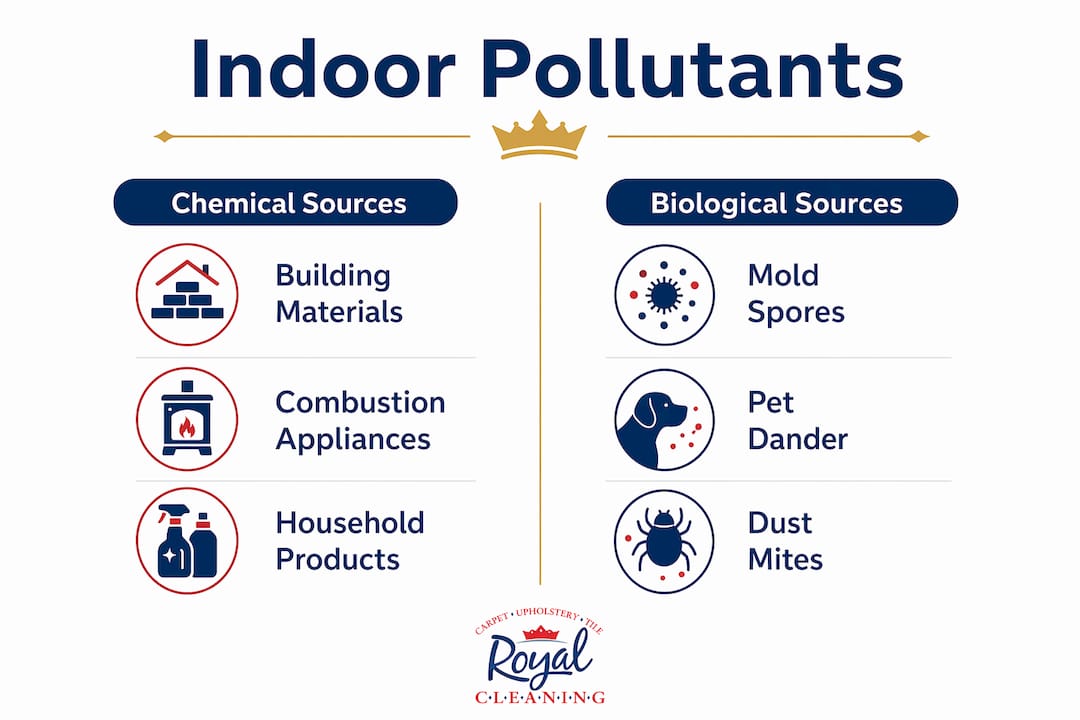
Chemical household pollutant sources fall into three main categories: building materials, everyday products, and combustion appliances. Each one releases compounds that accumulate indoors, often without any visible sign.
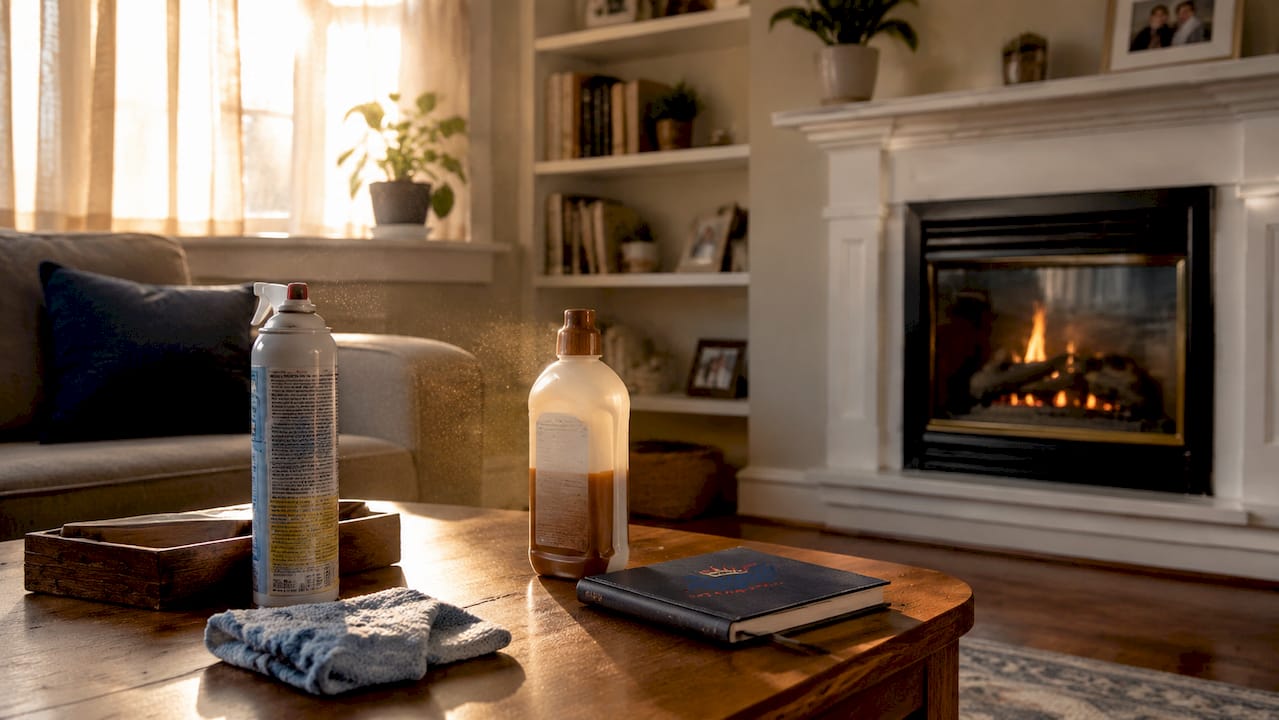
Building materials and furnishings are a major source of volatile organic compounds (VOCs) and formaldehyde. Pressed wood products used in cabinetry, flooring, and furniture release formaldehyde gas over time. New upholstery, carpeting, and adhesives also off-gas VOCs, sometimes for months after installation.
Everyday household products add another layer of chemical exposure:
- Cleaning sprays, disinfectants, and aerosol air fresheners release VOCs directly into your breathing space.
- Pesticides applied indoors leave residues on surfaces and in the air long after application.
- Dry-cleaned clothing brought indoors can off-gas perchloroethylene, a solvent linked to respiratory irritation.
- Paints, varnishes, and hobby supplies release solvents that linger in poorly ventilated rooms.
Combustion appliances produce carbon monoxide, nitrogen oxides, and fine particulate matter. Gas stoves, unvented space heaters, and wood-burning fireplaces are the most common offenders in residential homes.
| Pollutant type | Typical chemical sources |
|---|---|
| Formaldehyde | Pressed wood, cabinetry, insulation |
| VOCs | Paints, cleaners, air fresheners, adhesives |
| Carbon monoxide | Gas stoves, unvented heaters, fireplaces |
| Nitrogen oxides | Gas appliances, tobacco smoke |
| Pesticide residues | Indoor sprays, treated surfaces |
Indoor smoking and vaping add nicotine, formaldehyde, and fine particles to this chemical mix. Even after a cigarette is extinguished, thirdhand smoke residue clings to furniture, walls, and clothing, continuing to affect air quality for weeks.
Pro Tip: When buying new furniture or flooring, ask for low-VOC or formaldehyde-free certifications. Airing out new items in a garage or outdoors for 48–72 hours before bringing them inside reduces initial off-gassing significantly.
How do biological contaminants contribute to indoor pollution?
Biological contaminants are living organisms or their byproducts that degrade indoor air quality. Mold spores, pet dander, dust mites, and bacteria are the most common examples of indoor air pollutants in this category, and all of them thrive in conditions that many homes unknowingly provide.
Moisture is the single biggest driver of biological growth indoors. A leaking pipe, a poorly sealed bathroom, or even routine cooking without exhaust ventilation raises humidity enough to support mold colonies within 24–48 hours. Once mold takes hold in wall cavities or under flooring, surface cleaning alone does not eliminate it.
Dust mites are a less visible but equally significant problem. They live in mattresses, upholstered furniture, and carpeting, feeding on shed skin cells. Dust is a major carrier of biological pollutants, and a single gram of household dust can contain thousands of mite allergens. For families with asthma or allergies, this level of exposure triggers symptoms daily.
Biological contaminants also enter from outside. Pollen, mold spores, and bacteria travel in on shoes, clothing, and pets. Poor maintenance of HVAC filters allows these particles to recirculate through every room. Controlling biological pollutants requires addressing both entry points and the indoor conditions that allow them to multiply.
- Fix all moisture leaks promptly. Mold can establish within 48 hours of water exposure.
- Keep indoor humidity between 30% and 50% using a dehumidifier or exhaust fans.
- Wash bedding weekly in hot water to reduce dust mite populations.
- Bathe pets regularly and keep them off upholstered furniture when possible.
- Replace HVAC filters on schedule, typically every 60–90 days for standard filters.
Pro Tip: A simple hygrometer costs under $15 and gives you a real-time humidity reading. Keeping that number below 50% is one of the most effective ways to reduce indoor biological pollutants without any chemical intervention.
What makes combustion sources especially hazardous indoor pollutant origins?
Combustion sources are uniquely dangerous because their primary byproduct, carbon monoxide, is colorless and odorless. You cannot detect it without a monitor, and exposure at high concentrations can be fatal within minutes. Carbon monoxide is the second leading cause of accidental poisoning deaths among indoor combustion-related hazards.
The scale of the problem is concrete. Gas, propane, and wood-burning heating systems cause approximately 400 accidental deaths in the United States each year. That number represents only fatal cases. Non-fatal poisonings, which cause headaches, dizziness, and cognitive impairment, occur far more frequently and often go undiagnosed.
Beyond carbon monoxide, combustion appliances release:
- Nitrogen oxides, which irritate the respiratory tract and worsen asthma, especially in children.
- Fine particulate matter (PM2.5), which penetrates deep into lung tissue and enters the bloodstream.
- Polycyclic aromatic hydrocarbons (PAHs), produced by wood burning and linked to long-term cancer risk.
Thirdhand smoke is a combustion byproduct that most families overlook. Residue from tobacco smoke settles on surfaces, clothing, and even pets, releasing toxic compounds back into the air over time. A home where someone smoked years ago can still carry measurable thirdhand smoke contamination.
Annual professional inspections of gas furnaces, water heaters, and fireplaces are the most direct way to reduce combustion risks. Install carbon monoxide detectors on every floor, and replace batteries every six months.
How does inadequate ventilation interact with indoor pollutant sources?
Ventilation controls how quickly pollutants dilute and exit your home. Without sufficient outdoor air exchange, pollutant concentrations rise indoors even when individual source emissions are low. This is the core reason why indoor air is often more polluted than outdoor air.
Ventilation takes three forms in residential buildings: natural ventilation through open windows and doors, mechanical ventilation through HVAC systems and exhaust fans, and infiltration through gaps in walls, floors, and around windows. Older homes tend to rely heavily on infiltration, which is uncontrolled and inconsistent. Newer, energy-efficient homes are built tightly to reduce heating and cooling costs, but that same tightness traps pollutants unless mechanical ventilation is installed.
Homes designed for energy efficiency with limited natural airflow elevate health risks unless a mechanical ventilation system actively exchanges indoor and outdoor air. Heat recovery ventilators (HRVs) and energy recovery ventilators (ERVs) are the standard solutions for tight construction. They bring in fresh air while recovering most of the heating or cooling energy, so you do not pay a large energy penalty for better air quality.
The role of ventilation in home health extends beyond diluting pollutants. Proper airflow also prevents moisture buildup, which directly reduces biological contaminant growth. Running bathroom and kitchen exhaust fans during and for 15 minutes after use is one of the simplest ventilation improvements any family can make.
Pro Tip: Open windows on opposite sides of your home for 10–15 minutes each morning to create cross-ventilation. This single habit flushes accumulated overnight pollutants, including carbon dioxide and VOCs from off-gassing materials, before your family starts the day.
What practical steps can families take to reduce indoor pollutant sources?
Recognizing a problem is the starting point. Symptoms that improve outdoors and worsen when you return home are a reliable signal of indoor air pollution. Persistent headaches, eye irritation, and worsening allergy or asthma symptoms that follow this pattern warrant a thorough home assessment.
A structured approach to reducing common indoor toxins covers four areas:
- Control moisture. Fix leaks immediately, run exhaust fans in bathrooms and kitchens, and use a dehumidifier in basements or humid climates.
- Maintain combustion appliances. Schedule annual professional inspections for furnaces, water heaters, and fireplaces. Install carbon monoxide detectors on every floor.
- Choose safer products. Switch to fragrance-free, low-VOC cleaning products. Avoid aerosol sprays and synthetic air fresheners, which add chemical load without improving air quality.
- Improve filtration. HEPA filters capture 99.97% of particles 0.3 microns or larger. Use HEPA-rated vacuum cleaners and consider a standalone HEPA air purifier in bedrooms.
Cleaning technique matters as much as cleaning frequency. Dry sweeping and standard vacuuming re-suspend dust and allergens rather than removing them. HEPA vacuuming followed by damp wiping of hard surfaces captures particles instead of relocating them. This distinction is especially important for families managing asthma or allergies.
For carpets, upholstery, and air ducts, surface-level cleaning does not reach the allergens embedded deep in fibers or accumulated in ductwork. Professional extraction and allergen removal services address these reservoirs directly, reducing the biological pollutant load that routine cleaning cannot reach. Reviewing indoor air safety tips specific to your home type gives you a targeted checklist rather than a generic one.
Key Takeaways
Controlling the sources of indoor pollutants directly, rather than relying on air purifiers alone, is the most effective strategy for protecting your family’s health at home.
| Point | Details |
|---|---|
| Chemical sources are everywhere | Building materials, cleaning products, and gas appliances all release harmful compounds indoors. |
| Moisture drives biological growth | Keeping humidity below 50% prevents mold, dust mites, and bacteria from multiplying. |
| Combustion sources are the deadliest | Carbon monoxide from unvented appliances causes approximately 400 deaths annually in the US. |
| Ventilation is not optional | Without active air exchange, pollutant concentrations rise even from low-emission sources. |
| Cleaning method changes outcomes | HEPA vacuuming and damp wiping remove particles; dry sweeping only moves them around. |
What I’ve learned after years of watching families manage indoor air quality
Most families I encounter focus on air purifiers as their primary defense against indoor pollution. Air purifiers help, but they address symptoms rather than causes. A HEPA purifier running in your living room does nothing about the formaldehyde off-gassing from your new cabinets or the mold colony growing behind your bathroom wall.
The most common misconception I see is that a clean-looking home is a low-pollution home. Carpets and upholstered furniture can harbor years of accumulated dust mites, pet dander, and mold spores with no visible sign. Standard vacuuming stirs these particles into the air before the filter captures them. Families with children who have asthma often see the biggest improvement not from new equipment but from changing how they clean.
Combustion appliance maintenance is the area where I see the most dangerous neglect. Homeowners replace air filters and buy purifiers but skip the annual furnace inspection. A cracked heat exchanger or a partially blocked flue can produce carbon monoxide at levels that cause chronic fatigue and headaches for months before anyone connects the symptoms to the appliance.
My practical recommendation is to work through pollutant sources in order of risk: combustion first, moisture second, chemical products third, and filtration last. Ventilation improvements belong at every stage. This sequence prioritizes the threats most likely to cause serious harm and builds a genuinely healthier home rather than one that just smells clean.
— Bernadette
How Royal Carpet and Tile Cleaning helps reduce indoor pollutant sources at home
Carpets, upholstery, and air ducts are three of the largest reservoirs of biological pollutants in any home. Professional extraction removes the allergens, mold spores, and dust mite debris that routine vacuuming leaves behind.
Royal Carpet and Tile Cleaning provides professional carpet cleaning and upholstery cleaning in Albuquerque and Rio Rancho using advanced extraction equipment designed to pull contaminants from deep within fibers. Air duct cleaning removes the accumulated dust and mold spores that circulate through your HVAC system every time it runs. Learn more about the benefits of air duct cleaning and how it fits into a complete indoor air quality plan for your home.
FAQ
What are the most common sources of indoor pollutants?
The most common household pollutant sources are combustion appliances, building materials off-gassing VOCs and formaldehyde, biological contaminants like mold and dust mites, and everyday cleaning and personal care products. Each category releases different compounds that accumulate when ventilation is inadequate.
How does radon get into a home?
Radon is a naturally occurring radioactive gas that seeps through soil and enters homes through foundation cracks, floor drains, and construction joints. The EPA identifies radon as the second leading cause of lung cancer in the United States.
Can cleaning products worsen indoor air quality?
Yes. Many conventional cleaning sprays and aerosol air fresheners release VOCs that add to your home’s chemical pollutant load. Switching to fragrance-free, low-VOC products and improving ventilation during cleaning reduces this exposure.
How do I know if my home has indoor air quality issues?
Symptoms that improve when you leave home and return when you come back are a reliable indicator of indoor pollution. Persistent headaches, eye irritation, and worsening asthma or allergy symptoms that follow this pattern warrant a professional assessment.
Does professional carpet cleaning improve indoor air quality?
Professional carpet cleaning using hot water extraction removes dust mites, pet dander, mold spores, and other biological pollutants embedded deep in carpet fibers. Surface vacuuming alone does not reach these contaminants, making professional cleaning an effective part of a broader ways to reduce indoor pollution strategy.