(505) 280-5216
Seasonal Cleaning Routines for Better Air Quality at Home
TL;DR:
- Living in Albuquerque requires seasonally tailored cleaning routines to address its unique indoor air quality challenges. Each season demands specific tasks—such as filter replacement, moisture control, or HVAC inspection—to effectively reduce allergens, mold, and dust buildup. Implementing a mechanics-first approach focused on air systems alongside surface cleaning significantly improves respiratory health and indoor comfort year-round.
Living in Albuquerque means dealing with some of the most unpredictable air quality shifts in the country. One week, spring winds carry clouds of dust and juniper pollen straight into your home. The next, monsoon humidity encourages mold and moisture buildup indoors. Then winter arrives, windows stay shut for months, and allergens accumulate in carpets, vents, and upholstery without anywhere to go. If you find yourself constantly sneezing, noticing a stale smell, or wiping down surfaces only to see dust return within days, the problem is not your cleaning effort. The problem is that most cleaning routines are not built around the season you are actually in.
Table of Contents
- Why seasonal cleaning matters for Albuquerque homes
- Essential tools and supplies for effective seasonal cleaning
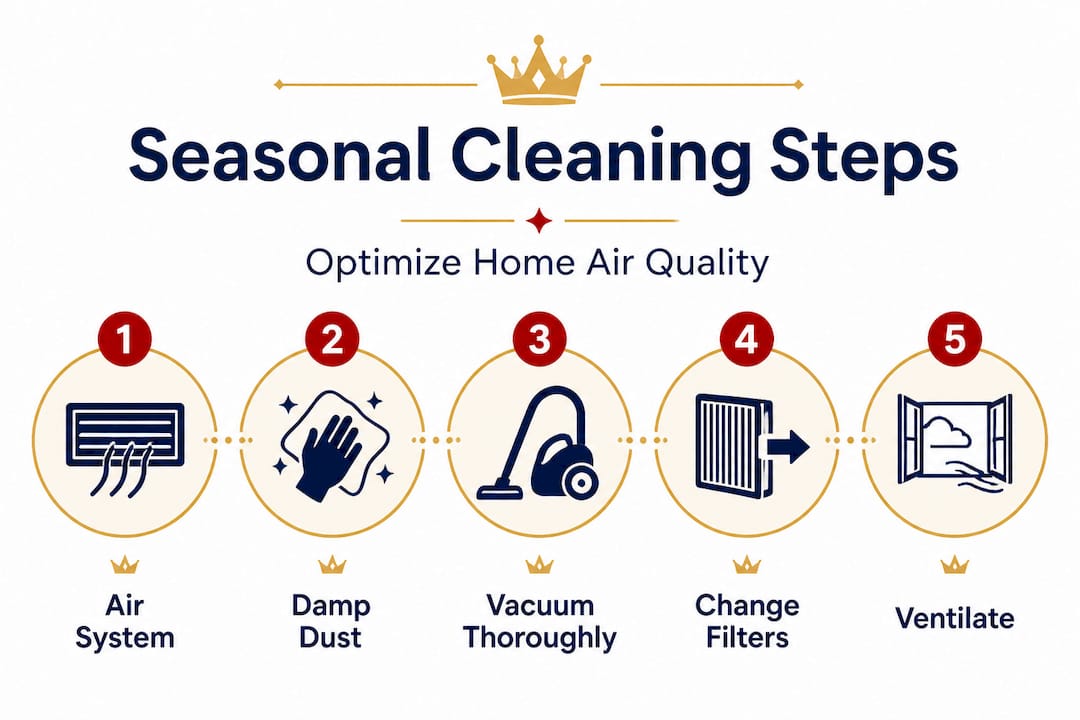
- Step-by-step: Seasonal cleaning routines to optimize air quality
- How to troubleshoot: Indoor air problems and high-particle events
- Most cleaning guides miss the air system: Here’s why Albuquerque homes need a mechanics-first approach
- Get professional help for a healthier home year-round
- Frequently asked questions
Key Takeaways
| Point | Details |
|---|---|
| Group cleaning by season | Address different dust, moisture, and allergen risks in each season for optimal comfort and air quality. |
| Prioritize air system maintenance | Regular HVAC and vent cleaning play the biggest role in trapping and reducing airborne particles. |
| Follow the right cleaning order | Start high, move down, use damp methods, and finish with vacuuming to minimize dust re-release. |
| Adapt for high-particle events | During dust storms or wildfires, use enhanced filtration and create a clean room for better air. |
| Use the best tools | Invest in HEPA vacuums, high-efficiency filters, and appropriate cleaning supplies for every season. |
Why seasonal cleaning matters for Albuquerque homes
Albuquerque’s climate does not follow a typical four-season pattern. Spring arrives windy and dry, sending fine dust and pollen particles indoors through every gap and crack. Summer brings monsoon rains that raise indoor humidity and create conditions where mold, mildew, and dust mites thrive. Fall cools quickly, people close windows and seal up homes, and heating systems push months of accumulated dust through the air. Winter traps all of it inside for weeks at a time.
This means the benefits of seasonal cleaning go well beyond aesthetics. Each season brings a distinct set of indoor air risks that require a different response. Treating every season the same way leads to missed threats and wasted effort.
| Season | Primary air quality risk | Key cleaning priority |
|---|---|---|
| Spring | Dust, pollen, outdoor allergens | Filter replacement, window track cleaning, dusting |
| Summer | Humidity, mold spores, dust mites | Moisture control, bathroom deep clean, fan cleaning |
| Fall | Heating system dust, pet dander | HVAC inspection, vent cleaning, carpet deep clean |
| Winter | Trapped allergens, VOCs from indoor products | Air purifier use, upholstery cleaning, damp dusting |
Experts recommend using seasonal cleaning checklists that focus on the specific indoor air risks of each period, including dust and pollen in spring, moisture control around the monsoon season, and settling allergens during the closed-window months of fall and winter. Grouping tasks this way is more effective than a generic cleaning schedule because it targets what is actually in your air right now.
Here are the core reasons a seasonal approach works better for Albuquerque homes:
- Spring and early summer require allergen extraction from surfaces that collected particles during windy months.
- Monsoon season demands moisture monitoring to prevent mold before it becomes a health concern.
- Fall is the single most important time to clean your HVAC system before heating season begins.
- Winter cleaning should focus on deep surface cleaning and indoor air filtration since fresh air exchange is limited.
You can find additional fresh solutions for cleaner air that are tailored to the local environment and specific indoor air challenges common in the Southwest.
Essential tools and supplies for effective seasonal cleaning
Before you start any seasonal cleaning routine, having the right tools makes a measurable difference. The wrong equipment can stir up particles without capturing them, making your indoor air quality temporarily worse before it gets better.
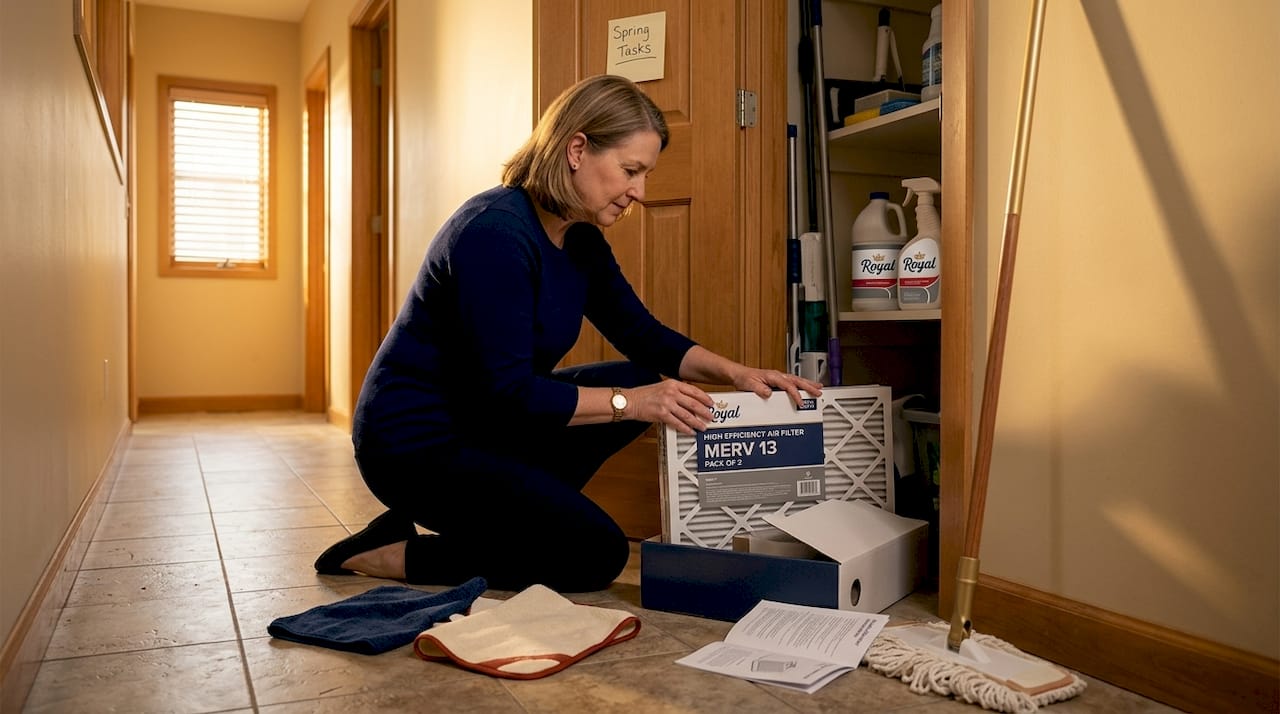
Here is a practical breakdown of what to keep on hand year-round:
| Tool or supply | Why it matters | Season of peak use |
|---|---|---|
| MERV 13 or higher HVAC filter | Captures fine dust, pollen, and smoke particles | Spring and fall |
| HEPA vacuum | Traps allergens instead of recirculating them | Year-round |
| Microfiber cloths (damp) | Picks up particles rather than spreading them | Spring and winter |
| Portable air cleaner (HEPA) | Improves filtration in heavily used rooms | Summer and winter |
| Moisture meter or hygrometer | Monitors humidity to prevent mold growth | Summer (monsoon) |
| Eco-friendly all-surface cleaner | Safe for surfaces without harsh chemical fumes | Year-round |
For homeowners focused on indoor air quality, EPA filtration guidance identifies HVAC filtration and vent cleaning as the highest-leverage mechanical steps you can take as seasons change. A $10 filter swap twice a year can have a bigger impact on your breathing than an afternoon of surface wiping.
Pro Tip: Never dry-dust shelves, blinds, or ceiling fan blades. Dry dusting sends particles airborne where they stay suspended for hours. Instead, use a lightly damp microfiber cloth to capture dust on contact. This single change noticeably reduces airborne particle counts in allergy-prone households.
When choosing a portable air cleaner, look for a unit rated with a CADR (Clean Air Delivery Rate) that matches your room size. Place it in the room where your family spends the most time, usually the living room or a bedroom, and run it continuously during high-pollen or high-dust periods.
Our multi-step cleaning approach outlines how layering tools and techniques leads to better results than relying on a single cleaning product or method.
Step-by-step: Seasonal cleaning routines to optimize air quality
Now that you have the tools, here is a season-by-season framework to follow. The structure follows a “top-to-bottom, then inside-out” method, which reduces recontamination during deep cleans by letting particles fall downward before you vacuum them up last.
Spring cleaning routine (March through May)
- Replace HVAC filters first. Before opening windows, swap out your furnace filter for a MERV 13 rated option so you capture incoming pollen from the start.
- Clean ceiling fans and light fixtures. Use a damp microfiber cloth on fan blades before doing anything else on that level.
- Wipe all horizontal surfaces top to bottom. Work from ceiling height down to countertops and then baseboards.
- Vacuum window tracks and sills. These collect concentrated pollen and fine dust during windy months.
- Deep carpet cleaning is essential in spring. Carpets trap pollen and allergens all winter. A professional extraction cleaning removes what regular vacuuming leaves behind.
- Wash curtains and bedding in hot water. Allergens cling to fabric fibers and require a full wash to be removed.
- Vacuum last, using a HEPA vacuum. This captures everything that fell during the earlier steps.
Summer routine (June through August)
- Check bathroom exhaust fans and run them during and after showers to control humidity.
- Wipe down windowsills and door frames for any moisture intrusion after monsoon rains.
- Clean ceiling fans again, as they run constantly and accumulate dust quickly in summer.
- Check under sinks and in crawlspaces for any signs of mold or moisture buildup.
- Change HVAC filters again and inspect vent covers for dust accumulation.
Fall routine (September through November)
Before heating season begins, you need to prepare your home’s air system for months of closed-window operation. Seasonal fall cleaning guidance specifically recommends cleaning and inspecting heating vents and replacing furnace filters before the first heating cycle to reduce the amount of settled dust that circulates when the system turns on for the first time.
- Schedule professional air duct inspection or cleaning if it has been more than three to five years.
- Replace furnace filters with MERV 13 or higher before the first use of the heating season.
- Vacuum all vents and registers with a brush attachment.
- Clean baseboards and behind large furniture where dust collects undisturbed.
- Allergy-friendly cleaning of upholstered furniture removes accumulated summer allergens before windows close for the season.
- Vacuum under and behind large appliances.
Winter routine (December through February)
- Run a portable air cleaner daily in primary living spaces.
- Damp-dust all surfaces weekly since particles have nowhere to escape.
- Wash bedding every one to two weeks.
- Clean dryer vents, which can accumulate lint and reduce airflow efficiency.
- Inspect tile and grout in bathrooms for early signs of mold during low-humidity months when cracks can widen.
For specific tasks to prioritize in spring, our guide to top spring cleaning tasks offers a detailed breakdown worth bookmarking.
Safety note: During any seasonal deep clean, wear a dust mask rated N95 or better if you are disturbing heavily dusty areas like attic storage, under beds, or behind appliances. This is especially important for allergy and asthma sufferers.
How to troubleshoot: Indoor air problems and high-particle events
Standard seasonal routines work well under normal conditions. But Albuquerque homeowners also face extreme events, including spring dust storms, wildfire smoke from regional fires, and unusually heavy pollen days, that require a different response entirely.
EPA guidance on high-particulate events is clear: during wildfire-like or high-particle conditions, seasonal cleaning should shift toward particle-source control and enhanced filtration in a concentrated “clean room” strategy rather than relying on regular housecleaning alone.
Here is what that means in practice:
- Designate a clean room. Choose one room, usually a bedroom, to keep as low-particle as possible. Run a HEPA air purifier in that room continuously.
- Stop particle-generating activities. Avoid vacuuming, sweeping, or burning candles during high-smoke or heavy-dust events, as these add to the particle load.
- Keep windows and exterior doors closed. Use recirculate mode on your HVAC system instead of fresh air intake.
- Change filters more frequently. During a multi-day dust event, check your filter daily and replace it if it appears visibly gray or clogged.
- Seal gaps. Use draft stoppers under doors to minimize particle infiltration from other parts of the home.
Pro Tip: Keep a small supply of replacement HVAC filters at home so you can swap them immediately during an air quality event rather than waiting for a delivery. A clogged filter does not just fail to clean the air. It reduces airflow and strains your heating and cooling system.
Long-term strategies for improving resilience against high-particle events include managing seasonal allergies proactively and following a duct maintenance guide that keeps your air distribution system clean between professional servicing appointments.
Reminder: Air quality index (AQI) readings above 150 are considered unhealthy for sensitive groups. On days when outdoor AQI reaches this level, keep your home sealed and rely fully on indoor filtration rather than trying to ventilate with outdoor air.
Most cleaning guides miss the air system: Here’s why Albuquerque homes need a mechanics-first approach
Most cleaning checklists focus almost entirely on surfaces: countertops, floors, windows, and appliances. They treat a home like a static object that just needs to be wiped down periodically. But your home has a circulatory system, your HVAC network, and ignoring it while cleaning surfaces is like washing the outside of a glass while the inside remains contaminated.
We have seen this pattern consistently when working with Albuquerque homeowners. A family vacuums weekly, dusts diligently, and still deals with persistent allergy symptoms. The culprit is almost always the air system. Ducts that have not been cleaned in years. Filters running at 40 percent efficiency. Vents redistributing years of accumulated dust into freshly cleaned rooms every time the thermostat kicks on.
General cleaning checklists often omit air-system mechanics, assuming steady conditions, while IAQ-focused guidance consistently stresses that filtration, ventilation, and source control matter most and that surface cleaning alone may not be sufficient during high-particle events.
The mechanics-first approach we recommend for Albuquerque homes looks like this: clean the air system before cleaning surfaces, not after. Replace filters at the start of each season. Clean vents and registers before running fans. Then do your surface cleaning from top to bottom, inside to out. This order ensures you are not recirculating dirty air through freshly cleaned rooms.
It is also worth acknowledging that why cleaning matters for health goes deeper than appearance. Consistent cleaning routines reduce respiratory irritants, lower allergen loads, and contribute to measurable improvements in sleep, energy, and overall wellness. In a climate as dust-intensive as Albuquerque’s, that is not a minor benefit.
Get professional help for a healthier home year-round
Staying consistent with seasonal cleaning is manageable for most homeowners, but some tasks require professional equipment and training to do properly. Duct cleaning, carpet extraction, and dryer vent servicing are all areas where professional results significantly exceed what DIY tools can achieve.
At Royal Cleaning New Mexico, we specialize in the cleaning services that have the most direct impact on your home’s air quality and comfort. Our air duct cleaning services remove years of accumulated dust, allergens, and debris from your HVAC system using professional-grade equipment. The benefits of air duct cleaning include improved airflow, reduced allergen circulation, and better heating and cooling efficiency. We also provide expert carpet cleaning expertise using hot water extraction that reaches deep into carpet fibers where vacuums cannot. We serve homeowners across Albuquerque, Rio Rancho, and surrounding areas with transparent pricing and a satisfaction guarantee.
Frequently asked questions
How often should I replace HVAC filters during Albuquerque’s windy seasons?
Replace HVAC filters monthly, or every 30 days, during the dustiest spring and early summer periods to maintain good airflow and air quality. Albuquerque’s windy conditions can clog filters far faster than the standard three-month replacement schedule suggests.
What’s the best cleaning order to reduce recontamination?
Always clean top-to-bottom to let dust fall downward, wipe all surfaces with a damp method rather than dry, and vacuum last for the best particle capture. Following this order prevents you from cleaning the same surfaces twice.
Can cleaning alone solve indoor air quality problems during wildfires or dust storms?
No, high-particulate events require air filtration, closed windows, and a targeted clean room approach rather than standard housecleaning. Regular cleaning can even worsen air quality temporarily during these events by stirring particles into the air.
What seasonal tasks are most important for allergy control?
Focus on vent and filter cleaning, seasonal task groupings by indoor air risk period, damp dusting instead of dry, and weekly vacuuming with a HEPA-rated machine. These four habits consistently produce the greatest reduction in airborne allergens throughout the year.
Recommended
- It’s Allergy Season! – Royal Carpet Cleaning
- Spring Cleaning Your Carpet – Royal Carpet Cleaning
- Expert cleaning tips for homeowners: fresh solutions for cleaner air
- 8 Spring Cleaning Tasks to Keep Your Home Fresh – Royal Carpet Cleaning
- Mattress Cleaning Tips & Guides | Mattress Magicians Blog – Twin Cities