(505) 280-5216
Sanitization at home: boost hygiene and air quality
TL;DR:
- Proper home sanitization focuses on using the right agents on specific surfaces at appropriate times.
- Over-sanitizing can increase indoor VOC levels, potentially harming health over time.
- Routine cleaning and targeted maintenance are more effective for indoor air quality than frequent duct cleaning.
Most homeowners assume that sanitizing more often means a healthier home. That belief feels logical, but it is not always accurate. The CDC notes that home sanitization reduces germs to safe levels on surfaces, yet it is primarily needed after illness, food prep mishaps, or when immunocompromised individuals are present. For Albuquerque homeowners dealing with high desert dust and dry air, the real question is not how much to sanitize, but when and how to do it right. This article walks you through the facts so you can protect your family’s health and indoor air quality without wasted effort or unnecessary risk.
Table of Contents
- What does sanitization truly mean in the home?
- The impact of sanitization on household hygiene
- Sanitization’s role in indoor air quality for Albuquerque homes
- Safer sanitization: Avoiding hidden pitfalls and overuse
- A balanced approach: What most guides get wrong about home sanitization
- Professional help for cleaner, healthier homes in Albuquerque
- Frequently asked questions
Key Takeaways
| Point | Details |
|---|---|
| Clean first, sanitize wisely | Cleaning removes most germs; sanitize only when circumstances warrant, not daily. |
| Prioritize indoor air quality | Manage sources of pollution and ventilation; don’t rely on routine duct sanitizing for air quality. |
| Avoid chemical overuse | Over-sanitizing can raise VOCs and chemical residues, harming indoor air and wellness. |
| Choose effective agents | Bleach and isopropyl alcohol work best, but natural alternatives like vinegar offer a balance between safety and efficacy. |
What does sanitization truly mean in the home?
Many people use the words cleaning, sanitizing, and disinfecting interchangeably. They are not the same thing, and confusing them leads to either under-protecting your home or overdoing it with harsh chemicals.
Cleaning uses soap and water to physically remove dirt, dust, and some germs from surfaces. It does not kill germs, but it removes them. Sanitizing reduces germs to levels considered safe by public health standards. Disinfecting goes further, killing most germs on a surface. According to CDC guidance, you should always clean first, then sanitize or disinfect only when the risk level calls for it.
Here is a quick comparison to keep these steps clear:
| Step | Method | When to use |
|---|---|---|
| Cleaning | Soap and water | Daily or routine maintenance |
| Sanitizing | EPA-registered sanitizer or diluted bleach | After food prep, illness, or high-risk contact |
| Disinfecting | Stronger EPA-registered disinfectant | When someone is sick or immunocompromised is present |
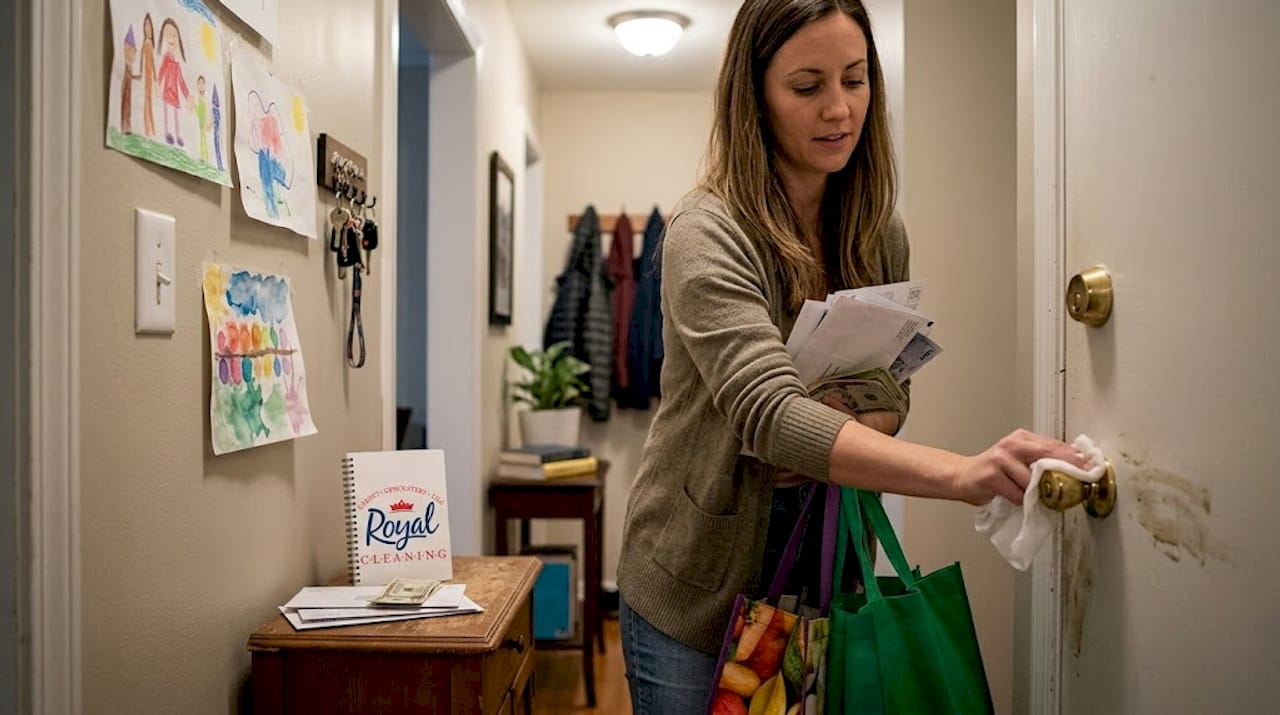
For most Albuquerque households on a normal week, routine cleaning handles the job. You do not need to reach for a disinfectant every time you wipe a countertop. Reserve stronger products for situations that actually call for them, such as after a stomach illness or when preparing raw meat.
When you do sanitize, these situations typically warrant it:
- After a family member has been sick with a contagious illness
- On food contact surfaces after handling raw poultry or meat
- When caring for someone with a compromised immune system
- After a flood, leak, or other water intrusion event
Albuquerque’s dry climate means that some bacteria and viruses do not survive as long on surfaces compared to humid regions. That is a small advantage, but it does not eliminate the need for targeted sanitization when the above situations arise.
Pro Tip: When using any chemical sanitizer, open windows and run a fan. EPA indoor air quality data confirms that ventilation is one of the most effective ways to reduce chemical buildup indoors after cleaning.
The impact of sanitization on household hygiene
Targeted sanitization genuinely reduces infection risk when applied correctly. The key is knowing which surfaces matter most and which agents actually work.
Research published on ResearchSquare compared common household sanitizing agents across mixed microbial contamination. The results were telling. Bleach and 70% isopropyl alcohol achieved the highest log reduction, greater than 3.5 to 3.8 log10 CFU per square centimeter, meaning they eliminated the vast majority of surface microbes. Vinegar and tea tree oil showed moderate results in the 2.1 to 3.6 range. Baking soda, despite its popularity in natural cleaning circles, showed minimal microbial reduction below 0.8 log10.
| Sanitizing agent | Log reduction (CFU/cm²) | Best use case |
|---|---|---|
| Bleach solution | >3.8 | Hard, nonporous surfaces |
| 70% isopropyl alcohol | >3.5 | Electronics, hard surfaces |
| Vinegar | 2.1 to 2.9 | Light-duty, low-risk surfaces |
| Tea tree oil | 2.5 to 3.6 | Supplemental use |
| Baking soda | <0.8 | Odor control, not sanitizing |
Hard, nonporous surfaces like countertops, sinks, and toilet handles respond best to sanitizing agents. Soft or porous surfaces like upholstery, carpets, and grout absorb products differently and often require professional methods for real results. For deep cleaning insights on porous surfaces, targeted approaches make a noticeable difference.
“Effective sanitization is not about using the strongest product. It is about using the right product on the right surface at the right time.”
Here is a numbered sequence to maximize hygiene without overdoing it:
- Remove visible dirt and debris with soap and water first
- Dry the surface completely before applying a sanitizer
- Apply your chosen sanitizer and allow it to sit for the contact time listed on the label
- Wipe or allow to air dry as directed
- Ventilate the room after use
Focus your sanitizing effort on high-touch points: door handles, light switches, faucet handles, toilet flush levers, and kitchen counters near the sink. These surfaces carry the highest transfer risk.
Sanitization’s role in indoor air quality for Albuquerque homes
Good surface hygiene matters, but what about the air you breathe? Many homeowners assume that sanitizing surfaces and cleaning air ducts will automatically improve indoor air quality. The reality is more nuanced.
People spend 90% of their time indoors, which means indoor air quality directly affects daily health and comfort. In Albuquerque, the combination of high desert dust, low humidity, and seasonal wind events means particulate matter gets into homes more easily than in many other cities.
However, surface sanitization does not directly clean the air. And duct cleaning? The EPA states that routine duct cleaning is not recommended unless ducts show visible mold growth, pest infestation, or a substantial accumulation of dust and debris. There is no solid evidence that routine duct cleaning prevents health problems or broadly improves indoor air quality.
What actually moves the needle on air quality in your home:
- Use high-efficiency HVAC filters and replace them on schedule, especially during Albuquerque’s dusty spring months
- Keep indoor humidity below 60% to limit mold and dust mite growth
- Control known pollutant sources like gas stoves, candles, and certain cleaning sprays
- Vacuum with a HEPA-filter vacuum regularly to capture fine particles
- Open windows when outdoor air quality permits to flush stale air
For homeowners who want to understand when duct work genuinely needs attention, these duct maintenance tips and guidance on common duct mistakes provide practical local context.
Pro Tip: In Albuquerque, check and replace HVAC filters every 30 to 60 days during high-dust seasons. This single habit does more for your indoor air than most sanitizing routines.
Safer sanitization: Avoiding hidden pitfalls and overuse
Even with good intentions, too much sanitizing can backfire. Here is how to avoid the most common pitfalls.
One of the least-discussed risks of frequent sanitizing is the spike in indoor volatile organic compounds, or VOCs. VOCs are chemicals that evaporate at room temperature and can irritate the lungs, eyes, and throat. Research published in PubMed found that cleaning activities raise VOC levels by approximately 60% and SVOC (semi-volatile organic compound) levels by around 80% post-cleaning, due to surface sorption changes rather than just product emissions alone. In other words, the surfaces in your home absorb and then slowly release these compounds after you clean.
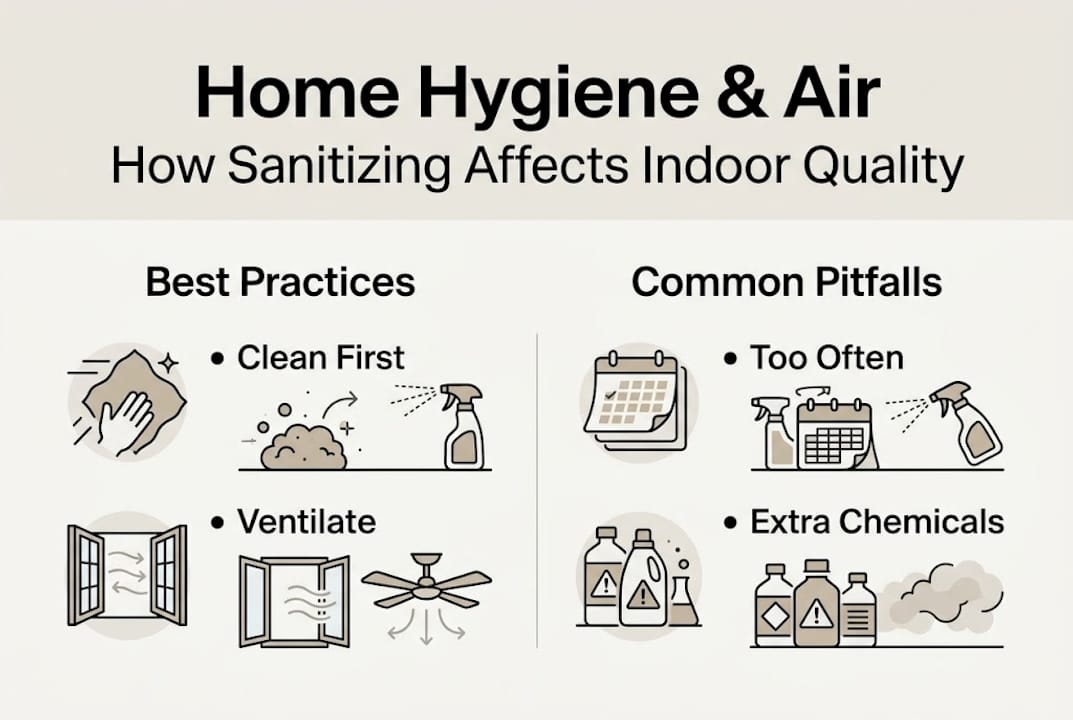
In a tightly sealed Albuquerque home during winter, those VOC levels can linger far longer than expected. The risks are not dramatic for healthy adults in the short term, but repeated exposure over months and years adds up, particularly for children and elderly family members.
Here is a practical checklist for sanitizing smarter:
- Choose EPA-registered sanitizers with lower VOC profiles when possible
- Never mix bleach with ammonia-based cleaners or vinegar, as this creates toxic fumes
- Always ventilate during and after cleaning by opening windows or running exhaust fans
- Follow label contact times exactly, more product does not equal more protection
- Limit disinfectant use to high-risk surfaces and situations, not every surface every day
- Consider air duct cleaning pros only when there is a documented contamination issue, not as routine maintenance
For broader EPA advice on air quality, the consistent theme is source control and ventilation, not more chemical intervention.
Pro Tip: After any cleaning session involving sprays or chemical sanitizers, run your HVAC fan on the fan-only setting for 20 to 30 minutes with a fresh filter in place. This helps clear residual VOCs from the air faster.
A balanced approach: What most guides get wrong about home sanitization
Most sanitization guides written for homeowners push a simple message: clean more, sanitize often, and your home will be healthier. We think that framing misses something important.
The CDC and EPA both emphasize that routine cleaning outperforms routine sanitization for most households. Yet the industry frequently promotes blanket sanitizing as a standard practice. The gap between those two positions is where many Albuquerque homeowners get confused and end up spending money and energy on steps that offer little real benefit.
Albuquerque’s climate adds a layer that generic guides ignore. The dust here is real and persistent. But the answer to that dust is targeted filter maintenance, strategic vacuuming, and addressing entry points, not more frequent chemical sanitizing. As the EPA notes, even duct cleaning has limited IAQ benefit unless a specific problem exists.
What we have seen work consistently is a prevention-first mindset. Seal gaps where dust enters. Replace filters on a real schedule. Sanitize surfaces when a genuine risk is present. Use the right product for the right surface. And when a situation exceeds what routine cleaning can handle, bring in professionals who understand the local environment. For targeted guidance on when professional service adds real value, these essential duct cleaning advice resources are a good starting point.
Professional help for cleaner, healthier homes in Albuquerque
Knowing the right steps is one thing. Executing them thoroughly in a busy household is another.
At Royal Cleaning New Mexico, we work with Albuquerque homeowners every day to address the specific challenges that come with high desert living. Whether you need air duct cleaning when contamination is confirmed, upholstery cleaning to remove allergens from soft surfaces, or professional surface cleaning for tile, grout, and high-touch areas, our team uses proven methods and eco-friendly products tailored to your home’s needs. We believe in transparent pricing, honest recommendations, and results you can see and breathe. Reach out today to schedule a consultation and get a cleaning plan that actually fits your home.
Frequently asked questions
How often should you sanitize high-touch surfaces at home?
Sanitize high-touch surfaces after potential contamination or when someone in the home is sick, not as a daily habit. Routine cleaning with soap and water is sufficient for most households under normal conditions.
Are air duct cleaning and sanitization necessary for improving air quality?
Only clean and sanitize ducts if there is visible mold, pest activity, or heavy dust accumulation. The EPA finds that routine duct cleaning offers little benefit for indoor air quality in the absence of a specific problem.
Can over-sanitizing cause health problems for families?
Yes. Overuse of chemical sanitizers raises indoor VOC and SVOC levels, which can irritate airways and accumulate over time. Research shows cleaning raises VOC levels by around 60%, making ventilation and product selection critical.
What are the most effective sanitizing agents for household surfaces?
Bleach and 70% isopropyl alcohol are the most effective on hard, nonporous surfaces. Studies show bleach and IPA achieve the highest microbial reduction, while baking soda offers minimal sanitizing benefit despite its popularity.