

 (505) 280-5216
Rug Fringe Cleaning: Save Fragile Fringes With Pro Anionic and Acid Rinse
The safest approach to rug fringe cleaning is dry removal of soil followed by spot-cleaning with a mild, pH-neutral detergent, rinsed and extracted without soaking the base. Skip bleach, skip peroxide, and never run a vacuum beater bar over fringe. If the fringe is brittle, chemically whitened, missing warps, or attached to a hand-knotted rug with visible foundation damage, stop and call a professional before you touch it with water.
TL;DR:
- Use dry soil removal and spot-cleaning with a mild, pH-neutral detergent while avoiding soaking the base or using harsh chemicals.
- Inspect the fringe to determine if it is sewn or part of the warp, and avoid wet cleaning if the fringe is brittle, damaged, or shows signs of coloring issues.
- Always work with the thread direction, avoid beater bars, and prevent over-wetting to reduce the risk of wicking and browning around the edges.
- Immediately extract excess moisture after cleaning and use airflow or fans to promote fast, even drying without leaving water sitting to prevent re-browning.
- Seek professional help when fringe feels fragile, has missing warp strands, shows dye migration, or cannot be cleaned effectively with gentle treatments.
Table of Contents
- How Do I Identify My Rug’s Fringe Before Cleaning It?
- Step-by-Step Home Methods for Cleaning Rug Fringes
- How Do Professionals Clean Ground-In Soil and Browning?
- What Should You Never Use on Rug Fringe?
- Drying and Grooming Fringe Without Causing New Damage
- When Should You Call a Professional for Fringe Cleaning?
- A Preservation-First Take on Fringe Cleaning
- Let Royal Carpet and Tile Cleaning Handle the Fringe You’re Afraid to Touch
- Sources
- FAQ
How Do I Identify My Rug’s Fringe Before Cleaning It?
Fold the rug edge back a few inches before you clean anything. If the fringe strands run continuously into the rug’s foundation, you’re looking at structural warp, the actual skeleton of a hand-knotted rug. If the fringe is stitched on as a separate strip, it’s decorative and far more forgiving to work on.
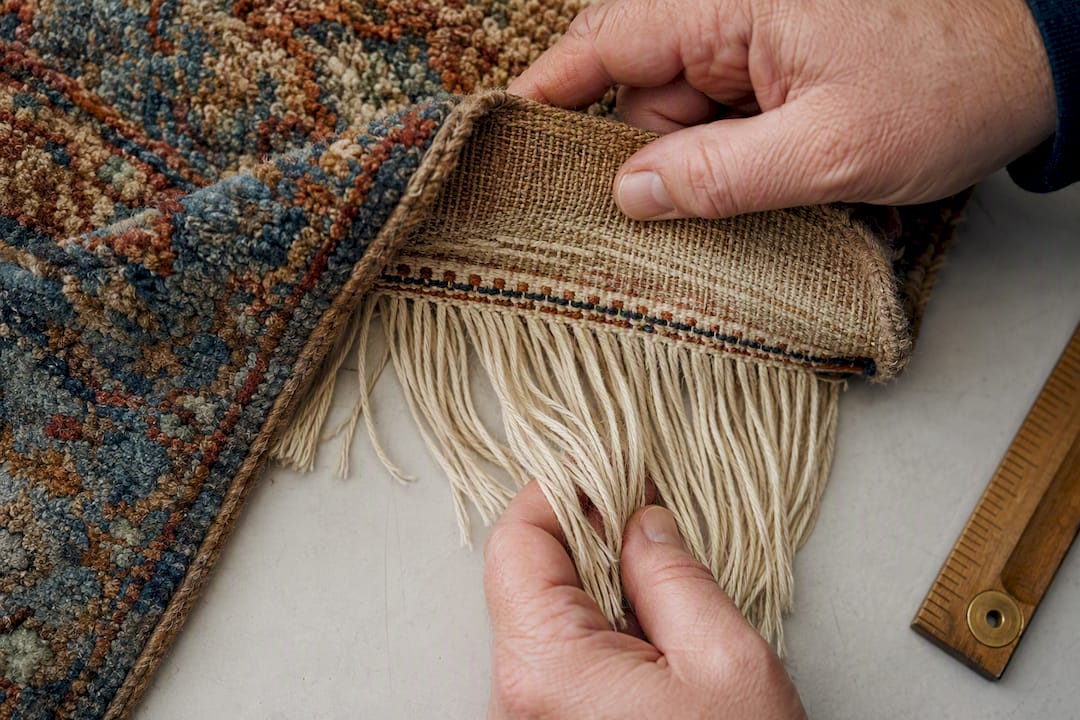
Material matters just as much as construction. Cotton fringe usually looks off-white and is prone to cellulosic browning over time. Wool fringe holds up well to gentle handling but can shrink if it gets too wet or too hot. Silk fringe is thin, shiny, and unforgiving; treat it like tissue paper. Synthetic fringe (found on machine-made rugs) tolerates more moisture and detergent than natural fiber.
Before any cleaning:
- Fold back the edge to check for sewn-on versus warp-exposed fringe.
- Run a wet finger test in a hidden corner to watch for dye bleed.
- Tug a single strand gently to check for brittleness before wetting anything.
Step-by-Step Home Methods for Cleaning Rug Fringes
Most fringe problems come down to dry soil and light surface staining, both of which respond well to a controlled, low-moisture home routine. The key is working with the thread direction, never against it, and never letting the fringe sit wet longer than necessary.
Dry preparation comes first.
- Comb the fringe outward with a wide-tooth comb or a soft-bristle brush to loosen dry grit.
- Vacuum using suction only, nozzle lifted slightly off the fringe, moving in the direction the threads lay.
- Never use a rotating brush head or beater bar attachment on fringe. It catches individual strands and pulls them loose from the weave.
Spot-cleaning light stains.
- Mix a small amount of mild, pH-neutral detergent into cool water.
- Test it on a hidden inch of fringe first and wait a few minutes to check for color change.
- Dab and blot along the thread direction with a microfiber towel. Don’t scrub across the strands.
- Rinse with a clean, barely damp towel to lift the detergent residue.
- Blot dry with a fresh towel, or use a small wet/dry vacuum on suction mode to pull out extra moisture.
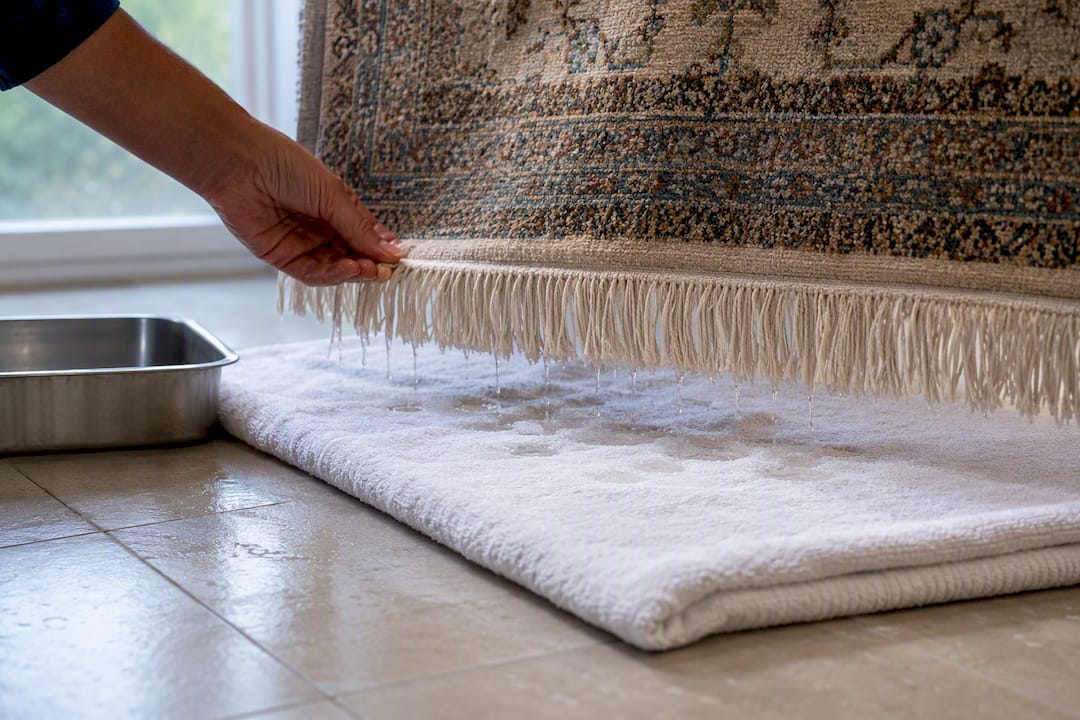
For heavier soiling, a controlled hand-wash works better than repeated spot treatments. Use minimal water, agitate gently along the thread line with your fingers or a soft brush, then rinse and blot repeatedly rather than one long soak. Keep a basin, spray bottle, and stack of absorbent towels nearby so you’re never letting water sit longer than it needs to.
Pro Tip: Keep a second dry towel underneath the fringe while you work. It catches runoff before it wicks into the rug’s pile and causes a dirty ring around the edge, which is often harder to fix than the fringe itself.
How Do Professionals Clean Ground-In Soil and Browning?
Technicians follow a sequence built around controlling moisture and avoiding harsh chemistry, guided by trade standards from groups like the SCRT. The process looks like this:
- Inspect the fringe and run a test patch on hidden threads.
- Saturate the fringe with an anionic detergent (a foaming shampoo formulated for natural fiber).
- Agitate along the thread direction to work the shampoo into ground-in soil.
- Let it dwell, then inject a hot acid rinse through an extraction unit.
- Run slow, repeated extraction passes, pulling out shampoo residue and loosened soil.
- Follow with vacuum-only extraction, then groom the fringe and force-dry it with an air mover.
This is the method SCRT technical guidance recommends for ground-in soil rather than oxidizing or reducing agents. Cotton fringe often develops a yellowish tint called cellulosic browning, caused by sugars in the fiber migrating to the surface as it dries. Bleach and other oxidizers seem like an obvious fix for that discoloration, but they attack the cellulose structure itself, permanently weakening cotton warp and stripping dye in the process.
Set realistic expectations going in. Professional cleaning restores brightness by removing embedded soil, not by chemically whitening the fiber, and controlled extraction and forced drying preserve strength rather than chasing a stark-white result that natural fiber was never going to hold anyway.
What Should You Never Use on Rug Fringe?
A handful of common cleaning habits cause more fringe damage than dirt ever will.
- Bleach and hydrogen peroxide oxidize cotton fibers, weakening the warp and often stripping dye unevenly across the strands.
- Vacuum beater bars catch and pull individual threads loose, a common cause of fringe loss on older rugs.
- Scrubbing across the threads instead of along them frays and tangles fibers that are already thin and exposed.
- Over-wetting during any cleaning step encourages wicking, where dirty water travels back into the rug body and causes browning at the edge.
The fix for each of these is almost always the same: test a hidden patch first, use a mild detergent instead of a harsh one, work with the thread direction using a gentle tamping motion, and call a professional the moment fringe feels brittle rather than pliable.
Drying and Grooming Fringe Without Causing New Damage
Wet fringe left to air-dry slowly is one of the most common causes of re-browning, since moisture sitting in the fiber gives soil residue time to migrate back to the surface. Pull out as much water as possible immediately after cleaning, then get airflow moving fast.
- Extract excess moisture with a suction-only vacuum pass, followed by pressing (not rubbing) absorbent towels into the fringe.
- Point a fan or air mover directly at the fringe to speed drying and prevent wicking back into the pile.
- While the fringe is still slightly damp, comb it outward from the field of the rug, aligning every strand in the same direction.
- Only trim loose ends that sit well outside the knot line. Cutting too close risks slicing into the knots that hold the warp together.
For rugs that see heavy foot traffic, ask about overcasting, binding, or folding the fringe under along the most exposed edge. A rotation schedule and a quality rug pad also cut down on the wear that makes fringe brittle in the first place.
When Should You Call a Professional for Fringe Cleaning?
Some fringe problems are safe to handle at home. Others aren’t, and pushing through a DIY method anyway is how a $20 stain turns into a $200 repair.
Call a professional when you notice:
- Fringe that feels brittle, stiff, or chemically whitened from a previous cleaning attempt.
- Missing or broken warp strands along the edge.
- Dye migration or bleeding into the fringe from the rug’s border colors.
- Ground-in soil that doesn’t lift after a gentle spot-clean attempt.
- Pet urine staining, which usually needs enzyme treatment beyond a household detergent.
Reputable services inspect the rug, run a test patch, apply controlled chemistry suited to the fiber, extract thoroughly, and force-dry the fringe before regrooming. If warps are already broken, repair options like overcasting or full re-fringing come next. Turnaround and cost depend mostly on how much repair the fringe needs beyond the cleaning itself, and whether you drop the rug off or need pickup arranged. Royal Carpet and Tile Cleaning handles this kind of area rug cleaning work directly, including the fringe-specific steps a standard cleaning misses.
A Preservation-First Take on Fringe Cleaning
Chasing whiteness on old cotton fringe is a losing game, and it’s usually the wrong goal anyway. What matters is whether the warp is still intact and whether the next cleaning attempt weakens it further. Some rug cleaning processes build around that priority: multi-step inspection before any chemistry touches the fiber, controlled extraction instead of oversaturation, and honest conversations with customers about what a stained, aging fringe can realistically look like afterward. If a rug in your home has fringe that feels more fragile than dirty, that’s the moment to call in help rather than reach for another home remedy.
— Bernadette
Let Royal Carpet and Tile Cleaning Handle the Fringe You’re Afraid to Touch
Some cleaning services offer a safer alternative to guessing with home remedies on fringe that might already be structurally weak.

Such professional processes often start with an inspection and a fiber test patch, involve chemistry matched to the actual material, cotton, wool, or silk, and finish with thorough extraction and forced air drying so the fringe doesn’t sit damp and re-brown. When a rug’s edge needs more than cleaning, repair and overcasting options may be available, and various scheduling options can help accommodate clients’ needs. If your rug’s fringe looks brittle, discolored, or worse than the rest of the rug, request a quote through the area rug cleaning page and get a technician’s read on it before you try anything else at home.
Sources
- Cleaning rug fringe — SCRT FAQ (Jeff Bishop, SCRT Technical Director)
- Rug fringes: cleaning, repair and yellowing — The Carpet Guys
- How rug fringe cleaning restores brightness without weakening the rug — DFW Rug & Carpet Cleaning
FAQ
How Do I Get Rid of Dirt Buildup on Rug Fringe?
Comb out loose soil first, vacuum with suction only, then spot-clean with a mild pH-neutral detergent applied along the thread direction and rinsed thoroughly before drying.
What Is the Fringe on a Rug Called?
On hand-knotted rugs, fringe is typically the exposed warp, the foundation threads the rug is woven onto, rather than a separate decorative trim.
How Do I Fix Curled or Lifted Fringe Edges?
Comb the damp fringe outward from the field of the rug to realign the strands, then force-dry it flat with an air mover; persistent curling on an older rug often means it’s time for professional grooming or a light overcast repair.
Can I Clean Rug Fringe With Baking Soda?
Baking soda can help absorb light odors from dry fringe, but it isn’t a substitute for rinsing, and leftover residue left in the fibers can attract more soil over time.
When Is Fringe Cleaning Too Risky to Do at Home?
Stop and call a professional if the fringe feels brittle or chemically whitened, if warps are missing, or if the rug has heavy ground-in soil that a gentle spot-clean won’t lift, since those are the exact conditions where DIY moisture and detergent can cause permanent damage.



