(505) 280-5216
Top rental turnover cleaning tips for faster results
TL;DR:
- A consistent top-to-bottom cleaning process reduces mistakes and cuts turnover time.
- Providing tenants with move-out instructions helps minimize labor and disputes.
- Professional cleaning ensures faster turnovers, odor control, and protects rental income.
Rental turnovers can drain your time, budget, and patience faster than almost any other part of property management. A poorly cleaned unit leads to tenant complaints, re-cleans, and extended vacancy, all of which cut directly into your returns. The good news is that a 5-7 day make-ready process, including 2-4 hours of focused cleaning, can be tightened significantly with the right approach. This guide walks Albuquerque landlords and property managers through the tools, checklists, and proven procedures that make every turnover faster, cleaner, and more profitable.
Table of Contents
- Establish your rental turnover cleaning process
- Prep tenants and plan for a smoother turnover
- Focus areas: Kitchens and bathrooms for complaint-free turnovers
- Quality checks and advanced turnover tips for landlords
- Our take: What most property owners miss about fast, flawless turnovers
- Get expert help with your Albuquerque rental turnover
- Frequently asked questions
Key Takeaways
| Point | Details |
|---|---|
| Follow a set cleaning workflow | A clear top-to-bottom process avoids missed spots and saves time during rental turnovers. |
| Communicate cleaning expectations | Send detailed move-out instructions to tenants early for less work and better outcomes. |
| Prioritize kitchens and baths | Focus extra effort here to prevent complaints, odors, and tenant dissatisfaction. |
| Inspect and document thoroughly | Final quality checks and detailed photos protect you and reduce repeat work. |
| Know your costs and call the pros | Efficient turnovers cut vacancy costs—consider local experts for best results. |
Establish your rental turnover cleaning process
With the rental turnover challenge clear, let’s start with the foundation of any efficient cleaning strategy: your process. A repeatable, step-by-step workflow is what separates landlords who struggle through every vacancy from those who turn units around quickly and confidently.
The most effective approach follows a systematic top-to-bottom method, completing all dry tasks before wet ones. That means dusting ceiling fans and light fixtures before you mop floors, and wiping down surfaces before you sanitize. Doing it out of order means redoing work, which wastes hours you don’t have.
Here is a reliable step-by-step order for any rental unit:
- Remove all trash and leftover tenant belongings from every room.
- Dust from top to bottom, including ceiling fans, vents, light fixtures, and shelves.
- Dry clean all surfaces, wiping down cabinets, counters, and appliances before any wet products are applied.
- Scrub and sanitize bathrooms and kitchens, including inside appliances and fixtures.
- Vacuum all carpets and rugs, then spot-treat any stains.
- Mop all hard floors after vacuuming is complete.
- Clean windows and mirrors last to avoid re-streaking from earlier tasks.
- Photograph every room before the new tenant arrives.
Following this order consistently reduces mistakes and cuts the number of passes needed. It also protects you legally. Documenting condition with photos before and after each tenancy is one of the smartest habits you can build when protecting your investment as a landlord.
Pro Tip: Create a printed checklist for every turnover and check off each item as you go. This simple habit prevents missed spots and gives you a paper trail if deposit disputes arise.
Consistency is what makes this process valuable. When your cleaning follows the same sequence every time, you spend less mental energy managing the job and more time catching the details that matter. Think of it as cleaning for value, not just cleaning for appearance.
Prep tenants and plan for a smoother turnover
Once you have your procedure in place, set the stage for success well before the tenants leave. Tenant preparation is one of the most underused tools in a landlord’s toolkit, and it can save you hours of cleaning labor on the back end.
According to best practices, you should provide move-out instructions to tenants at least 30 days before their move-out date. When tenants know exactly what is expected, many will handle basic cleaning tasks themselves to protect their deposit. That means less work for you and fewer disputes at the end.
Here is what to include in your tenant prep strategy:
- Send a written move-out cleaning checklist 30 days before the lease ends. Reference your move-out cleaning guide for a thorough room-by-room breakdown.
- Remind tenants that professional cleaning may be deducted from the deposit if the unit is not left in acceptable condition.
- Use your cleaning checklist as the standard for what “acceptable” means, so there is no ambiguity.
- Schedule your move-out walkthrough within 24 hours of the tenant leaving to document condition immediately.
- Begin marketing the unit as soon as the notice is received, not after cleaning is complete. Overlapping these tasks can shrink vacancy from 45 days to as few as 14.
- Review your local move-out tips to make sure your standards align with what Albuquerque renters expect.
Pro Tip: Attach your cleaning checklist directly to the lease at signing. Tenants who see the standard from day one are far more likely to meet it at move-out.
The more clearly you communicate expectations, the fewer surprises you face. A tenant who cleans even 60% of the unit well saves you one to two hours of labor. Over the course of a year with multiple turnovers, that adds up fast.
Focus areas: Kitchens and bathrooms for complaint-free turnovers
With tenant prep complete, let’s zoom in on the highest-impact spaces that raise or lower your turnover results: the kitchen and bathroom. These two rooms drive most tenant complaints, odors, and re-clean requests, so they deserve the most attention and the most time.
A thorough kitchen and bathroom cleaning goes well beyond wiping surfaces. Use this checklist for both rooms:
- Degrease range hoods, burner grates, and oven interiors completely.
- Clean inside the refrigerator, microwave, and dishwasher, including door seals.
- Scrub tile grout and caulk lines in the bathroom and kitchen backsplash.
- Sanitize all high-touch surfaces: faucet handles, light switches, cabinet pulls, and door knobs.
- Clean baseboards, window sills, and the area behind and beneath appliances.
- Address odors directly with a deodorizing spray or baking soda treatment before the final pass.
- Perform a white-glove check on countertop surfaces for streaks, residue, and missed spots.
“The deep cleaning standards for rental turnovers include degreasing, inside appliances, sanitizing baths, vacuuming and mopping floors, cleaning baseboards, windows, lights, and all high-touch surfaces.”
For units with heavy odors from pets or smoke, a single pass is rarely enough. Ventilate the unit, apply an enzyme-based deodorizer, and allow it to dwell before wiping down. This extra step prevents odors from returning after the new tenant moves in.
| Area | Common misses | Recommended product type |
|---|---|---|
| Oven interior | Baked-on grease, bottom panel | Heavy-duty degreaser |
| Bathroom grout | Mold, discoloration | Oxygen bleach cleaner |
| Range hood filter | Grease buildup | Degreaser soak |
| Cabinet interiors | Crumbs, sticky residue | All-purpose cleaner |
| Window tracks | Dust, debris, mold | Detail brush and cleaner |
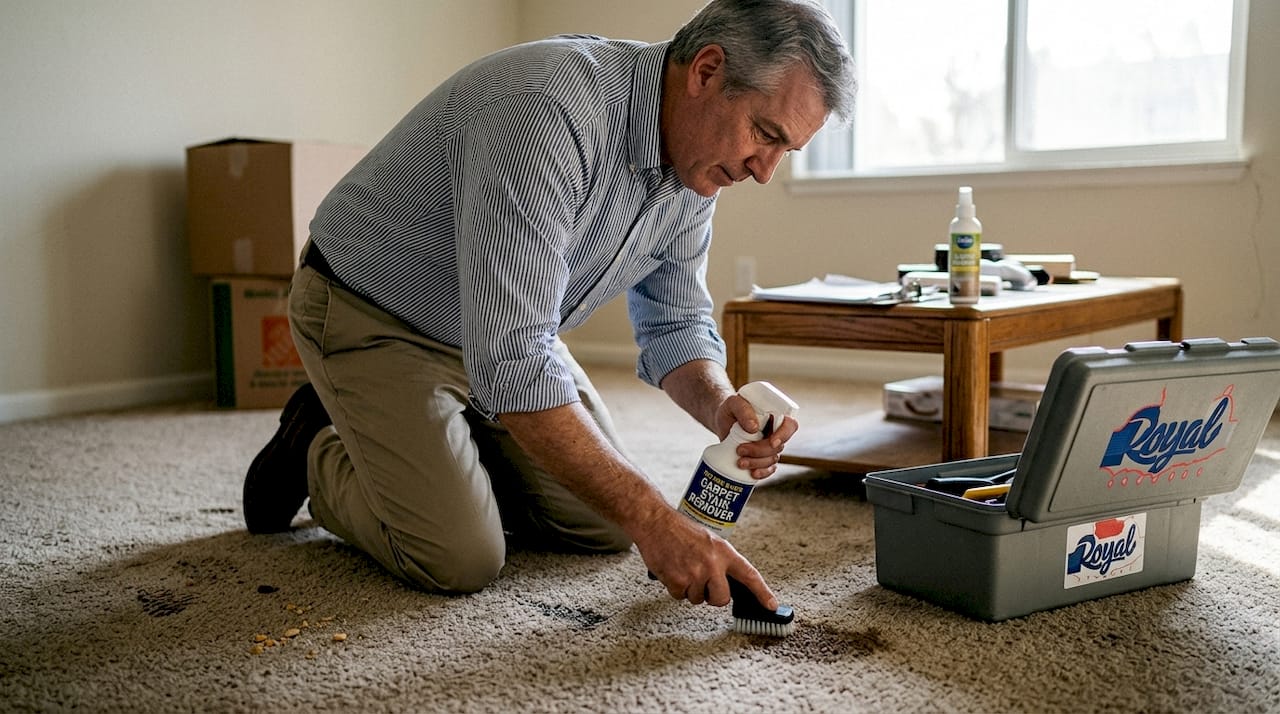
For carpeted areas, check out our carpet care tips to handle stains and odors before they become a problem for the next tenant.
Quality checks and advanced turnover tips for landlords
You’ve handled the main cleaning. Now ensure you meet top standards, document your work, and don’t get stuck with preventable issues. A strong finish is just as important as a strong start.
Run a final inspection using this numbered checklist:
- Touch test: Run your finger along baseboards, cabinet tops, and shelves. Any dust means another pass is needed.
- Sniff test: Stand in the center of each room and breathe in. Lingering odors signal unresolved issues under appliances or in drains.
- Streak check: Look at windows, mirrors, and stainless appliances at an angle to catch streaks missed head-on.
- Behind and beneath: Check behind toilets, under sinks, and beneath the refrigerator. These are the spots most often skipped.
- Window tracks and door frames: Wipe these with a damp cloth and inspect for debris.
- Photograph everything: Take photos of every room, every appliance interior, and every surface before locking up.
A 10-minute quality check at the end of every turnover catches the small things that create big complaints. It is the fastest way to protect your reputation and your deposit decisions.
Pro Tip: Use your phone’s flashlight to scan walls and floors at a low angle. This reveals scuffs, dust, and missed debris that normal lighting hides.
Knowing your numbers also helps you plan better. Review cleaning costs explained to understand what professional services charge per square foot in Albuquerque.
| Turnover cost category | Typical range |
|---|---|
| Professional cleaning | $200 to $800 |
| Repairs and touch-ups | $500 to $1,500 |
| Lost rent during vacancy | $1,000 to $2,000 |
| Total average turnover cost | $3,000 to $5,000 |
These numbers make a strong case for getting cleaning right the first time. Every re-clean or extended vacancy day adds to that total.
Our take: What most property owners miss about fast, flawless turnovers
After working with landlords and property managers across Albuquerque, we’ve noticed a pattern. Most owners focus on the obvious areas and rush through the rest. That shortcut costs far more than the time it saves.
The biggest hidden loss is not the cleaning cost itself. It is the extra vacancy days caused by a re-clean request or a new tenant complaint in the first week. One missed area, like a greasy oven or a moldy grout line, can trigger a formal complaint, a bad review, or a request to break the lease early.
For heavy odors especially, the extra deodorizing pass of degrease, deodorize, and ventilate before the final clean is not optional. It is the difference between a unit that smells fresh and one that drives your next tenant away.
Professional cleaning teams use specialty checklists built from hundreds of turnovers. You don’t need to reinvent that. Adopt a proven checklist, adapt it to your specific units, and follow it every time. If you want to see what professional help looks like for rental turnovers, the difference in outcome is often dramatic. The ROI on doing it right the first time is one of the clearest wins in property management.
Get expert help with your Albuquerque rental turnover
If you want spotless, speedier results without the hassle, here’s what to do next.
Rental turnovers are one of the highest-stakes cleaning jobs in property management. A missed spot or lingering odor can cost you days of vacancy and a frustrated new tenant. Our rental turnover cleaning experts at Royal Cleaning New Mexico know exactly what Albuquerque landlords and tenants expect, and we deliver it consistently.
From deep kitchen degreasing to bathroom sanitizing and odor control, we handle every detail so you don’t have to. We also offer upholstery cleaning solutions for furnished rentals that need a full refresh between tenants. Get a fast, no-obligation quote today and let us handle the hard work while you focus on stronger returns.
Frequently asked questions
How can I speed up my rental turnover cleaning?
Use a systematic top-to-bottom process and send tenants a cleaning checklist 30 days before move-out. These two steps alone can cut your cleaning time significantly.
What are common cleaning tasks landlords forget?
Landlords most often miss spots like behind toilets, cabinet handles, and window tracks. These small areas are the first things tenants notice and the most common sources of complaints.
How much should I budget for a rental turnover clean?
Plan for $200 to $800 per cleaning depending on unit size and condition, with total turnover costs averaging $3,000 to $5,000 when you include lost rent and repairs.
What is the fastest way to reduce vacancy after turnover?
Overlap your cleaning schedule with early marketing as soon as the tenant gives notice. This strategy can cut vacancy to 14 days instead of the typical 45.
Should I use professional cleaning services for turnovers?
Professionals handle deeper cleaning, odor control, and faster transitions, and turn to pros when efficiency and thoroughness matter most. It protects your investment and keeps your vacancy window as short as possible.