(505) 280-5216
Ultimate rental cleaning checklist for Albuquerque homeowners
Albuquerque homeowners
TL;DR:
- A tailored cleaning checklist ensures legal compliance, reduces re-cleaning costs, and shortens vacancy periods.
- Proper pre-cleaning preparation, including early communication and dust control, is vital for efficient turnover.
- Combining systematic cleaning with professional services like carpet and duct cleaning optimizes property readiness.
Every rental turnover in money and time adds up fast. Without a solid plan, you could face costly vacancies of $3,000 to $6,000 or more, plus 30 to 60 days without rental income. For homeowners in this market, that kind of loss is not just frustrating, it is preventable. A well-structured rental cleaning checklist keeps your property legally compliant, inspection-ready, and appealing to quality tenants faster. This guide walks you through every step of the process: from pre-cleaning prep to final walkthrough documentation, all optimized for the specific conditions and expectations of the New Mexico rental market.
Table of Contents
- Why use a rental cleaning checklist in albuquerque?
- Pre-cleaning prep: What to do before you start
- systematic top-to-bottom cleaning: The heart of your checklist
- Kitchen and bathroom: Deep-cleaning hotspots
- inspect, document, and avoid post-cleaning surprises
- Our perspective: What other guides miss about rental cleaning success
- supercharge your turnover with professional cleaning help
- frequently asked questions
Key Takeaways
| Point | Details |
|---|---|
| Checklists save money | Using a rental cleaning checklist prevents oversights, speeds up turnover, and protects your deposit documentation. |
| Focus on critical hotspots | Deep clean kitchens, bathrooms, vents, and baseboards to meet local Albuquerque standards. |
| Documentation is key | High-quality photos and itemized checklists are your best protection in deposit disputes and audits. |
| Overlap cleaning and marketing | Marketing your rental while cleaning can dramatically shorten your vacancy period. |
Why use a rental cleaning checklist in albuquerque?
With the stakes set, let’s look at why a cleaning checklist specifically tailored to the local market is crucial.
In New Mexico, habitability laws require units be clean and sanitary upon turnover. If a deposit dispute arises, you need documentation to support your position. A checklist gives you that paper trail. Without it, you are relying on memory in a legal situation where details matter.
A structured cleaning process also directly reduces your costs. High turnover costs are largely driven by extended vacancies and re-cleaning expenses. When you follow a proven checklist, each room gets cleaned in the right order, the first time, with nothing skipped.
Here is a quick comparison of two approaches:
| Factor | Ad hoc cleaning | checklist-driven cleaning |
|---|---|---|
| Time to complete | 2 to 3 days | 1 to 1.5 days |
| Risk of missed items | High | Low |
| Legal documentation | None | Full paper trail |
| Re-clean cost risk | Common | Very rare |
| Average vacancy period | 30 to 45 days | Under 21 days |
The risks of skipping a checklist include:
- Missing items that trigger inspection failures
- No documentation for deposit deductions
- Higher likelihood of bad reviews from new tenants
- Extra cleaning costs before new move-in
- Legal exposure if habitability is questioned
Pro tip: Always take photos alongside your checklist. When you check off an item, photograph it immediately. This timestamped visual record protects you in any dispute.
For a full breakdown of what your move-out cleaning essentials should cover, or to better protect your investment between tenants, these resources can help you get started on the right foot.
Pre-cleaning prep: What to do before you start
Once you understand why a checklist matters, preparing properly is your foundation.
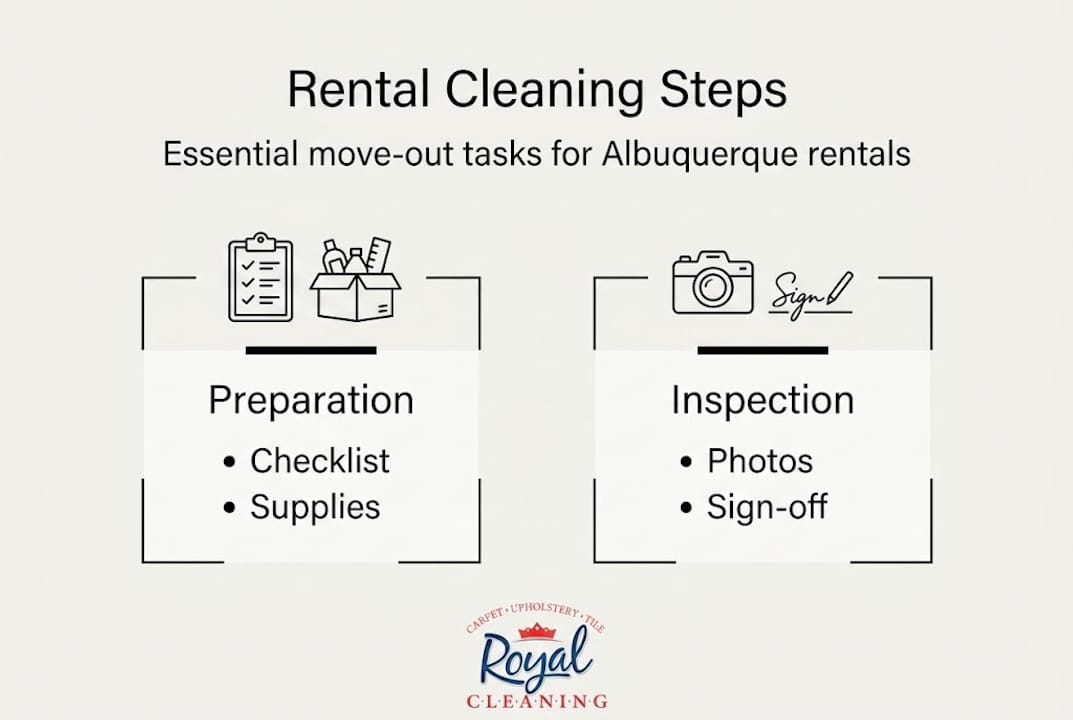
Advance communication matters more than most homeowners realize. Send tenants the move-out checklist 30 days before the move-out date, then schedule your walkthrough within 24 hours of vacancy. This keeps everything documented and reduces disputes before they start.
Here is a useful reference for what to gather before you begin:
| Category | Items needed |
|---|---|
| Documents | Move-out checklist, lease, inspection forms |
| Tools | Camera or phone, flashlight, ladder |
| Supply basics | All-purpose cleaner, degreasers, mop, microfiber cloths |
| Safety | PPE gloves, mask for dusty spaces |
| Local prep | Fresh air filters, dust-control supplies |
Albuquerque’s desert climate creates specific challenges. Fine dust settles everywhere, especially in vents, window tracks, and ceiling fan blades. Replace the air filters before cleaning starts, not after. This prevents recirculated dust from coating surfaces you just cleaned.
For your supply checklist, gather:
- All-purpose and disinfectant sprays
- A grout brush and scrub pads
- A steam cleaner or floor scrubber (or rent one)
- A step ladder for ceiling fans and light fixtures
- Fresh microfiber cloths, at least a dozen
On the DIY vs. professional question: if your property has carpet, grout, or air ducts that have not been serviced in over a year, professional cleaning is the right call. Following the move-out cleaning process step by step is manageable for surface cleaning. But deep extraction work is best left to equipment designed for it.
Property managers who use routine cleaning protocols between tenants report faster re-rentals and fewer disputes. Setting up that system starts before the first mop hits the floor.
Pro tip: Start listing your rental the moment your current tenant confirms their move-out date. Begin marketing while cleaning is underway. This single habit can cut your vacancy period by one to two weeks.
systematic top-to-bottom cleaning: The heart of your checklist
Now it’s time to tackle the actual cleaning, organized for efficiency and local conditions.
The top-to-bottom method works because gravity is always working. If you clean floors first and then dust ceiling fans, you are creating double work. Always start high and work down, and do dry tasks before wet tasks.
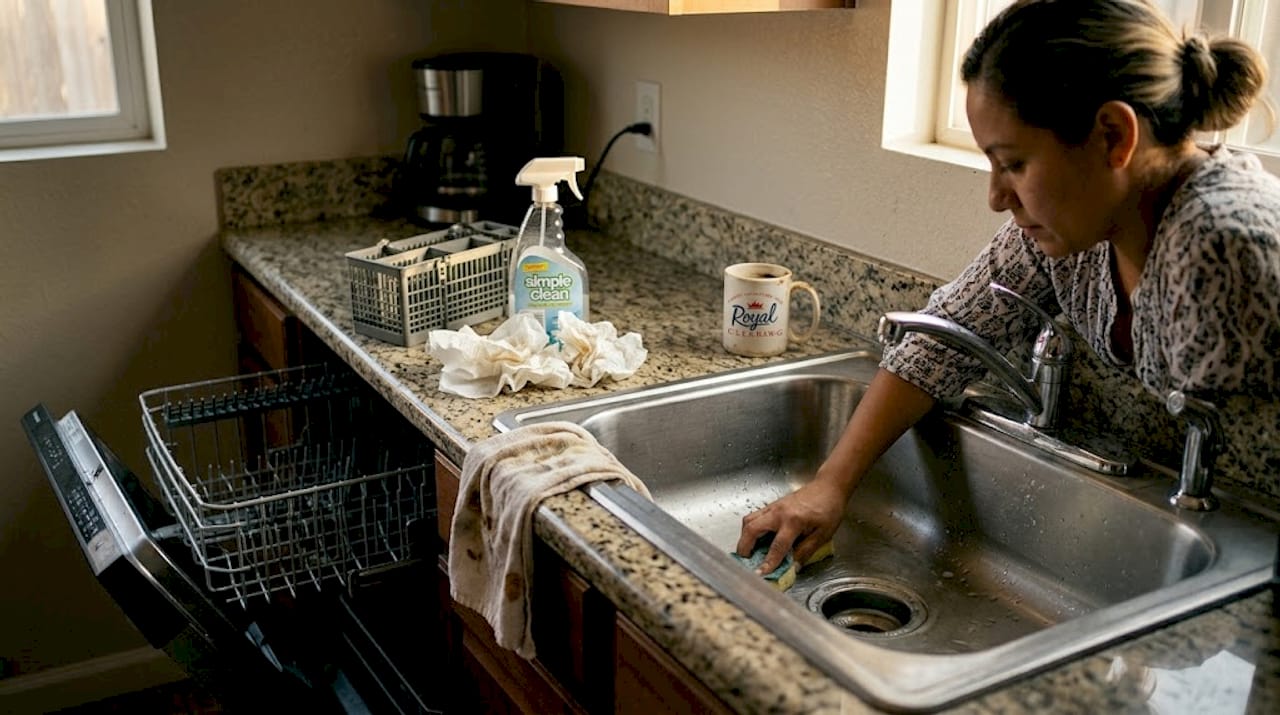
Because of the dusty desert climate here, vents, ceiling fans, window tracks, and baseboards need extra attention in every room. These are the spots that show age fastest and flag tenant concerns first.
Here is a room-by-room sequence that works well for most properties:
- All rooms first: Remove trash and debris, then dust ceiling fans, light fixtures, and vents in every room before anything else.
- Kitchen: Clean inside cabinets and drawers, degrease the range hood, scrub the stovetop, clean inside the refrigerator and dishwasher, wipe counters and backsplash.
- bathrooms: scrub grout and caulk, sanitize fixtures and faucets, clean toilet inside and out, remove soap scum and any mold.
- Living areas: Clean windows and tracks, wipe baseboards, vacuum upholstered items, and mop hard floors.
- bedrooms: Clean closet interiors, wipe shelving, clean window sills, vacuum or shampoo carpet.
- Final pass in all rooms: Check light switches, outlet covers, and door frames for grime buildup.
“Following a systematic top-to-bottom method: do dry tasks (dusting, vents, fans) before wet cleaning (scrubbing, floors) to avoid rework.”
For top turnover cleaning tips on specific problem areas, or a detailed move-out cleaning guide for new landlords, both resources are worth bookmarking.
Pro tip: Use a numbered checklist with a checkbox per item per room. Have someone sign off on each room as it is completed. This turns your cleaning day into a defensible document.
Kitchen and bathroom: Deep-cleaning hotspots
With the right sequence established, let’s focus on the two most inspection-prone rooms: kitchen and bathroom.
These two rooms receive the most scrutiny during any move-out inspection. Kitchen deep cleaning includes degreasing the full range hood, cleaning inside every appliance, and scrubbing cabinets and sinks until they pass both a visual and touch test.
For the kitchen, follow these steps:
- Remove all shelf liner from cabinets and drawers, then wipe interiors.
- Run the dishwasher empty with a cleaning tablet, then wipe the door and seals.
- Clean the refrigerator interior, shelves, and door gaskets. Do not skip the drip pan underneath.
- Pull the range out from the wall to clean the sides and floor underneath.
- Use a degreaser on the range hood filter and exhaust surface.
- scrub the sink and faucet until there is no discoloration, scale, or soap film.
For the bathroom, deep cleaning requires grout and caulk scrubbing, full fixture sanitizing, and mold or soap scum removal from every surface.
Bathroom steps:
- Apply a grout cleaner to all tile surfaces and let it dwell before scrubbing.
- Clean around and behind the toilet base, including the floor bolts.
- Replace caulk if it shows discoloration or mold that won’t come out.
- Polish faucets, handles, and showerhead until there is no water spotting.
- Check under the sink for moisture damage or mold before wiping it down.
“These two rooms alone determine whether a tenant feels safe moving in or walks away.”
Pro tip: Give departing tenants a small incentive, such as a partial deposit refund for returning keys early and leaving the space clean. This can reduce the professional cleaning time you need, directly cutting your costs.
For move out cleaning in albuquerque or detailed help with deep cleaning tile grout, these pages cover the specific tools and techniques that make the biggest difference.
inspect, document, and avoid post-cleaning surprises
After deep-cleaning, make sure nothing gets missed at the inspection and documentation stage.
A thorough final inspection should include a touch test for dust, a sniff test for lingering odors, a streak check on all glass surfaces, and a close look behind fixtures and appliances. These four checks catch the items that visual scans miss.
Here is what to look for during your post-cleaning walkthrough:
- Touch walls and baseboards for dust or grime residue
- Check mirrors and windows at an angle for streaks
- Open all cabinets and sniff for food odors or dampness
- Look behind the toilet, refrigerator, and stove
- Test all light switches and outlets for cleanliness and function
- Check ceiling corners for cobwebs or residual dust
Photo documentation is not optional. Take wide-angle photos of each room plus close-ups of appliances, fixtures, bathrooms, and any areas that had visible wear. These photos, dated and labeled, form the basis of any deposit decision you make.
Regarding vacancy targets: single-family homes turn over at 30 to 40% annually while apartments run 40 to 60%, and strong systems keep vacancy under 21 days. A thorough cleaning with proper documentation gets you to that goal faster than any other single action.
Pro tip: Start your new tenant listing with the photos from your post-cleaning inspection. They are already high quality and show the property at its best.
For your next move-in, the fresh move-in cleaning guide for local properties is a strong companion resource. For questions about move-out documentation for deposits, you will find clear guidance on the right paperwork and photo practices under New Mexico law.
Our perspective: What other guides miss about rental cleaning success
Stepping beyond standard advice, here is what our experience has taught us about truly mastering rental cleaning in the local market.
Most checklists treat cleaning as a one-time event. In practice, the homeowners who consistently cut vacancy time treat cleaning as a system, not a task. That means scheduled maintenance between tenancies, tenant incentive programs, and always overlapping marketing with cleaning so that no day is wasted.
One thing we see repeatedly is homeowners cutting costs on cleaning, then spending double on re-cleaning after a failed inspection. The math never works in their favor. A thorough clean done right the first time almost always costs less than two rounds of partial cleaning.
Photo and checklist audits protect you in ways that become especially important when staffing resources are stretched. If you hire cleaners, walk through with them before and after using your signed checklist. This is not distrust, it is accountability that benefits everyone.
Building routine cleaning success habits between tenancies is what separates landlords with perpetually full properties from those scrambling to fill vacancies. Start with the system, not the mop.
supercharge your turnover with professional cleaning help
If you want hands-off, stress-free turnovers, here is how you can get expert help.
Even with the best checklist, some cleaning tasks genuinely require professional equipment. Old carpet holds allergens and odors that surface vacuuming cannot reach. Air ducts in the desert Southwest accumulate dust year-round, affecting indoor air quality for incoming tenants.
At Royal cleaning New Mexico, our team handles the deep work that makes your property move-in ready fast. Our carpet cleaning services use hot water extraction to lift embedded grime and neutralize odors. Our air
duct cleaning removes the built-up dust and allergens that standard cleaning can never reach. When you combine these services with your checklist-driven approach, you cut vacancy time and give new tenants a genuinely fresh start. Contact us to book a turnover cleaning consultation today.
frequently asked questions
What is the most important part of the rental cleaning process?
Thoroughly cleaning kitchens and bathrooms is essential, as these are the most scrutinized areas during inspections. Kitchen and bathroom deep cleaning sets the standard for the entire turnover.
How do I document a cleaned rental for deposit disputes?
Take dated, high-quality photos of all rooms and keep a signed checklist. Photos and itemized checklists are the standard documentation for New Mexico deposit decisions.
Which areas are most commonly missed during rental turnover?
Vents, ceiling fans, window tracks, and baseboards are the most frequently overlooked spots. In the dry desert climate here, prioritize vents, fans, and baseboards in every room.
How far in advance should I give tenants a move-out checklist?
You should send the checklist 30 days prior to move-out. This gives tenants enough time to clean properly and reduces your workload at the end of the lease.
Can cleaning alone reduce rental vacancies?
Yes. overlapping cleaning and marketing minimizes vacancy duration, and a well-documented clean reduces disputes that extend the vacancy period further.