(505) 280-5216
How to prevent air duct mold growth for cleaner air
Mold lurking in your air ducts doesn’t just sit there quietly. It circulates through every room, affecting the air your family breathes and the cleanliness of your Albuquerque home. With our unique desert climate bringing dust storms and many homes relying on evaporative coolers, preventing mold growth in air ducts requires strategies tailored to local conditions. This guide walks you through understanding why mold develops, preparing your home, executing effective cleaning routines, and maintaining long-term prevention to keep your indoor air quality healthy.
Table of Contents
- Key takeaways
- Understanding mold growth in Albuquerque air ducts
- Preparing your home to prevent mold growth in air ducts
- Step-by-step guide to cleaning and maintaining your air ducts
- Verifying mold removal and maintaining long-term prevention
- Professional air duct cleaning services in Albuquerque
- Frequently asked questions
Key Takeaways
| Point | Details |
|---|---|
| Regular inspections and cleaning | Routine checks remove dust and moisture sources that feed mold in ducts. |
| Albuquerque climate risks | Dust storms and evaporative cooler humidity create mold friendly conditions in local air ducts. |
| Porous duct replacement | Fiberglass liner ducts absorb moisture and mold penetrates deeply, making replacement necessary when contaminated. |
| Preventive maintenance cadence | In dusty desert climates, schedule professional cleaning every two to three years to prevent mold establishment. |
Understanding mold growth in Albuquerque air ducts
Mold needs three things to thrive: moisture, organic material, and the right temperature. Your air ducts provide all three when conditions align. Dust particles settling inside ducts serve as food, while any humidity from evaporative coolers or seasonal monsoons creates the moisture mold spores need to colonize and spread.
Albuquerque’s climate presents unique challenges. Spring dust storms deposit fine particles throughout your ventilation system, creating layers of contamination that trap moisture. Many homes use evaporative coolers during hot months, adding significant humidity to circulating air. When this moist air contacts cooler duct surfaces, condensation forms. Pets shedding dander and indoor smoking contribute additional organic debris that feeds mold colonies.
Dust storms, evaporative coolers, pets, and smokers accelerate contamination in local homes, making the standard national recommendation of cleaning every 3 to 5 years insufficient here. Albuquerque homeowners typically need professional attention every 2 to 3 years to prevent mold establishment.
Health implications make prevention critical. Mold spores circulating through your HVAC system trigger allergic reactions, asthma attacks, and respiratory irritation. Children, elderly family members, and anyone with compromised immune systems face elevated risks. Black mold species produce mycotoxins that cause more severe health effects with prolonged exposure.
Simple habits reduce risk significantly:
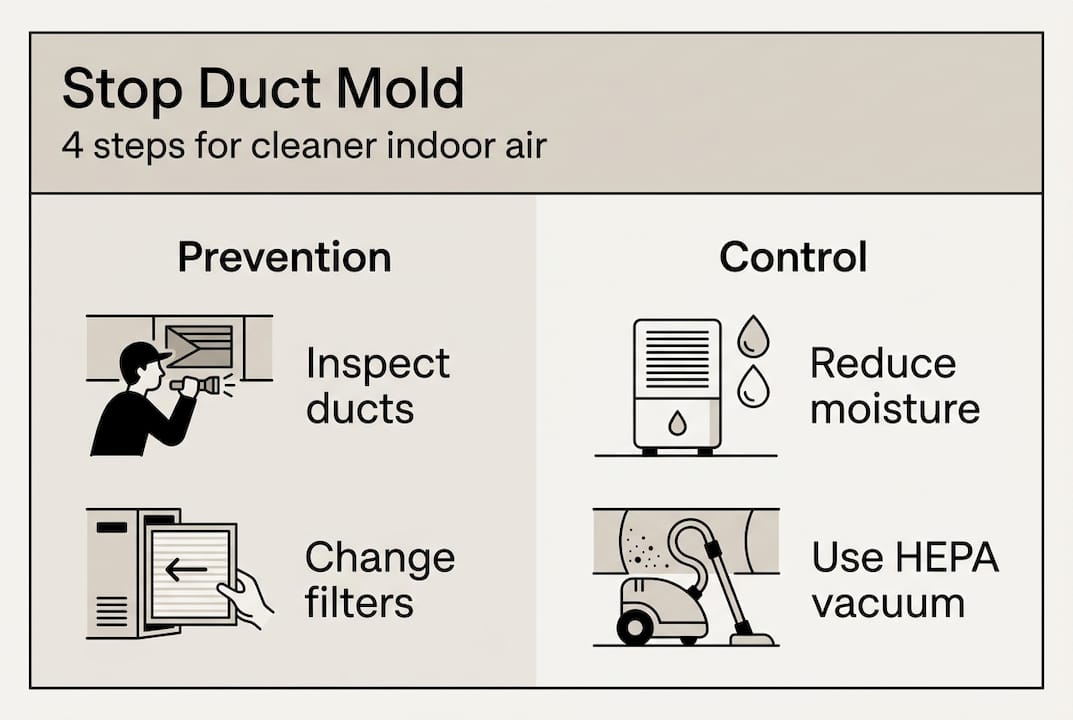
- Vacuum return air vents weekly to remove dust before it enters ducts
- Run exhaust fans during cooking and showering to control indoor humidity
- Replace HVAC filters monthly during high-use seasons
- Inspect visible ductwork quarterly for moisture stains or musty odors
Pro Tip: Place a small mirror inside return vents and shine a flashlight to check for dust buildup or visible mold spots without dismantling ductwork. This quick inspection takes two minutes and helps you catch problems early.
Recognizing these risk factors prepares you to take targeted preventive action suited to your home’s specific conditions and materials.
Preparing your home to prevent mold growth in air ducts
Before implementing prevention strategies, assess your current situation. Walk through your home and locate all supply and return vents. Remove vent covers and use a flashlight to inspect visible duct sections. Look for dark spots, fuzzy growth, or water stains indicating active mold or past moisture problems.
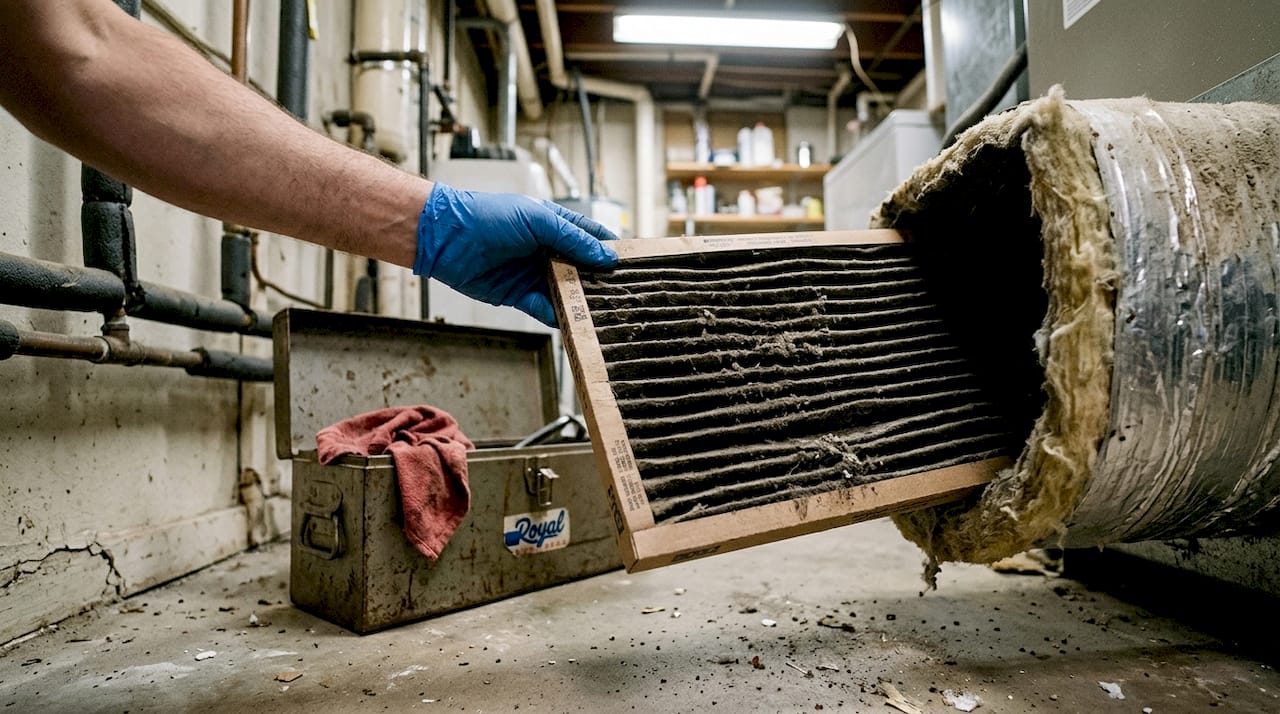
Identifying your duct material determines your remediation approach. Most Albuquerque homes have either sheet metal ducts or ducts with fiberglass liner insulation. Sheet metal ducts resist mold growth on their smooth surfaces and can be effectively cleaned when contamination occurs. Fiberglass liners, while energy efficient, absorb moisture and provide porous surfaces where mold roots penetrate deeply.
This material difference matters enormously. Moldy porous fiberglass liners cannot be adequately cleaned because spores embed within the material itself. Professional replacement becomes necessary to eliminate health risks. Attempting to clean moldy fiberglass releases more spores into your air and provides only temporary cosmetic improvement.
| Duct Material | Mold Response | Cleaning Method | Replacement Need |
|---|---|---|---|
| Sheet metal | Clean and treat | HEPA vacuum + antimicrobial | Rarely |
| Fiberglass liner | Replace section | Not effective | When moldy |
| Flex duct | Clean or replace | Brush + vacuum | If damaged |
| Duct board | Replace section | Not recommended | When moldy |
Pay special attention to areas around evaporative coolers. These units introduce significant moisture during operation, making nearby ductwork prime mold territory. Check for condensation on duct surfaces in attics or crawl spaces where temperature differences cause sweating.
Create a maintenance checklist covering these components:
- HVAC filter condition and replacement date
- Visible ductwork sections for damage or gaps
- Insulation around ducts for moisture or compression
- Drain pans under air handlers for standing water
- Outdoor intake vents for debris blocking airflow
Document your findings with photos and notes. This baseline helps you track changes over time and communicate effectively with professionals when needed. Homeowners who understand their duct systems make better maintenance decisions and catch problems before they escalate.
Pro Tip: Mark your HVAC filter with the installation date using a permanent marker. This simple habit eliminates guesswork about when replacement is due and ensures you maintain the monthly schedule needed in dusty climates.
With preparation complete and your home’s specific needs identified, you’re ready to implement effective cleaning and maintenance routines.
Step-by-step guide to cleaning and maintaining your air ducts
Professional air duct cleaning follows a systematic approach that homeowners can partially replicate for maintenance between professional services. Understanding this process helps you maintain results and recognize when professional intervention becomes necessary.
NADCA’s professional method establishes the industry standard. The process begins with comprehensive assessment using cameras to inspect inaccessible duct sections. Technicians identify contamination severity, locate moisture sources, and determine appropriate cleaning methods for your specific system.
Negative pressure HEPA vacuuming forms the core cleaning technique. Professionals seal off sections of your duct system and create powerful suction using truck-mounted or portable HEPA vacuum units. This negative pressure prevents dislodged contaminants from spreading through your home while capturing particles as small as 0.3 microns, including mold spores, dust mites, and pollen.
Follow these steps for effective maintenance:
- Turn off your HVAC system completely at the thermostat and breaker to prevent air circulation during cleaning
- Remove all vent covers and soak them in hot soapy water to dissolve accumulated dust and oils
- Use a vacuum with a HEPA filter and crevice attachment to clean visible duct sections as far as you can reach
- Wipe accessible metal surfaces with microfiber cloths dampened with water and a few drops of dish soap
- Allow all components to dry completely before reassembling to prevent trapping moisture
- Install a new high-efficiency filter appropriate for your system’s specifications
- Run the system and check all vents for proper airflow and absence of musty odors
Antimicrobial treatments applied after cleaning inhibit mold regrowth. Professionals use EPA-registered products specifically formulated for HVAC systems. These treatments create hostile surfaces for mold spores attempting to colonize cleaned ducts. Never apply household cleaners, bleach, or unapproved chemicals inside ductwork, as fumes circulate through your home and may damage system components.
| Approach | Effectiveness | Cost | Frequency | Best For |
|---|---|---|---|---|
| DIY maintenance | Moderate | $20-50 | Monthly | Surface cleaning |
| Professional cleaning | High | $400-800 | 2-3 years | Deep contamination |
| Filter replacement | High | $15-40 | Monthly | Prevention |
| Antimicrobial treatment | Moderate | $150-300 | After cleaning | Mold prevention |
Regular filter replacement provides your most cost-effective prevention tool. Filters trap airborne particles before they enter ductwork, reducing the contamination that feeds mold growth. In Albuquerque’s dusty environment, monthly replacement during spring and fall prevents filter overloading that forces unfiltered air through gaps.
Consider cleaning frequency based on your household factors. Homes with pets, smokers, recent renovations, or family members with allergies benefit from more frequent professional attention. Most Albuquerque homes without these factors maintain healthy ducts with professional cleaning every 2 to 3 years combined with diligent filter maintenance.
Pro Tip: Set recurring calendar reminders for the first day of each month labeled “Check HVAC Filter.” This automation removes the mental burden of remembering and ensures consistent maintenance even during busy periods.
Consistent execution of these cleaning steps creates the foundation for long-term mold prevention, but verification ensures your efforts achieve the intended results.
Verifying mold removal and maintaining long-term prevention
Cleaning ducts removes visible contamination, but confirming complete mold elimination requires verification. Verification sampling involves collecting air and surface samples after remediation to test for remaining mold spores. Professional services include this step as part of comprehensive cleaning packages.
Air sampling captures spores circulating through your HVAC system. Technicians collect samples from supply vents in multiple rooms and compare spore counts to outdoor baseline levels. Successful remediation produces indoor counts equal to or lower than outdoor air. Elevated indoor counts indicate incomplete cleaning or ongoing moisture problems requiring additional attention.
Surface sampling uses tape or swab methods to collect material from duct interiors. Laboratory analysis identifies mold species present and quantifies contamination levels. This information helps professionals determine if additional treatment is necessary and establishes a clean baseline for future comparison.
Homeowners can monitor results between professional services by watching for warning signs:
- Musty odors when the HVAC system operates
- Visible mold growth around vents or on vent covers
- Increased allergy symptoms or respiratory irritation indoors
- Condensation forming on duct surfaces in accessible areas
- Unexplained increases in dust accumulation on furniture
Maintaining low indoor humidity prevents mold establishment. Albuquerque’s dry climate helps, but evaporative coolers and monsoon season introduce moisture challenges. Use a hygrometer to monitor indoor humidity levels, keeping them below 50 percent year-round. When humidity rises, run exhaust fans, open windows for cross-ventilation, or use dehumidifiers in problem areas.
Schedule routine professional inspections every 2 to 3 years even when no problems are apparent. Prevention costs significantly less than remediation. Regular maintenance catches small issues before they develop into expensive mold infestations requiring duct replacement. Understanding how air ducts affect health motivates consistent attention to this often-overlooked home system.
Adopt lifestyle changes that reduce contamination sources. Remove shoes at entry points to minimize tracked-in dust. Groom pets regularly outdoors to reduce dander circulation. Address plumbing leaks immediately to prevent moisture migration into ductwork through walls and ceilings. These small habits compound over time, dramatically reducing the contamination load your HVAC system must handle.
Establishing these verification and maintenance routines ensures your prevention efforts deliver lasting results, but professional support amplifies your success.
Professional air duct cleaning services in Albuquerque
While diligent homeowner maintenance prevents many problems, professional expertise provides thorough remediation when mold establishes itself in your duct system. Local air duct cleaning services use specialized equipment and training to address contamination beyond DIY capabilities.
Professionals bring truck-mounted HEPA vacuum systems generating negative pressure impossible to achieve with household equipment. This industrial power removes deeply embedded debris and mold colonies from duct interiors. Technicians access your entire duct network through strategically placed entry points, cleaning sections homeowners cannot reach. Advanced camera systems verify cleaning completeness and identify hidden damage or moisture sources.
Comprehensive service packages include inspection, cleaning, antimicrobial treatment, and verification sampling. This complete approach addresses current contamination while preventing rapid recontamination. Experienced technicians recognize when duct replacement becomes more cost-effective than repeated cleaning attempts, saving you money long-term.
Understanding why professional cleaning matters and what the process involves helps you make informed decisions about your home’s air quality. Regular professional maintenance combined with consistent homeowner habits keeps Albuquerque homes healthier and more comfortable year-round. Contact local experts to establish a customized cleaning schedule based on your home’s specific risk factors and usage patterns.
Frequently asked questions
How often should homeowners in Albuquerque clean their air ducts?
Albuquerque homes typically require professional air duct cleaning every 2 to 3 years due to elevated dust and evaporative cooler use. Homes with pets, smokers, or family members with allergies may need annual service. Monthly filter changes and weekly return vent vacuuming extend time between professional cleanings while maintaining air quality.
Can I clean mold off fiberglass air duct liners myself?
No, porous fiberglass liners with mold require complete replacement rather than cleaning. Mold roots penetrate deep into fiberglass material where surface cleaning cannot reach them. Attempting DIY cleaning releases more spores into your air without eliminating the problem. Professional replacement ensures safe, permanent remediation when homeowners discover mold on fiberglass components.
How do professionals verify that mold has been removed from air ducts?
Verification sampling involves testing air and surfaces after cleaning to confirm mold removal. Technicians collect samples from multiple locations and send them to laboratories for spore count analysis. Results showing indoor spore levels equal to or lower than outdoor baseline confirm successful remediation. This scientific approach provides certainty that cleaning achieved its health and safety objectives.
What daily habits help prevent mold growth in my air ducts?
Replace HVAC filters monthly to trap dust and moisture before they enter ductwork. Vacuum return air vents weekly to remove accumulated debris. Run exhaust fans during cooking and bathing to control indoor humidity levels. Keep indoor humidity below 50 percent using ventilation or dehumidifiers. These simple routines dramatically reduce conditions that support mold establishment and growth in your duct system.
Recommended
- Workflow for air duct sanitation: 90% contaminant removal
- Homeowners Should Clean Their Air Ducts – Royal Carpet Cleaning
- Best Air Duct Cleaners 2025: Ultimate Fresh
- Professional Air Duct Cleaning: 2025’s Ultimate Clean
- Air purification checklist: 6 steps for healthier home air – Coway Water Purifier