(505) 280-5216
The Ultimate Guide to Spotless Porcelain and Ceramic Tile Cleaning
Porcelain tile cleaning: Ultimate Guide 2025
Why Porcelain Tile is a Smart, Low-Maintenance Choice
Porcelain tile cleaning is surprisingly simple. Unlike other flooring, porcelain tiles offer incredible durability with minimal maintenance.
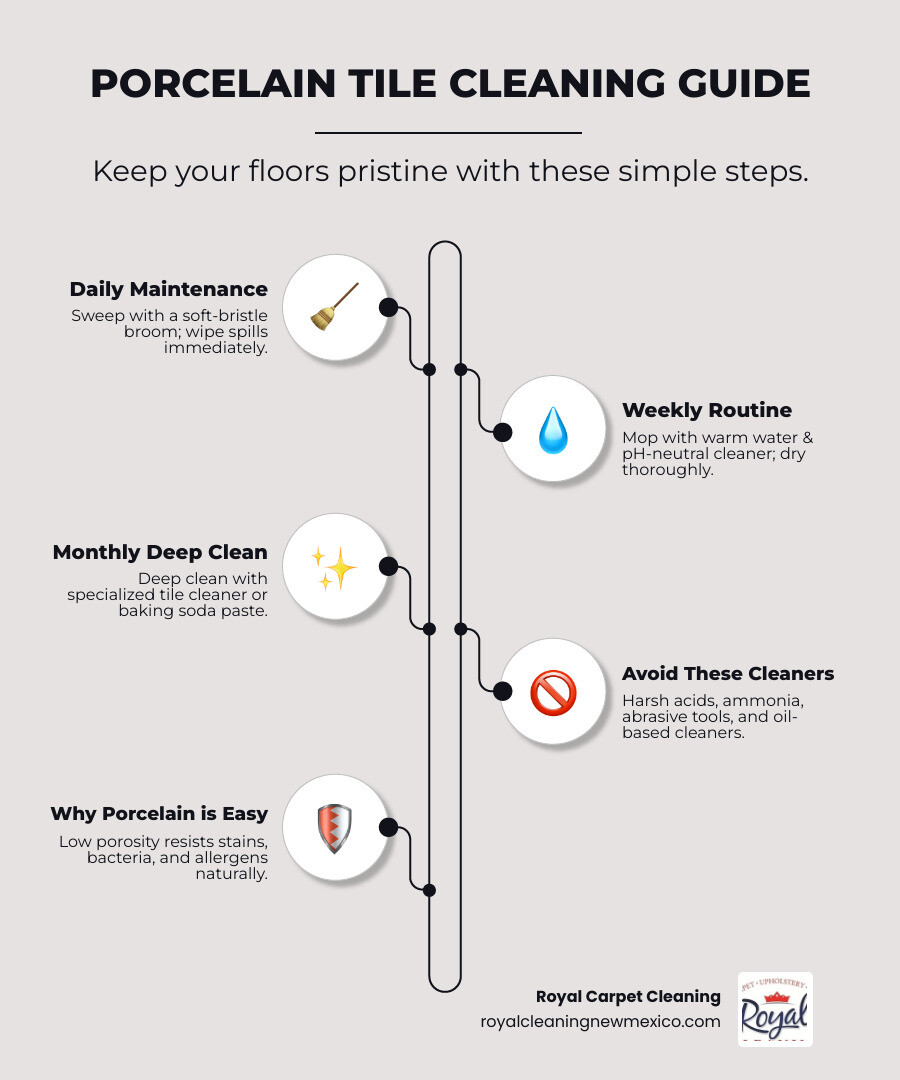
Quick Porcelain Tile Cleaning Guide:
- Daily: Sweep with a soft-bristle broom, wipe spills immediately
- Weekly: Mop with warm water and a pH-neutral cleaner, dry thoroughly
- Monthly: Deep clean with a specialized tile cleaner or baking soda paste
- Avoid: Harsh acids, ammonia, abrasive tools, oil-based cleaners
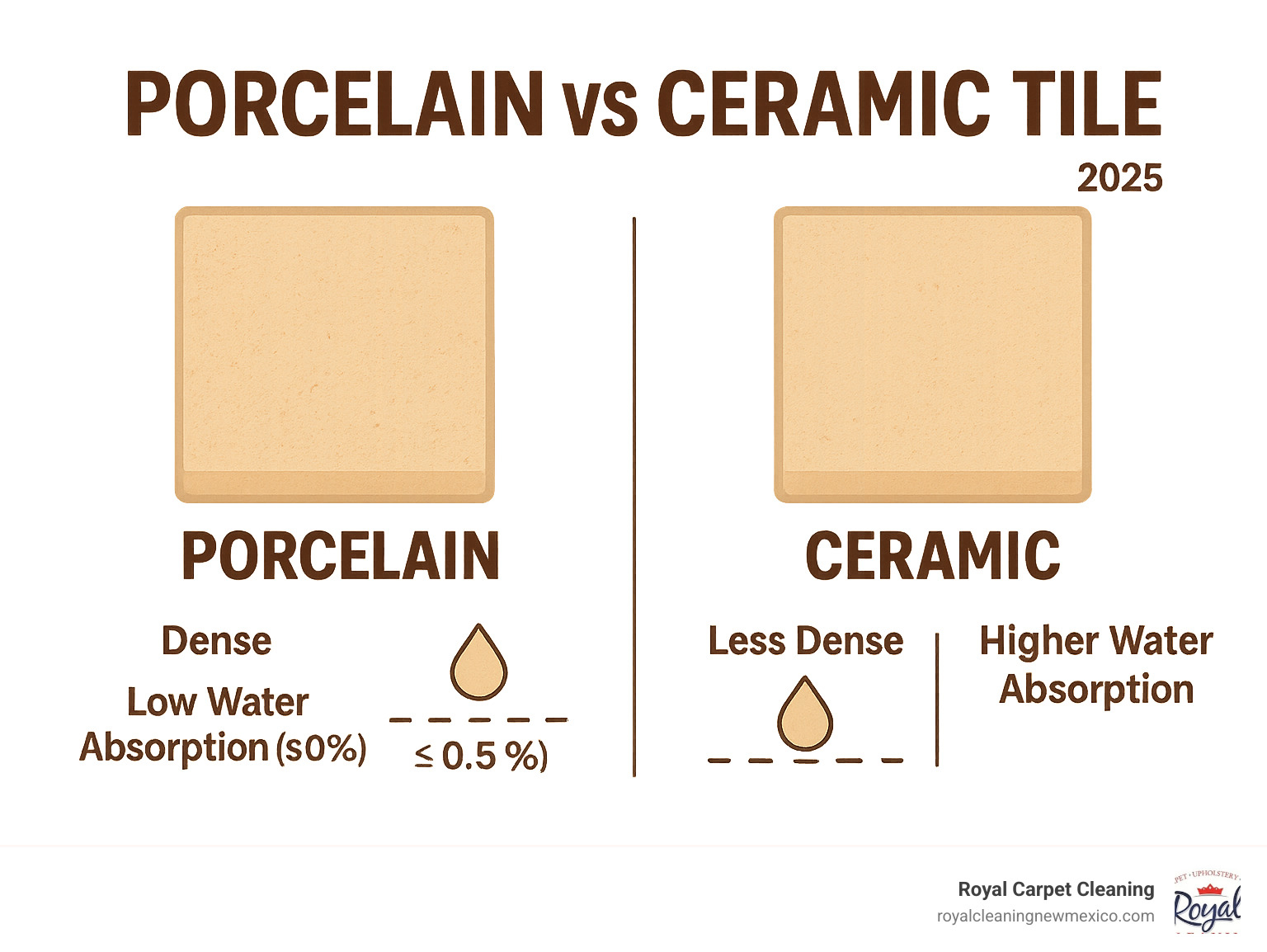
Made from fine clay fired at high temperatures, porcelain has a water absorption rate of 0.5% or less. This dense surface is naturally resistant to:
- Bacteria and mold growth
- Allergens like dust mites and pollen
- Stains, scratches, and water damage
- Wear from heavy foot traffic
This makes porcelain an excellent choice for busy homes, and with proper care, it can last for decades.
Porcelain is denser and less porous than ceramic tile, giving it superior resistance to water and stains. This means it often requires less aggressive cleaning.
Your Complete Guide to Porcelain Tile Cleaning
A simple, consistent porcelain tile cleaning routine saves you from major scrubbing sessions later. Here’s what you need to know.
Routine Cleaning for Floors and Showers
For daily maintenance, sweep floors with a soft-bristle broom or vacuum with a brush attachment (no beater bar). In the shower, use a squeegee on walls after each use to prevent soap scum buildup.
For weekly cleaning, first sweep or vacuum. Then, mop in small sections with a microfiber mop using warm water and a pH-neutral cleaner (or mild dish soap). Avoid over-saturating the floor. Rinse thoroughly to remove any leftover cleaning solution, which can attract dirt, and dry the tiles with a clean cloth to prevent water spots.
How to Deep Clean Porcelain Tile and Grout
To tackle built-up grime, deep clean high-traffic areas and showers monthly, and other spaces quarterly. First, sweep or vacuum. Then, use a specialized alkaline cleaner or a paste of baking soda and water for a deeper clean. Steam cleaning is also effective, using pressurized steam to lift stains with less water than mopping.
Let your cleaning solution sit for 5-10 minutes, then scrub with a soft-bristled brush, using a grout brush for grout lines. Remove the dirty water with a wet-dry vacuum or by rinsing multiple times with fresh water. Always dry the area completely.
To disinfect, use a diluted bleach solution, ensuring proper ventilation. For professional-level deep cleaning techniques, explore our deep clean tile and grout guide.
Cleaning Different Porcelain Finishes (Unglazed, Textured, Outdoor)
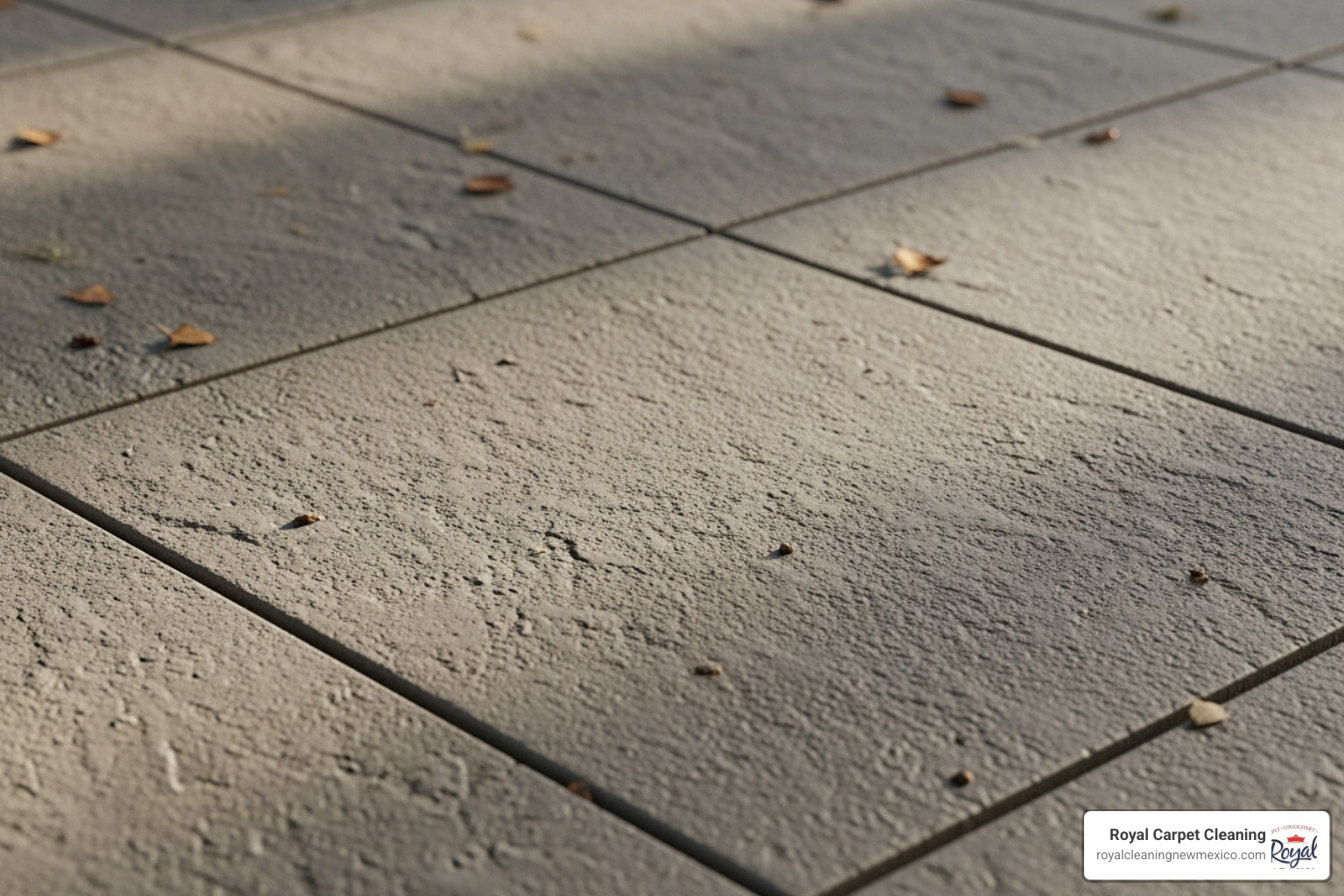
Adjust your porcelain tile cleaning method based on the finish.
Glazed porcelain: Clean with warm water and pH-neutral cleaners to protect the glass-like coating.
Unglazed porcelain: This matte finish may show dirt more easily. Use neutral pH cleaners for grease. A penetrating sealer can add stain resistance.
Polished porcelain: This glossy finish can scratch. Clean gently with pH-neutral cleaners and dry thoroughly to maintain its shine.
Textured tiles: The uneven surface traps dirt. Sweep in two directions and scrub with a brush when wet cleaning.
Outdoor porcelain: Remove debris. Use a 1:1 white vinegar and water solution for moss and algae. For general dirt, use mild dish soap and warm water. Avoid cleaning on hot days. A tile sealer applied every few years offers extra protection.
For detailed advice on maintaining grout, visit our guide on cleaning tile grouting.
Removing Tough Stains like Soap Scum and Hard Water

Here’s how to tackle tough stains without damaging your porcelain.
Soap scum: Spray a 1:1 solution of white vinegar and water, let it sit for 10-15 minutes, and scrub. For tough buildup, add baking soda to the vinegar to create a fizzing paste before scrubbing.
Hard water stains: Apply paper towels soaked in white vinegar to stains for 30-60 minutes to dissolve mineral deposits, then scrub and rinse.
Mold and mildew: Use a diluted bleach solution on grout lines. Let it sit briefly, scrub with a grout brush, and rinse. Ensure good ventilation to prevent regrowth.
Grout stains: Apply a paste of baking soda and water to grout lines. Let it sit for 10-15 minutes, then scrub. For tougher stains, use hydrogen peroxide instead of water. Seal clean grout to prevent future stains.
For bathroom-specific solutions, check out our guide on the best way to clean bathroom floor grout.
Best Practices and Professional Solutions
When it comes to porcelain tile cleaning, using the right products prevents costly damage and protects your investment.
Safe vs. Harmful: The Dos and Don’ts of Cleaning Products
pH-neutral cleaners are best for routine porcelain tile cleaning, as they clean effectively without harming the tile or grout. Mild dish soap and warm water is another safe, simple option. For tougher jobs, a baking soda paste is gentle yet powerful. White vinegar (diluted 1:1 with water) works well on soap scum and hard water, but test it in a hidden spot first and rinse well. For sanitizing, use an EPA-registered disinfectant and follow all label instructions.
Here’s what to avoid:
- Abrasive powders and steel wool, which can scratch the surface.
- Harsh acids like undiluted vinegar, which can etch tile and damage grout.
- Ammonia-based cleaners, which are harsh on tile and sealants.
- Oil- or wax-based cleaners, which leave a slippery, dirt-attracting residue.
- Colored cleaners, which can stain light grout.
Always test new cleaners in a hidden spot and rinse thoroughly after cleaning.
Maintaining Your Investment with Professional Care
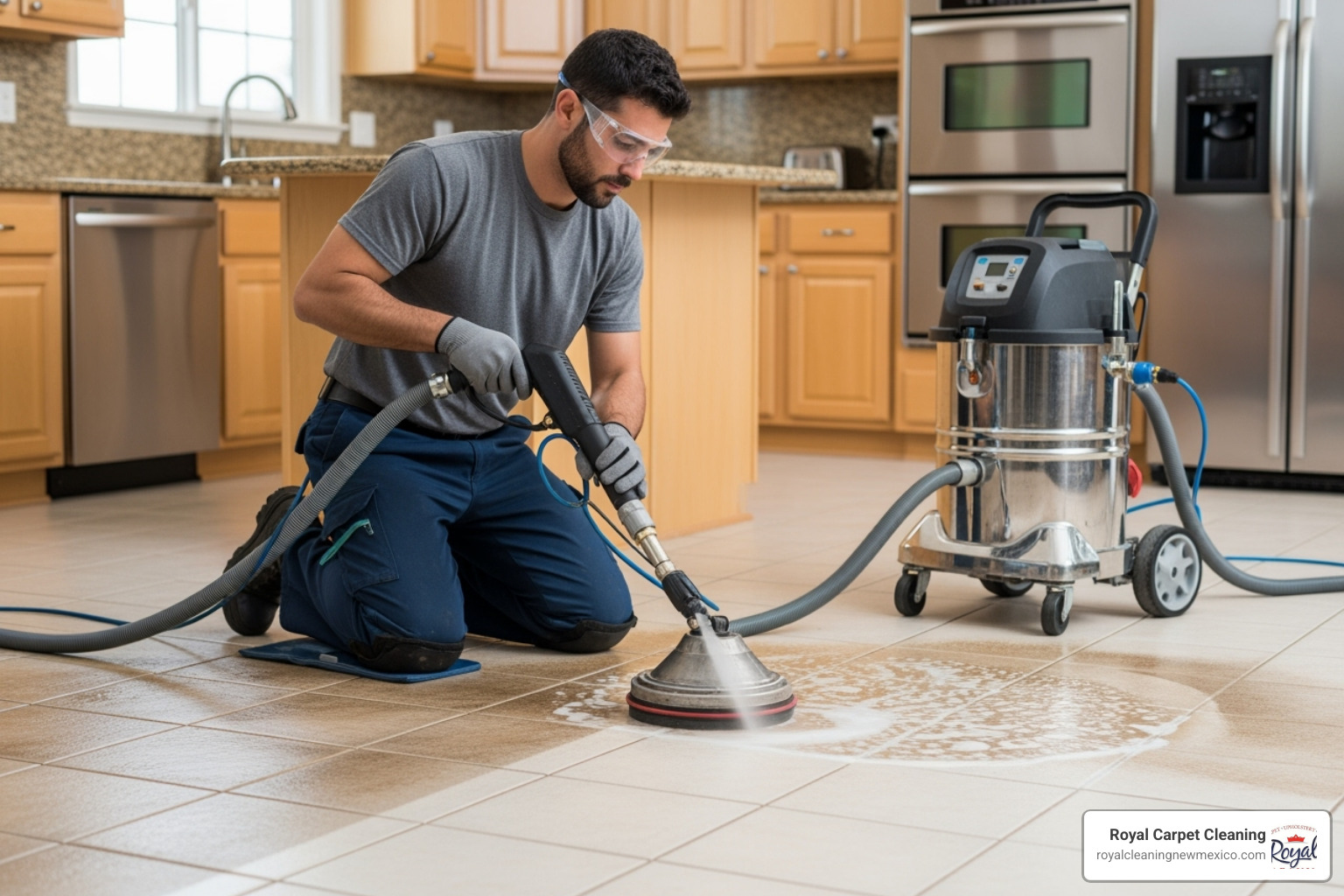
While DIY cleaning is great for daily maintenance, professional care protects your long-term investment. Professionals use high-powered equipment to extract embedded dirt from tile pores and grout lines that regular mopping misses. They can also apply a penetrating sealer to protect porous grout from stains and mildew. Color restoration is also an option for severely discolored grout.
Professionals have the specialized expertise to identify your tile type and clean it safely and effectively. Professional cleaning also removes allergens and bacteria, creating a healthier home.
We recommend professional cleaning annually, or whenever your tiles look dull or grout is heavily stained. At Royal Carpet Cleaning, we offer expert tile and grout cleaning in Albuquerque and surrounding areas. Our multi-step process and satisfaction guarantee will bring your porcelain back to life. For comprehensive solutions, explore our real estate cleaning services.
Combining regular home care with periodic professional cleaning will keep your porcelain tiles beautiful for years.