

 (505) 280-5216
Don’t Wash Silk: Safe Oriental Rug Cleaning Methods for Homeowners
For most routine dirt and fresh spills, blotting and gentle vacuuming plus a cold-water spot clean after a colorfast test are safe. Vacuum without a beater bar, rotate the rug twice a year, and blot spills immediately rather than rubbing. For silk, antiques, pet urine, set stains, or any hint of color bleeding during a test, stop and call a professional for hand or immersion washing.
TL;DR:
- Use suction-only vacuum settings and avoid beater bars to protect delicate fibers, and rotate the rug every six to twelve months to prevent uneven wear.
- Only deep clean wool rugs that pass a dyefastness test and are not antique or silk, following a careful step-by-step process including dust removal, dye testing, and cold-water rinsing.
- Blot spills immediately with cold water and avoid scrubbing or using hot water, bleach, or high-pH detergents to prevent permanent damage or dye bleeding.
- Silk and antique rugs require professional care because home cleaning can cause irreversible damage like fiber distortion or dye instability.
- Obtain professional inspections, dye testing, and controlled immersion washing for valuable or delicate rugs, with proper assessment before attempting any cleaning.
Table of Contents
- Quick Do’s and Don’ts to Avoid Irreversible Damage
- How Do You Deep Clean an Oriental Rug at Home?
- How Do You Get Stains Out of an Oriental Rug?
- Why Do Silk and Antique Rugs Need Specialist Care?
- What Does Professional Rug Cleaning Actually Involve?
- Weekly and Seasonal Maintenance to Extend Rug Life
- The Gap Between DIY Confidence and What Rugs Actually Need
- How to Request an Estimate for Area Rug Cleaning
- Sources
- FAQ
Quick Do’s and Don’ts to Avoid Irreversible Damage
A handmade wool or silk rug can survive decades of foot traffic and still get ruined in an afternoon by the wrong cleaner. The mistakes that cause permanent damage are almost always avoidable once you know the short list of hazards.
- Do vacuum using suction-only settings and avoid rotating beater bars to protect delicate fibers, and flip the rug to vacuum the back every few months.
- Do rotate the rug every 6 to 12 months so wear and sun fading stay even.
- Do test any cleaner on a hidden corner first and watch for color transfer onto a white cloth.
- Do blot spills, never rub, and always use cold water.
- Don’t use steam, hot-water extraction, bleach, or high-pH detergents. Conservators consistently point to pH-matched, cold-water cleaning as the safer standard for natural fibers.
- Don’t dry a rug in direct hot sun or leave it damp on the floor, which invites mildew and dye bleed.
How Do You Deep Clean an Oriental Rug at Home?
If your rug is wool, not antique, and passes a colorfastness test, a careful home deep clean is realistic. Skip this entirely for silk or valuable pieces. Otherwise, work through these steps in order.
- Remove dust first. Vacuum both sides thoroughly, or hang the rug outdoors and beat it gently, since embedded grit left in the fibers turns to abrasive mud once water hits it and accelerates wear.
- Test every color. Dab a damp white cloth on each dye used in the pattern and press firmly. Any color on the cloth means stop and call a professional.
- Mix a mild, wool-safe cleaner with cold water. Avoid anything alkaline or scented with strong solvents.
- Work in small sections, brushing gently in the direction of the pile rather than against it.
- Rinse thoroughly with cold water until no soap residue remains. Leftover detergent attracts dirt faster than before you started.
- Remove excess water with clean towels or a squeegee, pushing in the direction of the pile.
- Dry flat with strong airflow, a fan if possible, turning the rug periodically. Keep it away from heaters, radiators, and direct sun.
Pro Tip: If you see any color lifting during rinsing, stop immediately, blot the area dry, and set the rug aside for professional evaluation. Continuing to wash a bleeding rug spreads the dye further into the pile.
How Do You Get Stains Out of an Oriental Rug?
Speed and gentleness matter more than the product you use. The single biggest cause of permanent staining isn’t the spill itself. It’s scrubbing, which pushes the stain deeper and frays the fibers.
- Wine and food spills: Blot immediately with a dry cloth, working from the outside of the stain inward. Follow with cold water blotting only, never rubbing.
- Pet urine: Blot fresh accidents right away and treat with an enzyme cleaner made for the purpose, following the label exactly. Set or repeated urine stains usually need professional extraction, since the salts crystallize deep in the foundation.
- Grease and oil: Test a solvent-based cleaner on a hidden corner first. Apply sparingly and blot instead of pouring, since over-wetting spreads the oil rather than lifting it.
- Any stain that resists or shows color transfer: Stop treating it yourself. Continued attempts usually make the mark harder for a specialist to remove later.
Why Do Silk and Antique Rugs Need Specialist Care?
Silk fibers lose strength and stretch out of shape when they get wet, and even a careful home cleaning attempt can leave permanent ripples or sheen changes that no amount of drying will fix. Antique rugs carry their own risks: dyes made decades or centuries ago are often unstable, foundations can be brittle, and aggressive cleaning can strip away the wear patterns and repairs that establish a rug’s age and origin.
- Never wet-clean silk rugs at home. Vacuum lightly with suction only and leave everything else to a specialist.
- Treat any rug older than a few decades as a conservation project, not a cleaning job.
- Photograph both the front and back, including fringe and any labels, before doing anything. Cleaning or repair done before appraisal can obscure provenance details important for valuation that affect resale or insurance value.
- When in doubt, get a conservator or reputable restorer to look at the rug before you touch it with water.
What Does Professional Rug Cleaning Actually Involve?
Professional cleaning follows a more deliberate sequence than most people expect, and that sequence is exactly why it protects rugs that home methods can damage.
- Inspection and documentation of the rug’s fiber type, existing damage, and repairs before any water touches it.
- Dye testing on every color present, not just a quick spot check.
- Mechanical dust removal, often revealing far more embedded soil than a household vacuum can pull out.
- Targeted pre-treatment of visible stains, followed by pH-balanced hand or immersion washing rather than machine extraction.
- Complete rinsing and monitored flat drying to prevent shrinkage and stop dye migration before it starts.
This full process is why professional inspection, dye testing, and immersion washing remain the standard for hand-knotted rugs, and it’s also why costs vary. Handwashing typically runs higher than dry cleaning or steam extraction because of the labor involved, and cleaning frequency guidance generally recommends professional cleaning every few years, with higher frequency for high traffic or pet households, depending on foot traffic, pets, and whether the rug sits in an entryway.
Weekly and Seasonal Maintenance to Extend Rug Life
Most of a rug’s long-term condition comes down to habits between cleanings, not the cleanings themselves.
- Vacuum weekly with suction only, and vacuum the underside occasionally to catch grit that works its way through the weave.
- Rotate the rug periodically, typically twice a year, to even out wear and fading and set it on a cushioned rug pad to reduce friction and slipping. Pad placement also affects how a rug reads in a room, which is worth considering alongside how rug placement shapes a space.
- Shake out small rugs outdoors or beat them gently to release loose dirt between vacuum sessions.
- Have a professional check periodically for pests, odor, or hidden moisture damage, especially in humid seasons.
- Store rugs rolled, never folded, with acid-free paper, and keep them out of damp basements or attics prone to temperature swings.
For everyday wool-rug upkeep specifically, a closer look at wool rug cleaning habits covers the fiber-specific quirks that generic carpet advice tends to miss.
The Gap Between DIY Confidence and What Rugs Actually Need
Most advice about cleaning oriental rugs treats the home methods and the professional process as two separate worlds. They aren’t. The steps that make a home deep clean safe (dust removal, dye testing, cold water, controlled drying) are the same steps a professional performs, just with better equipment and more time to do them right. That’s the real lesson here: the method matters far more than who’s holding the sponge.
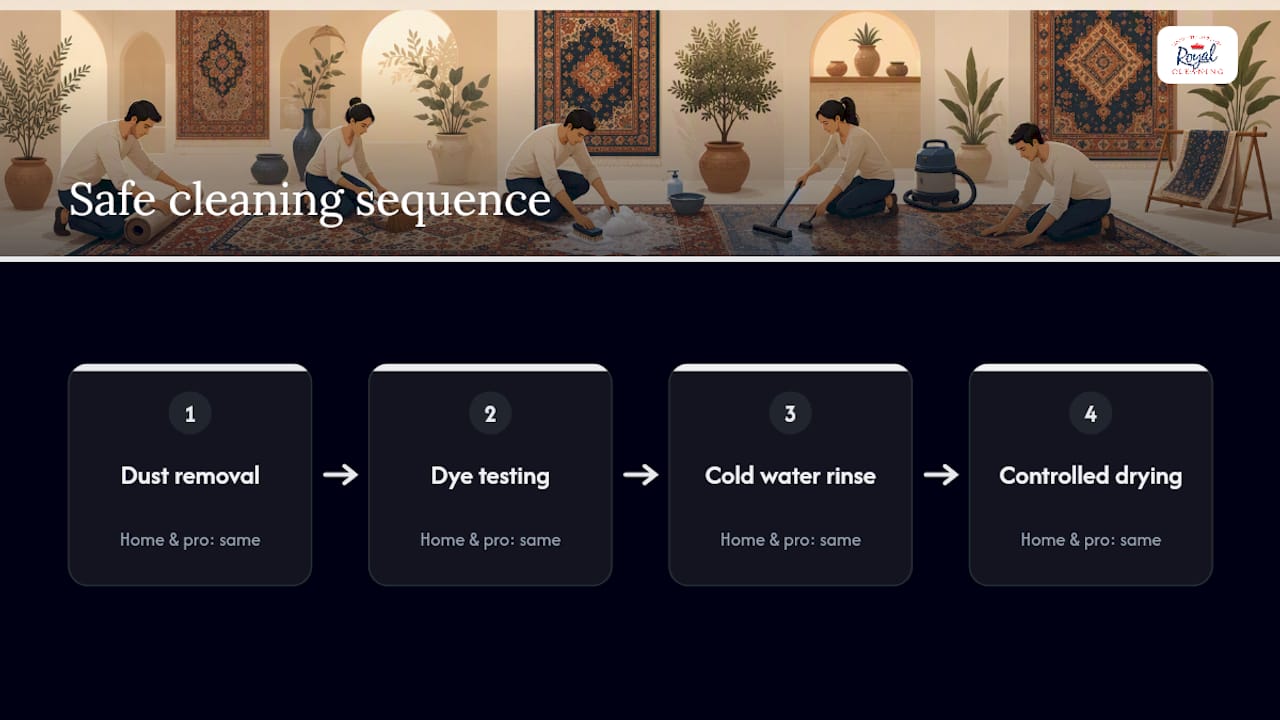
Where conventional advice falls short is in downplaying dye testing. Plenty of guides mention it as an afterthought, buried after the cleaning instructions. It should come first, every time, because a rug that bleeds mid-wash is much harder to fix than one that was never washed at all.
If you take one thing from this, prioritize honest self-assessment overconfidence. A rug that’s wool, modern, and passes its dye test is fair game for a careful home wash. A rug that’s silk, old, urine-stained, or shows any color lift deserves a phone call, not a bucket. Rental steam machines make this worse, not better, since they push heat and water into rugs that were never built to handle either.
— Bernadette
How to Request an Estimate for Area Rug Cleaning
When a rug crosses the line into professional territory, a professional cleaning service handles the process with inspection, dye testing, gentle hand or immersion washing, and controlled flat drying, not a rushed steam pass that risks the dyes and foundation.

Some professional cleaners offer both on-site assessments and pick-up/drop-off service for rugs that need more controlled conditions than a living room floor allows, with transparent pricing discussed before any work begins. If you’ve got a rug that failed its dye test, shows signs of pet odor, or is simply too valuable to risk on a DIY attempt, our area rug cleaning services page walks through what to expect from an estimate. Reach out to schedule an inspection and get a straight answer on whether your rug needs a hand wash, a spot treatment, or just a good vacuuming.
Sources
The claims in this guide draw on rug-restoration guidance covering in-home versus off-site cleaning tradeoffs, fiber-specific care from Ahmadi Rug’s cleaning guide, home-cleaning steps from Surena Rugs, and appraisal guidance from Lion & Unicorn’s rug value guide. Each source specializes in the exact subtopic it’s cited for, from conservation chemistry to resale value.
- In-Home vs Off-Site Rug Cleaning | What to Know – Oriental Rug Salon
- How to Clean an Oriental Rug at Home (And When to Call a Professional) – Surena Rugs
- Oriental Rug Cleaning Chicago | Expert Guide | Ahmadi Rug
- Oriental rug value guide: identify and sell | Lion & Unicorn
FAQ
What’s the Average Cost to Clean an Oriental Rug?
Hand washing generally costs more per square foot than dry cleaning or steam extraction because of the labor involved, and Persian or Oriental rugs often land at the higher end of whatever method is used. Get a specific estimate based on your rug’s size and condition rather than assuming a flat rate.
Can You Use a Carpet Cleaner Machine on an Oriental Rug?
No. Machine steam or hot-water extraction is generally unsuitable for hand-knotted rugs because it risks over-wetting, dye bleed, and fiber damage that cold, hand-washed methods avoid.
Are Old Oriental Rugs Worth Anything?
Many are, and some significantly so, but value depends on age, origin, dye quality, and condition. Document the rug with photos before any cleaning or repair, since altering it beforehand can erase the details an appraiser needs.
Should Oriental Rugs Be Vacuumed?
Yes, weekly, using suction only and never a rotating beater bar, which can snag and pull hand-knotted fibers. Vacuuming the underside occasionally also helps remove grit trapped in the weave.



