(505) 280-5216
Master the move-out cleaning process for Albuquerque homes
TL;DR:
- Thorough, deep cleaning beyond surface tidying is required to secure full security deposit refund.
- Proper move-out cleaning involves organized tools, systematic top-to-bottom process, and detailed inspections.
- Document everything with receipts and photos to protect against deposit disputes under New Mexico law.
Leaving a rental property spotless is one of the highest-stakes tasks you’ll face as a homeowner or outgoing tenant in Albuquerque. A single missed detail, like grease buildup inside the oven or streaky windows, can cost you hundreds of dollars in deposit deductions. Under New Mexico law, landlords can legally deduct cleaning costs from your security deposit when the property is left beyond normal wear and tear. Knowing exactly what’s required, gathering the right tools, and following a proven process from top to bottom gives you the best chance of getting every dollar back.
Table of Contents
- Know the move-out cleaning requirements in Albuquerque
- Gather all tools and supplies for efficient cleaning
- Follow the systematic top-to-bottom cleaning process
- Check your work and avoid common move-out mistakes
- A seasoned perspective: What most guides don’t tell Albuquerque homeowners
- Let experts handle your Albuquerque move-out cleaning
- Frequently asked questions
Key Takeaways
| Point | Details |
|---|---|
| Understand Albuquerque requirements | Local law requires itemized receipts and timely return of security deposits after a proper deep clean. |
| Use a systematic cleaning process | Follow a top-to-bottom, room-by-room checklist for thorough results and fewer missed spots. |
| Document everything | Take photos and keep receipts to prevent disputes and support your deposit claim. |
| Pros save time and risk | Professional cleaners can help cut vacancy turnover, boost home appeal, and offer proof for compliance. |
Know the move-out cleaning requirements in Albuquerque
Before you start, it’s crucial to know what landlords in Albuquerque actually expect and what the law demands.
New Mexico law is specific about security deposits. Landlords must provide itemized deductions within 30 days of a written request, and if they wrongfully withhold your deposit, you may be entitled to double damages. That means documentation and a genuinely thorough clean are not optional. They are your financial protection.
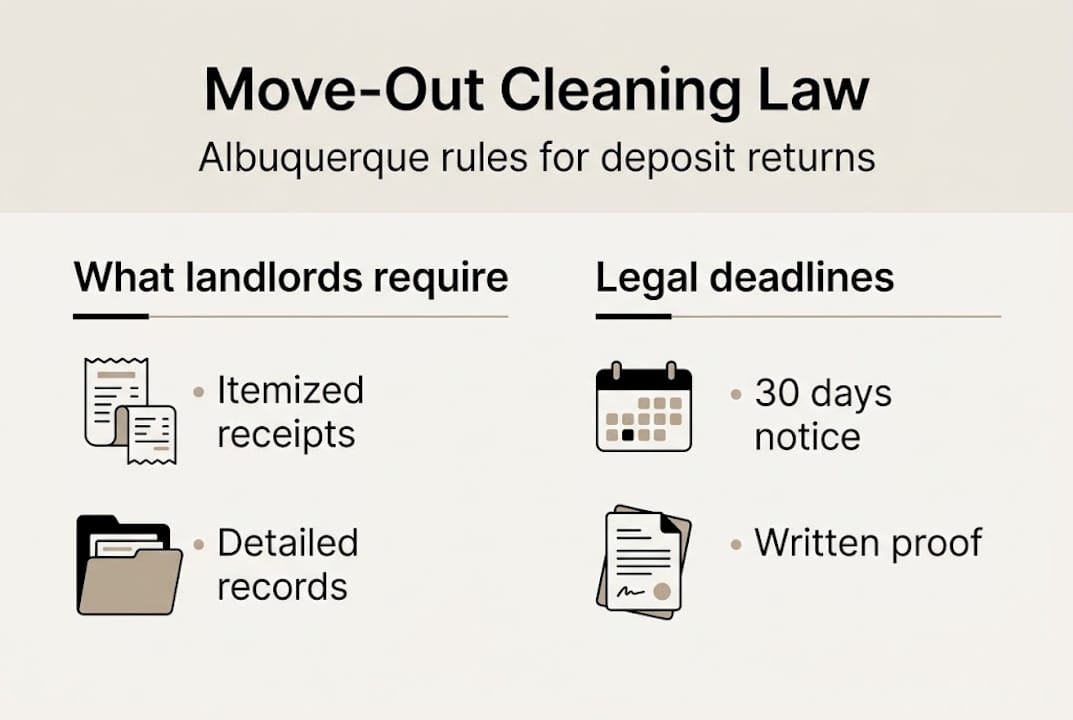
Many tenants assume a surface wipe-down is enough. It rarely is. Professionals and landlords require deep cleaning that goes well beyond what most people consider “clean.” Think inside cabinets, behind appliances, inside the oven, around toilet bases, and inside light fixtures. These are the spots that trigger disputes.
Understanding what counts as move-out cleaning helps you set realistic expectations before you pick up a sponge. And if you’re preparing a property for sale or new tenants, cleaning for inspection follows a very similar standard.
Here’s what Albuquerque landlords typically expect:
- Inside all cabinets and drawers, wiped clean with no crumbs or residue
- All appliances, including inside the oven, refrigerator, and microwave
- Bathroom fixtures, scrubbed free of soap scum, mold, and mineral deposits
- All floors, vacuumed and mopped, including under furniture
- Windows and glass, streak-free inside and out
- Walls and baseboards, wiped down and free of scuffs
Stat: Professional cleaning at turnover can increase a property’s appeal by up to 20%, making it easier to attract quality tenants faster.
| Cleaning level | What’s included | Typical landlord acceptance |
|---|---|---|
| Surface clean | Counters, visible floors, mirrors | Rarely accepted at move-out |
| Standard clean | Bathrooms, kitchen surfaces, floors | Sometimes accepted for short stays |
| Deep/professional clean | Inside appliances, cabinets, fixtures, walls | Required for full deposit return |
Gather all tools and supplies for efficient cleaning
Once you know what’s required, set yourself up for success with the right gear.
A systematic top-to-bottom process starts with having every tool ready before you begin. Running back to the store mid-clean wastes time and breaks your momentum. Organize your supplies by area: kitchen, bathrooms, general surfaces, and floors.
Here’s what you’ll need for a complete move-out clean:
- General: Microfiber cloths, scrub brushes, sponges, trash bags, step ladder
- Kitchen: Degreaser, oven cleaner, stainless steel polish, dish soap
- Bathrooms: Toilet brush, grout brush, mold and mildew remover, lime scale cleaner
- Floors: Vacuum with attachments, mop and bucket, hardwood-safe floor cleaner
- Glass: Streak-free glass cleaner, squeegee, lint-free cloths
Pro-grade supplies make a real difference. Commercial degreasers cut through built-up grease in a fraction of the time compared to standard store brands. Enzyme-based cleaners handle odors that surface sprays just mask. If you want to follow a complete residential cleaning checklist, it helps to cross-reference your supply list against every task before you start.
| Supply type | DIY store-bought | Pro-grade used by professionals |
|---|---|---|
| Degreaser | Standard spray, multiple applications | Concentrated formula, one pass |
| Floor cleaner | General multipurpose | Surface-specific, no residue |
| Glass cleaner | Streak-prone formulas | Streak-free, ammonia-free options |
| Odor treatment | Masking sprays | Enzyme-based eliminators |
| Scrubbing pads | Standard sponge | Non-scratch commercial pads |
For carpeted rooms, carpet cleaning tips can help you decide whether a rental machine is enough or whether professional extraction is needed to meet landlord standards.
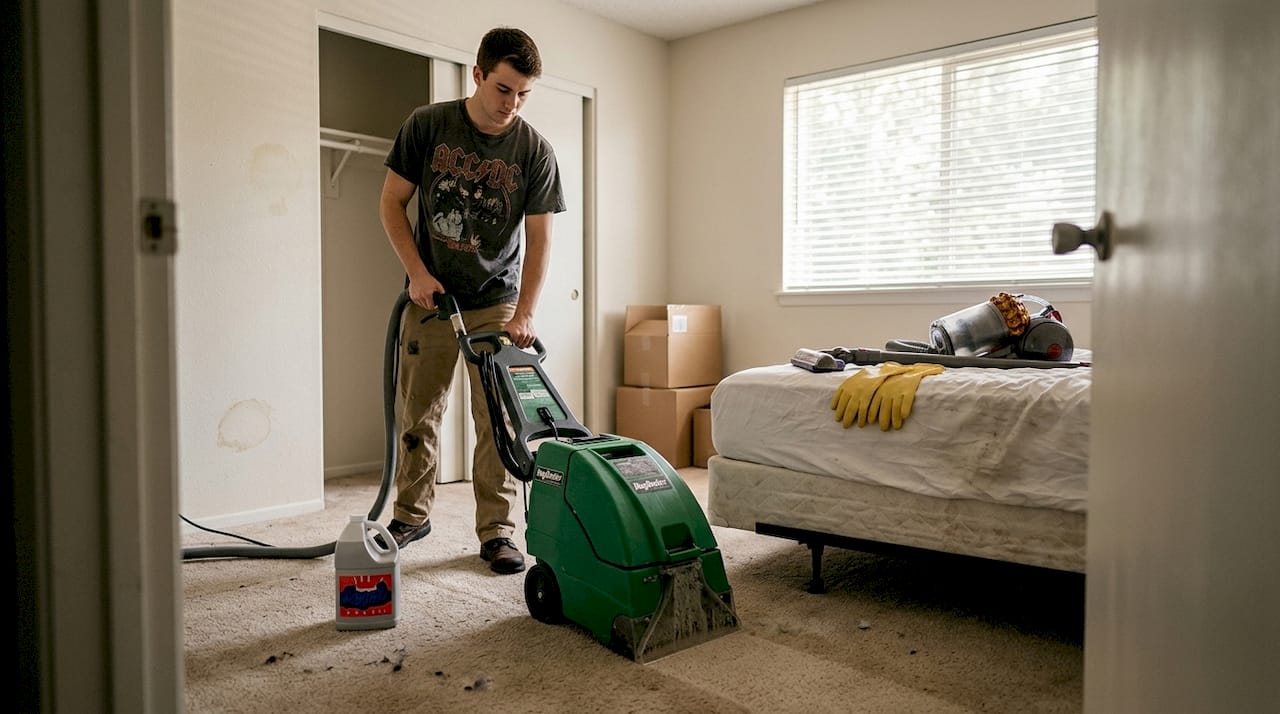
Pro Tip: Set up a cleaning caddy for each area of the home before you begin. This keeps everything within reach, prevents cross-contamination between rooms, and cuts your total cleaning time significantly.
Follow the systematic top-to-bottom cleaning process
With your supplies in hand, here’s the detailed process to guarantee results landlords will accept.
The order you clean in matters. Starting from the top of each room and working down ensures that dust and debris fall onto surfaces you haven’t cleaned yet. A top-to-bottom methodology covers debris removal, dusting, cabinet and appliance interiors, detailed kitchen and bath scrubbing, and finishes with floors and glass. Skipping the sequence leads to re-cleaning and wasted effort.
Follow these steps in order:
- Remove all trash and personal items from every room, including closets and storage areas
- Dust ceiling fans, light fixtures, and vents using a step ladder and microfiber duster
- Wipe down walls, doors, and baseboards to remove scuffs and dust buildup
- Deep clean the kitchen: degrease stovetop, clean inside oven, wipe inside cabinets and drawers, clean refrigerator inside and out
- Scrub all bathrooms: clean toilet inside and out, scrub tub and shower tiles, remove soap scum, polish fixtures
- Clean all windows and glass surfaces with streak-free cleaner
- Vacuum all carpets and rugs, then mop all hard floors last
For rental turnover cleaning tips that speed up the process, and for detailed guidance on between-tenant cleaning best practices, these resources give you a deeper look at what property managers expect.
| Task | Area | Estimated time |
|---|---|---|
| Trash removal | All rooms | 20-30 minutes |
| Dusting and walls | All rooms | 30-45 minutes |
| Kitchen deep clean | Kitchen | 45-60 minutes |
| Bathroom scrub | Each bathroom | 30-45 minutes |
| Windows and glass | All rooms | 20-30 minutes |
| Floors (vacuum and mop) | All rooms | 30-45 minutes |
“Cleaning receipts help protect your deposit.” Keep every receipt from supplies or professional services as written proof of your effort.
Pro Tip: Always open and inspect the inside of every appliance and cabinet before you consider a room finished. Landlords check these spots first.
Check your work and avoid common move-out mistakes
Before you hand back the keys, run through this final checklist to make sure your effort pays off.
Even a thorough clean can miss critical spots. The most common errors that lead to deposit disputes in Albuquerque include streaky glass, dusty baseboards, grime inside cabinets, and residue under or behind appliances. These are exactly the areas landlords check when withholding deposits, and they must provide itemized receipts for any deductions within 30 days.
Run through this post-cleaning checklist before your walkthrough:
- Floors: Check under beds, behind doors, and inside closets for missed debris
- Appliances: Pull out the refrigerator and stove to clean behind and underneath
- Cabinets and drawers: Open every single one and check for crumbs, stains, or residue
- Baseboards: Run a clean white cloth along them. Any gray residue means they need another pass
- Fixtures: Check faucets, showerheads, and toilet bases for mineral deposits or staining
- Glass: Stand at an angle to catch streaks that are invisible straight-on
- Walls: Look for scuffs near light switches, door frames, and corners
Stat: Under New Mexico law, landlords who wrongfully withhold your security deposit may owe you double the amount withheld, making compliance genuinely worth the effort on both sides.
For a side-by-side look at your options, a move-out services comparison can help you decide between DIY and professional cleaning. If you’re weighing costs, the cleaning price guide breaks down what to expect per square foot.
Pro Tip: Take timestamped photos of every room, every appliance interior, and every cabinet after cleaning. This visual record is your strongest defense against disputed deductions.
A seasoned perspective: What most guides don’t tell Albuquerque homeowners
Having covered the nuts and bolts, here’s what years of Albuquerque cleaning experience reveal that most guides skip.
Most move-out guides focus entirely on the cleaning itself. What they underestimate is how much documentation matters. In our experience, tenants who photograph every room, keep every receipt, and request a pre-move-out walkthrough almost never lose deposit disputes. The cleaning is important. The paper trail is equally important.
Cutting corners almost always costs more than it saves. The money saved by skipping professional carpet cleaning or leaving the oven interior for the landlord to “deal with” often comes back as a deduction that exceeds what a pro would have charged. New Mexico’s double-damage rule means a wrongful withholding dispute can get expensive fast for landlords too, which is why most prefer a clean property and a clean exit.
Professional cleaning help is not a luxury for move-outs. It’s a practical investment. And receipts serve as proof that the work was done to a professional standard, which carries real weight if a dispute reaches a mediator or small claims court.
If you’re ever unsure, ask your landlord for a walkthrough before you return the keys. Most will tell you exactly what still needs attention. That conversation is worth more than any checklist.
Let experts handle your Albuquerque move-out cleaning
If you want to guarantee the best results and skip the stress, let certified Albuquerque teams shoulder the heavy lifting.
At Royal Cleaning New Mexico, we handle the full scope of move-out cleaning services so you can focus on your next move. From deep kitchen and bathroom scrubbing to carpet extraction and tile cleaning, our team covers every item on a landlord’s checklist. You can review our residential cleaning checklist to see exactly what we cover, and our carpet cleaning pros are equipped to restore floors to move-in condition. Contact us today for a free estimate and protect your deposit with confidence.
Frequently asked questions
How long does a proper move-out cleaning take in Albuquerque?
A full move-out cleaning typically takes 2-4 hours, while the total turnover process including key return and walkthroughs averages 5-7 days.
What areas are most often missed during a move-out cleaning?
The most commonly missed spots are inside appliances, cabinet interiors, baseboards, and glass surfaces. These are also top reasons for deductions because tenants assume surface cleaning is sufficient when landlords require a deep clean.
What cleaning costs can Albuquerque landlords legally deduct from my deposit?
Landlords may deduct for cleaning beyond normal wear and tear, but under New Mexico law they must provide an itemized list with receipts within 30 days of your written request.
Should I provide cleaning receipts to my landlord after move-out?
Yes. Receipts are proof that professional-grade cleaning was completed, and they significantly reduce the risk of disputed or wrongful deposit deductions.